
Overview
Just as your lungs need clean air to function properly, your car’s engine relies on a clean air filter to “breathe” efficiently—with a clogged filter reducing fuel economy by up to 10% and potentially leading to thousands in repair costs. Regular replacement every 12,000-15,000 miles is one of the simplest DIY maintenance tasks you can perform, costing only $10-$30 while protecting your engine from premature wear and preventing costly repairs to components like oxygen sensors, mass airflow sensors, and even catalytic converters.
Table of Contents
- Understanding Air Filters: Your Engine’s First Defense
- Why Regular Air Filter Replacement Matters
- 5 Signs Your Air Filter Needs Replacement
- The Ideal Replacement Timeline
- Factors That Affect Your Air Filter’s Lifespan
- DIY Air Filter Replacement: Easier Than You Think
- Cost Comparison: Regular Maintenance vs. Repairs
- Common Air Filter Maintenance Mistakes
- Conclusion: Simple Maintenance, Major Savings
- Frequently Asked Questions
Understanding Air Filters: Your Engine’s First Defense
When it comes to keeping your engine healthy, few components work harder than your air filter. Think of it as your engine’s bouncer – it stands guard, keeping harmful particles from crashing your engine’s party.
Your vehicle actually uses two types of air filters. The engine air filter prevents dirt, dust, and debris from entering your engine during the combustion process. The cabin air filter, on the other hand, keeps the air inside your vehicle clean for you and your passengers.
Every time your engine runs, it pulls in enormous amounts of air – about 10,000 gallons for every gallon of fuel burned. Without proper filtration, all the contaminants in that air would end up inside your engine, causing premature wear and potentially serious damage.
A clean air filter allows your engine to “breathe” properly, maintaining the perfect air-to-fuel ratio for efficient combustion. When this balance is right, your engine runs smoother, performs better, and consumes less fuel – all while producing fewer emissions.
Why Regular Air Filter Replacement Matters
Neglecting your air filter is a bit like ignoring a slow leak in your roof – the damage accumulates gradually until suddenly you’re facing a major problem. Regular replacement is one of the most cost-effective maintenance tasks you can perform.
When your air filter becomes clogged, your engine compensates by working harder. This extra strain leads to reduced fuel efficiency – as much as 10% in older vehicles and 2-6% in modern fuel-injected engines, according to EPA research on fuel economy. For the average driver, that translates to throwing away hundreds of dollars annually at the pump.
But reduced fuel efficiency is just the beginning. A dirty air filter restricts the oxygen your engine needs for proper combustion. This can lead to fouled spark plugs, damage to oxygen sensors, and even problems with your mass airflow sensor – repairs that can cost hundreds or even thousands of dollars.
Beyond the immediate repair costs, clean air filters contribute significantly to engine longevity. By keeping abrasive particles out of your engine, you reduce internal wear and tear on critical components. This protection can add years to your engine’s useful life – a benefit worth thousands in delayed replacement costs.
5 Signs Your Air Filter Needs Replacement
Your vehicle won’t always flash a convenient dashboard warning when your air filter needs attention, but it does provide several telltale signs if you know what to look for:
- Decreased fuel economy: If you’re making more frequent trips to the gas station, a dirty air filter could be the culprit. Many drivers notice this symptom before any others appear.
- Reduced engine performance: When your engine struggles to get enough air, acceleration suffers. That sluggish response when you press the gas pedal often points to a restricted airflow problem.
- Unusual engine sounds: Listen for misfiring, rough idling, or coughing sounds. When your engine can’t get proper airflow, it often protests audibly.
- Black smoke from the exhaust: Excessive exhaust smoke, particularly if it’s black, suggests your engine is running “rich” (too much fuel, not enough air) – a common result of a clogged air filter.
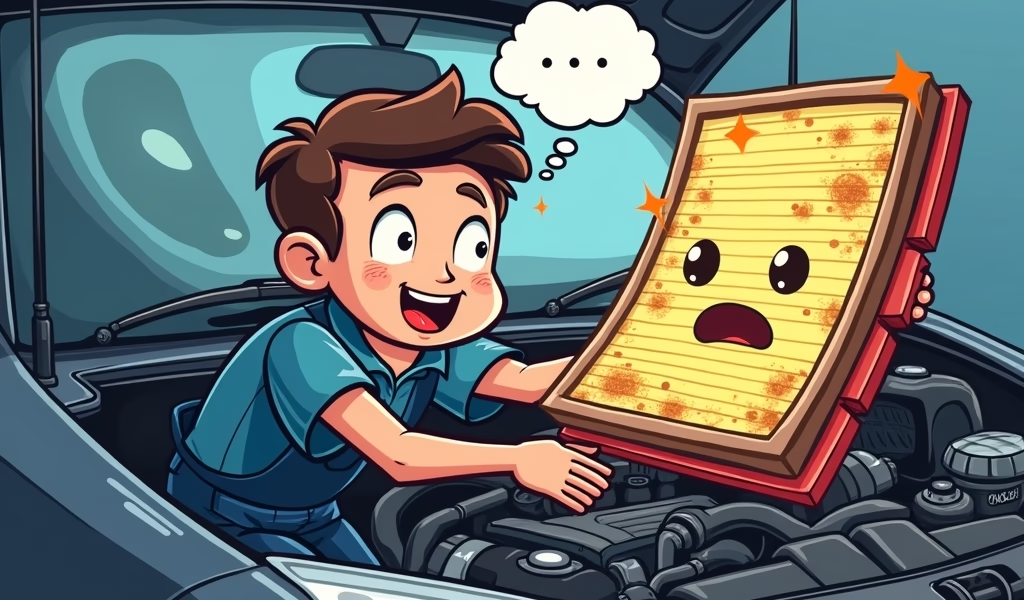
- Visible dirt on the filter: The most definitive check is a visual inspection. A clean filter appears white or off-white. As it collects contaminants, it darkens to gray and eventually black.
I always recommend checking your air filter whenever you change your oil. It only takes a minute, and this simple habit can prevent more serious issues from developing. If you can’t see light passing through when holding it up to a bright source, it’s definitely time for a replacement.
One quick test I teach my customers is the “flashlight test.” Remove your air filter, hold it up to a flashlight in a dark area, and see how much light passes through. If very little light comes through, you’re overdue for a change.
The Ideal Replacement Timeline
The question of exactly when to replace your air filter doesn’t have a one-size-fits-all answer, but I can give you solid guidelines based on decades of experience under the hood.
For most vehicles under normal driving conditions, replacing the engine air filter every 12,000 to 15,000 miles is a good rule of thumb. If you drive primarily on highways in clean environments, you might stretch this to 15,000-20,000 miles. Cabin air filters typically need replacement every 15,000-30,000 miles, though pollen and environmental factors can necessitate more frequent changes.
Time-based intervals matter too. Even if you don’t drive much, you should replace your air filter at least once a year. Filters can deteriorate even when not in active use, and seasonal contaminants like pollen can clog them regardless of mileage.
Different vehicles have different needs. Larger vehicles with bigger engines, like trucks and SUVs, typically move more air through their filters and may need more frequent replacements. Diesel engines often have specialized filtration requirements – always check your owner’s manual for manufacturer-specific guidance.
The most essential car maintenance tasks often include a regular inspection schedule, and I recommend checking your air filter every 3,000 miles or three months, even if you’re not replacing it yet. This quick check takes just minutes but can prevent performance issues before they start.
Factors That Affect Your Air Filter’s Lifespan
Understanding what influences your air filter’s lifespan can help you adjust your replacement schedule to your specific circumstances:
- Driving environment: Urban environments with higher pollution levels, construction zones, and unpaved roads all accelerate filter clogging. If you live in a dusty area like Arizona or New Mexico, you might need replacements twice as often as someone in less dusty regions.
- Driving style: Stop-and-go city driving typically dirties filters faster than steady highway cruising. Your engine works harder in city driving, pulling in more air per mile traveled.
- Seasonal factors: Spring introduces pollen, fall brings leaves and plant debris, and winter introduces road salt and moisture issues. Each season presents unique challenges for your filtration system.
- Off-road adventures: Even occasional off-road excursions can dramatically shorten filter life. The dust kicked up during these trips can clog a filter in a matter of hours rather than months.
- Weather conditions: Areas with frequent dust storms, heavy pollen seasons, or wildfire smoke require more vigilant filter maintenance.
Vehicle design also plays a role. Some manufacturers design their air intake systems with better pre-filtering or larger filter surface areas. This is why it’s important to follow the guidelines in your specific vehicle’s maintenance schedule rather than generic advice.
According to AAA automotive experts, air filters in regions with high pollution or dust can require replacement up to twice as frequently as those in cleaner environments.
DIY Air Filter Replacement: Easier Than You Think
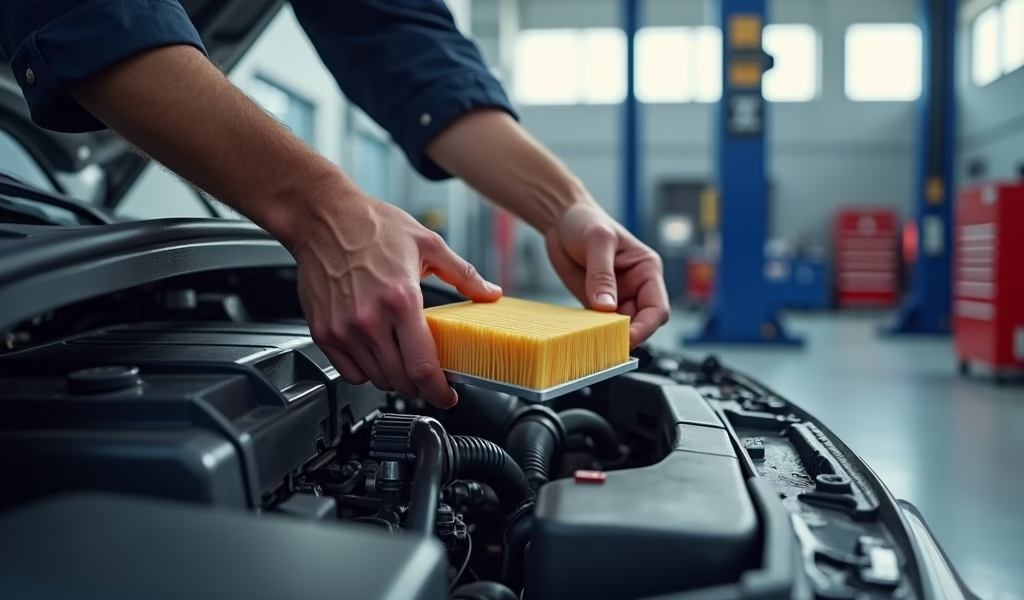
Replacing your air filter is one of the most accessible DIY maintenance tasks – something I encourage even my most mechanically hesitant customers to try. On most vehicles, you can complete the job in under 10 minutes with few or no tools.
Here’s a simple step-by-step process that works for most vehicles:
- Locate your air filter box – typically a black plastic box on the top or side of the engine.
- Open the housing (usually secured by metal clips or simple screws).
- Take note of how the old filter is positioned before removing it.
- Remove the old filter and check for any debris inside the housing.
- Insert the new filter in the same orientation as the old one.
- Secure the housing, making sure all clips or screws are properly fastened.
The tools needed are minimal – often just a screwdriver for some vehicles, while many modern cars require no tools at all. Before purchasing a new filter, consult your owner’s manual or use the reference guide at your local auto parts store to ensure you get the correct size and type.
If you’re interested in a more detailed walkthrough, check out our comprehensive guide on how to replace your car air filter with step-by-step instructions and helpful photos.
DIY replacement typically costs only the price of the filter itself ($10-$30), while professional service might add $20-$50 in labor. For most vehicles, the simplicity of the task makes DIY the smart choice – you’ll save money and gain the satisfaction of maintaining your own vehicle.
Cost Comparison: Regular Maintenance vs. Repairs
Let’s talk dollars and cents – the financial impact of regular air filter maintenance versus neglect. The math makes a compelling case for staying on top of this simple maintenance task.
A standard engine air filter typically costs between $10 and $30, depending on your vehicle. Even premium filters rarely exceed $50. If you replace it yourself, that’s your total cost – no labor fees.
Now let’s look at what neglect might cost you:
- Reduced fuel economy: A clogged filter can reduce fuel efficiency by 2-10%. For a vehicle averaging 25 MPG, driving 15,000 miles annually with gas at $3.50/gallon, that’s $105-$525 in wasted fuel each year.
- Mass airflow sensor damage: $300-$400
- Oxygen sensor replacement: $200-$300
- Spark plug replacement: $150-$250
- Catalytic converter damage: $1,000-$2,500
- Engine rebuilding (extreme cases): $2,500-$4,000+
The contrast is striking: $10-$30 and 10 minutes of your time every 12,000-15,000 miles versus potential repair costs in the hundreds or thousands of dollars.
Beyond these direct costs, there’s also the inconvenience factor. A neglected air filter that leads to engine problems means unplanned time without your vehicle, possible towing expenses, and the frustration of dealing with repairs that could have been easily prevented.
From my 25 years in the shop, I’ve seen too many customers spend hundreds fixing problems that a $15 filter replacement would have prevented. That’s why I consider regular air filter maintenance one of the best investments you can make in your vehicle’s health and your financial well-being.
Common Air Filter Maintenance Mistakes
Even with something as straightforward as air filter maintenance, I’ve seen plenty of well-intentioned vehicle owners make mistakes that can lead to problems. Here are the most common pitfalls to avoid:
- Using the wrong filter: Vehicles require specific filter sizes and types. Using an incorrect filter can lead to poor sealing, allowing unfiltered air to enter your engine.
- Installing incorrectly: Always note the orientation before removing the old filter. Installing a new filter backward or improperly seated creates gaps that bypass filtration entirely.
- Attempting to clean standard filters: While some specialty filters are designed to be cleaned and reused, standard paper filters should always be replaced. Cleaning attempts often damage the filtration media and reduce effectiveness.
- Relying solely on visual inspection: By the time a filter looks visibly dirty, it’s often well past its optimal replacement point. Follow mileage guidelines even if the filter doesn’t appear extremely dirty.
- Forgetting the cabin filter: Many owners diligently replace engine air filters but neglect cabin filters. This oversight affects air quality inside your vehicle and can stress your HVAC system.
Another mistake I frequently see is using the wrong tools or excessive force when accessing the air filter. The housing is typically made of plastic and can crack if handled roughly. Always follow the proper procedure for your specific vehicle model.
Some drivers also make the mistake of over-tightening filter housing clamps or screws, which can damage the housing or create inadequate seals. Just snug is enough – there’s no need for muscling things tight.
Following essential car maintenance tips like these can help you avoid costly mistakes and keep your vehicle running smoothly for years to come.
Conclusion: Simple Maintenance, Major Savings
Air filter maintenance stands as one of those rare win-win scenarios in vehicle care – simple enough for anyone to handle, yet significant enough to impact your car’s performance, longevity, and your budget.
The numbers tell the story clearly: spending $15-$30 and 10 minutes of your time every 12,000-15,000 miles can prevent repair costs ranging from hundreds to thousands of dollars while improving fuel economy and performance.
I’ve spent over two decades watching what happens to vehicles that receive proper air filter maintenance versus those that don’t. The difference is dramatic – not just in terms of repair frequency, but in how long engines last and how well they perform throughout their lives.
Regular air filter replacement is one of the most accessible ways to take control of your vehicle’s health. It doesn’t require special skills or expensive tools – just awareness and a small investment of time and money.
As you drive away from reading this article, consider when you last checked or replaced your air filters. If it’s been more than a year or 12,000 miles, perhaps today is the perfect opportunity to give your engine the clean breathing space it deserves.
Your car will reward you with better performance, improved fuel economy, and a longer, more trouble-free life. And that, in my professional opinion, is worth far more than the modest cost of regular air filter maintenance.
Frequently Asked Questions
How can I tell if my air filter needs replacement without opening the housing?
Watch for decreased fuel economy, sluggish acceleration, or rough idling. These symptoms often appear before visual signs of a dirty filter become apparent.
Can a dirty air filter cause a check engine light to come on?
Yes, a severely clogged air filter can trigger a check engine light. This typically happens when the restricted airflow affects the air-fuel mixture enough to register in the engine control system.
Is it worth paying extra for premium air filters?
For most drivers, standard OEM-quality filters provide the best balance of protection and value. Premium filters may offer slight performance benefits but rarely justify their additional cost for everyday driving.
Should I replace my air filter more often in winter?
Winter doesn’t typically require more frequent changes unless you drive in areas with road salt or snowy conditions. The most important seasonal consideration is making sure your filter is clean before winter begins.
Can I damage my engine by changing the air filter too frequently?
No, changing your air filter more often than necessary won’t harm your engine. While it might be an unnecessary expense, it’s always better to err on the side of changing too frequently rather than not frequently enough.