

Overview
This guide explains how fuel injection systems work and outlines seven key fixes for common problems, including cleaning clogged injectors, replacing faulty components, and performing regular maintenance. It emphasizes the importance of understanding symptoms like engine misfires, hard starting, rough idle, and poor fuel economy as indicators of fuel system issues that require attention.
Table of Contents
- Understanding Fuel Injection Systems
- How Fuel Injection Systems Work
- Common Fuel Injection System Problems
- Fix #1: Cleaning Clogged Fuel Injectors
- Fix #2: Replacing Faulty Fuel Injectors
- Fix #3: Fuel Pump Replacement
- Fix #4: Fuel Pressure Regulator Service
- Fix #5: Oxygen Sensor Replacement
- Fix #6: ECU Diagnostics and Reset
- Fix #7: Fuel System Maintenance
- Conclusion
- Frequently Asked Questions
Modern vehicles rely on precision fuel delivery to keep your engine running smoothly and efficiently. Unlike the carburetors of yesteryear, today’s fuel injection systems are technological marvels that deliver exactly the right amount of fuel at exactly the right time. As a mechanic who’s spent over two decades elbow-deep in engines, I’ve seen firsthand how these systems have revolutionized vehicle performance.
But even the best systems develop problems over time. When your fuel injection system starts acting up, it can leave you stranded or, at the very least, damage your wallet at the gas pump. The good news? Many common fuel injection issues have straightforward fixes that you can often handle yourself.
In this comprehensive guide, I’ll walk you through how fuel injection systems work and share seven proven fixes for common problems. Whether you’re a weekend warrior who enjoys tinkering under the hood or simply want to understand what’s happening when you take your vehicle to the shop, this information will help you keep your engine running like a dream.
Understanding Fuel Injection Systems
Fuel injection systems have been standard in vehicles since the 1980s and 1990s, gradually replacing carburetors due to their superior efficiency and emissions control. Think of your fuel injection system as your engine’s personal bartender – it measures and delivers the perfect “drink” of fuel for any situation.
Unlike carburetors that use engine vacuum to draw in fuel, injection systems use pressure to precisely spray fuel where it’s needed. This pressure-based delivery is what gives modern vehicles their excellent performance, fuel economy, and emissions ratings.
Types of Fuel Injection Systems
There are three main types of fuel injection systems you’ll encounter in modern vehicles:
- Throttle Body Injection (TBI): The simplest and oldest type, using one or two injectors mounted in a central throttle body. These were common in the 1980s and early 1990s.
- Port Fuel Injection (PFI): The most common type, with individual injectors for each cylinder that spray fuel into the intake ports just before the intake valve.
- Direct Injection (DI): The newest technology, where fuel is sprayed directly into the combustion chamber at extremely high pressure. This allows for incredible precision and efficiency.
Most vehicles on the road today use port injection, though direct injection is becoming increasingly common in newer models. Some manufacturers even use a combination of both port and direct injection to get the best of both worlds.
The heart of any car engine is its fuel delivery system, and understanding this relationship helps diagnose many common problems.
How Fuel Injection Systems Work
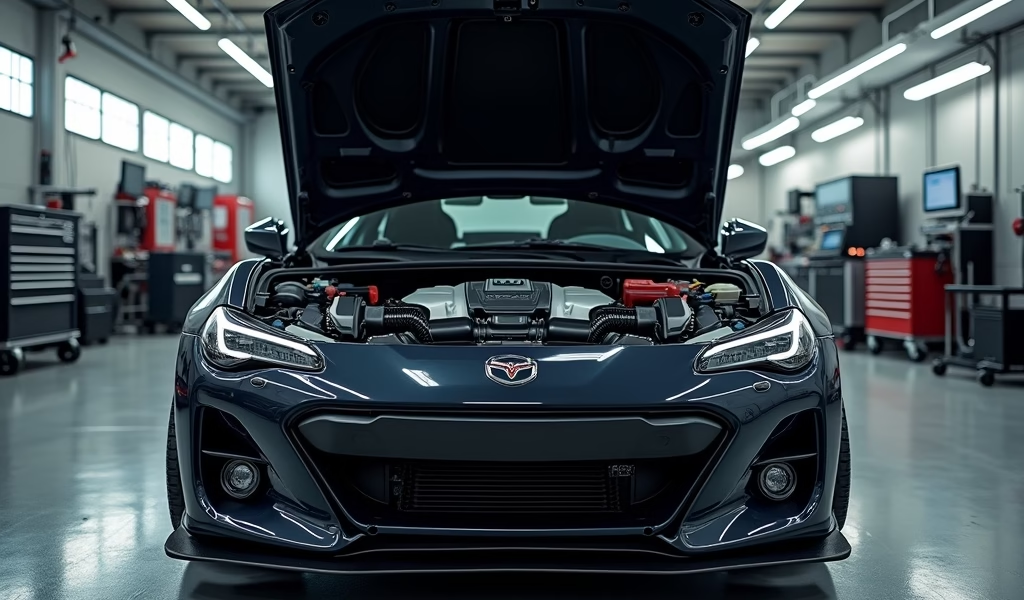
Let’s break down how these systems actually deliver fuel to your engine. The process starts in your fuel tank, where an electric pump pressurizes the fuel and sends it through lines toward the engine. Along the way, it passes through a filter that removes contaminants that could clog injectors.
Once the fuel reaches the engine area, it enters the fuel rail – essentially a distribution manifold that feeds each injector. The fuel pressure regulator maintains consistent pressure in this rail regardless of engine demand.
The real magic happens at the injectors themselves. These precision devices are essentially electrically-controlled valves with incredibly fine spray nozzles. When signaled by the Engine Control Unit (ECU), they open for milliseconds at a time, spraying a fine mist of fuel.
The Brains Behind the Operation
The ECU – your engine’s computer – determines exactly when injectors fire and for how long. It makes these split-second decisions based on input from numerous sensors monitoring:
- Engine speed (RPM)
- Engine load
- Throttle position
- Engine temperature
- Oxygen levels in the exhaust
- Intake air temperature
- Barometric pressure
Using these inputs, the ECU calculates the precise fuel needs thousands of times per minute. This constant adjustment is why modern engines can maintain the perfect air-fuel ratio (about 14.7:1 for gasoline) in virtually any driving condition.
The precision of fuel injectors is truly remarkable – they can deliver fuel in quantities as small as a few milligrams, with spray patterns engineered to optimize combustion based on each engine’s design.
Common Fuel Injection System Problems
Even the most sophisticated fuel injection systems eventually develop issues. The good news is that your vehicle will usually give you clear warning signs before a complete failure. Here are the most common symptoms that suggest your fuel injection system needs attention:
- Engine misfires or hesitation: If your vehicle stumbles during acceleration or hesitates when you press the gas, you may have fuel delivery issues.
- Hard starting: When starting takes longer than normal or requires multiple attempts, fuel pressure or injector problems might be to blame.
- Rough idle: An engine that vibrates excessively or runs unevenly at idle often points to fuel delivery problems.
- Poor fuel economy: A sudden drop in miles per gallon is a classic symptom of fuel injection issues.
- Check engine light: This warning light often illuminates for fuel system problems, especially if accompanied by any of the above symptoms.
- Failed emissions test: Fuel delivery problems frequently cause vehicles to fail emissions testing due to improper air-fuel mixtures.
Now that you know what to watch for, let’s dive into the seven most effective fixes for fuel injection problems.
Fix #1: Cleaning Clogged Fuel Injectors
Clogged injectors are probably the most common fuel injection problem I see in my shop. Over time, fuel deposits build up inside injector nozzles, restricting fuel flow and distorting spray patterns. This is especially common if you use lower-quality fuels or drive mostly short distances.
Think of your injectors like shower heads – over time, mineral deposits can clog the tiny holes and mess up the spray pattern. The same thing happens with your fuel injectors, except instead of hard water minerals, it’s fuel varnish and carbon.
DIY Injector Cleaning Options
You have two main approaches for DIY injector cleaning:
- Fuel additives: The simplest method involves adding a quality fuel system cleaner to your tank. Products containing PEA (Polyetheramine) work best for removing deposits. Pour in the recommended amount when your tank is about 1/4 full, then fill up and drive normally. This method works gradually over several tanks of fuel.
- Direct cleaning kits: For more serious clogs, you can use a pressurized cleaning kit that connects directly to your fuel rail. These kits bypass your normal fuel system and run concentrated cleaner directly through the injectors. This method requires some mechanical knowledge but provides more thorough cleaning.
For the average driver, I recommend using a quality fuel system cleaner every 3,000-5,000 miles as preventive maintenance. If you’re already experiencing symptoms, try a full-bottle treatment first before moving to more invasive methods.
When learning how to tune a car engine, understanding injector flow rates becomes critical for optimizing performance.
Fix #2: Replacing Faulty Fuel Injectors
Sometimes cleaning isn’t enough, particularly if an injector has mechanical or electrical failure. Injectors are precision components with both mechanical and electrical elements that can wear out over time. If you’ve tried cleaning and still have problems, replacement might be necessary.
Signs an Injector Needs Replacement
Here are clear indicators that cleaning won’t solve your problem:
- Leaking injector (fuel or oil residue around the injector)
- Electrical failure (no click when tested)
- Physical damage to the injector body
- Persistent misfire code on a specific cylinder
- No improvement after thorough cleaning
Replacement Process
Replacing injectors requires moderate mechanical skill. Here’s the basic process:
- Relieve fuel system pressure (usually via a Schrader valve on the fuel rail)
- Disconnect the battery to prevent electrical shorts
- Remove necessary components to access the fuel rail
- Disconnect electrical connectors from injectors
- Remove the fuel rail with injectors attached (in most vehicles)
- Remove the bad injector(s) from the rail
- Install new injector(s) with fresh O-rings lubricated with clean motor oil
- Reinstall the fuel rail and torque fasteners to specification
- Reconnect electrical connections and other components
- Reconnect battery and test for leaks before fully reassembling
When replacing injectors, use only OEM or high-quality aftermarket parts matched to your specific vehicle. Using injectors with incorrect flow rates can cause significant performance problems.
Prices vary widely by vehicle, but expect to pay $25-100 per injector plus 1-3 hours of labor if you’re having a shop do the work.
Fix #3: Fuel Pump Replacement
The fuel pump is the workhorse of your fuel injection system, and when it starts to fail, all sorts of problems develop. Modern fuel pumps are electric and typically mounted inside the fuel tank, where the fuel itself provides cooling.
A healthy pump maintains consistent pressure throughout the fuel system. When it weakens, pressure drops and your engine starves for fuel, especially under load or at higher speeds.
Diagnosing Pump Problems
Here’s how to tell if your fuel pump is failing:
- Listen for the pump. Turn your key to the “on” position without starting the engine. You should hear a brief whirring sound from the tank area as the pump primes the system. No sound could indicate pump failure.
- Check fuel pressure. Connect a fuel pressure gauge to the test port on the fuel rail. The reading should match specifications in your service manual (typically 35-60 PSI depending on the system).
- Notice performance changes. A failing pump often causes the car to run fine at low speeds but starve for fuel during acceleration or highway driving.
Replacement Considerations
Replacing a fuel pump is a more involved job because it requires accessing the fuel tank. On many vehicles, this means dropping the tank from the vehicle, which can be challenging without a lift. Some vehicles have access panels under the rear seat or in the trunk floor.
If you’re doing this job yourself, always work with a nearly empty tank to reduce weight and spillage. Follow safety precautions for handling fuel, including working in a well-ventilated area and avoiding any sparks or open flames.
A quality replacement pump typically costs $100-300, and professional installation adds another $200-400 depending on vehicle complexity.
Fix #4: Fuel Pressure Regulator Service
The fuel pressure regulator is the gatekeeper of your fuel system, ensuring consistent pressure regardless of engine demands. When it fails, your engine receives either too much or too little fuel, causing performance issues and potential damage.
Most regulators are mechanical devices that use a spring-loaded diaphragm to control pressure. They’re typically mounted on the fuel rail or sometimes inside the tank as part of the pump assembly on newer vehicles.
Symptoms of Regulator Problems
Watch for these classic signs of regulator failure:
- Fuel leaking from the vacuum line connected to the regulator
- Black smoke from the exhaust (indicating too much fuel)
- Engine running lean and overheating (too little fuel)
- Fluctuating fuel pressure readings
- Gasoline smell from the engine area
Testing and Replacement
Testing a regulator involves checking fuel pressure at idle and when the vacuum line to the regulator is disconnected. A properly functioning regulator will show increased pressure when the vacuum line is removed.
Replacement is usually straightforward on external regulators:
- Relieve fuel system pressure
- Remove the vacuum line
- Remove retaining clips or bolts
- Carefully remove the old regulator
- Install the new unit with fresh O-rings
- Reassemble and test pressure
For internal regulators that are part of the pump assembly, you’ll typically replace the entire pump unit.
Understanding the difference between petrol and diesel engines is essential when diagnosing fuel system problems, as their injection systems operate at vastly different pressures.
Fix #5: Oxygen Sensor Replacement
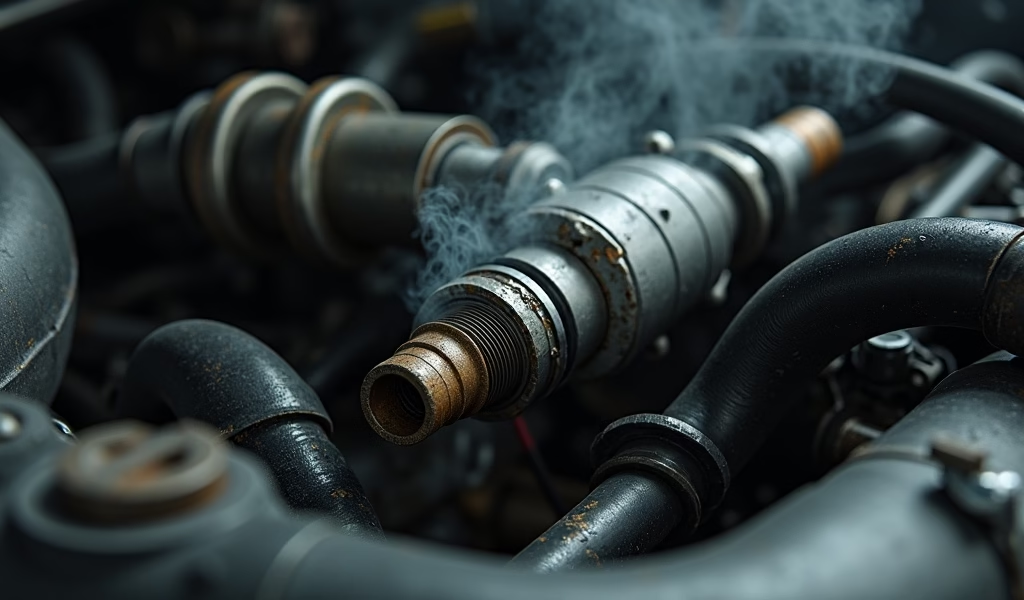
Oxygen sensors (O2 sensors) play a crucial role in your fuel injection system by monitoring exhaust gases and helping the ECU adjust fuel delivery. When these sensors fail, your engine can run too rich or too lean, damaging efficiency and performance.
Modern vehicles typically have multiple O2 sensors – at least one before the catalytic converter (upstream) and one after (downstream). The upstream sensor is most critical for fuel injection operation.
Identifying Failed O2 Sensors
Common symptoms of oxygen sensor failure include:
- Check engine light with codes P0130-P0175
- Poor fuel economy (up to 40% reduction)
- Rough running or hesitation
- Failed emissions test
- Black exhaust smoke (running rich) or popping through exhaust (running lean)
Replacement Tips
Oxygen sensors are one of the more accessible components to replace:
- Locate the sensor using your vehicle manual (typically threaded into the exhaust manifold or pipes)
- Disconnect the electrical connector
- Unscrew the old sensor (often requires a special oxygen sensor socket)
- Apply a small amount of anti-seize compound to the threads of the new sensor (unless pre-applied)
- Install the new sensor and tighten to specifications
- Reconnect the electrical connector
- Clear any check engine codes
Quality sensors typically cost $20-100 each. Always use OEM or equivalent quality sensors for proper function. Cheap sensors can cause more problems than they solve.
According to the EPA, faulty oxygen sensors are one of the leading causes of emissions test failures and decreased fuel efficiency in modern vehicles.
Fix #6: ECU Diagnostics and Reset
Sometimes the problem isn’t with any physical component but with the electronic brain controlling your fuel system. The ECU (Engine Control Unit) relies on complex algorithms and adaptive learning to optimize fuel delivery. When these algorithms get confused by sensor data or component changes, performance suffers.
When to Consider ECU Issues
ECU-related problems are likely if:
- Problems began after replacing components or disconnecting the battery
- Multiple fuel and ignition codes appear simultaneously
- Performance issues occur despite all components testing normal
- Problems come and go unpredictably
Diagnostic Approach
Start with a thorough scan of the system using an OBD-II scanner. Basic code readers start around $30, while more advanced scanners that show live data can cost $100-300. Professional-grade tools run $500+, but for most DIYers, a mid-range scanner is sufficient.
Look for patterns in the codes. Multiple misfires across cylinders often point to fuel delivery issues, while a single cylinder misfire might indicate an injector problem.
ECU Reset Procedures
If diagnostics suggest an ECU issue, try these reset procedures:
- Use your scanner to clear all codes
- If problems persist, disconnect the negative battery terminal for 15-30 minutes (this forces the ECU to reset completely)
- Reconnect the battery and start the engine
- Allow the engine to reach operating temperature at idle
- Drive the vehicle through different speed ranges to help the ECU relearn proper fuel trim values
Be aware that after a reset, your vehicle may run poorly for the first 10-15 miles as the ECU relearns its adaptive values. This is normal and should improve gradually as you drive.
The relationship between fuel injection and OBD codes provides crucial insights when troubleshooting persistent engine problems.
Fix #7: Fuel System Maintenance
The best fix is prevention. Regular maintenance keeps minor issues from becoming major problems. In my decades as a mechanic, I’ve seen many expensive repairs that could have been avoided with simple maintenance.
Essential Maintenance Tasks
Incorporate these practices into your regular vehicle care:
- Use quality fuel. Opt for Top Tier certified gasoline when possible – these fuels contain additional detergents that help keep injectors clean.
- Replace fuel filters. Change your fuel filter according to your vehicle’s maintenance schedule (typically every 30,000-50,000 miles).
- Add fuel system cleaner. Use a quality cleaner every 5,000-7,500 miles as preventive maintenance.
- Maintain your air filter. A clean air filter ensures proper air-fuel mixture.
- Address check engine lights promptly. Early intervention prevents cascading problems.
- Keep your tank at least 1/4 full. This helps keep the fuel pump cool and prevents it from picking up sediment from the bottom of the tank.
Professional Maintenance Services
Consider these professional services periodically:
- Fuel injection cleaning service every 30,000 miles (especially beneficial for direct injection systems prone to carbon buildup)
- Comprehensive fuel system inspection during major service intervals
- Fuel pressure testing if you notice any performance changes
These preventive measures typically cost $100-200 every few years but can save thousands in repairs and lost efficiency.
Conclusion
Your vehicle’s fuel injection system is an engineering marvel that transforms liquid fuel into the power that moves you down the road. When issues arise, they typically fall into one of the seven categories we’ve explored. By understanding these common problems and their fixes, you’ll be better equipped to maintain your vehicle’s performance and efficiency.
Remember that most fuel injection problems start small and grow worse over time. That slight hesitation or occasional rough idle might seem minor today, but addressing it promptly can prevent more extensive repairs down the road.
Whether you decide to tackle these repairs yourself or leave them to a professional, understanding how your fuel injection system works puts you in the driver’s seat when making maintenance decisions. Your engine (and your wallet) will thank you for the attention.
Happy motoring, and may your injectors always spray true!
Frequently Asked Questions
How do I know if my fuel injectors are clogged?
Common signs include rough idling, hesitation when accelerating, and decreased fuel economy. You might also notice misfiring or your check engine light illuminating due to combustion issues.
Can bad fuel damage my injection system?
Absolutely. Low-quality or contaminated fuel can clog injectors and damage the fuel pump. Always use reputable gas stations and consider using Top Tier fuels when possible.
How often should fuel injectors be cleaned?
For preventive maintenance, adding fuel system cleaner every 5,000-7,500 miles is sufficient. A professional cleaning service might be beneficial every 30,000 miles, especially for direct injection systems.
What’s the difference between port injection and direct injection?
Port injection sprays fuel into the intake port before the intake valve, while direct injection sprays directly into the combustion chamber. Direct injection offers better efficiency and power but is more prone to carbon buildup issues.
Will a fuel injection problem always trigger a check engine light?
Not always. Minor issues may not trigger the light immediately, especially if they’re intermittent. That’s why paying attention to subtle performance changes is important for early problem detection.