
Overview
Like a mechanical breath of fresh air, turbochargers boost engine performance by using otherwise wasted exhaust gases to compress intake air, allowing smaller engines to deliver more power while improving fuel efficiency. Understanding how these precision components work—and heeding warning signs like unusual noises or power loss—can help prevent costly repairs through proper maintenance practices such as regular oil changes, warm-up/cool-down periods, and clean filters that can extend your turbo’s life to match your vehicle’s.
Table of Contents
- What Is a Turbo?
- How a Turbocharger Works
- Benefits of Turbocharged Engines
- Common Turbo Problems
- Warning Signs of Turbo Failure
- Maintenance Tips to Extend Turbo Life
- Cost of Turbo Repair or Replacement
- Conclusion
- Frequently Asked Questions
What Is a Turbo?
Ever wondered how car manufacturers squeeze more power out of smaller engines? That’s where turbochargers come in. As a mechanic who’s rebuilt countless turbos over my 20-year career, I’ve seen firsthand how these remarkable devices transform vehicle performance while improving fuel efficiency.
A turbocharger (or “turbo” for short) is essentially an air compressor that increases the amount of air entering your engine’s combustion chamber. More air means more fuel can be added, resulting in more power from each explosion inside your cylinders. It’s like giving your engine a breath of fresh air – quite literally!
What makes turbos special is that they use what would otherwise be wasted energy. They’re powered by your engine’s exhaust gases, which would normally just exit through your tailpipe. Instead, these gases are put to work, making your vehicle more efficient and powerful at the same time.
Many modern vehicles now come equipped with turbos straight from the factory. From economical daily drivers to high-performance sports cars and hard-working diesel trucks, turbocharging technology has become increasingly common. Understanding how your turbo works is crucial for preventing those eye-watering repair bills that can come with neglect.
How a Turbocharger Works

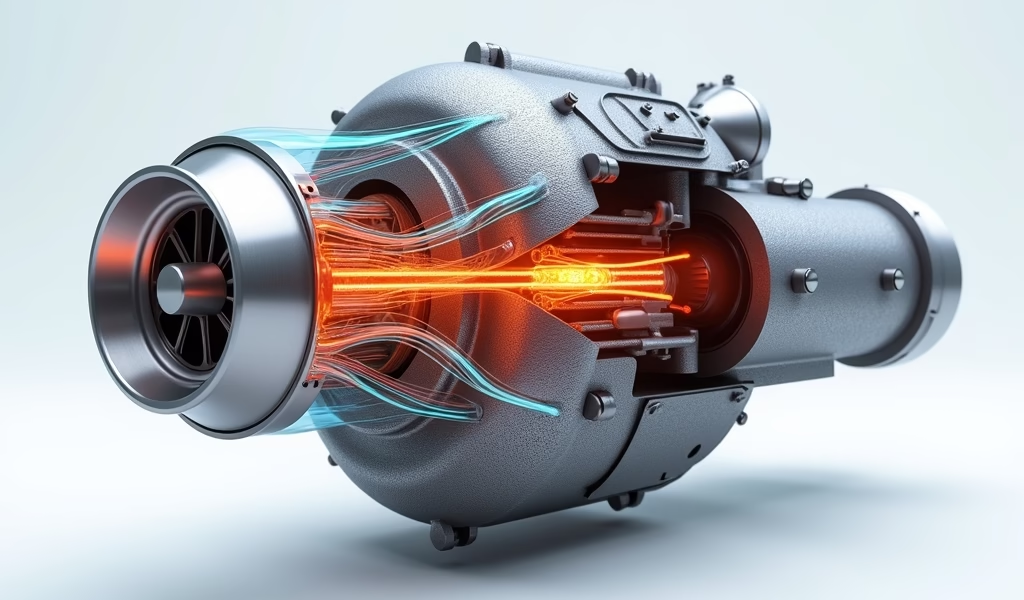
Let’s break down how this mechanical marvel actually works. At its core, a turbocharger consists of two main parts: a turbine and a compressor, connected by a shaft. These components work together in a beautifully synchronized dance to boost your engine’s performance.
Here’s what happens when you press that accelerator:
- Your engine produces hot exhaust gases that flow into the turbo’s turbine housing
- These gases spin the turbine wheel at incredibly high speeds (often 150,000+ RPM!)
- The spinning turbine drives the compressor wheel on the other end of the shared shaft
- The compressor wheel draws in ambient air, compresses it, and forces it into your engine’s intake manifold
- Your engine can now burn more fuel with this extra oxygen, producing more power
This process creates what we call “boost” – the increased air pressure that gives turbocharged engines their characteristic surge of power. Most modern turbocharged engines run between 8-15 PSI of boost pressure for everyday vehicles, though performance cars can run much higher.
One component worth mentioning is the wastegate, which regulates boost pressure by controlling how much exhaust gas flows through the turbine. Without it, your boost pressure could climb to dangerous levels that might damage your engine. Think of it as a pressure relief valve for your turbo system.
Another key component is the intercooler. When air gets compressed, it heats up – and hot air is less dense than cool air. The intercooler cools the compressed air before it enters your engine, allowing for maximum oxygen density and better performance. According to research published in Science Direct, intercooling can improve turbocharger efficiency by 10-15%.
Understanding how the turbocharger integrates with your car’s engine helps you grasp why proper maintenance is so crucial for preventing expensive breakdowns. The high speeds and temperatures these components endure make them particularly sensitive to neglect.
Benefits of Turbocharged Engines
Why do manufacturers love turbochargers so much these days? The benefits go well beyond just making your car feel peppier when you stomp on the gas. Let’s look at what makes turbocharged engines so appealing.
First and foremost is the power-to-weight ratio. A turbocharged engine can produce significantly more power than a naturally aspirated engine of the same size. This means manufacturers can use smaller, lighter engines while maintaining or even improving performance. A 2.0L turbocharged engine might produce the same power as a 3.0L naturally aspirated engine, but with less weight and better weight distribution.
Fuel efficiency is another major advantage. Smaller engines generally consume less fuel during normal driving conditions. When you need extra power, the turbo kicks in to provide it, but only when necessary. It’s like having two engines in one – an economical one for cruising and a powerful one for passing or climbing hills.
This leads to reduced emissions too. Smaller engines with turbochargers often produce fewer greenhouse gases than their larger, naturally aspirated counterparts. As emission standards become increasingly strict worldwide, turbocharging helps manufacturers meet these requirements while still delivering the performance customers expect.
Then there’s the fun factor – torque delivery in turbocharged engines is typically available at lower RPMs compared to naturally aspirated engines. This means better acceleration from a standstill and easier overtaking without having to downshift. The sensation of boost building as you accelerate creates a distinctive and enjoyable driving experience that many enthusiasts love.
Modern turbo systems have also largely eliminated the “turbo lag” that plagued earlier designs. Technological advancements like twin-scroll turbos, variable geometry turbochargers, and electric assist systems have made power delivery smoother and more immediate than ever before.
Common Turbo Problems
Despite their benefits, turbochargers can develop problems that might leave you stranded or facing costly repairs. Over my years turning wrenches, I’ve seen certain issues come up again and again. Let’s talk about what typically goes wrong with these precision components.
Oil-related problems top the list of turbo killers. Your turbo’s bearings spin at incredible speeds under extreme temperatures, and they rely entirely on a constant supply of clean oil for lubrication and cooling. Any interruption or contamination in this oil flow can lead to rapid bearing wear and eventual failure. According to Engine Builder Magazine, oil-related issues account for nearly 90% of all turbocharger failures.
Here are the most common oil-related turbo problems:
- Carbon buildup from old or poor-quality oil
- Clogged oil feed lines restricting flow to the turbo
- Oil leaks from worn seals or gaskets
- Bearing wear from delayed oil pressure at startup
Foreign object damage is another serious issue. Something as small as a tiny piece of debris can cause catastrophic damage when it enters either the turbine or compressor side of your turbo. The high-speed impact can chip or crack the delicate wheel blades, creating an imbalance that quickly escalates into complete failure.
Heat-related damage is also common, especially in performance applications or vehicles that are frequently driven hard. Excessive heat can cause the turbine housing to crack or warp, oil to coke (bake onto surfaces), and seals to deteriorate. This is why proper cool-down periods after hard driving are so important.
Boost leaks represent another common problem area. Over time, the various hoses, clamps, and gaskets in the pressurized portion of your intake system can deteriorate or loosen, allowing compressed air to escape. This reduces performance and efficiency while potentially causing your engine to run with improper air-fuel mixtures.
Warning Signs of Turbo Failure
Your turbocharger rarely fails without warning. Like most components, it usually sends distress signals before complete failure. Recognizing these early warning signs can save you from a roadside breakdown and potentially thousands in repair costs.
The most noticeable symptom is usually a significant loss of power. If your once-zippy car now feels like it’s dragging an anchor, your turbo might be struggling. This power loss is often most noticeable during acceleration or when climbing hills, precisely when your turbo should be providing that extra boost.
Unusual noises are another telltale sign. A healthy turbo makes a distinctive whooshing sound during operation, but any whining, whistling, or grinding noises should raise immediate concerns. Particularly worrying is a high-pitched whine that changes with engine RPM, which often indicates worn bearings – the precursor to complete failure.
Keep an eye on your exhaust too. Excessive blue or gray smoke from your tailpipe suggests oil is being burned in the combustion chambers, which could mean your turbo’s seals are allowing oil to leak past. Black smoke, on the other hand, might indicate your engine is running too rich, possibly due to turbo-related issues affecting the air-fuel ratio.
The check engine light is your friend here. Modern vehicles have sensors monitoring boost pressure, intake pressure, and exhaust flow. When these readings fall outside expected parameters due to turbo problems, your car’s computer will illuminate that warning light. Don’t ignore it – have the codes read promptly.
Increased oil consumption can also signal turbo problems. If you’re adding oil between changes and can’t find obvious leaks under your car, your turbocharger might be consuming it through worn seals. This is particularly common in higher-mileage turbocharged vehicles.
Finally, watch for hesitation or surging during acceleration. This uneven power delivery might feel like your car is momentarily losing and regaining power as you press the accelerator. This symptom often indicates an inconsistent boost pressure caused by a failing turbo or boost leaks.
Maintenance Tips to Extend Turbo Life
Now for the good news: with proper care, your turbocharger can last the life of your vehicle. Here’s how to keep it spinning smoothly for years to come.
Oil changes are your turbo’s best friend. I can’t stress this enough – frequent oil changes with the correct grade and quality of oil are absolutely essential. For turbocharged vehicles, I typically recommend changing oil every 5,000 miles or even sooner for vehicles driven hard. Always use the manufacturer-specified oil grade, and consider synthetic oils for their superior high-temperature stability.
Warm-up and cool-down procedures make a huge difference too. Before demanding full power from your engine, give it at least 30 seconds at idle after a cold start, allowing oil to circulate through the entire system, including your turbo. Even more important is the cool-down period: after hard driving, let your car idle for 1-2 minutes before shutting off the engine. This prevents oil from “coking” (baking onto the hot turbo bearings), a leading cause of premature failure.
Air filter maintenance is crucial since your turbo compresses whatever air comes through your intake. A dirty or compromised air filter allows contaminants to enter the turbo’s compressor wheel, potentially causing damage or accelerated wear. Check your filter regularly and replace it according to your manufacturer’s schedule – or more frequently if you drive in dusty conditions.
Keep an eye on all boost hoses and connections. Even a small boost leak can affect performance and potentially lead to improper air-fuel mixtures that stress your engine and turbo. Periodically inspect all hoses, clamps, and gaskets in the intake system for cracks, loose connections, or deterioration.
Avoid lugging the engine. This means not trying to accelerate in too high a gear at low RPM. The strain this puts on both your engine and turbo can accelerate wear. Instead, downshift when needed to keep your engine in its power band, especially when climbing hills or carrying heavy loads.
Consider using a turbo timer if you frequently drive your vehicle hard. These devices keep your engine running for a predetermined time after you remove the key, ensuring proper cool-down. They’re especially popular among performance enthusiasts and can be a worthwhile investment for protecting your turbocharger.
Cost of Turbo Repair or Replacement
Let’s talk about what you’re probably most concerned about – the cost. Turbocharger repairs or replacements aren’t cheap, which is why preventative maintenance is so important.
The cost to replace a turbocharger typically ranges from $1,000 to $3,500, depending on your vehicle make and model. Luxury and performance vehicles tend to be at the higher end of that spectrum. This estimate includes both parts and labor, as turbocharger replacement is a labor-intensive job requiring specialized knowledge.
Here’s a breakdown of what contributes to that cost:
- New OEM turbocharger: $600-$2,000
- Labor: $400-$1,500 (typically 4-10 hours)
- Gaskets, oil, and peripheral components: $100-$300
You might find cheaper options through remanufactured turbos, which can cost 30-50% less than new units. Just be sure to use reputable remanufacturers who completely rebuild the unit with new bearings, seals, and properly balanced wheels. A properly remanufactured turbo can provide reliability comparable to a new unit at a more affordable price point.
If you’re lucky, sometimes only certain components of your turbo system need repair rather than complete replacement. For instance, replacing just a wastegate actuator might cost $300-$600, while fixing boost leaks in the intercooler system might run $200-$500.
The most expensive scenario is when a catastrophically failing turbo damages other engine components. Metal fragments from a disintegrating turbo can be sucked into your engine, potentially requiring a complete engine rebuild. This worst-case scenario can easily exceed $5,000-$7,000.
This is why heeding those early warning signs is so crucial. Catching turbo issues early might allow for a rebuild rather than replacement, potentially saving you significant money. And following proper maintenance routines can help you avoid these costs entirely by extending your turbo’s life to match that of your vehicle.
Conclusion
Your vehicle’s turbocharger is a remarkable feat of engineering that delivers impressive performance benefits while helping improve fuel efficiency. Understanding how it works isn’t just mechanical trivia – it’s practical knowledge that can save you from expensive repairs and keep your vehicle running at its best.
Remember that most turbo failures don’t happen overnight. They’re usually the result of gradual wear accelerated by poor maintenance habits or driving practices. By following the maintenance tips we’ve discussed – proper oil change intervals, warm-up and cool-down periods, clean air filters, and avoiding engine lugging – you can significantly extend your turbocharger’s lifespan.
Pay attention to the warning signs we’ve covered. That unusual noise, performance change, or wisps of smoke could be your turbo’s cry for help before catastrophic failure. Addressing these symptoms early typically means less expensive repairs and less inconvenience.
Whether you’re driving a turbocharged economy car, diesel truck, or high-performance sports car, these principles apply universally. Your turbocharger works hard to enhance your vehicle’s capabilities – return the favor by giving it the care it deserves.
With proper attention and maintenance, there’s no reason your turbocharger can’t provide reliable service throughout your vehicle’s lifetime. That’s not just good for your wallet – it’s good for your peace of mind on the road.
Frequently Asked Questions
How long do turbochargers typically last?
With proper maintenance, a turbocharger can last the lifetime of the vehicle (150,000+ miles). Regular oil changes and proper driving habits are the keys to maximum turbo longevity.
Can I drive with a failing turbocharger?
While you might be able to drive with reduced power, continuing to operate with a failing turbocharger risks catastrophic damage. Metal fragments from a failing turbo can enter your engine and cause extensive damage.
Are turbocharged engines less reliable than non-turbo engines?
Modern turbocharged engines can be just as reliable as naturally aspirated engines when properly maintained. They simply require more diligent maintenance, particularly regarding oil changes and driving habits.
Why does my car have a turbo lag?
Turbo lag occurs because the turbine needs time to spool up to speed before producing significant boost. Modern turbochargers have reduced this effect considerably through technologies like twin-scroll designs and variable geometry turbos.
Do turbocharged engines require special oil?
Yes, most turbocharged engines require specific oil grades with higher temperature stability. Always follow manufacturer recommendations for oil type and change intervals.