

Overview
Catalytic converters transform harmful engine exhaust into less toxic substances while directly impacting fuel economy through optimal back-pressure and engine computer feedback. When functioning properly, they can improve MPG by 10-15%, but require regular maintenance and prompt attention to warning signs like decreased fuel economy, check engine lights, and unusual smells or sounds.
Table of Contents
- Understanding Catalytic Converters: The Basics
- How Catalytic Converters Actually Work
- The Surprising Connection to Fuel Economy
- Warning Signs Your Converter Is Hurting MPG
- Maintenance Tips for Better Performance
- Upgrading Options: Is It Worth It?
- Conclusion
Understanding Catalytic Converters: The Basics
That metal canister tucked underneath your car? It’s not just another emissions part – it’s actually one of the most important components in your vehicle’s exhaust system. As a mechanic who’s worked on thousands of these devices, I can tell you that catalytic converters are remarkable pieces of engineering that deserve more appreciation.
Simply put, a catalytic converter is an emissions control device that transforms harmful engine exhaust into less toxic substances before they exit your tailpipe. These devices became mandatory in the U.S. in 1975 following the Clean Air Act, and they’ve been quietly cleaning our air ever since.
What makes them special is their dual role – they not only protect our environment but can also play a significant role in your vehicle’s fuel efficiency. That’s right – a properly functioning catalytic converter can actually help boost your MPG.
Located between the engine and muffler, the converter resembles a small muffler with inlet and outlet pipes. Inside, however, is where the real magic happens. The interior contains a ceramic honeycomb structure coated with precious metals like platinum, palladium, and rhodium. These metals act as catalysts – substances that speed up chemical reactions without being consumed themselves.
Think of your catalytic converter as a chemical processing plant for exhaust gases. As these gases pass through, the precious metals facilitate reactions that convert harmful compounds into less damaging ones. It’s like having a miniature environmental protection agency working under your car 24/7.
How Catalytic Converters Actually Work
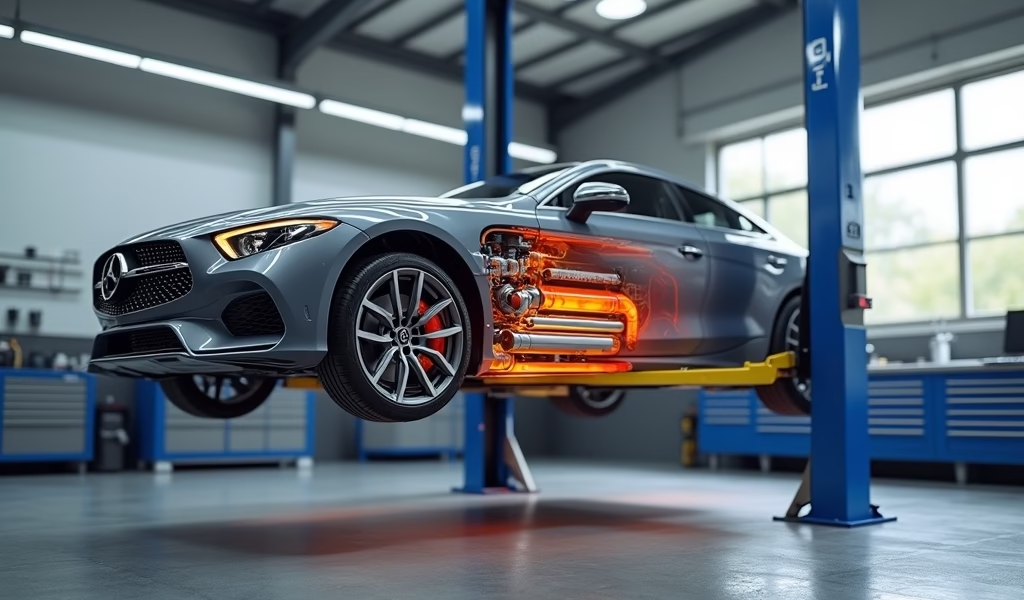
Let’s get into the nitty-gritty of how these devices actually work. When your engine burns fuel, it produces three main pollutants: carbon monoxide (a deadly gas), nitrogen oxides (contributors to smog and acid rain), and hydrocarbons (unburned fuel).
Modern vehicles use what we call “three-way” catalytic converters because they handle all three pollutants. The conversion process is fascinating:
- Carbon monoxide (CO) is converted to carbon dioxide (CO₂)
- Hydrocarbons (HC) are transformed into carbon dioxide and water
- Nitrogen oxides (NOx) are broken down into nitrogen and oxygen
The catalytic process happens in two stages within most converters. The first stage is the reduction catalyst, where nitrogen oxides are converted to nitrogen and oxygen. The second stage is the oxidation catalyst, which converts carbon monoxide and hydrocarbons into carbon dioxide and water.
For these reactions to occur effectively, the converter needs to reach its “light-off temperature” – typically around 400-600°F. That’s why catalytic converters don’t work well when your engine is cold, and why short trips can be problematic for emissions.
The honeycomb design inside the converter isn’t random – it maximizes surface area for exhaust contact while minimizing restriction. According to a study by the Environmental Protection Agency, modern catalytic converters can reduce harmful emissions by up to 90% when functioning properly.
The precise interactions happening inside your converter are controlled by your vehicle’s engine management system, which uses oxygen sensors before and after the converter to monitor its efficiency. This feedback loop helps optimize the air-fuel ratio for both performance and emissions control.
The Surprising Connection to Fuel Economy
Now let’s talk about what really gets people’s attention – fuel economy. Many drivers don’t realize that their catalytic converter directly impacts their MPG. Here’s how:
A properly functioning converter creates an optimal level of back-pressure in your exhaust system. Think of back-pressure like breathing through a straw – too much resistance makes your engine work harder (burning more fuel), while too little can actually reduce efficiency.
Your engine’s computer uses oxygen sensor data from before and after the converter to make fuel delivery decisions. When a converter is failing, these sensors can report misleading information, causing your engine to run “rich” (using excess fuel). I’ve seen fuel economy improve by 10-15% simply by replacing a failing converter.
Contrary to popular belief, removing your catalytic converter rarely improves fuel economy. Modern engines are designed to work with catalytic converters. Without them, the engine management system receives incorrect feedback and typically compensates by adding more fuel than necessary.
The honeycomb structure inside your converter is engineered to provide just enough resistance without restricting flow. Research from the U.S. Department of Energy confirms that a properly maintained emissions system is essential for optimal fuel economy.
Temperature also plays a crucial role. A converter that’s struggling to reach operating temperature (often due to excessive carbon buildup) won’t process exhaust gases efficiently. This inefficiency creates a cascade effect that ultimately reduces MPG. I’ve seen this most commonly in vehicles primarily driven on short trips.
Warning Signs Your Converter Is Hurting MPG
After working on thousands of vehicles, I’ve identified several telltale signs that your catalytic converter might be dragging down your fuel economy. Pay attention to these warning signals:
- A noticeable decrease in fuel economy (keep a log of your MPG to track changes)
- Sluggish acceleration or reduced engine performance
- Check engine light illumination (particularly codes P0420 or P0430)
- A rotten egg smell from your exhaust (indicates poor conversion of sulfur compounds)
- Excessive heat under the vehicle (a clogged converter can overheat)
- Rattling sounds from underneath your vehicle (could be damaged internal components)
If your vehicle exhibits multiple symptoms, it’s time for a professional diagnosis. Modern diagnostic equipment can measure the pressure differential across your converter and analyze the efficiency of the catalytic process.
One simple test I often perform is temperature measurement. A properly functioning converter should be noticeably hotter than the exhaust pipe leading to it. If there’s minimal temperature difference, the catalyst may no longer be active.
Sometimes, converter issues stem from other problems. Engine misfires, rich fuel mixtures, or oil consumption can all damage your catalytic converter. Treating only the converter without addressing the root cause is like putting a bandage on a broken arm – it might look better temporarily, but the underlying issue remains.
Remember that converter issues typically develop gradually. Your fuel economy might decline so slowly that you don’t notice until it’s significantly impacted. That’s why regular maintenance checks are crucial for catching problems early.
Maintenance Tips for Better Performance
Keeping your catalytic converter in top shape doesn’t require specialized knowledge – just some consistent attention to your vehicle’s overall health. Here are my top recommendations after decades in the shop:
First, address engine performance issues promptly. Misfires, rich fuel conditions, and ignition problems all send unburned fuel into your converter, which can cause overheating and damage. When troubleshooting engine problems early, you’re also protecting your converter.
Make sure to follow your vehicle’s maintenance schedule religiously. Regular oil changes prevent contamination of your exhaust system with oil ash, which can coat the catalyst and reduce its effectiveness. Use the recommended oil type and quality for your specific vehicle.
Your driving habits matter too. Short trips prevent your converter from reaching operating temperature, which can lead to carbon buildup. When possible, combine errands into one longer trip rather than several short ones. Once a week, try to include at least 20 minutes of highway driving to help clear out your system.
Be mindful of what goes into your tank. Use the fuel grade recommended for your vehicle, and consider using a quality fuel system cleaner every 3,000-5,000 miles. These cleaners can help remove deposits throughout your fuel and exhaust system.
Pay attention to warning signs. If your check engine light illuminates, have it diagnosed promptly. Many converter issues begin as minor problems that, if caught early, can be remedied before expensive damage occurs.
Finally, be gentle during cold starts. Allow your engine (and converter) to warm up naturally rather than revving the engine, which can send unburned fuel into a cold converter. Modern engines warm up more efficiently when driven gently rather than idling.
Upgrading Options: Is It Worth It?
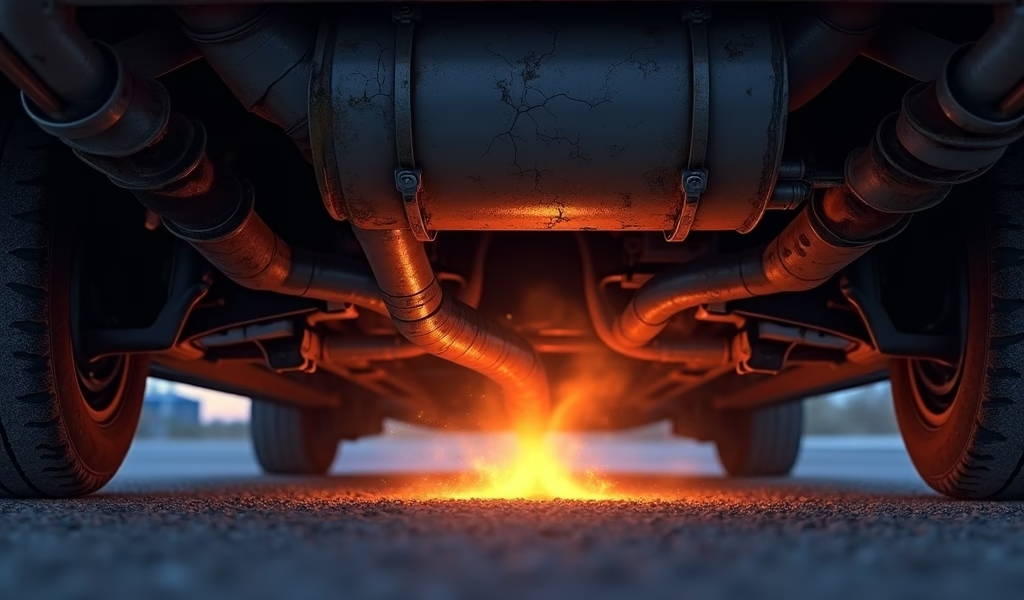
When it comes to replacement or upgrades, you have several options. Let’s break them down from my perspective as someone who’s installed hundreds of different types.
OEM (Original Equipment Manufacturer) converters are typically the most expensive but offer the best compatibility with your vehicle’s systems. They’re designed specifically for your make and model, ensuring proper fit and function. For most drivers, this is the safest choice.
Aftermarket direct-fit converters cost less but quality varies dramatically. A quality aftermarket converter from a reputable brand like Walker, Magnaflow, or Eastern can perform nearly as well as OEM at a lower price point. Beware of ultra-cheap options – they often use minimal catalyst material and fail prematurely.
High-flow catalytic converters are designed to reduce exhaust restriction while maintaining emissions compliance. These can improve performance and fuel economy slightly (typically 1-3%), but the benefits are most noticeable in modified or high-performance vehicles. For the average driver, the cost-benefit ratio rarely justifies the premium price.
Whatever option you choose, ensure it’s legal. Federal law prohibits installing converters that don’t meet EPA requirements, and many states have additional regulations. California and states following CARB standards are particularly strict – only CARB-certified converters are legal in these areas.
Installation matters too. A properly installed converter with new gaskets and hardware will perform better and last longer than one hastily bolted in. If you’re moderately handy, converter replacement on many vehicles is achievable as a DIY project, but specialized tools may be required for removing corroded bolts or cutting old pipes.
From a cost perspective, expect to pay $200-$500 for a quality aftermarket converter plus installation, or $800-$2,500 for an OEM unit installed at a dealership. While not cheap, a properly functioning converter can pay for itself through improved fuel economy over time.
Conclusion
Your catalytic converter might be hidden underneath your vehicle, but its impact on both your fuel economy and our environment is substantial. Understanding how this component works gives you the knowledge to maintain it properly and recognize when issues arise.
Remember that a healthy converter is part of a healthy vehicle system. Regular maintenance, prompt attention to warning signs, and appropriate driving habits all contribute to keeping your converter functioning optimally for maximum MPG.
Whether you’re considering a replacement due to damage, age, or performance concerns, choose quality components that comply with legal requirements. The right converter, properly installed and maintained, can serve your vehicle for many years and many thousands of miles.
By caring for this critical component, you’re not just saving money at the pump – you’re also contributing to cleaner air for everyone. That’s something we can all feel good about when we turn the key.
Frequently Asked Questions
How long should a catalytic converter typically last?
Most catalytic converters are designed to last the lifetime of the vehicle, typically 100,000+ miles. Proper maintenance and avoiding engine issues that cause converter damage can help ensure maximum longevity.
Can a bad catalytic converter cause engine damage?
Yes, a severely clogged converter can create excessive backpressure that strains the engine. This restriction can lead to overheating, reduced power, and potentially serious engine damage if left unaddressed.
Is it legal to drive without a catalytic converter?
No, federal law requires all vehicles originally equipped with catalytic converters to maintain them in working order. Removing a catalytic converter is illegal in all 50 states and can result in significant fines.
Why are catalytic converters so expensive?
The high cost comes from the precious metals inside them, primarily platinum, palladium, and rhodium. These metals serve as catalysts for the chemical reactions and can be worth more than gold by weight.
Can I unclog my catalytic converter without replacing it?
In some cases, using a catalytic converter cleaner or performing an “Italian tune-up” (driving at highway speeds to heat up the exhaust system) may help with minor clogs. However, severely damaged or melted converters will need replacement.