
Overview
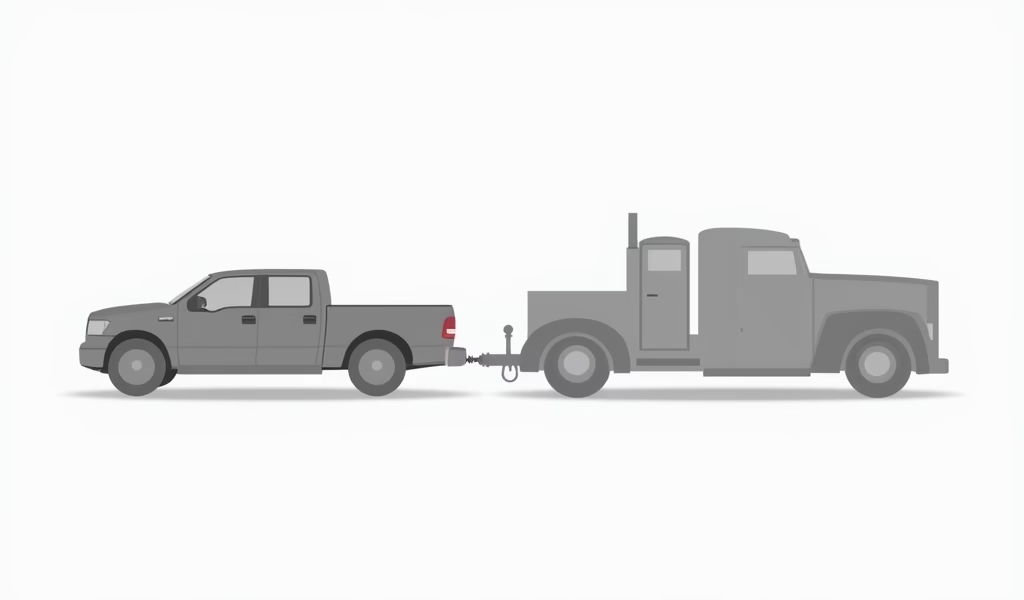
Proper gooseneck hitch installation is no ball game – placing it 3-4 inches ahead of your truck’s rear axle is crucial for safety and performance, with incorrect placement potentially turning your trailer into an unguided missile at highway speeds. The article outlines six key tips for optimal placement: positioning over the rear axle, ensuring adequate clearance, secure frame mounting, proper weight distribution, regular maintenance, and considering professional installation to avoid common mistakes.
Table of Contents
- Understanding Gooseneck Hitch Basics
- Importance of Proper Gooseneck Ball Placement
- Tip 1: Proper Positioning Over the Rear Axle
- Tip 2: Ensuring Adequate Clearance
- Tip 3: Secure Mounting to the Truck Frame
- Tip 4: Weight Distribution Considerations
- Tip 5: Regular Inspection and Maintenance
- Tip 6: Professional Installation Benefits
- Common Mistakes to Avoid
- Conclusion
- Frequently Asked Questions
Understanding Gooseneck Hitch Basics
When I first started working on heavy-duty trucks and trailers nearly 20 years ago, I quickly learned that gooseneck hitches are not your average towing setup. A properly installed gooseneck ball can make the difference between a smooth haul and a dangerous disaster on the road.
Gooseneck hitches get their name from their distinctive curved neck that extends from the trailer and connects to a ball mounted in the bed of your pickup truck. Unlike conventional bumper-pull hitches, gooseneck hitches place the connection point directly over or slightly ahead of your truck’s rear axle. This design dramatically increases towing capacity and improves stability, which is why they’re favored for hauling heavy horse trailers, large recreational vehicles, and industrial equipment.
The core component—the gooseneck ball—typically measures 2-5/16 inches in diameter and mounts directly to your truck’s frame through the bed. This setup creates a strong, stable connection point that can handle significant weight and stress during towing operations.
But here’s what many first-timers don’t realize: the ball’s placement isn’t arbitrary. Its position in your truck bed affects everything from your vehicle’s handling characteristics to the safety of your precious cargo. I’ve seen plenty of avoidable accidents caused by improperly placed gooseneck balls, which is why getting this right from the beginning matters so much.
Importance of Proper Gooseneck Ball Placement
The positioning of your gooseneck ball isn’t just a matter of convenience—it’s critical for safety, performance, and the longevity of both your truck and trailer. Let me share a quick story that drives this point home.
A few years back, a client came to my shop after experiencing severe handling problems with his new horse trailer. He’d installed the gooseneck ball himself, placing it too far forward in the bed because he thought it would provide better turning clearance. On his first long haul, he noticed his truck’s front end feeling light at highway speeds, making steering dangerous and unpredictable. When I examined his setup, the improperly placed ball had created dangerous weight distribution issues that could have led to a serious accident.
Proper ball placement ensures weight is distributed correctly between your truck’s axles. When positioned correctly, about 15-25% of the trailer’s weight should rest on the ball, with the remainder supported by the trailer’s axles. This weight distribution is essential for maintaining steering control and braking efficiency.
Additionally, correct placement prevents unnecessary stress on your truck’s frame and suspension components. A misplaced ball can create torque and leverage issues that might slowly damage your vehicle’s structure over time—damage that often isn’t covered by warranties.
Perhaps most importantly, proper placement ensures stability during emergency maneuvers. If you’ve ever had to swerve or brake suddenly while towing, you know how quickly a trailer can become unmanageable. Correct ball placement helps maintain predictable handling characteristics even in challenging situations.
Tip 1: Proper Positioning Over the Rear Axle
The golden rule of gooseneck ball placement is positioning it over or slightly ahead of your truck’s rear axle. This isn’t just conventional wisdom—it’s rooted in physics and vehicle dynamics.
When I teach installation workshops, I always demonstrate this concept with a simple visual aid: a yardstick balanced on my finger. When weight is added directly above the balance point (representing your rear axle), the stick remains stable. Move that weight forward or backward, and the balance shifts dramatically. Your truck responds the same way when towing heavy loads.
For most standard pickup trucks, the ideal position is 3-4 inches ahead of the centerline of the rear axle. This specific positioning accomplishes several things:
- It maintains proper weight distribution between front and rear axles
- It ensures your truck’s front end doesn’t become too light at highway speeds
- It provides optimal turning characteristics when maneuvering
- It reduces stress on your truck’s frame and suspension components
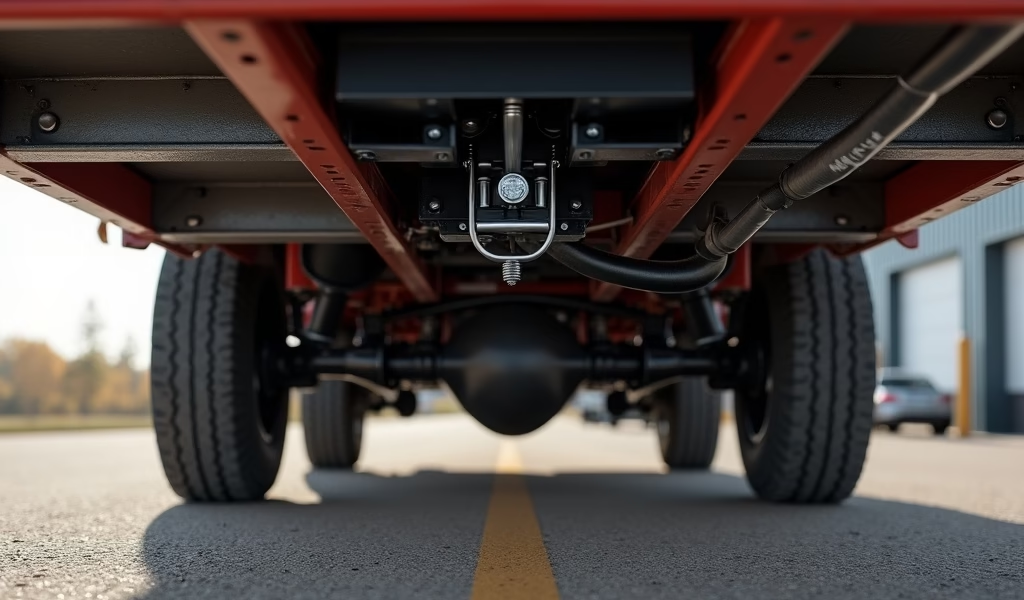
To locate your rear axle, you can usually look for the center of the rear wheels. In most cases, you’ll need to get under the truck to measure precisely from the axle centerline forward to determine your ball placement. If you’re uncertain, reputable hitch manufacturers provide detailed guidelines for different truck models.
One important note: short-bed trucks (typically under 6.5 feet) require special consideration. In these cases, you might need to use a sliding hitch mechanism that allows the ball to move backward during sharp turns to prevent the trailer from contacting your cab.
Tip 2: Ensuring Adequate Clearance
Clearance issues can quickly turn a smooth towing experience into a nightmare of damaged equipment and frustrated adjustments. I learned this lesson the hard way during my early days as a mechanic when I installed a gooseneck hitch without accounting for all the necessary clearances. My customer returned the next day with a dented truck bed rail after his first tight turn.
When positioning your gooseneck ball, you need to consider three critical clearance factors:
- Trailer-to-cab clearance during turns
- Ball-to-bed sides clearance for installation and operation
- Underbed clearance for frame brackets and supporting hardware
For trailer-to-cab clearance, the industry standard recommendation is a minimum of 6 inches between the trailer and your truck’s cab during the sharpest possible turn. This prevents dangerous contact that could damage both your trailer and truck.
Ball-to-bed sides clearance is equally important. Most installations require at least 5-6 inches of clearance from the ball to any bed rails or sides. This ensures you can operate the coupling mechanism without interference and provides room for the natural movement that occurs during towing.
Underbed clearance is often overlooked but crucial. Your truck’s undercarriage houses fuel lines, brake lines, exhaust components, and wiring harnesses. The mounting brackets and hardware for your gooseneck hitch must not interfere with these vital systems. Always perform a thorough inspection beneath your truck before drilling any holes or mounting any hardware.
For trucks with bed liners, special considerations apply. You’ll likely need to cut clearance holes in the liner to accommodate the ball and safety chain anchors. Some specialized hitch designs allow the ball to be removed when not in use, leaving a flat bed surface—something worth considering if you use your truck for purposes beyond towing.
Tip 3: Secure Mounting to the Truck Frame
A properly placed gooseneck ball is only as good as its attachment to your truck’s frame. This connection must withstand tremendous forces during acceleration, braking, and turns—not to mention the constant vibration and stress of highway travel.
The frame mounting system consists of several key components:
- Cross members that span between the frame rails
- Mounting brackets that attach to your truck’s frame
- High-grade hardware (bolts, nuts, and washers)
- The ball’s mounting plate or under-bed support structure
Never attempt to mount a gooseneck ball directly to your truck bed without proper frame support. The sheet metal of your bed isn’t designed to handle towing forces and will fail catastrophically under load. Instead, the mounting system must transfer forces directly to your truck’s frame rails—the backbone of your vehicle.
When installing mounting brackets, use only the hardware specified by the manufacturer. These are typically grade 8 bolts with appropriate lock washers or locking nuts. Follow torque specifications precisely—overtightening can be just as dangerous as under-tightening.
Some modern trucks have factory-prepared mounting points for gooseneck hitches, which simplifies installation considerably. If your truck has these provisions, use them rather than creating custom mounting solutions. Manufacturers have engineered these points to integrate seamlessly with your truck’s load-bearing structure.
For trucks without factory provisions, quality aftermarket hitches include detailed instructions for creating proper mounting points. These typically involve drilling precisely placed holes in your bed and frame for the mounting hardware. Never take shortcuts with these procedures—they’re designed to ensure your hitch can safely handle its rated capacity.
Tip 4: Weight Distribution Considerations
Understanding weight distribution is crucial for safe and effective towing with a gooseneck setup. This isn’t just theory—I’ve helped countless customers resolve handling problems that stemmed directly from weight distribution issues.
The key measurement in gooseneck towing is tongue weight—the downward force exerted by the trailer on the gooseneck ball. For optimal handling, this should typically be 20-25% of the trailer’s total loaded weight. Too little tongue weight creates a dangerous condition where the trailer may sway or fishtail at highway speeds. Too much tongue weight can overload your truck’s rear suspension, causing steering and braking problems.
Your gooseneck ball placement directly affects this weight distribution. Positioning the ball correctly helps ensure proper tongue weight percentage. Here’s how to check if your distribution is correct:
- Your truck should settle slightly at the rear when connected to a loaded trailer
- The front end shouldn’t feel light or unresponsive when steering
- The truck and trailer should remain level (or with a slight nose-down attitude)
If you’re hauling particularly heavy loads, consider additional suspension support such as airbags or helper springs. These don’t increase your truck’s towing capacity but help maintain proper ride height and improve handling characteristics.
Remember that your truck has manufacturer-specified limits for both total towing capacity and maximum payload (which includes tongue weight). Never exceed these ratings, regardless of how well your gooseneck is mounted. Your truck’s braking system, cooling system, and drivetrain are engineered for specific maximum loads.
Tip 5: Regular Inspection and Maintenance
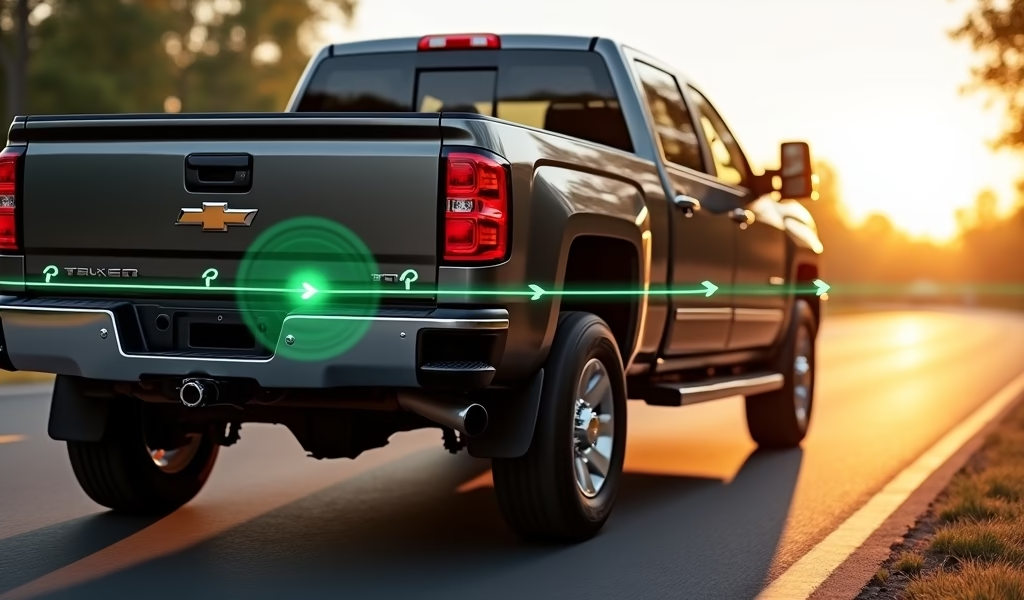
Even perfectly placed gooseneck balls require regular attention to ensure they remain safe and functional. I’ve developed a habit of quickly inspecting my own towing setup before every trip, which has helped me catch potential issues before they became roadside emergencies.
Establish a regular inspection routine that includes:
- Checking mounting bolts for tightness (follow manufacturer’s torque specifications)
- Inspecting the ball surface for wear, scoring, or deformation
- Examining the ball neck for cracks or bending
- Verifying that safety chain attachments are secure and undamaged
- Ensuring any removable components lock properly in place
Pay particular attention to the ball itself. Over time, the constant friction between the ball and coupler can cause wear that affects the security of the connection. Most manufacturers recommend replacing the ball if wear exceeds 1/8 inch from the original diameter or if any flat spots develop on the surface.
Lubrication is another critical maintenance aspect. The ball should be lightly lubricated according to the manufacturer’s recommendations—typically with a thin layer of automotive grease. This reduces wear and ensures smooth coupling and uncoupling. However, avoid over-greasing, as excess lubricant can collect dirt and potentially become abrasive.
After periods of heavy use or exposure to harsh conditions (like salt water or road salt), perform a more thorough inspection of the entire mounting system. Look for signs of corrosion, particularly at connection points between different metals where galvanic corrosion can occur.
Finally, if you notice any unusual handling characteristics while towing—such as new vibrations, wandering, or instability—stop and inspect your gooseneck setup immediately. These symptoms often indicate loosening hardware or developing structural issues that should be addressed before continuing your journey.
Tip 6: Professional Installation Benefits
While many truck owners enjoy DIY projects, gooseneck hitch installation is one area where professional help often proves invaluable. After supervising hundreds of installations throughout my career, I’ve seen firsthand how professional expertise prevents common mistakes.
Professional installers bring several advantages to the process:
- Specialized tools designed specifically for precise installation
- Experience with your specific truck model and its unique requirements
- Knowledge of potential interference issues with undercarriage components
- Proper torque application for all mounting hardware
- Post-installation testing and verification
Many quality installations also come with valuable warranties that cover both parts and labor. This protection can prove invaluable if you encounter issues down the road.
Additionally, professional installers can provide guidance on trailer compatibility, weight ratings, and proper towing techniques. They often spot potential problems that might not be obvious to someone installing a gooseneck hitch for the first time.
If you do decide to install your gooseneck hitch yourself, consider having a professional inspect your work before towing. This second set of experienced eyes can catch critical issues before they lead to problems on the road.
For those determined to handle their own installation, manufacturer-specific kits that include detailed instructions, all necessary hardware, and access to technical support are the best option. These kits are designed for your exact truck model and take the guesswork out of component selection and placement.
Common Mistakes to Avoid
Throughout my years working with heavy-duty trucks and towing equipment, I’ve witnessed several recurring mistakes that compromise safety and performance. Being aware of these common pitfalls can help you avoid them:
The first and most dangerous mistake is mounting the gooseneck ball directly to the bed without proper frame support. Your truck’s bed is designed to hold cargo, not support several tons of towing force. Proper mounting brackets that transfer forces directly to the frame are absolutely essential.
Another frequent error is incorrect positioning relative to the rear axle. Placing the ball too far forward overloads your truck’s rear suspension and creates dangerous weight distribution. Conversely, placing it too far back can cause trailer instability and compromised steering control.
I’ve also seen many people neglect clearance considerations, especially in short-bed trucks. This leads to trailer-to-cab contact during turns, which can cause significant damage to both vehicles. Always verify adequate turning clearance before hitting the road.
Using incorrect or low-quality hardware is another common mistake. The bolts, nuts, and washers that secure your gooseneck mounting system must be high-grade, properly sized, and torqued to specification. This isn’t the place to cut corners or substitute “similar” parts.
Finally, many truck owners fail to consider their vehicle’s actual towing capacity when selecting a gooseneck hitch. Just because you can physically mount a 30,000-pound rated hitch doesn’t mean your truck can safely handle that weight. Always work within your vehicle’s manufacturer-specified limitations.
Conclusion
Proper gooseneck ball placement is foundational to safe, effective towing. By positioning the ball correctly over the rear axle, ensuring adequate clearance, mounting securely to the frame, considering weight distribution, maintaining your equipment regularly, and seeking professional installation when needed, you’ll create a towing setup that performs reliably for years to come.
Remember that the investment you make in correct installation and placement pays dividends in safety, vehicle longevity, and peace of mind. Whether you’re hauling horses, heavy equipment, or recreational trailers, these six proven tips will help you achieve perfect towing performance.
As a final thought from someone who’s spent decades working with towing equipment: never rush the installation process or take shortcuts with safety components. The few hours you spend ensuring everything is perfectly positioned and secured might just prevent a catastrophic failure down the road. Happy (and safe) towing!
Frequently Asked Questions
Where exactly should a gooseneck ball be placed in the truck bed?
The gooseneck ball should be positioned directly over or 3-4 inches ahead of the rear axle centerline. This placement ensures optimal weight distribution and handling characteristics.
How much clearance do I need between the trailer and truck cab?
Maintain a minimum of 6 inches clearance between your trailer and truck cab during the tightest turns. This prevents damage to both vehicles during maneuvering.
Can I install a gooseneck hitch myself or should I hire a professional?
While DIY installation is possible with the right tools and knowledge, professional installation ensures proper placement and secure mounting. Consider professional help if you’re uncertain about any aspect of the installation.
How often should I inspect my gooseneck hitch?
Perform a quick visual inspection before each towing trip and a thorough inspection at least seasonally. Look for loose hardware, wear on the ball, and any signs of structural issues.
What’s the difference between a gooseneck hitch and a fifth-wheel hitch?
Gooseneck hitches use a ball mounted in the truck bed, while fifth-wheel hitches use a kingpin and plate system similar to semi-trucks. Goosenecks typically offer more bed space when not in use and slightly different towing characteristics.