
Overview
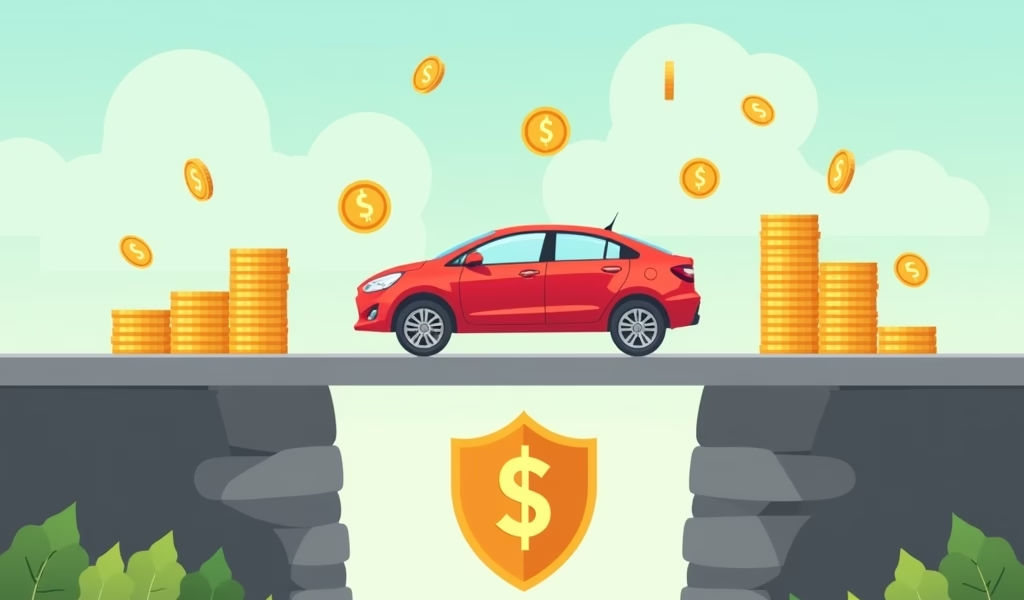
When your new car depreciates faster than you pay down your loan, gap insurance steps in to cover the difference if your vehicle is totaled or stolen—potentially saving you thousands in out-of-pocket expenses. While dealerships typically charge $500-$700 for this protection, savvy consumers can secure identical coverage through their auto insurer for just $20-$40 annually, making it an affordable safeguard during the first few vulnerable years of vehicle ownership.
Table of Contents
- Understanding Gap Insurance Protection
- Why You Need Gap Insurance: The Reality of Depreciation
- How Gap Insurance Works: Real-World Protection
- When to Buy Gap Insurance: Smart Timing Decisions
- Cost Analysis: Is Gap Insurance Worth It?
- Alternatives to Traditional Gap Insurance
- Smart Buying Tips: Getting the Best Gap Coverage
- Common Misconceptions About Gap Insurance
- Conclusion: Protecting Your Financial Future
- Frequently Asked Questions
Understanding Gap Insurance Protection
Gap insurance protection serves as your financial safety net when the unexpected happens to your vehicle. As someone who’s spent over two decades in the automotive financing world, I’ve seen too many drivers left owing thousands on vehicles they no longer own. That’s the “gap” we’re talking about – the difference between what you owe on your car loan and what your insurance pays if your vehicle is totaled or stolen.
Think of it this way: you drive your brand-new $30,000 SUV off the lot, and just like that, it’s worth about $27,000 (thanks to immediate depreciation). Fast-forward six months, and your SUV gets totaled in an accident. Your standard insurance coverage might pay the current market value of $25,000, but you still owe $28,000 on your loan. Without gap insurance protection, that $3,000 difference comes straight from your pocket – on top of needing to finance a replacement vehicle.
This financial protection isn’t for everyone, but it’s particularly valuable for certain car-buying scenarios. If you’ve made a small down payment (less than 20%), chosen a long-term loan (60+ months), leased your vehicle, or purchased a model known for rapid depreciation, gap insurance could save you from a serious financial headache down the road.
Why You Need Gap Insurance: The Reality of Depreciation
Vehicles are notorious for their rapid depreciation – they’re investments that begin losing value the moment you drive off the dealership lot. Most new cars depreciate 20-30% in their first year alone, according to data from Edmunds. This creates a dangerous financial window where your loan balance exceeds your car’s actual value.
The math is straightforward but often overlooked in the excitement of purchasing a new vehicle. Let’s say you finance $30,000 for that new crossover SUV. Within a year, its market value might drop to $24,000, but you might still owe $27,000 on your loan. That $3,000 gap represents your financial vulnerability – money you’d owe even if the vehicle were totaled tomorrow.
Certain factors significantly widen this gap:
- Small down payments (less than 20%)
- Extended loan terms (60-84 months)
- Vehicles with faster-than-average depreciation rates
- Rolling negative equity from a previous vehicle into a new loan
- High interest rate loans
Without gap insurance protection, you’re essentially gambling that nothing will happen to your vehicle during this financially vulnerable period. As someone who’s helped dozens of drivers navigate this precise situation, I can tell you the peace of mind is well worth the relatively modest cost of the coverage.

How Gap Insurance Works: Real-World Protection
Let me walk you through exactly how gap insurance protection kicks in when you need it most. Imagine you’re driving your two-year-old sedan when another driver runs a red light and totals your vehicle. Here’s the process that follows:
First, you file a claim with your primary auto insurance. They assess the current market value of your vehicle – let’s say it’s $18,000. Your insurance sends you a check for this amount (minus your deductible). But here’s the catch: you still owe $22,000 on your auto loan.
This is where gap insurance becomes your financial lifesaver. Your gap coverage steps in to pay that $4,000 difference between your insurance payout and your loan balance. Some policies even cover your primary insurance deductible, though this varies by provider. Without gap protection, that $4,000 would come straight from your savings – all while you’re shopping for a replacement vehicle.
Most gap policies have specific requirements that must be met for coverage to apply:
- Your vehicle must be declared a total loss by your primary insurer
- You must have comprehensive and collision coverage on your primary policy
- The vehicle must typically be relatively new (often less than 2-3 years old)
- Some policies exclude commercial use or certain vehicle modifications
It’s important to note that gap insurance only covers the difference between your loan balance and your car’s actual cash value. It won’t help with bodily injury claims, mechanical repairs, or continued payments on a replacement vehicle. The protection is specifically designed to prevent you from making payments on a car you can no longer drive.
When to Buy Gap Insurance: Smart Timing Decisions
Timing is everything when it comes to gap insurance protection. The ideal window to purchase this coverage is right when you’re signing your financing paperwork, though you can typically add it within 30 days of your purchase. Beyond this point, many insurers become reluctant to offer the coverage since the risk profile changes.
You should strongly consider gap insurance if:
- Your down payment is less than 20% of the vehicle’s value
- You’ve financed for longer than 48 months
- You’re leasing your vehicle (in fact, many leases require it)
- You’ve purchased a luxury vehicle or model known for rapid depreciation
- You drive significantly more than average (15,000+ miles annually)
- You’ve rolled negative equity from a previous loan into your new financing
The sweet spot for gap insurance is typically during the first 2-3 years of your loan or lease. This is when the gap between your loan balance and the vehicle’s value is widest. As you pay down your loan and the gap narrows, you may want to reevaluate whether the coverage remains necessary.
If you’re comparing lease versus purchase options, remember that leased vehicles almost always benefit from gap protection. Many leasing companies actually build this coverage into your lease agreement, though often at premium prices. Check your lease contract carefully before purchasing separate coverage.
A smart approach is to calculate your potential gap at different points in your loan. Using online depreciation calculators and your loan amortization schedule, you can estimate when your loan balance will finally drop below your car’s value – that’s typically when you can safely cancel your gap coverage.
Cost Analysis: Is Gap Insurance Worth It?
Let’s talk dollars and cents. Gap insurance protection typically costs between $20-$40 per year when purchased through your auto insurance provider, or a one-time fee of $300-$700 if purchased through a dealership. This price difference is substantial and one of the industry’s best-kept secrets.
To determine if this investment makes sense for your situation, consider the potential gap you’re protecting against. For a typical new vehicle purchase with minimal down payment, this gap could easily reach $3,000-$7,000 in the first few years of ownership. When you compare a potential $5,000 out-of-pocket expense against an annual $30 premium through your insurer, the value proposition becomes crystal clear.
Where you purchase gap insurance dramatically impacts its cost:
- Dealerships typically charge $500-$700 as a one-time fee
- Banks and credit unions usually offer it for $300-$450
- Auto insurance companies often provide it for $20-$40 annually
- Standalone gap providers typically charge $200-$300 for a policy
The coverage itself is essentially identical regardless of where you purchase it, making the insurance company route usually the most cost-effective. However, dealership gap coverage sometimes includes additional benefits like deductible reimbursement.
One often overlooked factor in this equation is your loan’s interest rate. If you add gap insurance to your financing at the dealership, you’re paying interest on that premium throughout your loan term. This can significantly increase the true cost of the coverage, sometimes doubling it over a 60-month loan at higher interest rates.

Alternatives to Traditional Gap Insurance
While standard gap insurance protection is the most common solution, it’s not the only way to shield yourself from loan-value disparities. Several alternatives exist that might better suit your specific financial situation.
Loan/lease payoff coverage is offered by some auto insurers as a slightly different protection. Unlike traditional gap insurance that covers the full difference between your loan and the car’s value, loan/lease payoff typically covers up to 25% above the vehicle’s value. This means if your car is worth $20,000 but you owe $27,000, there might still be a $2,000 gap you’d need to cover out of pocket.
Some credit unions and banks offer specialized protection products for their auto loan customers. These might be marketed under names like “Debt Cancellation Agreements” or “Asset Protection Products.” They function similarly to gap insurance but are structured differently from a legal perspective.
A more proactive alternative is structuring your auto purchase to minimize or eliminate the potential gap:
- Making a larger down payment (20%+ is ideal)
- Choosing a shorter loan term (36-48 months)
- Selecting vehicles known for better value retention
- Adding principal-only payments early in your loan
- Avoiding rolling negative equity from previous vehicles
Some manufacturers offer guaranteed value programs on certain models, effectively building gap protection into the purchase. These programs guarantee a specific future value for your vehicle, eliminating uncertainty about depreciation.
For those comfortable with more risk, self-insuring is always an option. This means maintaining a sufficient emergency fund to cover potential gaps yourself. While financially sound in theory, this approach requires disciplined saving and assumes you can absorb a sudden $3,000-$5,000 expense if your vehicle is totaled.
Smart Buying Tips: Getting the Best Gap Coverage
Securing the right gap insurance protection at the best price requires a strategic approach. After helping countless clients navigate this decision, I’ve developed these practical tips to ensure you get quality coverage without overpaying:
First, always compare multiple providers before purchasing. Get quotes from your current auto insurer, your bank or credit union, and at least one standalone gap provider. The price differences can be substantial – I’ve seen variations of $300+ for identical coverage. Online gap insurance providers often offer competitive rates worth investigating.
Read the fine print carefully before signing. Pay particular attention to:
- Maximum coverage limits (some policies cap at $5,000 or $10,000)
- Whether your deductible is covered
- Exclusions for commercial use, modifications, or certain driving behaviors
- Claim filing deadlines and documentation requirements
- Cancellation policies and refund procedures
If you’re buying at a dealership, remember that gap insurance is negotiable like many other F&I products. Never accept the first price offered – I’ve seen customers successfully negotiate 30-50% discounts on dealer gap coverage simply by asking. Better yet, use quotes from other providers as leverage.
Consider a prorated refund if you pay off your loan early or sell your vehicle. Most one-time gap policies will refund the unused portion of your coverage. This can put hundreds of dollars back in your pocket, but you typically must request this refund proactively.
Finally, set a reminder to reevaluate your need for gap coverage annually. As your loan balance decreases and your equity position improves, you’ll eventually reach a point where gap coverage is no longer necessary. Canceling at this point can save you money without increasing your risk.
Common Misconceptions About Gap Insurance
Despite its straightforward purpose, gap insurance protection is surrounded by persistent myths that lead to costly mistakes. Let’s clear up some of the most common misconceptions I encounter in my daily conversations with vehicle owners:
Many drivers believe their regular auto insurance automatically covers loan gaps. This is categorically false – standard auto policies pay only up to the current market value of your vehicle, regardless of what you owe. This fundamental misunderstanding leaves many drivers financially vulnerable.
Another common myth is that gap insurance is only for new vehicles. While the gap is typically largest with new cars, many used vehicles also experience significant depreciation, especially higher-end models or those purchased with minimal down payments. If you finance a used vehicle for more than 48 months with less than 20% down, gap coverage often makes sense.
Some buyers wrongly assume gap insurance continues protecting them throughout their entire loan. In reality, the coverage is most valuable during the first 2-3 years when your negative equity position is largest. As you build equity in your vehicle, the gap shrinks and eventually disappears.
I frequently hear the misconception that gap insurance is prohibitively expensive. While dealer-offered gap coverage often costs $500-$700, the same protection through your auto insurer might cost just $20-$40 annually. This dramatic price difference is rarely explained at dealerships.
Finally, many consumers believe they can add gap coverage at any time. Unfortunately, most insurers restrict gap insurance to new purchases or vehicles less than 2-3 years old. Waiting too long to secure this protection can leave you with limited options or higher premiums.
Conclusion: Protecting Your Financial Future
Gap insurance protection represents a small investment that can prevent a major financial setback during an already stressful time. When your vehicle is totaled or stolen, the last thing you need is to continue making payments on a car you no longer have while simultaneously financing a replacement. This unfortunate scenario plays out thousands of times daily across the country, but it’s entirely avoidable.
The decision ultimately comes down to your personal risk tolerance and financial situation. If you’ve made a substantial down payment, chosen a short loan term, or selected a vehicle known for strong value retention, your gap risk might be minimal. Conversely, if you’ve financed with little money down, stretched your loan to 72+ months, or purchased a rapidly-depreciating vehicle, gap insurance protection becomes nearly essential.
Remember that where you purchase gap coverage dramatically impacts its cost. Taking a few minutes to shop around can save you hundreds of dollars for identical protection. And as your loan balance decreases, periodically reassess whether the coverage remains necessary.
Ultimately, gap insurance offers something invaluable: peace of mind. For a relatively modest cost, you can eliminate a significant financial risk and ensure that an accident doesn’t transform into a lasting financial burden. That’s protection worth considering for any vehicle purchase where you don’t have the cash reserves to comfortably cover a potential gap.
Frequently Asked Questions
How much does gap insurance typically cost?
Gap insurance typically costs $20-$40 annually through an insurance company or $300-$700 as a one-time fee at dealerships. Shopping around can save you hundreds of dollars for identical coverage.
How long do I need to keep gap insurance?
You should maintain gap insurance until your loan balance drops below your vehicle’s market value, typically 2-3 years into your loan. Review your loan statements and vehicle value annually to determine when you’ve built sufficient equity.
Can I get gap insurance after I’ve purchased my vehicle?
Yes, you can typically purchase gap insurance within 30 days of buying your vehicle through most insurers. After this window, options become more limited and potentially more expensive.
Does gap insurance cover my deductible?
Some gap policies cover your primary insurance deductible, but many do not. Read your policy details carefully, as deductible coverage can save you an additional $500-$1,000 in the event of a total loss.
Will gap insurance pay off my loan if I can’t make payments?
No, gap insurance only applies when your vehicle is declared a total loss or is stolen. It doesn’t cover missed payments, voluntary repossession, or mechanical breakdowns.