

Overview
When your Explorer hesitates before shifting gears, it’s not just annoying—it’s a warning sign that could save you from a $4,000+ transmission catastrophe. This comprehensive guide details common Ford Explorer transmission issues across different generations, outlines preventative maintenance strategies that can extend transmission life to 200,000+ miles, and provides practical advice on when to repair versus replace, helping owners make informed decisions that preserve both their vehicle and their bank account.
Table of Contents
- Ford Explorer Transmission Problems: The Warning Signs You Shouldn’t Ignore
- Understanding Explorer Transmissions: Know Your Model
- Common Symptoms of Ford Explorer Transmission Issues
- Transmission Problems by Explorer Generation
- What Causes Explorer Transmission Failures?
- Preventative Maintenance: Your First Line of Defense
- Repair vs. Replace: Making the Smart Decision
- Transmission Work Cost Breakdown
- DIY Possibilities and When to Call a Pro
- Avoiding Common Mistakes That Kill Transmissions
- Frequently Asked Questions
Ford Explorer Transmission Problems: The Warning Signs You Shouldn’t Ignore
That moment when your Ford Explorer hesitates before shifting gears on the highway isn’t just annoying—it’s your vehicle sending an urgent message. Transmission problems in Explorers can start subtly but quickly escalate into major repair bills that make your wallet weep.
As a mechanic who’s rebuilt countless Explorer transmissions over twenty years, I’ve seen the same patterns repeat. What begins as a slight shudder between gears can rapidly develop into a $4,000+ catastrophe that leaves you stranded roadside, wondering where things went wrong.
Explorer transmission issues have plagued various generations of this popular SUV. While Ford has made improvements over the years, certain model years remain particularly troublesome. The good news? Early intervention can save you thousands, and preventative maintenance can help your transmission reach 200,000+ miles with minimal drama.
In this guide, I’ll walk you through the warning signs, explain what’s happening inside your transmission, and outline practical steps to protect this vital component. Whether you’re driving a 2005 model with shifting quirks or a 2020 Explorer with the latest 10-speed, this information could preserve both your vehicle and your bank account.
Understanding Explorer Transmissions: Know Your Model
Before we dive into problems and solutions, let’s identify exactly what transmission your Explorer has—each type has its own quirks and reliability profile.
Early Explorers (1990s-early 2000s) typically used the 4R44E/4R55E and later the 5R55E transmissions. The 2002-2010 models mostly featured 5-speed automatics from the 5R55 family (5R55S/5R55W). These units were workhorses but developed notorious valve body and solenoid issues as they aged.
Fifth-generation Explorers (2011-2019) came with either the 6F35 six-speed (in front-wheel drive models) or 6R60/6R80 transmissions (in AWD/4WD configurations). These brought improved efficiency but introduced new potential failure points, particularly in the 6F35.
The latest Explorers (2020-present) use Ford’s 10R80 ten-speed automatic, co-developed with GM. This sophisticated transmission offers better performance and fuel economy but adds layers of electronic complexity.
Your transmission’s core job is seemingly simple: transfer power from the engine to the wheels while allowing your Explorer to shift between different gear ratios as needed. But accomplishing this requires hundreds of precision components working in hydraulic harmony under computer control.
The heart of automatic transmission operation involves planetary gear sets, clutch packs, and a complex valve body that directs pressurized fluid to engage or disengage specific gear combinations. Modern transmissions also incorporate numerous electronic solenoids and sensors that communicate with your Explorer’s computer thousands of times per second.
This mechanical symphony must perform flawlessly while handling tremendous forces, all while bathed in transmission fluid that lubricates, cools, and enables hydraulic pressure. When any element fails, the entire system begins to deteriorate—often quickly.
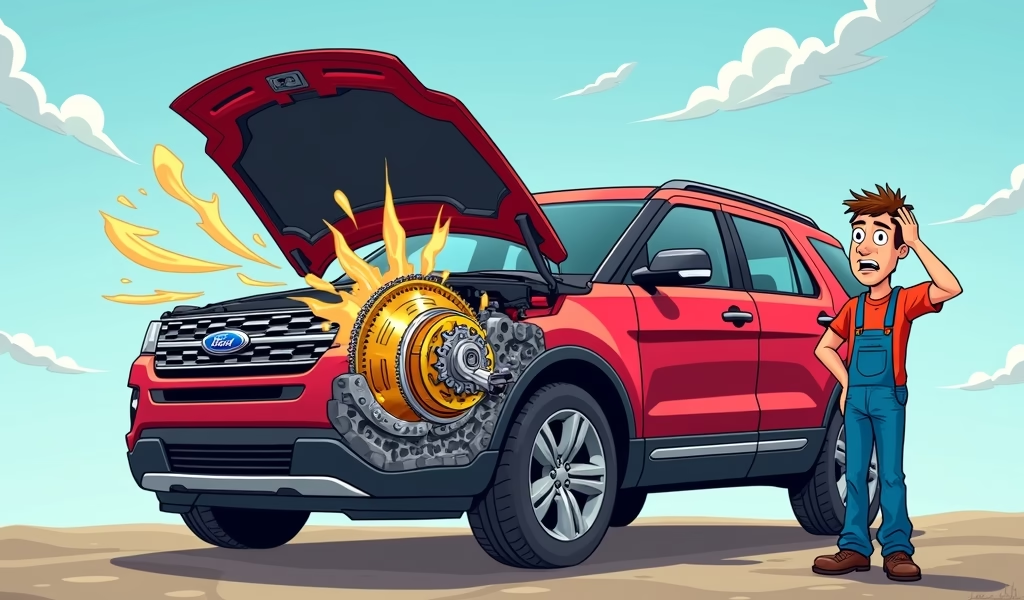
Common Symptoms of Ford Explorer Transmission Issues
Your Explorer will typically give several warning signs before a transmission fails completely. Catching these early can mean the difference between a minor repair and a complete rebuild:
Delayed Engagement
When you shift from Park to Drive or Reverse, your Explorer should respond immediately. A noticeable pause (1-2 seconds or more) before the vehicle moves indicates transmission trouble. This symptom often worsens as the transmission warms up and is particularly common in 2011-2015 Explorers.
Harsh or Erratic Shifting
Healthy transmissions shift so smoothly you barely notice. If your Explorer slams into gear, jerks during shifts, or seems confused about which gear to select, internal wear is likely occurring. The 5R55 transmissions in 2002-2010 Explorers frequently develop harsh 1-2 and 3-4 shifts as their valve bodies wear.
Unusual Noises
Transmissions shouldn’t be noisy. Whining sounds that change with vehicle speed often indicate bearing wear or fluid problems. Clunking or thudding during shifts suggests mechanical issues with clutch packs or bands. A buzzing noise may indicate a failing torque converter—especially common in 2011-2016 models.
Burning Smell
If you detect a burnt toast smell after driving, particularly in hot weather or hilly terrain, your transmission fluid may be overheating. This is serious—heat is a transmission’s worst enemy. Fluid that reaches excessive temperatures breaks down rapidly and loses its protective properties.
Transmission Fluid Leaks
Transmission fluid should remain entirely within the system. Any red or brownish fluid beneath your parked Explorer indicates a leak that needs immediate attention. Common leak sources include the pan gasket, front pump seal, and cooler lines. Even slow leaks eventually lead to low fluid levels and major damage.
Low fluid is particularly dangerous because transmissions can function seemingly normally until they reach a critical threshold, at which point damage occurs rapidly. Many owners are shocked when transmissions fail “suddenly” after what seemed like minor symptoms.
Warning Lights
Modern Explorers will illuminate the check engine light for transmission issues. Common transmission-related trouble codes include P0700-series codes (general transmission faults), P0715 (input/turbine speed sensor), and P0731-P0736 (gear ratio errors). A diagnostic scanner can read these codes, providing valuable insights into specific problems.
Slipping Gears
If your engine revs without corresponding acceleration, or if the transmission unexpectedly shifts to neutral while driving, you’re experiencing transmission slippage. This severe symptom indicates clutch wear, low fluid, or internal pressure problems and requires immediate attention before catastrophic failure occurs.
Transmission Problems by Explorer Generation
Explorer transmission issues vary significantly by generation, with certain model years developing a particularly troublesome reputation:
Early-Mid 2000s Models (2002-2005)
These Explorers, especially with the 5R55W transmission, frequently experienced shifting problems between 70,000-120,000 miles. Common issues included:
- Valve body wear causing erratic shifts
- Failed solenoids resulting in loss of specific gears
- Cracked forward clutch pistons
- Worn servo bores leading to band failures
Ford issued multiple technical service bulletins addressing these issues, including updated valve body components and revised solenoid designs. Many 2004-2005 models received transmission control module reprogramming to improve shift quality and reduce wear.
These transmissions can actually be quite reliable with timely maintenance and prompt repairs when minor issues emerge. I’ve seen properly maintained 5R55 transmissions exceed 200,000 miles, while neglected units often fail before 100,000.
Fifth Generation (2011-2019)
The 2011-2015 Explorers developed perhaps the most notorious transmission reputation, particularly those equipped with the 6F35 transmission. Owners reported:
- Shuddering/vibration, especially at highway speeds
- Hard shifts that worsened as the vehicle warmed up
- Torque converter clutch failures causing shudder and overheating
- Premature internal clutch wear
These problems were so widespread that Ford extended warranty coverage on some transmissions and issued multiple technical service bulletins. The 6F35 transmission received several design revisions throughout production, with later units (2016+) showing improved reliability.
The 6R60/6R80 transmissions in AWD Explorers generally proved more robust but still suffered occasional torque converter and valve body issues. These typically manifested as shuddering during light acceleration or unexpected downshifts during steady highway driving.
Sixth Generation (2020-Present)
The newest Explorers utilize Ford’s 10R80 ten-speed automatic. While generally more refined and efficient, early production models experienced:
- Software-related harsh shifts
- Hesitation when accelerating from a stop
- Occasional “hunting” between gears
Most of these issues have been addressed through electronic control module updates rather than mechanical repairs. The 10R80’s increased complexity means specialized diagnostic equipment is often required even for seemingly minor problems.
Ford has continued to refine the transmission control software, with many early issues resolved through dealer-performed updates. The mechanical reliability appears promising so far, though these transmissions haven’t yet accumulated the high mileage that truly tests longevity.
What Causes Explorer Transmission Failures?
Understanding why transmissions fail helps you prevent problems in your own vehicle:
Design Limitations
Some Explorer transmissions were simply underdesigned for their workload. The 6F35 transmission used in 2011-2015 models, for example, featured a relatively small torque converter and limited cooling capacity. When subjected to the weight of an Explorer—especially when towing or in mountainous driving—these components could quickly exceed their design parameters.
Fluid Degradation
Transmission fluid doesn’t just lubricate—it transfers power, cools components, conditions seals, and prevents corrosion. Modern transmission fluid must perform these functions while withstanding extreme temperatures and pressures for tens of thousands of miles.
When fluid breaks down from heat or contamination, it loses these protective properties. Clutch material suspended in old fluid acts as an abrasive, accelerating wear of precision components. This is why regular transmission service intervals are critical, despite some manufacturers’ “lifetime fluid” claims.
Excessive Heat
Heat is the primary killer of transmissions. Every 20°F increase above normal operating temperature cuts fluid life in half. Frequent towing, stop-and-go traffic, and aggressive driving all generate excess heat. Without adequate cooling, internal components break down prematurely.
The Explorer’s transmission cooling system relies on a section of the radiator or a separate transmission cooler. When these components become partially clogged or the cooling fans malfunction, transmission temperatures can quickly reach damaging levels.
Electronic Control Issues
Modern Explorer transmissions rely heavily on computer control. The transmission control module or powertrain control module makes thousands of calculations per second to determine optimal shift points.
Software bugs, sensor failures, or wiring problems can cause shifting anomalies even when the mechanical components are sound. These electronic gremlins can be challenging to diagnose but often require less expensive repairs than mechanical failures.
Torque Converter Problems
The torque converter—which connects the engine to the transmission—is a common failure point, particularly in fifth-generation Explorers. Its lockup clutch can develop shuddering or fail to engage, causing fluid overheating, poor fuel economy, and eventually more severe transmission damage.

Preventative Maintenance: Your First Line of Defense
Proactive maintenance dramatically extends transmission life and helps avoid those painfully expensive repairs:
Fluid Changes
Despite Ford’s sometimes lengthy official service intervals, I recommend changing transmission fluid every 30,000-60,000 miles. If you frequently tow or drive in severe conditions, lean toward the shorter interval.
The procedure varies by transmission type. Older Explorers with dipsticks and drain plugs allow for straightforward drain-and-fill service. Newer models often require special equipment to perform a fluid exchange since they lack traditional drain plugs.
Always use the exact fluid specification for your Explorer model. Modern transmissions are extremely sensitive to fluid properties, and using the wrong type can cause significant problems. Most recent Explorers require MERCON LV or MERCON ULV fluid, but always verify the specific requirement in your owner’s manual.
Cooling System Maintenance
Because heat kills transmissions, maintaining your Explorer’s cooling system is essential. Ensure the radiator is clean and functioning properly. Cooling fans should activate at the appropriate temperatures. Some owners of high-mileage Explorers install auxiliary transmission coolers for extra protection, which can be a wise investment if you frequently tow or drive in hot climates.
Filter Service
Many Explorer transmissions contain an internal filter that should be replaced during fluid service. This filter captures debris that could otherwise damage sensitive components. On transmissions with accessible pans (most pre-2020 models), filter replacement is relatively straightforward. Some newer transmissions have “lifetime” filters that require partial disassembly to access.
Address Minor Issues Promptly
That slight hesitation between shifts won’t fix itself—it will almost certainly worsen over time. Having minor issues diagnosed early often means the difference between a simple solenoid replacement ($300-500) and a complete rebuild ($3,000+).
When transmission symptoms first appear, consider obtaining a diagnostic scan to check for trouble codes. Even if the check engine light isn’t illuminated, the computer may have stored pending codes that indicate developing problems.
Monitor Fluid Level and Condition
For Explorers with transmission dipsticks, regularly check the fluid level and condition. Healthy transmission fluid should be clear red or light brown, without a burnt smell. Dark brown or black fluid with a burnt odor indicates overheating and should be changed immediately.
Many newer Explorers lack traditional dipsticks, making fluid checks more challenging. If your model has a sealed transmission, rely on mileage-based service intervals and watch vigilantly for any shifting abnormalities.
Respect Your Explorer’s Capabilities
Stay within the manufacturer’s specified towing and payload limits. Exceeding these limits puts tremendous strain on the transmission. If you regularly tow near your Explorer’s capacity, consider investing in a transfer case maintenance plan and transmission cooler upgrade.
Repair vs. Replace: Making the Smart Decision
When transmission problems strike, you’ll face the critical decision of whether to repair specific components or replace the entire unit. Here’s how to make the right call:
When Targeted Repairs Make Sense
For certain issues, focused repairs can save thousands compared to replacement:
- Solenoid Problems: Shift solenoids can be replaced individually, often for $300-800 including labor. This is particularly common in 2002-2010 Explorers.
- Valve Body Issues: Valve bodies can be rebuilt or replaced without removing the entire transmission, typically costing $400-1,200.
- External Sensors: Speed sensors and pressure switches located outside the transmission case can be replaced relatively inexpensively.
- Minor Leaks: Pan gaskets, cooler line connections, and even some seals can be replaced without major disassembly.
These repairs make the most sense when the transmission has otherwise been maintained well and doesn’t show signs of internal damage.
When Replacement Is Necessary
Complete replacement or rebuild becomes necessary when:
- Metal Particles in Fluid: This indicates internal component failure and widespread damage.
- Multiple Failed Components: When multiple issues exist, combined repair costs often approach replacement costs.
- Severe Internal Damage: Failures of planetary gears, clutch drums, or the case itself necessitate complete replacement.
- After Complete Fluid Loss: If your Explorer has been driven with little or no transmission fluid, internal damage is almost certain.
Replacement Options
When replacement becomes necessary, you have several options:
- New OEM Transmission: The most expensive option ($4,000-6,000 plus installation) but comes with full warranty protection and factory specifications.
- Remanufactured (“Reman”) Transmission: A popular middle-ground option ($2,500-4,000 plus installation) where a transmission is completely disassembled, inspected, and rebuilt with new wear parts to meet original specifications.
- Used/Salvage Transmission: The most affordable option ($1,200-2,500 plus installation) but comes with significant uncertainty regarding the unit’s history and remaining lifespan.
- Rebuild Your Existing Transmission: Having your transmission rebuilt by a qualified shop typically costs $2,000-3,500 and addresses all worn components while preserving your original unit.
For Explorers under 10 years old with otherwise good condition, remanufactured units typically offer the best value, combining reasonable cost with reliability and warranty protection (often 3 years/36,000 miles).
For older Explorers, economic considerations become important. If your vehicle’s market value is under $5,000, investing in an expensive new transmission rarely makes financial sense. A quality used or rebuilt unit might be more appropriate.
Transmission Work Cost Breakdown
Understanding potential costs helps you budget appropriately and evaluate repair quotes:
Diagnostic Costs
Professional diagnosis typically runs $100-150. Many shops apply this fee toward subsequent repairs if you proceed with their recommended service. Diagnosis should include computer scanning, road testing, and fluid inspection.
Maintenance Services
- Transmission fluid change (drain and fill): $150-300
- Transmission fluid flush (complete fluid exchange): $250-450
- Filter replacement: $200-400 (including fluid)
- Pan gasket replacement: $200-400
- Cooler line repair: $150-350
Component Repairs
- Shift solenoid replacement: $300-800
- Valve body replacement/rebuild: $400-1,200
- Torque converter replacement: $800-1,500
- Speed sensor replacement: $150-300
- Wiring harness repair: $200-600
Major Repairs
- Transmission rebuild (your unit): $2,000-3,500
- Remanufactured transmission installed: $3,000-5,000
- New OEM transmission installed: $4,500-7,000
Labor rates vary significantly by location, with dealerships typically charging 20-40% more than independent transmission shops. However, dealers may have better access to specific technical information and factory parts for your Explorer model.
Always request itemized estimates showing parts and labor separately. For major work, get multiple quotes and don’t be afraid to ask about warranty coverage—quality transmission work should come with at least a 12-month/12,000-mile warranty, with many shops offering 36-month protection.
If you’re facing unexpected major transmission expenses, many repair facilities offer financing options. Some credit cards designed for automotive repairs also provide introductory 0% interest periods that can help manage the financial impact.
DIY Possibilities and When to Call a Pro
While transmission work generally requires professional expertise, there are maintenance tasks Explorer owners can handle themselves:
DIY-Friendly Tasks
- Fluid level checks (on models with dipsticks)
- External inspection for leaks
- Drain and fill fluid changes (on models with drain plugs)
- Transmission pan and filter service (particularly on 2002-2010 models)
- Basic computer code scanning with consumer-grade OBD-II readers
To perform these tasks, you’ll need basic tools including:
- Jack and jack stands (rated for your Explorer’s weight)
- Basic socket and wrench set
- Torque wrench
- Fluid catch pan
- Funnel with narrow spout
- Correct transmission fluid (specific to your model)
When to Call a Professional
Seek professional help for:
- Any internal transmission repair
- Complete fluid flushes requiring specialized equipment
- Electronic troubleshooting beyond basic code reading
- Torque converter issues
- Persistent shifting problems after basic maintenance
- Installation of auxiliary cooling systems
Modern transmissions have become increasingly complex, with newer Explorer models featuring sophisticated adaptive learning capabilities and interconnected electronic systems. These complexities mean even seemingly minor issues can require specialized diagnostic equipment to properly address.
When selecting a transmission shop, look for specialists rather than general repair facilities. Transmission rebuilding is a specialized skill requiring extensive experience. Ask about the shop’s specific experience with Ford Explorer transmissions, as each model has unique characteristics and common failure points.
Avoiding Common Mistakes That Kill Transmissions
Many Explorer transmission failures are accelerated by owner habits. Avoid these common mistakes to maximize transmission life:
Ignoring Early Warning Signs
That occasional harsh shift isn’t “normal”—it’s the first indication of developing problems. Addressing issues when they’re minor often saves thousands in eventual repairs. Pay particular attention to changes in shifting behavior when the transmission reaches operating temperature.
Using Incorrect Fluid
Modern transmissions require specific fluid formulations. Using the wrong type can cause seal damage, overheating, and premature failure. The difference between MERCON V and MERCON LV isn’t just marketing—these fluids have fundamentally different friction characteristics that directly affect shifting quality and component life.
Always use the exact fluid specification listed in your Explorer’s owner’s manual. When in doubt, consult a dealer parts department with your VIN to identify the correct fluid.
Neglecting Cooling System Maintenance
Your Explorer’s transmission relies on the cooling system to maintain proper operating temperatures. A partially clogged radiator or malfunctioning cooling fan can cause transmission overheating even if the transmission itself is in good condition.
Maintain the entire cooling system according to Ford’s recommended intervals, typically including coolant changes every 100,000 miles or 5 years. If you notice the temperature gauge running higher than normal, address cooling system issues immediately to prevent transmission damage.
Towing Beyond Capacity
Every Explorer has specific towing capacity limits based on its drivetrain configuration. Exceeding these limits puts enormous strain on the transmission, particularly the torque converter and clutch packs.
If you regularly tow near your Explorer’s capacity limit, consider adding an auxiliary transmission cooler and scheduling more frequent differential service and transmission fluid changes.
Shifting Before Complete Stops
Shifting from Drive to Reverse (or vice versa) while the vehicle is still moving forces the transmission to counteract momentum, wearing clutches prematurely. Always come to a complete stop before changing between forward and reverse gears.
Skipping Regular Maintenance
Transmission fluid doesn’t last forever, regardless of what some manufacturers claim. As it ages, it loses lubricating properties and can become contaminated with clutch material and metal particles. Regular fluid changes remove these contaminants before they can cause damage.
Even “sealed for life” transmissions benefit from fluid changes every 60,000 miles, particularly in demanding conditions like frequent towing or stop-and-go traffic.
Conclusion
Your Ford Explorer’s transmission is an engineering marvel that, when properly maintained, can provide 200,000+ miles of reliable service. But when neglected or abused, it becomes an Achilles’ heel capable of generating repair bills that rival the vehicle’s value.
The key to avoiding transmission disaster lies in prevention and early intervention. Recognizing warning signs—hesitation, unusual noises, fluid leaks, or shifting anomalies—allows you to address issues before they escalate into complete failures. Regular maintenance, particularly fluid changes using the correct specification, dramatically extends transmission life.
Different Explorer generations face different transmission challenges. The 2002-2005 models with their 5R55W transmissions and the 2011-2015 models with 6F35 units have proven particularly problematic. Later models have generally improved reliability, though they introduce new complexities in diagnosis and repair.
When transmission problems do arise, understanding your repair options helps make sound financial decisions. Minor issues like solenoid or sensor failures can often be addressed individually at reasonable cost. More severe problems may require complete transmission replacement, with remanufactured units typically offering the best balance of reliability and value.
Remember that your driving habits directly impact transmission longevity. Gentle acceleration, complete stops before shifting between Drive and Reverse, and respecting towing limits all contribute to extended transmission life. The investment in proper maintenance is minimal compared to the cost of major repairs.
By staying vigilant for warning signs and maintaining your Explorer’s transmission properly, you can avoid joining the ranks of owners facing those painfully expensive repair bills—and instead enjoy thousands of trouble-free miles in your Ford Explorer.
Frequently Asked Questions
How long should a Ford Explorer transmission last?
With proper maintenance, most Explorer transmissions should last 150,000-200,000 miles. Regular fluid changes every 30,000-60,000 miles significantly extend this lifespan.
What are the most common signs of Explorer transmission failure?
The most common warning signs include delayed engagement, harsh shifting, unusual noises during operation, fluid leaks, and dashboard warning lights. Address these symptoms immediately to prevent further damage.
Which Explorer years have the most transmission problems?
The 2002-2005 and 2011-2015 model years have the highest rates of reported transmission problems. The 5R55W transmission in early 2000s models and 6F35 in 2011-2015 models are particularly problematic.
How much does it cost to replace a Ford Explorer transmission?
Complete transmission replacement typically costs between $3,000-$6,000 depending on the model year and whether you choose a new, remanufactured, or used replacement. Labor represents about 30-40% of this cost.
Can I drive with a slipping Explorer transmission?
Driving with a slipping transmission is not recommended as it can lead to catastrophic failure and unsafe driving conditions. Limit driving to essential trips while arranging for repairs as soon as possible.