
Overview
Like a marriage that needs regular counseling, your fifth wheel hitch demands consistent TLC to avoid catastrophic breakups on the highway. This guide covers five essential maintenance practices: regular inspection and cleaning, proper lubrication techniques, checking bolt torque, corrosion prevention, and seasonal maintenance strategies—all delivered with the no-nonsense wisdom of a veteran mechanic who’s seen too many preventable towing disasters.
Table of Contents
- Understanding Fifth Wheel Hitches: The Basics
- Tools and Preparation: Setting Yourself Up for Success
- Essential Maintenance Tip #1: Regular Inspection and Cleaning
- Essential Maintenance Tip #2: Proper Lubrication Techniques
- Essential Maintenance Tip #3: Checking and Tightening Bolts
- Essential Maintenance Tip #4: Protecting Against Corrosion
- Essential Maintenance Tip #5: Seasonal Maintenance Strategies
- Troubleshooting Common Issues With Your Fifth Wheel Hitch
- Conclusion: Keep Your Hitch Happy, Keep Your Journeys Safe
- Frequently Asked Questions
Understanding Fifth Wheel Hitches: The Basics
Let me tell ya something about fifth wheel hitch installation – it ain’t rocket science, but it sure as heck ain’t like changing a light bulb either! I’ve been elbow-deep in grease for over 20 years here at KnowsYourCar, and if there’s one thing I’ve learned, it’s that a properly installed and maintained fifth wheel hitch is the difference between smooth sailing and a highway nightmare.
Think of your fifth wheel hitch as the unsung hero of your towing setup. It’s that beefy connection point mounted in your truck bed that creates a secure link between your pickup and that massive camper you’ve been dreaming about dragging to the Grand Canyon. Unlike your standard ball hitch, a fifth wheel creates a downward pivot point that improves stability and handling – kind of like how a semi-truck connects to its trailer.
Now, I’ve seen more than my fair share of white-knuckled folks pulling into my shop with horror stories about swaying trailers and near-misses on the highway. Nine times out of ten, their issues boil down to poor installation or neglected maintenance. That’s why I’m fixin’ to share my top five maintenance tips to keep your fifth wheel hitch in tip-top shape after installation.
Before we dive in, remember this: your fifth wheel hitch is rated for specific weights and applications. I can’t count how many times I’ve seen a customer try to haul a 15,000-pound beast with a 12,000-pound rated hitch. That’s about as smart as wearing flip-flops to a snowstorm! Always check your manufacturer’s specifications and follow proper towing guidelines before hitting the road.
Tools and Preparation: Setting Yourself Up for Success
Alright, folks, let’s talk shop for a minute. Before you start poking around your fifth wheel hitch, you’re gonna need the right tools for the job. In my garage at KnowsYourCar, I keep a dedicated toolbox just for hitch maintenance – saves me from doing the “where-did-I-put-that-wrench” dance every time.
Here’s what you’ll want to round up:
- Socket set with various sizes (metric and standard)
- Torque wrench (this ain’t optional, trust me)
- Penetrating oil (WD-40’s fine, but I prefer PB Blaster for the stubborn stuff)
- High-quality lithium grease
- Wire brush
- Shop rags (the grungier, the better)
- Flashlight (a headlamp keeps your hands free)
- Safety glasses (your eyeballs will thank you)
- Gloves (unless you enjoy having black fingernails at your cousin’s wedding)
Now, before you dive in, park that rig on level ground and set the parking brake. I learned this lesson the hard way back in ’02 when a customer’s truck started rolling while I was underneath it. Let’s just say my vocabulary expanded considerably that day!
If you’re working on a hitch that’s already installed, disconnect any electrical connections and make sure your trailer is properly supported if it’s still attached. Safety first, speed second – that’s been my shop motto since day one. When it comes to buying car parts online safely, always make sure your hitch components come from reputable sources with proper weight ratings clearly indicated.
Essential Maintenance Tip #1: Regular Inspection and Cleaning
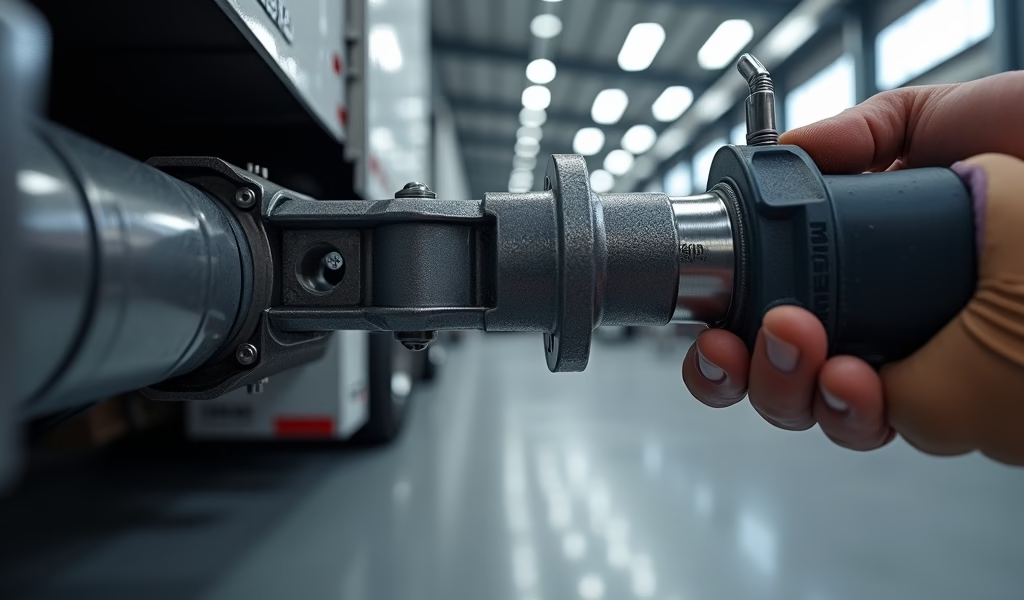
Listen up, weekend warriors and full-time towers alike – the number one thing you can do to keep your fifth wheel hitch installation purring like a kitten is giving it a thorough inspection and cleaning after every major trip. I’m not talking about a quick glance and calling it good; I mean get in there and really show that hitch some love!
I had a customer named Bill (changed his name to protect the guilty) who swore he “checked” his hitch regularly. When his pin box catastrophically failed in the middle of Wyoming, we discovered enough caked-on grime to start a small garden. Don’t be like Bill.
Here’s my tried-and-true inspection routine:
- Remove the trailer and visually inspect the hitch plate and jaws for any cracks, excessive wear, or deformation
- Check the entire mounting system where it connects to your truck bed
- Inspect all moving parts for smooth operation
- Look for any signs of rust or corrosion beginning to form
- Verify all locking mechanisms are functioning properly
For cleaning, grab that wire brush and go to town on any accumulated grime. Road grit mixed with grease creates a sandpaper-like compound that’ll wear down your components faster than my patience at a four-way stop. Once you’ve loosened the tough stuff, wipe everything down with a clean shop rag.
Pro tip from the KnowsYourCar garage: If you’re dealing with a particularly dirty hitch, a degreaser can work wonders, but be sure to thoroughly rinse and dry afterward to prevent flash rusting. I’ve seen folks use everything from dish soap to fancy specialty cleaners – honestly, they all work fine as long as you’re thorough.
Remember, a clean hitch is a happy hitch, and a happy hitch means you’re not the poor soul broken down on the side of I-80 with your vacation plans circling the drain.
Essential Maintenance Tip #2: Proper Lubrication Techniques
If there’s one thing I’ve learned in my 20+ years of turning wrenches, it’s that lubrication is the secret sauce to mechanical longevity. Your fifth wheel hitch has several moving parts that need regular greasing to function smoothly and prevent premature wear. Skipping this step is like driving without oil in your engine – it might work for a while, but you’re headed for a world of hurt.
Back in 2018, I had a customer bring in a fifth wheel hitch that was making more noise than a metal band in a tin shed. The poor fella had installed it himself but skipped the lubrication steps in the manual because he “didn’t want it getting all messy.” Three months and one very expensive replacement later, he became a lubrication convert!
Here’s what needs your greasy attention:
- The fifth wheel plate (the surface where the trailer’s kingpin makes contact)
- Pivot points in the jaw mechanism
- Any moving parts in the locking system
- Pins, bushings, and other connection points
For the plate surface, I recommend a thin layer of high-quality lithium grease. Don’t go crazy – you’re not icing a cake here. Too much grease attracts dirt and can actually cause more problems than it solves. A thin, even coat is all you need.
For pivots and moving parts, a spray lithium grease often works best as it can penetrate into tight spaces. Some folks at KnowsYourCar swear by specialty fifth wheel lubricants, and they do work exceptionally well, but a good quality lithium grease will do the trick for most applications.
After application, operate all moving parts through their full range of motion to distribute the lubricant evenly. This also helps you identify any binding or rough spots that might need additional attention.
Remember, lubrication isn’t a “once and done” job – it’s an ongoing commitment to your equipment, just like those essential car maintenance tips you (hopefully) follow for the rest of your vehicle.
Essential Maintenance Tip #3: Checking and Tightening Bolts
Alright folks, it’s time to talk about one of the most overlooked aspects of fifth wheel hitch maintenance – bolt torque. I can’t tell you how many times I’ve crawled under a truck only to find mounting bolts so loose you could turn them with your fingers. It’s enough to make a grown mechanic cry!
Your fifth wheel hitch installation is only as good as the bolts holding it in place. These fasteners are constantly subjected to vibration, stress, and the occasional “oh-no-that-pothole-was-bigger-than-I-thought” moment. Over time, even properly torqued bolts can work themselves loose.
I had a customer – let’s call him “Lucky Larry” – who came in for a routine oil change. While his truck was on the lift, I noticed his fifth wheel hitch dancing around like it was auditioning for America’s Got Talent. Three of the eight mounting bolts had completely backed out, and the rest were barely finger-tight. Given that he regularly towed a 14,000-pound fifth wheel, “Lucky” was indeed an appropriate nickname.
Here’s my bolt-checking routine:
- Check all mounting bolts securing the hitch to your truck bed rails
- Inspect the bolts connecting any brackets or support structures
- Verify all pivot point fasteners are secure but not overtightened
- Don’t forget the bolts securing the handle mechanism and locking components
The key here is using a torque wrench and following the manufacturer’s specifications. Finger-tight ain’t right, and “as tight as my burly arms can make it” is a recipe for stripped threads or broken bolts. Proper torque specifications ensure the bolts are tight enough to stay put but not so tight they damage components.
I recommend checking your bolts after the first 500 miles following installation, then every 2,000 miles or before any major trip. At KnowsYourCar, we’ve seen enough preventable disasters to make this a standard part of our pre-trip inspection service for customers heading out on long hauls.
A little thread locker on non-adjustable bolts can provide extra insurance, but check your owner’s manual first – some manufacturers advise against it for certain components. When in doubt, follow the documentation that came with your specific hitch model.
Essential Maintenance Tip #4: Protecting Against Corrosion
Let me tell you a little story about a customer we’ll call “Rusty Ron.” Ron bought a brand-new fifth wheel hitch, had it professionally installed (not by us at KnowsYourCar, I might add), and then proceeded to ignore it for the next three years while he lived in coastal Florida. When he finally brought it in, that once-shiny hitch looked like it had been salvaged from the Titanic. The corrosion was so bad that several components had fused together, making the locking mechanism about as functional as a chocolate teapot.
Corrosion is the silent killer of fifth wheel hitches, folks. It creeps in, sets up shop, and before you know it, you’re looking at replacement costs instead of maintenance costs. And let me tell ya, prevention is a whole lot cheaper than replacement – that’s something we preach daily at our affordable car repair tips workshops.
Here’s how to keep the rust monster at bay:
- After cleaning your hitch thoroughly, apply a light coat of corrosion inhibitor to metal surfaces
- Pay special attention to areas where different metals meet (these are particularly vulnerable to galvanic corrosion)
- Protect electrical connections with dielectric grease
- Consider a hitch cover when not in use, especially if you store your vehicle outdoors
- Touch up any chips or scratches in painted surfaces immediately
For those of you living near oceans or in areas where roads are heavily salted in winter, you’ll want to be extra vigilant. Salt is to metal what kryptonite is to Superman – bad news all around. I recommend a more frequent cleaning schedule and possibly removing the hitch entirely during off-seasons if you’re not using it.
There are some fantastic marine-grade corrosion inhibitors on the market that work wonders for fifth wheel hitches. They create a protective barrier that keeps moisture and oxygen away from the metal surface. Just be careful not to apply these products to parts that need to remain dry, like brake components or electrical connections.
Remember, your fifth wheel hitch is an investment – treat it accordingly, and it’ll remain safe and functional for many years of adventure.
Essential Maintenance Tip #5: Seasonal Maintenance Strategies
Listen up, campers and haulers! If you’re anything like me, your towing rig might hibernate during certain parts of the year. Maybe you’re a snowbird who only tows in winter, or perhaps you’re a summer camper who parks it all winter long. Either way, seasonal transitions require special attention for your fifth wheel hitch installation.
I learned this lesson the hard way with my own rig. After leaving my fifth wheel setup untouched through a particularly nasty Michigan winter, I hitched up for a spring camping trip without a proper inspection. Let’s just say the subsequent roadside repair involved colorful language, an emergency tool run, and my wife reminding me that I “literally tell people about this stuff for a living.”
Here’s my seasonal maintenance gameplan:
End-of-Season Protocol
- Perform a complete cleaning and inspection
- Apply fresh lubrication to all moving parts
- Check for and address any signs of wear or damage
- Apply a quality corrosion inhibitor to all metal surfaces
- Cover the hitch or consider removing it if it won’t be used for an extended period
Start-of-Season Checklist
- Remove covers and inspect for any damage or pests that might have moved in
- Clean thoroughly, removing any old grease and debris
- Check all bolts and fasteners, retorquing as necessary
- Verify all locking mechanisms function smoothly
- Apply fresh lubricant to all pivot points and contact surfaces
- Test operation several times before actually connecting to your trailer
At KnowsYourCar, we offer a “wake-up service” in the spring where we go through this entire process for customers bringing their rigs out of hibernation. It’s become one of our most popular services because, let’s face it, nobody wants to discover an issue when they’re already packed and the kids are bouncing off the walls with excitement.
If you store your truck outdoors with the hitch installed, consider investing in a quality hitch cover. They’re relatively inexpensive insurance against the elements. I’ve seen uncovered hitches develop significant rust issues in just one season of exposure.
And here’s a pro tip that’s saved many a customer’s bacon: take photos of your hitch when it’s in good working order, from multiple angles. These reference photos can be incredibly helpful when you’re trying to determine if something looks “off” after a period of storage.
Troubleshooting Common Issues With Your Fifth Wheel Hitch
Even with religious maintenance, sometimes things go sideways with your fifth wheel hitch. After two decades of diagnosing hitch hiccups at KnowsYourCar, I’ve developed a sixth sense for what’s usually causing those weird noises, sticky mechanisms, or alignment issues.
Let me share some common problems and their likely culprits:
Sticky or Difficult Operation
If your hitch jaws aren’t opening and closing smoothly, don’t just muscle through it! This is usually caused by inadequate lubrication, debris buildup in the mechanism, or components beginning to wear. Start with a thorough cleaning and fresh lubrication. If that doesn’t solve it, inspect for worn parts that might need replacement.
Excessive Play or Movement
A properly functioning fifth wheel hitch should feel solid, with minimal movement once locked. If you’re noticing excessive play, check your mounting bolts first – they’re often the culprit. If those are tight, look for worn pivot points, damaged bushings, or issues with the hitch head itself. This isn’t something to ignore; excessive movement can lead to control problems while towing.
Unusual Noises
Those squeaks, grinds, and clunks are your hitch’s way of crying for help. Squeaking typically indicates dry pivot points needing lubrication. Grinding noises often point to debris in moving parts or surfaces that are wearing against each other without proper lubrication. Clunking could mean loose components or excessive wear creating abnormal movement.
Locking Mechanism Issues
If your locking system isn’t engaging properly, this is a red-flag, stop-everything situation. First, verify nothing is physically blocking the mechanism. Check for proper alignment of components and adequate lubrication. If it still seems off, get it professionally inspected before towing – a failure here could be catastrophic.
I once had a customer who ignored a sticky locking mechanism for months. “It always eventually locks,” he told me. Unfortunately, “eventually” wasn’t good enough when his trailer separated on a gentle turn in a parking lot. Luckily it was at low speed with no injuries, but his trailer tongue punched a hole right through the side of someone’s brand-new Escalade. That was one expensive “I’ll get to it later.”
Remember, when troubleshooting your fifth wheel hitch, systematic is better than shotgun. Change one thing at a time, test, and then move on. This methodical approach helps pinpoint exactly what fixed the issue, saving you time and frustration in the future if it recurs.
Conclusion: Keep Your Hitch Happy, Keep Your Journeys Safe
Well, folks, we’ve covered a lot of ground in this fifth wheel hitch maintenance journey – from cleaning and lubrication to bolt-checking and seasonal care. If there’s one thing I want you to take away from all my ramblings, it’s this: your fifth wheel hitch isn’t just another accessory – it’s the critical link between your truck and that massive trailer carrying your home-away-from-home, precious cargo, or livelihood.
Throughout my years at KnowsYourCar, I’ve seen the consequences of neglected hitches, and believe me, they range from inconvenient to downright dangerous. The good news? Every single problem I mentioned is preventable with regular, intentional maintenance.
The five essential maintenance tips we’ve covered:
- Regular inspection and thorough cleaning
- Proper lubrication techniques
- Checking and tightening bolts to proper torque specs
- Protecting against corrosion
- Seasonal maintenance strategies
These aren’t just suggestions – they’re your roadmap to thousands of trouble-free towing miles. Implement them consistently, and that fifth wheel hitch installation you invested in will serve you faithfully for many years to come.
Remember, the time to discover a problem with your hitch isn’t when you’re already loaded up and heading down the highway. A little preventive maintenance goes a long way toward peace of mind on the open road.
Now get out there and show that hitch some love – your future self will thank you when you’re cruising down the highway without a worry in the world, except maybe where to find the best roadside diner for your next pit stop!
Frequently Asked Questions
How often should I inspect my fifth wheel hitch?
Inspect your hitch before every major trip and after approximately 1,000 miles of towing. More frequent inspections are recommended if you regularly travel on rough roads or in harsh weather conditions.
Do I need to remove my fifth wheel hitch when not in use?
While not absolutely necessary, removing the hitch when not in use can prevent corrosion and reduce wear. It also restores your truck bed’s utility and improves fuel economy.
What type of grease is best for a fifth wheel hitch?
High-quality lithium grease or specific fifth wheel lubricants are best for most applications. Avoid using regular chassis grease as it can be too thick and attract excessive dirt.
Can I install a fifth wheel hitch myself?
While DIY installation is possible for those with mechanical experience, it’s often best left to professionals. Improper installation can lead to serious safety hazards and potential damage to your vehicle.
How long should a quality fifth wheel hitch last?
With proper maintenance, a quality fifth wheel hitch can last 10-15 years or more. The actual lifespan depends on frequency of use, maintenance practices, and exposure to harsh conditions.