
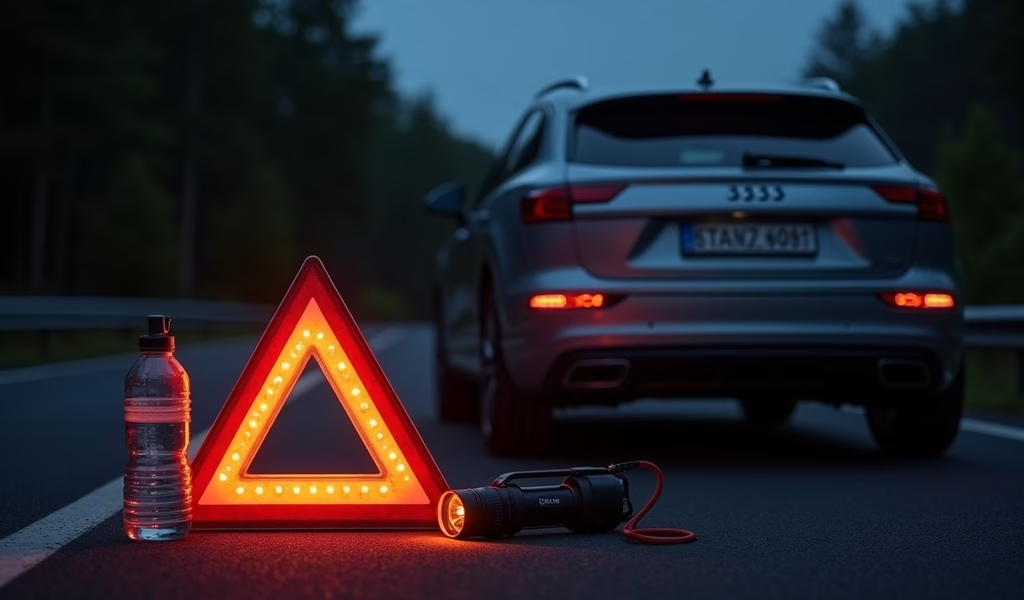
Overview
This article provides a detailed guide for creating and maintaining a car emergency kit with seven essential categories: first aid supplies, roadside visibility tools, basic tools, jumper cables/portable starters, food/water, seasonal items, and communication tools. Based on decades of mechanical experience, the author emphasizes that proper preparation can transform potential roadside disasters into minor inconveniences, potentially saving lives when emergencies occur.
Table of Contents
- Why You Need a Car Emergency Kit
- 7 Essential Items for Your Car Emergency Kit
- First Aid Supplies
- Roadside Visibility Tools
- Basic Tool Kit
- Jumper Cables or Portable Jump Starter
- Food and Water Supplies
- Seasonal Emergency Items
- Communication and Navigation Tools
- How to Organize Your Car Emergency Kit
- Maintaining Your Emergency Kit
- Conclusion
- Frequently Asked Questions
As a mechanic who’s spent decades helping stranded drivers, I’ve seen firsthand how a well-prepared emergency kit can turn a potential disaster into a minor inconvenience. The open road offers freedom, but it also presents unexpected challenges when we least expect them. According to AAA’s roadside assistance data, nearly 69 million Americans face vehicle breakdowns annually – roughly one in three drivers will experience a roadside emergency this year.
Having the right supplies readily available in your vehicle isn’t just smart – it’s potentially life-saving. The Essential Parts to Keep in Your Car Emergency Kit go beyond just jumper cables and a spare tire. Let’s look at what you really need to stay safe out there, based on my 30+ years helping drivers prepare for the unexpected.
Why You Need a Car Emergency Kit
Car troubles strike with the timing of a summer storm – unpredictable but inevitable. Whether you’re on your daily commute or halfway through a cross-country adventure, mechanical failures, flat tires, and electrical gremlins don’t check your schedule before appearing.
Weather complications amplify these risks tremendously. A sunny afternoon drive can transform into a blizzard or thunderstorm within hours, leaving you vulnerable if unprepared. This danger multiplies exponentially when breakdowns occur in remote locations where help might be hours away.
Even in our connected world, many rural areas still lack reliable cell service. I’ve helped countless drivers who couldn’t call for assistance and had to rely solely on what they had packed. Beyond practical aspects, there’s also invaluable peace of mind knowing you’re prepared for whatever the road throws your way.
7 Essential Items for Your Car Emergency Kit
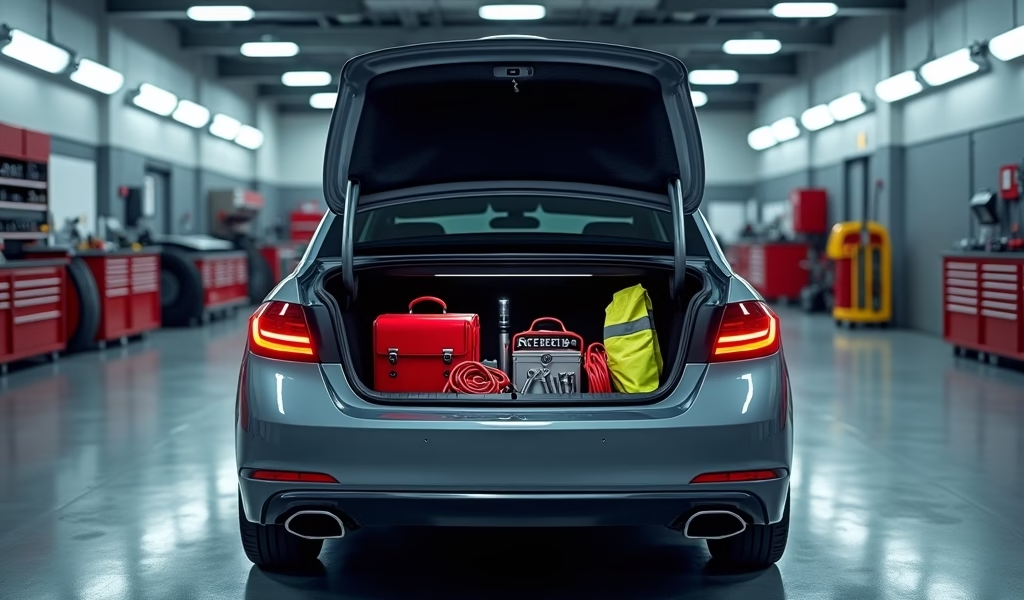
After decades in the shop and responding to roadside emergencies, I’ve narrowed down the absolute essentials every driver should keep in their vehicle. These aren’t nice-to-haves – they’re must-haves that could make all the difference when you’re stranded.
First Aid Supplies
The cornerstone of any emergency kit is proper first aid supplies. Your kit should include adhesive bandages in various sizes, gauze pads, adhesive tape, antiseptic wipes, antibiotic ointment, scissors, tweezers, and disposable gloves.
Don’t forget to include any personal prescription medications you take regularly. A small supply of over-the-counter pain relievers, antihistamines, and any specific medications your family members might need can be invaluable during extended waits for assistance.
In our post-pandemic world, hand sanitizer, disinfectant wipes, and a few face masks have become essential additions. These items prove useful not just for health emergencies but for general hygiene when you’re unable to access proper facilities.
Remember to check expiration dates regularly – medicine loses effectiveness over time, and you don’t want to discover this when you actually need it. I recommend updating your first aid supplies every six months.
Roadside Visibility Tools
When you’re stranded roadside, being seen is being safe. Reflective triangles or road flares should be placed at intervals behind your vehicle to alert approaching traffic. Place the first one about 50 feet behind your car, the second at 100 feet, and the third at 150 feet on highways.
A high-visibility vest transforms you from a shadowy figure to a clearly visible person when you need to exit your vehicle along busy roads. This fluorescent lifesaver costs under $10 but offers substantial protection. I never work roadside without mine.
A reliable flashlight with extra batteries (or better yet, a crank-powered model) serves multiple purposes: signaling for help, illuminating your engine compartment for repairs, or simply finding your way in the dark. Consider adding a headlamp to keep your hands free when working.
These visibility tools become absolutely critical during nighttime emergencies when the risk of not being seen by passing motorists increases exponentially. I’ve seen too many close calls with drivers who lacked proper visibility gear.
Basic Tool Kit
You don’t need a mechanic’s complete toolbox, but a few essentials can enable temporary fixes to get you moving again. Include a multi-bit screwdriver, adjustable wrench, pliers, and a pocket knife or multi-tool. These basics can handle a surprising number of roadside fixes.
The humble duo of duct tape and zip ties has saved countless stranded motorists. From temporarily securing loose parts to patching hoses, their versatility makes them indispensable. I’ve used duct tape to hold exhaust pipes in place and zip ties to secure dragging bumpers until drivers could reach my shop.
A tire pressure gauge helps you maintain proper inflation, improving safety and fuel economy. Paired with a portable tire inflator, you can address minor air pressure issues without seeking a service station. Knowing how to change a flat tire can also save you hours of waiting for roadside assistance.
With these tools, you can perform simple fixes like tightening loose connections, temporarily reattaching dragging parts, or making adjustments that might get you safely to a repair facility instead of waiting hours for a tow.
Jumper Cables or Portable Jump Starter
Battery issues remain among the most common roadside problems, especially during extreme temperatures. Traditional jumper cables are reliable, but they require another vehicle for assistance. Learning proper jump-starting technique is essential to avoid damaging vehicle electronics or causing dangerous sparks.
Modern portable jump starters offer independence from other vehicles. These compact devices store enough power to start most passenger vehicles multiple times on a single charge. Many also include USB ports for phone charging and built-in flashlights – features I’ve seen rescue many stranded drivers.
To minimize battery problems, practice preventative maintenance: keep terminals clean, secure connections, and replace batteries every 3-5 years. Understanding the basics of car battery replacement can help you avoid being stranded with a dead battery in the first place.
I recommend having your charging system checked annually before winter to prevent cold-weather starting problems. A simple test can predict battery failures before they leave you stranded.
Food and Water Supplies
When a quick roadside stop stretches into hours, basic sustenance becomes crucial. Pack non-perishable, high-energy foods that can withstand temperature extremes: protein bars, nuts, dried fruits, and sealed crackers all work well.
Water is non-negotiable. Store at least one gallon per person, replacing it every six months. Plastic bottles can degrade over time, especially when exposed to summer heat in your vehicle. I suggest rotating your emergency water supply with each oil change as a simple reminder.
During high-stress situations, your body burns calories faster than normal. Having appropriate food supplies helps maintain energy, clarity of thought, and body temperature regulation—all critical factors when making emergency decisions.
Seasonal Emergency Items
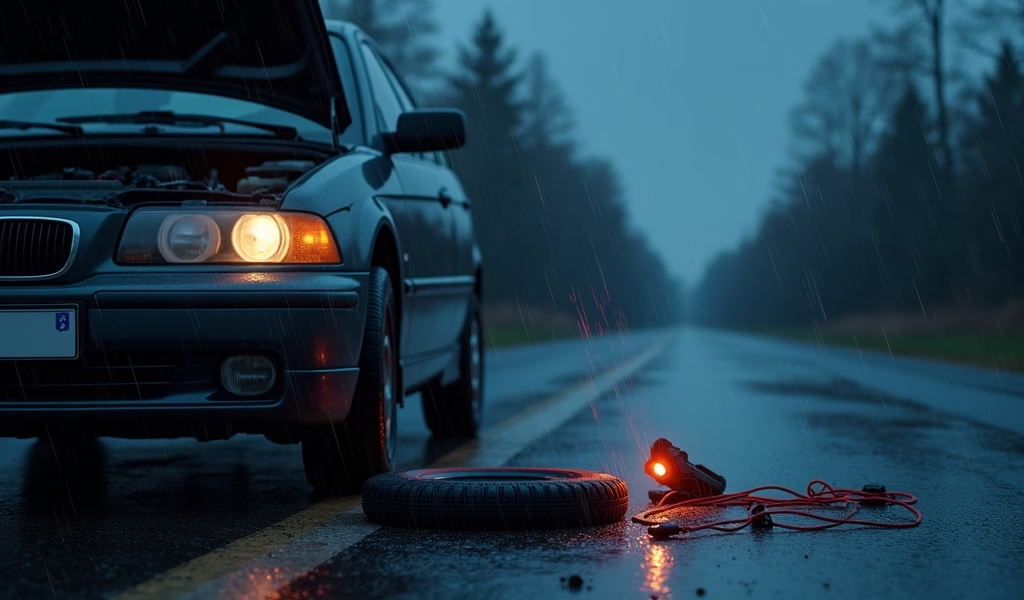
Your emergency kit should evolve with the seasons. Winter demands specialized equipment: a collapsible shovel for digging out of snow, ice scrapers and brushes for visibility, thermal blankets to retain body heat, and hand warmers for comfort during extended waits.
Summer brings different challenges: extra engine coolant, sun protection (hats, sunscreen), and perhaps additional water supplies to prevent dehydration in high temperatures. As a mechanic in Minnesota, I’ve seen both extremes and the dangers they present to unprepared drivers.
Create a seasonal rotation schedule for your kit, swapping items during spring and fall maintenance checks. Year-round essentials like tools and first aid supplies stay constant, while seasonal specialties rotate in and out based on your local climate conditions.
Communication and Navigation Tools
When emergencies strike, connectivity becomes critical. A fully charged power bank can keep your phone operational for days, providing a vital link to emergency services and loved ones. I recommend at least 10,000mAh capacity for most drivers.
While smartphones have largely replaced traditional navigation methods, technology isn’t foolproof. Keep physical maps of your state and surrounding areas as backup. They never lose signal or run out of battery – a fact many younger drivers learn the hard way.
Store a waterproof document containing emergency contact information, insurance details, and medical information. Include car chargers and adapters compatible with all family devices to ensure everyone stays connected during emergencies.
How to Organize Your Car Emergency Kit
Effective organization makes all the difference during stressful situations. Choose a dedicated container—a durable plastic bin or backpack works well for most items, keeping them clean and easily accessible when needed.
Storage location depends on your vehicle type. In sedans, secure the kit in your trunk but keep critical items (like flashlights and first aid supplies) accessible from the passenger compartment. SUV and minivan owners can utilize dedicated compartments while ensuring visibility isn’t compromised by improperly stored items.
Consider accessibility during actual emergencies. The perfectly packed kit is useless if buried beneath luggage during a family vacation or inaccessible during inclement weather. Position your most critical supplies where you can reach them without fully exiting your vehicle if possible.
Label everything clearly. In the stress of an emergency, you don’t want to be digging through unmarked containers. A simple labeling system using waterproof markers or tape can save precious minutes when they matter most.
Maintaining Your Emergency Kit
Like any safety system, your emergency kit requires regular maintenance. Schedule quarterly inventory checks, perhaps with each oil change, to ensure everything remains in working order. This simple habit has saved countless drivers from discovering expired or damaged supplies when they needed them most.
Establish a replacement schedule for perishable items—food, water, medications, and batteries all have limited useful lives, especially when stored in the temperature extremes of a vehicle. I suggest setting calendar reminders to prompt these critical updates.
Perform seasonal updates aligned with your local climate patterns. As winter approaches, add cold-weather gear; as summer arrives, ensure cooling and hydration supplies are ready. Living in Minnesota, I’ve seen how these seasonal adjustments can be life-saving during extreme weather events.
Test equipment periodically, especially electronic devices like flashlights and jump starters. Nothing is more frustrating than discovering your emergency flashlight’s batteries leaked or your jump starter lost its charge right when you need it most.
Conclusion
The humble car emergency kit represents one of the most important yet overlooked aspects of responsible vehicle ownership. While we hope you’ll never need to use these supplies, the reality is that roadside emergencies happen to even the most careful drivers.
Over my decades in automotive repair, I’ve heard countless stories from grateful customers whose preparation made all the difference during emergencies. From the family stranded during a blizzard who stayed warm and nourished until help arrived, to the solo traveler who successfully performed roadside repairs with their basic tool kit – these real experiences reinforce the value of preparation.
Don’t wait until you’re facing an emergency to wish you had been better prepared. Take time this week to assemble your Essential Parts to Keep in Your Car Emergency Kit, checking off each of the seven essential categories outlined. Your future self—perhaps standing beside a disabled vehicle in challenging conditions—will thank you for your foresight.
Remember, in emergencies, fortune favors the prepared. Your car emergency kit is an investment in safety and peace of mind that costs little but could someday prove priceless. Stay safe out there!
Frequently Asked Questions
How often should I update my car emergency kit?
Check your emergency kit quarterly, replacing perishable items like food, water, and batteries. Perform a complete overhaul annually, testing all equipment and updating seasonal items.
What’s the most important item in a car emergency kit?
While all items serve important purposes, visibility tools like reflective triangles are critical for preventing secondary accidents. Your safety always comes first when stranded roadside.
Should I have different emergency kits for different seasons?
Maintain a core emergency kit year-round, adding seasonal items as weather conditions change. Winter requires thermal blankets and ice scrapers, while summer calls for extra water and sun protection.
Do I really need an emergency kit for short trips?
Absolutely – most roadside emergencies happen within 25 miles of home. A basic emergency kit should remain in your vehicle at all times, regardless of trip distance.
What’s better: jumper cables or a portable jump starter?
A portable jump starter offers independence but requires periodic charging. Traditional jumper cables are more reliable long-term but require another vehicle’s assistance, so ideally, carry both if space permits.
Pingback: Trailer Hitch Receiver Care: 5 Proven Tips to Prevent Rust - knowsyourcar.com
Pingback: Roadside assistance benefit: Save money & avoid breakdowns - knowsyourcar.com