
Overview
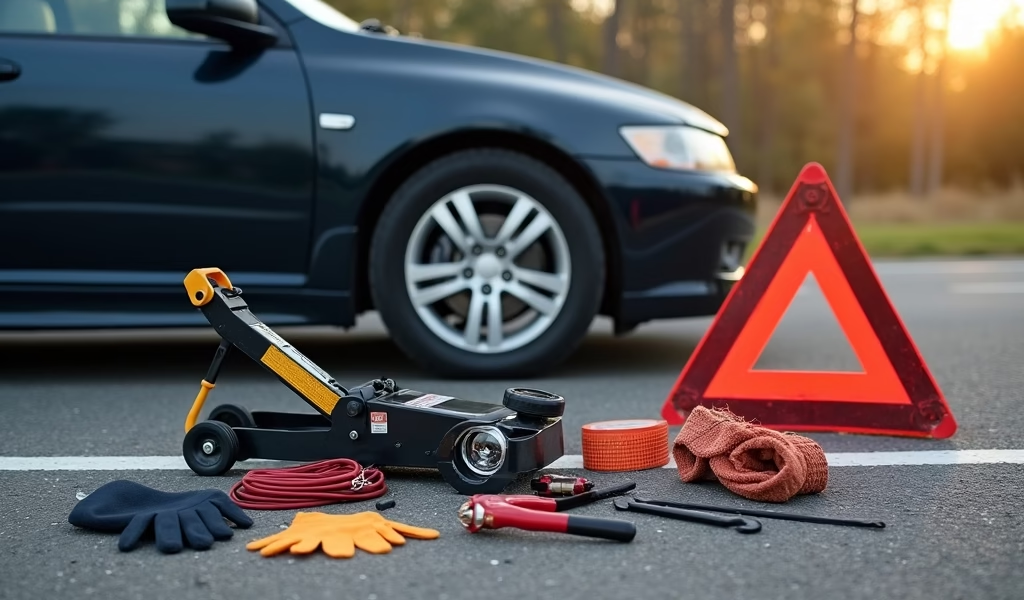
Like a Boy Scout with a socket wrench, the prepared driver packs a vehicle emergency kit containing essential tools, electrical items, tire repair supplies, fluids, safety equipment, and comfort items for roadside mishaps. The article emphasizes organizing these supplies by category, maintaining them regularly with seasonal updates, and familiarizing yourself with their use before emergencies occur—potentially saving you time, money, and the indignity of being stranded on the roadside.
Table of Contents
- Understanding Emergency Kits for Your Vehicle
- Why Preparing for Roadside Emergencies Matters
- Essential Tools for Basic Repairs
- Electrical Items That Can Save the Day
- Tire Essentials: Be Ready for Flats
- Fluid Supplies to Keep on Hand
- Safety Items No Kit Should Be Without
- Comfort Items for Extended Waits
- Organizing Your Emergency Kit
- Seasonal Considerations for Your Kit
- Conclusion
- Frequently Asked Questions
Understanding Emergency Kits for Your Vehicle
Having a well-stocked emergency kit contents in your vehicle isn’t just good advice—it’s essential preparation that can make the difference between a minor inconvenience and a major ordeal. As a mechanic with over 15 years of experience, I’ve seen countless drivers stranded with easily fixable issues, simply because they lacked a few basic tools.
Think of your car’s emergency kit as insurance you can actually use. Unlike your policy that kicks in after something goes wrong, these emergency kit contents help you handle problems immediately, potentially saving you time, money, and stress. Whether you’re dealing with a dead battery on a quiet country road or a flat tire during rush hour, having the right tools at hand empowers you to take action.
The peace of mind that comes from being prepared is invaluable. You might drive for years without needing your emergency kit—but when trouble strikes, you’ll be thankful you took the time to assemble these emergency kit contents thoughtfully. Let’s explore what should be in every driver’s roadside rescue package.
Why Preparing for Roadside Emergencies Matters
Roadside emergencies don’t schedule appointments. They happen when least expected—during critical commutes, family road trips, or late-night drives. According to AAA’s roadside assistance statistics, they respond to over 30 million calls annually, with the majority being issues that drivers could potentially address themselves with the right emergency kit contents.
The financial math makes a compelling case too. A typical roadside assistance call costs between $50-$150 depending on your location and the time of day. More significant issues requiring a tow can easily exceed $300. Compare that to the one-time investment of about $100-$200 for a comprehensive emergency kit, and the economics become clear.
Beyond money, there’s the time factor. The average wait time for roadside assistance ranges from 30 minutes to over 2 hours during peak periods or bad weather. With proper maintenance and emergency preparedness, you could potentially fix simple issues and be back on the road in 15 minutes or less.
Perhaps most importantly, self-sufficiency provides security. In remote areas with spotty cell coverage or during extreme weather events when services are overwhelmed, your emergency kit might be your only immediate resource. Now, let’s look at exactly what tools should make up your vehicle’s safety net.
Essential Tools for Basic Repairs
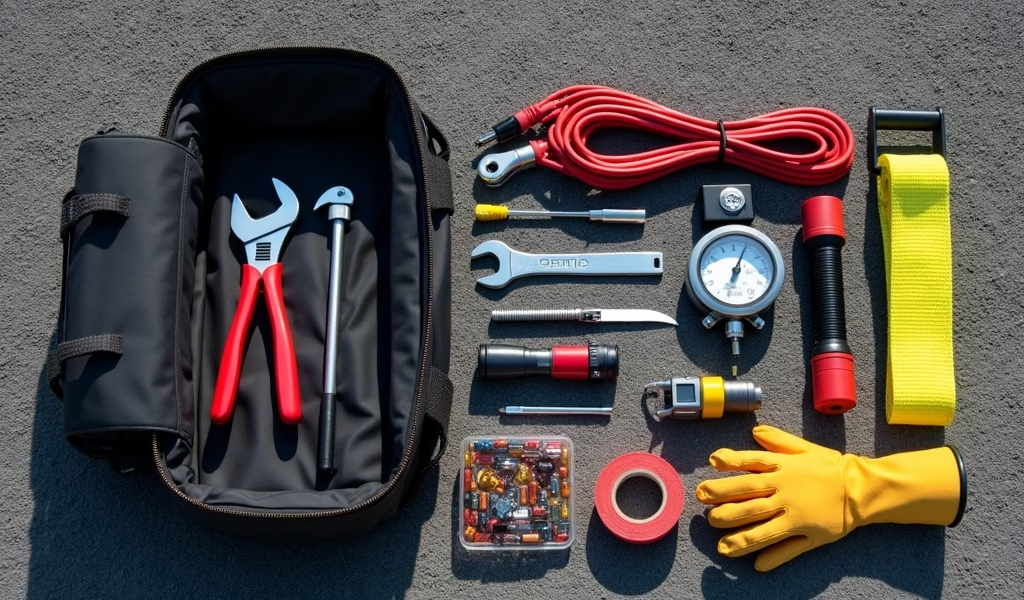
A versatile multi-tool or Swiss Army knife should be your emergency kit’s foundation. These compact marvels pack multiple functions into one tool, often including pliers, wire cutters, screwdrivers, and a knife blade—all potentially useful for improvised repairs. I’ve used mine to tighten loose connections, cut away damaged weather stripping, and even improvise solutions for broken accessories.
Next, include a comprehensive screwdriver set with both Phillips and flathead bits in various sizes. Cars use countless screws and fasteners, and having the right tool prevents stripping them (which creates bigger problems). Look for a screwdriver with interchangeable bits to save space while maximizing functionality.
Adjustable wrenches are indispensable for your emergency kit contents. A quality 8-inch adjustable wrench can handle most emergency fastening needs without carrying a full socket set. For more comprehensive coverage, consider adding a small socket set with both standard and metric sizes since vehicles use both depending on their origin.
Don’t overlook the humble roll of duct tape and electrical tape. These versatile materials can temporarily seal leaks, secure loose parts, and even substitute for broken belts in absolute emergencies. I once helped a stranded motorist use duct tape to secure a dangling exhaust pipe long enough to reach the nearest repair shop—simple but effective.
Zip ties (cable ties) in various sizes are another space-efficient addition that can secure loose components, bundle wires, or even temporarily hold body panels in place after minor accidents. Their strength-to-weight ratio makes them perfect for emergency repairs.
Finally, include a small hammer or mallet. Beyond the obvious hammering applications, it can be used to tap stuck components loose or, in combination with your other tools, help with makeshift repairs that need some persuasion. Just remember, gentle taps are usually all you need—excessive force causes more problems than it solves.
Electrical Items That Can Save the Day
Jumper cables remain essential despite advances in portable power. Opt for heavy-gauge cables (at least 4-gauge) with a minimum length of 12 feet to ensure you can connect to another vehicle even in awkward parking situations. The thicker cables allow for better current flow, which means faster and more reliable jump starts.
Even better, consider investing in a portable jump starter with USB ports. These lithium-battery devices have revolutionized roadside assistance by eliminating the need for another vehicle. Modern units are remarkably compact—some no larger than a paperback book—yet powerful enough to start a V8 engine multiple times on a single charge. The USB ports double as emergency phone chargers, making them dual-purpose lifesavers.
A quality flashlight with fresh batteries is non-negotiable for your emergency kit contents. LED flashlights offer the best combination of brightness, battery life, and durability. Consider models with adjustable beams and multiple brightness settings. I recommend keeping a headlamp in your kit as well, as it frees both hands for repairs.
Electrical tape and wire connectors help address common electrical failures. Frayed wires can cause all sorts of problems, from inoperative lights to complete engine failure. Having the means to make temporary electrical repairs might be the difference between continuing your journey and waiting for a tow.
For those comfortable with basic automotive electrical systems, a simple multimeter can be invaluable for diagnosing electrical issues. Learning to check voltage, continuity, and resistance can help you pinpoint whether a problem is a simple blown fuse or something requiring professional attention. Regular maintenance checks using a multimeter can even help prevent issues before they strand you.
Finally, never underestimate the importance of spare fuses. They’re inexpensive, take virtually no space, and can fix many electrical failures in minutes. Just be sure to include an assortment that matches your vehicle’s fuse types and amperage ratings.
Tire Essentials: Be Ready for Flats
A portable tire inflator should top your tire emergency list. These compact compressors plug into your vehicle’s 12V outlet and can reinflate a tire that’s losing air slowly, potentially getting you to a repair facility without changing the tire. The best models include pressure gauges and auto-shutoff features that prevent over-inflation.
Tire pressure gauges remain essential despite the prevalence of tire pressure monitoring systems (TPMS). Digital gauges offer precision, but good-quality analog stick gauges are reliable and don’t need batteries. Proper tire pressure is crucial not just for emergencies—it improves fuel economy, extends tire life, and enhances safety daily.
Tire repair kits have become increasingly sophisticated and user-friendly. Modern kits contain rubber plugs and the tools needed to insert them into punctured tires without removing the tire from the wheel. I’ve personally used these to repair punctures on the roadside that have then lasted thousands of miles. Just remember that plugs are considered temporary repairs by most manufacturers, so follow up with a professional as soon as practical.
Don’t forget the basics: a lug wrench and wheel chocks. While your vehicle likely came with a lug wrench, aftermarket telescoping models offer better leverage, making tight lug nuts easier to loosen, especially for drivers with less upper body strength. Wheel chocks prevent your car from rolling during tire changes—particularly important on even slight inclines where parking brakes might not hold completely.
If your vehicle uses specialty lug nuts (like those with locks or unique patterns), always keep the key or adapter in your emergency kit. I’ve met countless drivers who discovered their specialized lug nut key was missing only when they needed it most, rendering their spare tire useless.
Fluid Supplies to Keep on Hand
Engine oil tops the list of fluid emergency essentials. Carry at least one quart of the correct grade for your vehicle (check your owner’s manual for specifications). Low oil levels can cause catastrophic engine damage, but a timely top-off might get you safely to your destination if you notice the warning light. Remember that regularly checking fluids is part of affordable preventative maintenance that saves expensive repairs later.
Coolant (antifreeze) is equally important, especially during extreme temperatures. Pre-mixed coolant is convenient but takes more storage space, while concentrated coolant needs to be diluted with water. Either works in an emergency—just make sure what you carry is compatible with your vehicle’s cooling system. Some newer vehicles require specific formulations, so check your manual before buying.
Brake fluid might seem less critical for emergencies, but a brake fluid leak can quickly render your vehicle unsafe or inoperable. A small bottle of the correct DOT-rated fluid could be the difference between continuing safely or requiring a tow. Remember that brake fluid is hygroscopic (absorbs moisture), so keep it tightly sealed in its original container.
Windshield washer fluid seems mundane until you’re driving toward the sun with a dirty windshield that’s creating dangerous glare. In winter conditions, proper winter-rated washer fluid can also help clear ice and prevent freeze-ups. Consider seasonal adjustments to your emergency kit contents based on your local climate.
For storing these fluids, use leak-proof containers with secure lids to prevent spills inside your vehicle. I recommend placing all fluids in a separate plastic bin or heavy-duty ziplock bag within your emergency kit for additional protection. This simple organization prevents a minor inconvenience from becoming a messy disaster.
Safety Items No Kit Should Be Without
Reflective triangles or LED flares are crucial for nighttime breakdowns. Traditional flammable road flares work well but have limited burn times and can be hazardous. Modern LED flares last for hours on a battery charge, can be seen from greater distances, and don’t pose fire risks. Position these warning devices at 50, 100, and 150 feet behind your vehicle to give approaching traffic adequate warning.
A reflective safety vest might seem like overkill until you’ve had to change a tire on a busy highway at dusk. Studies by the National Highway Traffic Safety Administration show that pedestrians near roadways face significant risks, especially in low-light conditions. The minimal investment in a high-visibility vest could literally save your life.
Fire extinguishers designed for automotive use (typically rated for Class B and C fires) should be secured where you can reach them from the driver’s seat. Vehicle fires often start small but escalate quickly—having immediate access to an extinguisher can prevent total vehicle loss or worse. Look for compact models with secure mounting brackets to prevent them from becoming dangerous projectiles during sudden stops.
First aid kits deserve thoughtful consideration. Beyond the basics (bandages, antiseptic wipes, gauze), include any personal medications you might need if stranded for several hours. Add emergency blankets (those thin, metallic sheets that retain body heat) which take almost no space but can prevent hypothermia in cold-weather emergencies.
Emergency escape tools combine seatbelt cutters and window breakers in one device. While hopefully never needed, these inexpensive tools can be lifesavers if you need to exit a vehicle quickly after an accident, especially if water is involved. Keep yours within reach of the driver, not buried in the trunk where it’s inaccessible when needed most.
Comfort Items for Extended Waits
Water and non-perishable snacks provide more than comfort during extended roadside waits—they’re practical necessities. Dehydration and hunger make stressful situations worse and can impair decision-making. Keep at least one liter of water per person your vehicle typically carries, rotating the supply every few months to ensure freshness.
Weather-appropriate extra clothing can transform a miserable wait into a manageable one. A spare sweatshirt, pair of gloves, or rain poncho takes minimal space but provides significant comfort if you’re stuck changing a tire in unexpected weather. Think of these as insurance against forecasts that turned out wrong or sudden weather changes.
Phone chargers and portable power banks have become emergency essentials in our connected world. A dead phone means no calls for help, no navigation, and no access to online repair tutorials or roadside assistance apps. Include both a car charger adapter and a fully-charged power bank in case your vehicle’s electrical system is compromised.
Cash in small denominations might seem old-fashioned, but not all service stations or small-town repair shops accept cards, especially in remote areas. Having $50-$100 in small bills can be invaluable when digital payment methods aren’t available or reliable.
A good old-fashioned paper map of your region serves as backup when digital navigation fails due to poor reception or drained devices. Basic map reading remains an important skill despite our reliance on GPS. Similarly, keeping a list of important phone numbers (roadside assistance, insurance, family contacts) written down ensures you can call for help even from someone else’s phone if yours is damaged or dead.
Organizing Your Emergency Kit
Container selection matters more than you might think. The ideal emergency kit container is waterproof, durable, and compact enough to fit in your trunk without sacrificing too much cargo space. Many experienced drivers prefer stackable plastic totes with secure lids, which protect contents from moisture and keep everything contained if your vehicle is moving over rough terrain.
Organization within the container saves precious time during emergencies. Use smaller zippered pouches or plastic bags to group similar items—tools in one, electrical supplies in another, fluids in a third. Label these clearly, and you won’t waste time digging through the entire kit when you only need one specific item.
Accessibility requires strategic thinking. The items you’re most likely to need should be easiest to reach. Consider your region and driving patterns—if you frequently travel in cold climates, winter-specific items should be more accessible. Similarly, if you drive an older vehicle prone to electrical issues, keep your jumper cables or jump starter where you can grab them quickly.
Regular maintenance of your emergency kit is crucial but often overlooked. Set calendar reminders to check your kit twice yearly—typically when daylight saving time begins and ends works well. During these checks, replace expired items, recharge batteries, check tire repair kit components, and ensure all tools remain in good working order.
Consider creating a detailed inventory list and taping it inside the lid of your emergency kit. This serves two purposes: it helps you quickly confirm everything is present during your regular checks, and it provides a quick reference in emergencies when stress might make it harder to remember what resources you have available.
Seasonal Considerations for Your Kit
Winter demands specialized emergency kit contents beyond the basics. Add a collapsible snow shovel, ice scraper, and lock de-icer (kept in your purse or pocket, not the locked car!). Traction aids like sand, cat litter, or purpose-made traction mats can help you escape when stuck in snow. Hand warmers and extra blankets might seem excessive until you’re waiting hours for help in below-freezing temperatures.
Summer presents different challenges, particularly in hotter climates. Additional water becomes even more critical, as both you and your vehicle may need extra hydration. Consider adding sunscreen and insect repellent to your warm-weather kit. Portable battery-powered fans provide welcome relief if you’re stuck without air conditioning in hot weather.
Spring and fall transition periods require flexibility. These seasons often bring unpredictable weather swings that might catch you unprepared if your emergency kit is strictly summer or winter-focused. During these times, maintain a hybrid kit that can handle either temperature extreme until the season firmly establishes itself.
Regional considerations should influence your kit’s contents too. Coastal areas prone to flooding might benefit from plastic tarp and rope that could protect engine components from water damage. Desert drivers should carry significantly more water than those in temperate regions. Mountain drivers might add tire chains even in seasons when they seem unnecessary, as high-elevation weather can change rapidly.
Review your emergency kit contents based on upcoming trips. A daily urban commute requires different preparation than a cross-country journey or off-road adventure. Temporarily augment your standard kit when venturing beyond your usual driving patterns, especially when heading to remote areas with limited services.
Conclusion
A thoughtfully assembled collection of emergency kit contents represents one of the wisest investments any driver can make. Beyond the practical benefits of being able to handle common roadside problems, there’s the immeasurable value of peace of mind that comes with preparation. Knowing you have the tools and supplies to manage most situations allows you to focus on enjoying your journey rather than worrying about what might go wrong.
Remember that your emergency kit is a living system that should evolve with your vehicle, driving patterns, and the seasons. What works perfectly for your current car might need adjustments when you change vehicles. Similarly, as you gain experience using these tools, you might find personal preferences for certain types of equipment that work better for your specific needs.
Perhaps most importantly, familiarize yourself with the contents before emergencies occur. The middle of a breakdown isn’t the time to learn how to use a tire repair kit or jump starter. Spend a Saturday afternoon practicing with these tools in your driveway, and you’ll be far more confident and efficient when using them under pressure.
The small investment of time and money in creating a comprehensive emergency kit yields enormous returns in capability, confidence, and safety. Your future self—perhaps standing beside a disabled vehicle in challenging conditions—will thank you for the foresight you showed today.
Frequently Asked Questions
How often should I check and update my car emergency kit?
Check your emergency kit at least twice yearly, ideally during daylight saving time changes. Replace expired items, recharge batteries, and adjust seasonal contents as needed.
What’s the minimum amount of water I should keep in my emergency kit?
Keep at least one liter of water per passenger your vehicle typically carries. In hot climates or for longer trips, double this amount at minimum.
Are all-in-one emergency kits worth buying, or should I build my own?
Pre-packaged kits provide convenience but often contain lower-quality tools and miss vehicle-specific needs. Building your own ensures quality components tailored to your specific vehicle and driving patterns.
Where’s the best place to store an emergency kit in my vehicle?
Store your kit in the trunk or cargo area, secured so it doesn’t become a projectile during sudden stops. Keep small, frequently-used items like flashlights in the glove box or center console for quick access.
Do hybrid or electric vehicles need different emergency kit contents?
Yes, they require specialized items like insulated gloves for handling high-voltage components and specific jump-starting equipment. Consult your owner’s manual for safety procedures and recommended emergency equipment.