

Overview
The article explains how driving score apps can extend vehicle lifespan by providing feedback on driving habits like acceleration, braking, speed maintenance, and idling, while offering five key strategies: mastering smooth driving techniques, maintaining consistent speeds, planning efficient routes, following data-driven maintenance schedules, and using gamification features to reinforce good habits. When selecting a driving score app, users should consider data collection methods, compatibility with their vehicle, interface usability, and privacy implications to maximize vehicle preservation benefits.
Table of Contents
- Understanding Driving Score Apps
- Benefits of Using Driving Score Apps
- Tip 1: Master Smooth Acceleration and Braking
- Tip 2: Maintain Consistent Speed and Reduce Idling
- Tip 3: Plan Trips and Routes Efficiently
- Tip 4: Regular Maintenance Based on App Data
- Tip 5: Use Gamification Features for Better Driving Habits
- Choosing the Right Driving Score App
- Privacy Considerations
- Conclusion
- Frequently Asked Questions
Understanding Driving Score Apps
Driving score apps have revolutionized how we care for our vehicles and monitor our driving habits. As a certified mechanic with over 15 years of experience, I’ve seen firsthand how these digital tools can transform vehicle longevity when used correctly. These apps analyze your driving patterns through sensors in your smartphone or through OBD-II devices that plug directly into your car’s diagnostic port, providing real-time feedback on your driving behaviors.
What makes driving score apps particularly valuable is their ability to identify harmful driving habits you might not even realize you have. They monitor factors like harsh acceleration, sudden braking, sharp cornering, and excessive idling – all behaviors that silently wear down your vehicle’s components over time. By making these patterns visible, you gain the power to make adjustments that can add years to your car’s life.
The technology behind these apps has become incredibly sophisticated. Modern driving score apps don’t just track basic movements; they use advanced algorithms to provide personalized recommendations based on your specific vehicle make and model. This targeted approach means the feedback you receive is directly applicable to extending your particular car’s lifespan.
Benefits of Using Driving Score Apps
The advantages of integrating driving score apps into your vehicle care routine extend far beyond simple monitoring. Let’s break down why these digital companions have become essential tools for the conscientious car owner.
First and foremost, these apps provide objective feedback on your driving habits. As humans, we tend to overestimate our skills behind the wheel – it’s just natural. Having a neutral observer tracking your patterns helps cut through this bias, showing you exactly where improvement is needed. This honesty leads to better driving decisions and ultimately, less wear and tear on critical components.
Financial benefits quickly become apparent too. By encouraging smoother driving habits, these apps directly contribute to fuel efficiency improvements. Many users report 10-15% savings on fuel costs after adjusting their driving based on app recommendations. Over a year, that adds up to hundreds of dollars back in your pocket.
Perhaps most importantly for vehicle longevity, driving score apps help reduce strain on your car’s most expensive systems. Transmission repairs can easily cost thousands, but gentle acceleration and careful shifting guided by app feedback can dramatically extend transmission life. Similarly, gradual braking preserves brake pads, rotors, and calipers, pushing major brake services further into the future.
The preventative maintenance reminders these apps provide also ensure you never miss critical service intervals. This consistent care prevents small issues from snowballing into catastrophic failures that might otherwise send your beloved vehicle to an early grave.

Tip 1: Master Smooth Acceleration and Braking
One of the most impactful ways driving score apps can help extend your vehicle’s life is by teaching you to master smooth acceleration and braking techniques. As I tell my clients in the shop, your gas and brake pedals aren’t on-off switches – they’re precision instruments that deserve a gentle touch.
When you accelerate aggressively, you’re forcing your engine to work harder than necessary, generating excessive heat and putting strain on your transmission, drive axles, and suspension components. Driving score apps typically flag these events, measuring the g-forces during acceleration. Aim for a gradual application of throttle that keeps your acceleration score in the “green zone” of your app.
Similarly, harsh braking causes premature wear to your entire braking system. When you slam on the brakes, the extreme friction generates intense heat that can warp rotors, degrade brake fluid, and wear down pads unevenly. The sudden weight transfer also strains suspension components and can even affect alignment over time.
Try implementing the “egg technique” – imagine an egg between your foot and the pedals. You want to press firmly enough to control the car but gently enough not to break the imaginary egg. Your driving score app will reward this behavior with improved braking scores, and your car will reward you with thousands of additional miles of reliable service.
For the best results, develop the habit of looking further down the road to anticipate stops. This defensive driving approach gives you more time to react, eliminating the need for sudden braking in most situations. Remember, smooth inputs are king when it comes to vehicle longevity.
Tip 2: Maintain Consistent Speed and Reduce Idling
Maintaining a steady speed is like finding the sweet spot for your engine’s efficiency. Most driving score apps track speed consistency, and for good reason. Every time you fluctuate between speeds, your engine must work harder, consuming more fuel and generating additional wear on components.
The physics behind this is straightforward: your vehicle requires significantly more energy to accelerate than to maintain speed. When you’re constantly speeding up and slowing down – what we mechanics call “speed hunting” – you’re repeatedly asking your engine to perform its most demanding task. This puts stress on everything from your fuel injection system to your transmission.
Try using your cruise control when appropriate, especially on highways. Most modern driving score apps will acknowledge this consistent speed pattern and reward it with higher efficiency scores. Your car’s engine control unit can maintain speed far more efficiently than your foot, finding the perfect fuel-air mixture for cruising conditions.
Excessive idling represents another silent killer for vehicle longevity that quality driving score apps monitor. When idling, your engine operates in a suboptimal temperature range where incomplete combustion occurs. This leads to carbon deposits on valves and injectors while oil remains too cool to properly lubricate critical components.
Many modern apps will notify you when idling exceeds optimal durations. As a rule of thumb, if you’re stopping for more than 30 seconds, turning the engine off is usually more efficient than idling – something the latest start-stop technology in newer vehicles does automatically. This small change can significantly reduce engine hours and extend the useful life of numerous systems.
Tip 3: Plan Trips and Routes Efficiently
Smart trip planning might seem like an indirect way to extend vehicle life, but it’s one of the most underrated strategies that driving score apps can help optimize. Many advanced driving score apps now include route planning features that analyze traffic patterns, elevation changes, and even weather conditions to suggest the most efficient path.
Cold starts put tremendous stress on your engine. When your engine is cold, oil is thicker and doesn’t flow optimally through critical components. This means that for the first few minutes of operation, wear rates are dramatically increased. By combining multiple errands into single trips, you reduce the number of cold starts your engine endures.
Some of the more sophisticated driving score apps can actually analyze your travel patterns and suggest trip combinations that minimize these harmful cold starts. They might recommend, for instance, that you handle grocery shopping on your way home from work rather than making it a separate journey later in the evening.
Route selection itself plays a major role in vehicle longevity. Apps that guide you away from roads with poor conditions help you avoid suspension-damaging potholes and uneven surfaces. Similarly, routes that minimize stop-and-go traffic reduce the strain on your braking system and transmission.
Pay attention to the elevation data in your driving score app too. Constant uphill climbs force your engine to work harder, while steep downhill sections can overheat brakes. The best apps will factor these elevation changes into their route recommendations, helping you find paths that maintain your vehicle in its efficiency sweet spot.
By following the trip planning guidance from your driving score app, you’re not just saving time and fuel – you’re actively extending your vehicle’s useful life by minimizing the most damaging driving scenarios it faces.
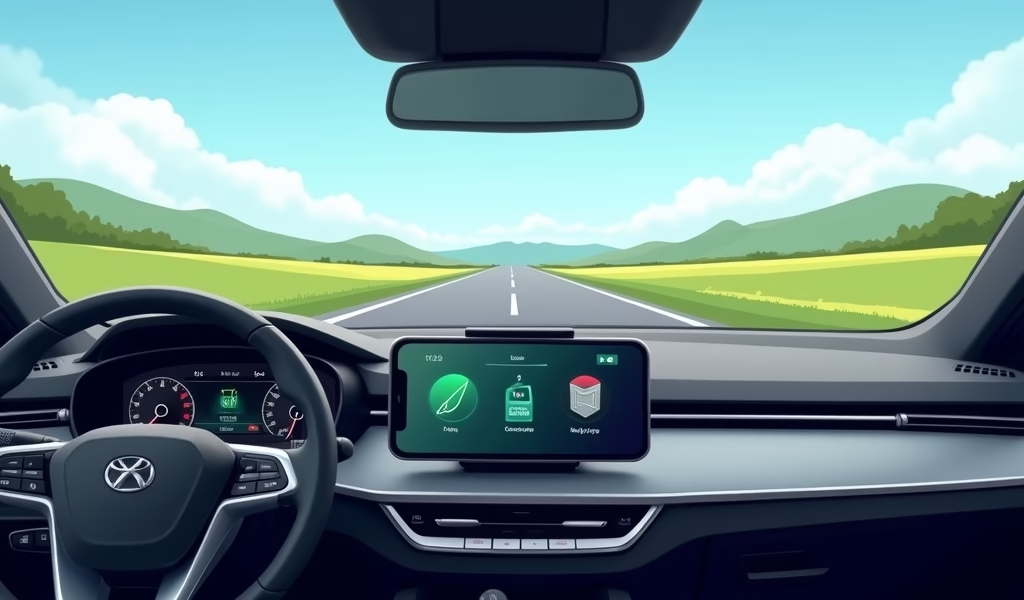
Tip 4: Regular Maintenance Based on App Data
The maintenance reminders in driving score apps aren’t just arbitrary notifications – they’re data-driven prompts based on your actual driving patterns. Unlike the traditional mileage-based service intervals in your owner’s manual, app-based maintenance recommendations consider how you drive, not just how far.
For example, if your driving score app detects that you frequently drive in stop-and-go traffic or make numerous short trips, it might suggest more frequent oil changes than the standard interval. This is because these driving conditions cause more rapid oil degradation, and the app is intelligently accounting for this real-world usage.
Pay particular attention to component-specific warnings. If your app shows consistently high scores for harsh braking, your brake system might need inspection less frequently. Conversely, if cornering scores are routinely low, your suspension components and tires may require more frequent checks to ensure even wear patterns.
The most advanced driving score apps can even detect subtle changes in vehicle performance over time. Decreasing fuel efficiency scores despite consistent driving habits might indicate developing issues with oxygen sensors or fuel injectors. Addressing these warnings promptly can prevent more serious damage to catalytic converters or engine components.
Consider creating a digital maintenance log that correlates with your driving score data. This allows you to track how specific driving behaviors might be affecting different vehicle systems. Such documentation is not only valuable for your own vehicle care but can significantly increase resale value by demonstrating meticulous maintenance backed by objective data.
According to Consumer Reports research, proper maintenance based on actual driving conditions rather than generic intervals can extend a vehicle’s useful life by up to 200,000 miles – a compelling reason to heed your driving score app’s maintenance suggestions.
Tip 5: Use Gamification Features for Better Driving Habits
The gamification elements built into driving score apps aren’t just entertaining gimmicks – they’re powerful psychological tools that can help cement lasting driving improvements. These features tap into our natural competitive instincts and desire for positive reinforcement.
Many driving score apps award points, badges, or virtual trophies for achieving certain milestones or maintaining good habits over time. This turns the sometimes tedious process of changing driving behaviors into an engaging challenge. Our brains respond well to these reward systems, making it easier to stick with new habits until they become automatic.
Take advantage of community features that allow you to compare scores with friends, family, or other drivers in your area. These social elements add accountability and motivation – you’re less likely to revert to harsh braking habits when you know your weekly score is visible to others in your driving circle.
Pay attention to the trend analysis in your app’s gamification system. Most good apps will show how your driving scores improve over time, reinforcing the positive changes you’re making. This visual representation of progress provides powerful motivation to continue developing car-friendly driving techniques.
Some advanced driving score apps even offer tangible rewards through partnerships with insurance companies, offering premium discounts for consistently high scores. These financial incentives provide immediate, real-world benefits for the same behaviors that extend your vehicle’s lifespan – a win-win scenario for mindful drivers.
The beauty of these gamification features is that they make good driving habits satisfying on a daily basis, even though the vehicle longevity benefits might take years to fully appreciate. It’s immediate gratification aligned with long-term goals – a rare and valuable combination.
Choosing the Right Driving Score App
Not all driving score apps are created equal, and selecting the one that best fits your needs requires careful consideration. From my experience in the garage, I can tell you that the right app can make the difference between meaningful vehicle preservation and just another forgotten download.
First, consider how the app collects data. Smartphone-based apps use your phone’s sensors and are generally more affordable, but they require consistent placement in your vehicle and might miss nuanced data. OBD-II port devices connect directly to your car’s computer system, providing more accurate and comprehensive information, though they typically come with a higher price tag.
Look for apps that offer detailed breakdowns of specific driving behaviors rather than just an overall score. The ability to see exactly where your driving habits are affecting vehicle components allows for targeted improvements. Apps that show trends over time are particularly valuable for tracking your progress.
Compatibility with your specific vehicle make and model is crucial. Some apps are designed with certain manufacturers in mind and may provide more relevant feedback for those vehicles. Check user reviews from owners of cars similar to yours for insights on compatibility and useful features.
Consider the app’s user interface and accessibility. A beautifully designed app with intuitive controls will be used more consistently than one with a confusing layout or cumbersome navigation. Since regular engagement is key to improving driving habits, this ease of use shouldn’t be underestimated.
Finally, investigate any premium features or subscription costs. While free apps can provide basic feedback, paid versions often include more detailed analysis, maintenance reminders, and integration with other services. Weigh these costs against the potential savings in vehicle maintenance and extended lifespan to determine the best value for your situation.
Privacy Considerations
While driving score apps offer tremendous benefits for vehicle longevity, it’s essential to understand the privacy implications of using technology that tracks your movements and driving behaviors. Taking a few minutes to review privacy policies can prevent unwelcome surprises down the road.
Most driving score apps collect location data, driving patterns, and sometimes even audio (for distraction detection). Before installation, review exactly what data is being gathered and how it will be used. Reputable apps will provide clear privacy policies detailing their data practices.
Pay particular attention to data sharing policies. Some apps, especially those offered by insurance companies, may share your driving data with the parent company to adjust premiums or make coverage decisions. Others might anonymize and aggregate your information for research or sell it to third parties for marketing purposes.
Consider apps that offer local processing options, where driving data is analyzed on your device rather than transmitted to cloud servers. This approach generally provides stronger privacy protections, though it may limit some advanced features that require cloud computing resources.
Look for apps that include user-controlled privacy settings allowing you to limit data collection during certain times or in specific locations. This flexibility helps balance the benefits of driving feedback with reasonable privacy expectations.
Remember that in many jurisdictions, you have legal rights regarding your data, including the right to access, correct, and delete information collected about you. Quality apps will make these processes straightforward and accessible through their settings menus.
Conclusion
Driving score apps represent one of the most accessible and effective tools available for extending your vehicle’s lifespan. By providing objective feedback on driving behaviors that silently damage components over time, these digital companions help you develop habits that can add years and miles to your car’s service life.
The five tips we’ve explored – mastering smooth acceleration and braking, maintaining consistent speeds while reducing idle time, planning efficient routes, following data-driven maintenance schedules, and embracing gamification features – create a comprehensive approach to vehicle preservation that addresses both immediate driving behaviors and long-term care strategies.
What makes driving score apps particularly valuable is their ability to make abstract concepts like “gentle driving” concrete and measurable. When you can see your harsh braking score improve week after week, you know you’re actively reducing wear on brake components. This feedback loop transforms vague good intentions into specific, trackable improvements.
As vehicle technology continues to evolve, driving score apps are keeping pace, offering increasingly sophisticated analysis and more personalized recommendations. The integration with maintenance tracking, route optimization, and even vehicle diagnostics creates a holistic approach to vehicle care that was unimaginable just a decade ago.
By embracing these digital tools while maintaining awareness of privacy considerations, you’re not just adopting a trendy technology – you’re making a smart investment in your vehicle’s future. The small adjustments you make today, guided by your driving score app’s feedback, will compound over time, potentially saving thousands in premature repairs and replacement costs while ensuring your car remains reliable for years to come.
Frequently Asked Questions
How accurate are smartphone-based driving score apps compared to OBD-II devices?
Smartphone apps are generally 80-90% as accurate as dedicated OBD-II devices for basic metrics like acceleration and braking. OBD-II devices provide superior accuracy for engine-specific data and can detect issues smartphones cannot.
Can driving score apps drain my car’s battery?
OBD-II connected apps draw minimal power and typically won’t drain your battery unless your vehicle sits unused for extended periods (7+ days). Most modern devices have auto-sleep functions that activate when the engine is off.
Will using a driving score app affect my car’s warranty?
No, using driving score apps (even those with OBD-II connections) will not void your vehicle warranty. These devices are designed to read data without modifying any vehicle systems.
How much can improving my driving score actually extend my car’s life?
Studies suggest consistent high-scoring driving habits can extend vehicle lifespan by 20-30% compared to aggressive driving. This translates to potentially 2-5 additional years of service from your vehicle.
Do insurance companies have access to my driving score data?
Only if you’re using an insurance company’s own app or have explicitly authorized data sharing. Independent driving score apps generally don’t share your data with insurers unless specified in their privacy policy.