
Overview
The article outlines five essential maintenance strategies for Honda Civic Hatchbacks: following manufacturer schedules, prioritizing fluid changes, replacing wear items proactively, addressing minor issues quickly, and choosing appropriate service providers. Proper preventative maintenance saves owners thousands in costly repairs while extending vehicle lifespan beyond 200,000 miles and preserving resale value.
Table of Contents
- Why Preventative Maintenance Matters
- Follow the Recommended Maintenance Schedule
- Pay Special Attention to Fluid Changes
- Monitor and Replace Wear Items Before Failure
- Address Minor Issues Before They Escalate
- Choose the Right Service Provider
- Conclusion
- Frequently Asked Questions
The Honda Civic Hatchback has earned its reputation as one of the most reliable vehicles on the road today. As a master technician who’s had my hands under the hood of thousands of these vehicles over the past two decades, I can tell you they’re engineering marvels. But even the most dependable cars need proper care to avoid costly repairs.
I’ve seen too many Civic owners end up with repair bills in the thousands simply because they skipped basic maintenance. Trust me, that $80 oil change you’ve been putting off can prevent a $3,000 engine rebuild down the road. Prevention isn’t just smart—it’s the difference between keeping your Civic running for 250,000 miles or watching it die prematurely.
Let’s walk through the five essential steps to keep your Civic Hatchback running smoothly while protecting your wallet.
Why Preventative Maintenance Matters
Before diving into specific maintenance steps, it’s important to understand the financial impact of preventative care. The average major repair on a Civic Hatchback costs between $500 and $2,000, while routine maintenance typically runs $300-$800 annually.
The math is clear: consistent maintenance is significantly cheaper than emergency repairs. Plus, a well-maintained Civic retains more of its value when it’s time to sell or trade in. As someone who’s seen used cars in various conditions, I can assure you that maintenance records can add hundreds or even thousands to your car’s resale value.
Most importantly, preventative maintenance keeps you and your family safe. Critical systems like brakes, steering, and suspension components need regular inspection to ensure they’ll perform when you need them most.
Follow the Recommended Maintenance Schedule

Your Civic’s maintenance schedule isn’t a suggestion—it’s a carefully calculated plan designed by engineers who know exactly what your vehicle needs and when. Honda didn’t just make up these intervals; they’re based on extensive testing and real-world data.
The cornerstone of this schedule revolves around mileage milestones:
- Every 7,500 miles: Oil change, tire rotation, fluid checks
- Every 15,000 miles: Air filter replacement, brake inspection
- Every 30,000 miles: Transmission service, coolant check, more comprehensive inspection
- Every 60,000 miles: Major service including timing components, cooling system service
- Every 90,000-100,000 miles: Most comprehensive service including all systems
These intervals may vary slightly based on your specific model year and driving conditions. The maintenance minder system in newer Civic models will actually alert you when service is needed based on your actual driving habits, not just arbitrary mileage.
Your owner’s manual contains the exact schedule for your vehicle. Keep it in your glove compartment or download a digital copy. I recommend creating calendar reminders based on your average monthly mileage to stay ahead of maintenance needs.
Maintaining detailed service records serves dual purposes: it helps you track what’s been done, and it significantly increases your car’s value when selling. A study by Car and Driver found that vehicles with complete maintenance records can command 5-10% higher resale prices.
Pay Special Attention to Fluid Changes
If there’s one thing I’ve learned after two decades under the hood, it’s that fluids are the lifeblood of your Civic. Neglect them, and your car will let you know—usually in expensive ways.
Engine oil is your first priority. Modern Civics with their efficient engines need clean oil to prevent excessive wear. The days of 3,000-mile oil changes are gone; most newer models with synthetic oil can go 7,500-10,000 miles between changes. However, if you regularly drive in stop-and-go traffic or extreme temperatures, consider shorter intervals.
Transmission fluid is frequently overlooked until it’s too late. The continuously variable transmissions (CVTs) in recent Civic Hatchbacks are particularly sensitive to fluid condition. Honda recommends changing CVT fluid every 30,000-60,000 miles. Don’t cut corners here—I’ve seen $4,000 transmission failures that could have been prevented with a $150 fluid service.
Coolant (antifreeze) does more than prevent freezing. It protects against corrosion, lubricates the water pump, and maintains proper operating temperature. Flush and replace it every 60,000 miles or 5 years. Honda’s blue coolant is specifically formulated for your engine’s aluminum components.
Brake fluid is hygroscopic, meaning it absorbs moisture from the air over time. This moisture lowers the fluid’s boiling point and can cause brake fade during heavy use. Replace it every 3 years regardless of mileage to maintain optimal stopping power.
Power steering fluid, if your model has a hydraulic system rather than electric assist, should be checked regularly and replaced if it appears dark or smells burnt. Many newer Civic models use electric power steering, which eliminates this maintenance item.
Monitor and Replace Wear Items Before Failure
Certain components in your Civic are designed to wear out gradually. Replacing these items before they fail not only prevents inconvenient breakdowns but also protects more expensive components from collateral damage.
Timing chains (or belts in older models) are critical. Most newer Civic Hatchbacks use timing chains that theoretically last the vehicle’s lifetime but should still be inspected at higher mileages (100,000+). If your Civic has a timing belt (generally pre-2006 models), it must be replaced every 60,000-90,000 miles. A broken timing belt can cause catastrophic engine damage that often exceeds the car’s value.
Brake components require regular inspection. Check your pads every 10,000 miles and look for at least 3mm of friction material. Rotors should be smooth and free from deep scoring. When replacing brakes, always use quality parts—this is literally what stops your car, after all. As a bonus, high-quality brake components usually create less dust on your wheels.
Tires deserve quarterly rotations to ensure even wear. Uneven wear patterns often indicate alignment issues that can stress suspension components. A good tire rotation service should include inflation checks and visual inspection for damage.
Battery health typically declines after 3-4 years, especially in hot climates. Have it tested annually after the three-year mark. A failing battery puts additional strain on the alternator and can leave you stranded at the most inconvenient times.
Suspension components like struts, shocks, and bushings gradually wear out, affecting both comfort and handling. Listen for clunks, knocks, or excessive bouncing, especially over bumps. Replacing worn suspension components not only improves ride quality but also extends tire life and maintains proper alignment.
Your Civic’s drive belt (serpentine belt) powers multiple accessories including the alternator, air conditioning, and power steering. Inspect it annually for cracks, fraying, or glazing, and replace it every 60,000-100,000 miles. A top affordable car like the Civic deserves proper belt maintenance to keep all systems functioning correctly.
Address Minor Issues Before They Escalate
In my years as a technician, I’ve seen $20 problems snowball into $2,000 catastrophes simply because warning signs were ignored. Your Civic will almost always give you hints before major systems fail.
Warning lights aren’t suggestions—they’re urgent communications from your vehicle’s monitoring systems. The check engine light, in particular, should never be ignored. Modern OBD-II scanners are affordable (under $50) and connect to smartphone apps, giving you insight before visiting a mechanic. This knowledge transforms you from “worried car owner” to “informed consumer” in minutes.
Unusual sounds deserve immediate attention. That grinding noise during braking isn’t going to fix itself—it’s metal-on-metal contact destroying your rotors. Squealing belts, knocking during acceleration, or humming noises that change with speed all warrant prompt investigation.
Fluid leaks should never be dismissed as “normal.” Fresh spots on your driveway are your car literally bleeding out its vital fluids. The color can help identify the source:
- Brown/black: Engine oil
- Red/brown: Transmission fluid
- Green/orange: Coolant
- Clear with slight brown tint: Brake fluid (this is particularly dangerous)
- Clear water (from A/C condensation) is normal in summer
Performance changes like hesitation during acceleration, rough idling, or decreased fuel economy often indicate developing problems. Modern engines in vehicles like the best cars of 2025 shouldn’t exhibit these symptoms when healthy.
Keep your Civic’s software updated. Many newer models receive periodic updates that improve functionality or address known issues. Your dealer can check if any updates are available during routine service.
Choose the Right Service Provider
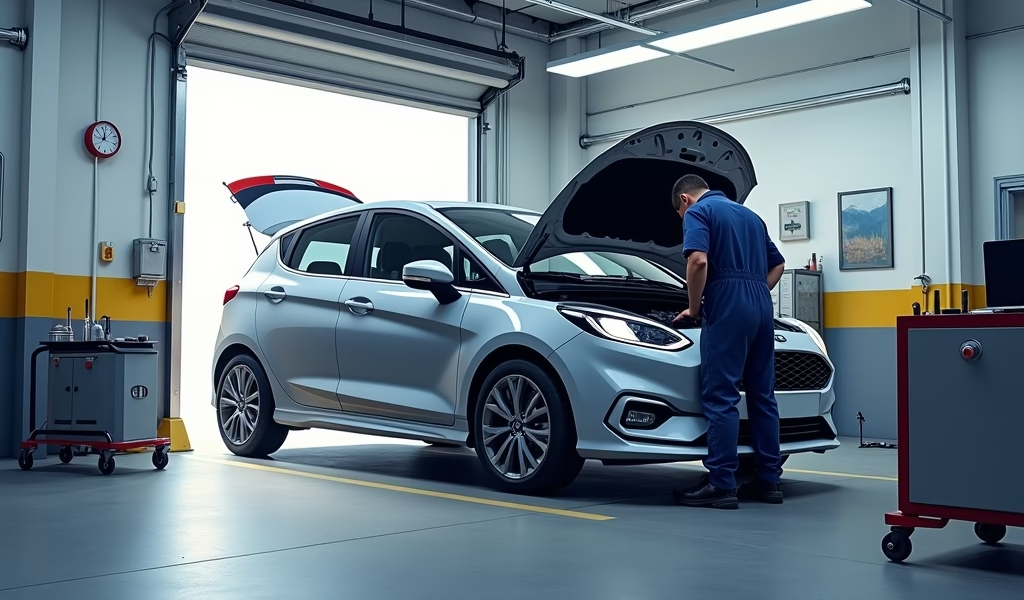
Finding the right mechanic for your Civic is perhaps as important as the maintenance itself. You have several options, each with distinct advantages:
Dealerships offer factory-trained technicians with specialized tools and direct access to manufacturer information. They typically charge premium rates but follow factory procedures precisely. Consider dealerships for complex diagnostics, warranty work, recalls, and major services where specialized knowledge is crucial.
Independent shops may offer comparable service at lower rates, especially for routine maintenance. The sweet spot often lies with independent shops that specialize in Honda vehicles, combining expertise with reasonable pricing. Ask potential shops about their Honda experience specifically and whether technicians hold ASE certifications.
Quick-service chains excel at routine maintenance like oil changes and tire rotations but may lack the expertise for complex repairs. They’re convenient and cost-effective for basic services but not ideal for major work.
DIY maintenance is viable for basic tasks if you have the tools and knowledge. Oil changes, air filter replacements, and battery swaps are relatively straightforward on Civic Hatchbacks. However, modern vehicles are increasingly complex, and some maintenance requires specialized tools or software.
When selecting a shop, consider these factors:
- Certifications (ASE, Honda factory training)
- Warranty offered on parts and labor
- Transparency in explaining repairs and costs
- Willingness to show you the worn/damaged parts they’ve replaced
- Reviews from other Honda owners
Building a relationship with a trusted mechanic pays dividends. They’ll become familiar with your car’s history and might prioritize your emergency repairs. According to a Consumer Reports survey, mechanics are more likely to go the extra mile for regular customers, sometimes even waiving diagnostic fees.
Conclusion
Maintaining your Civic Hatchback isn’t just about avoiding repairs—it’s about maximizing your investment. With proper care, these vehicles regularly exceed 200,000 miles while maintaining their reliability, efficiency, and resale value.
The five steps we’ve covered—following the maintenance schedule, monitoring fluids, replacing wear items proactively, addressing minor issues quickly, and choosing the right service provider—form a comprehensive protection plan for your vehicle.
Remember that preventative maintenance transforms unpredictable, budget-busting emergencies into planned, manageable expenses. It’s the difference between controlling when and how you spend money on your car versus having your car dictate your financial decisions through unexpected failures.
As someone who’s seen countless Civics roll through my bay doors over the years, I can tell you with certainty: the owners who follow these guidelines typically spend less overall and enjoy more trouble-free miles. Your Civic was engineered to be a reliable partner—give it the care it deserves, and it will return the favor many times over.
Frequently Asked Questions
How often should I change the oil in my Civic Hatchback?
Most newer Civics with synthetic oil can go 7,500-10,000 miles between oil changes. Follow your maintenance minder system or owner’s manual for specific intervals based on your driving conditions.
What’s the average lifespan of a Honda Civic Hatchback with proper maintenance?
With proper maintenance, a Civic Hatchback can easily exceed 200,000-250,000 miles. Many well-maintained examples have surpassed 300,000 miles while remaining reliable.
Are Civic Hatchbacks expensive to maintain compared to other compact cars?
Civic Hatchbacks typically have lower maintenance costs than the segment average. According to reliability studies, they rank among the most affordable vehicles to maintain long-term.
How often should the CVT transmission fluid be changed in a Civic Hatchback?
Honda recommends changing CVT fluid every 30,000-60,000 miles depending on driving conditions. Severe conditions like frequent stop-and-go traffic warrant more frequent changes.
What’s the most common major repair needed on Civic Hatchbacks?
The most common major repair on higher-mileage Civics involves the air conditioning system, particularly the compressor. Regular maintenance of the A/C system can help prevent these expensive repairs.