

Overview
While Chrysler Voyager transmissions can be the Achilles’ heel of these otherwise dependable family haulers, proper maintenance—including regular fluid changes every 30,000-40,000 miles and attention to warning signs like delayed engagement or unusual noises—can extend their lifespan from a premature 80,000 miles to well beyond 200,000 miles. The comprehensive guide covers everything from understanding transmission operation and common problems (solenoid failures, torque converter issues) to maintenance tips, repair options ranging from DIY fluid changes to professional rebuilds ($1,800-2,800) or replacements ($2,500-4,500), and driving habits that significantly impact transmission longevity.
Table of Contents
- Understanding Your Voyager’s Transmission
- Common Transmission Problems
- Warning Signs to Watch For
- Preventative Maintenance Tips
- DIY vs Professional Repairs
- When to Consider Replacement
- Cost Breakdown
- Extending Transmission Life
- Conclusion
- Frequently Asked Questions
Understanding Your Voyager’s Transmission
Let me tell you something about the Chrysler Voyager transmission that most folks don’t realize – it’s both the heart and the Achilles’ heel of these otherwise dependable family haulers. I’ve been working on these minivans for over 20 years, and I’ve seen firsthand how a well-maintained transmission can go 200,000+ miles, while a neglected one might fail before hitting 80,000.
Chrysler Voyager models typically come equipped with one of two automatic transmissions. Earlier models (1990s through early 2000s) featured the 41TE four-speed automatic (also called the A604 or Ultradrive). Later models use the more robust 62TE six-speed automatic transmission, which showed some improvements in reliability.
What makes these transmissions unique is their electronic control system. Unlike older, purely mechanical transmissions, the Voyager’s transmission relies on computer-controlled solenoids to direct fluid flow and manage shifting. It’s clever engineering, but it also introduces more potential failure points compared to simpler designs.
The transmission works by using hydraulic pressure to engage different gear sets. Your engine connects to the transmission through a torque converter – essentially a fluid coupling that allows your engine to keep running when you’re stopped at a light. When you’re ready to move, the transmission fluid transfers power through the appropriate gears based on your speed and throttle position.
Understanding this basic operation helps explain why proper fluid condition is absolutely critical – it’s not just a lubricant; it’s the working medium that actually transfers power from your engine to your wheels.

Common Transmission Problems
Through the years, I’ve diagnosed and repaired thousands of Voyager transmission issues. Certain problems show up so consistently that you can almost set your watch by them. Here are the most common culprits I see roll into the shop:
The solenoid pack failure is probably the most frequent repair we perform. These electronic solenoids control fluid flow within the transmission, and when they fail, you’ll experience erratic shifting, delayed engagement, or complete failure to shift into certain gears. Fortunately, replacing solenoids is far less expensive than a complete transmission overhaul.
Torque converter issues are another regular visitor to our shop. The lockup clutch inside the converter can develop a shudder or fail to engage properly. You’ll feel this as a vibration around 40-45 mph, especially under light acceleration. This problem is particularly common in 1996-2000 Voyagers.
Internal clutch wear becomes more likely as your Voyager ages, especially if fluid changes have been neglected. These clutch packs engage and disengage to select different gears, and when they wear out, you’ll experience slipping, especially during acceleration.
Valve body problems are less common but more serious. The valve body directs hydraulic fluid throughout the transmission, and when its passages become clogged with debris or its valves stick, shifting becomes unpredictable. This often requires transmission disassembly to correct.
Overheating is perhaps the ultimate transmission killer in Voyagers. The stock cooling system can struggle during hot weather, especially when towing or driving in mountainous terrain. Once transmission fluid exceeds about 200°F, its lifespan begins to decrease dramatically. At 220°F, it’s aging twice as fast as normal. Install an auxiliary transmission cooler if you regularly face these conditions.
Warning Signs to Watch For
Your Chrysler Voyager won’t suddenly leave you stranded without sending up some warning flares first. In my experience, transmission failures almost always announce themselves well before complete breakdown. Here’s what to watch and listen for:
Delayed engagement when shifting from Park to Drive or Reverse is often the first sign of trouble. If your Voyager hesitates for more than a second before moving after you’ve selected a gear, it’s time to have the transmission checked. This symptom frequently indicates low fluid, worn clutches, or solenoid problems.
Unusual noises should never be ignored. A healthy transmission operates quietly, so any whining, grinding, or clunking sounds warrant investigation. A buzzing or whining that increases with speed often indicates pump problems, while clunks during shifts suggest mechanical wear inside the transmission.
Fluid leaks are a serious warning sign. Transmission fluid should stay inside the transmission – period. Even small leaks can lead to low fluid levels, causing overheating and accelerated wear. Check under your parked Voyager regularly for red or brown fluid spots. The most common leak points are the pan gasket, front pump seal, and cooler lines.
Erratic shifting or hunting between gears suggests electronic control problems. If your Voyager can’t decide which gear it wants to be in, particularly during steady highway cruising, you’re likely dealing with a sensor issue, solenoid problem, or electronic control unit fault.
The check engine light often illuminates for transmission problems. Don’t ignore it! Modern transmissions are computer-controlled, and trouble codes can provide valuable diagnostic information. Common Voyager transmission codes include P0700 (general transmission system fault), P0730 (incorrect gear ratio), and P0740 (torque converter clutch circuit malfunction).
Burning smells indicate overheating transmission fluid. This distinctive odor resembles burning electrical components and often appears after driving in hot weather or heavy traffic. If you notice this smell, check your fluid level and condition immediately. According to transmission specialists, just 20 degrees of overheating can cut your fluid’s lifespan in half.
Preventative Maintenance Tips
Let me share something I tell all my customers: regular maintenance is far cheaper than transmission replacement. After working on thousands of Voyagers, I’ve identified these key maintenance practices that can literally save you thousands:
Change your transmission fluid regularly, regardless of what the owner’s manual says about “lifetime” fluid. For Voyagers used in normal driving, I recommend fluid changes every 30,000-40,000 miles. If you tow or frequently drive in hot weather, shorten that to every 25,000 miles.
Always use the correct fluid specification. For most Voyagers, that means MOPAR ATF+4 fluid. Using the wrong fluid type can cause shift problems, overheating, and accelerated wear. Don’t be tempted by “universal” transmission fluids – they’re rarely truly universal.
Replace the transmission filter during fluid changes. The filter catches debris from normal wear inside the transmission. A clogged filter restricts fluid flow, leading to shifting problems and overheating. It’s inexpensive insurance that’s well worth the additional cost during service.
Consider adding an auxiliary transmission cooler if you live in a hot climate or use your Voyager for towing. These affordable add-ons can drop transmission temperatures by 20-30 degrees, dramatically extending fluid life and reducing wear on internal components.
Pay attention to your differential service schedule too, as problems here can place additional strain on your transmission. The two systems work in tandem, and maintaining both properly creates a more reliable drivetrain.
Check the fluid level and condition monthly. On models with a dipstick, the procedure is straightforward – with the engine warm and running, check that the fluid level is between the “MIN” and “MAX” marks, and that the fluid is bright red, not brown or black, and doesn’t smell burnt.
For newer Voyagers without dipsticks, fluid checks require a professional, but the investment is worth it. We can extract a small fluid sample to assess its condition – often the first indicator of developing problems.
DIY vs Professional Repairs
As someone who’s spent decades working on transmissions, I have tremendous respect for DIY enthusiasts. However, I’ve also seen many well-intentioned repair attempts go sideways. Let’s talk about what’s realistic to tackle yourself and when to call in the pros:
Fluid and filter changes are doable for mechanically-inclined DIYers with basic tools. You’ll need jack stands, a drain pan, basic hand tools, and a torque wrench. The procedure involves removing the transmission pan, replacing the filter, cleaning the pan, and reinstalling it with a new gasket. Just remember that proper disposal of used fluid is essential – it’s toxic to the environment.
External component repairs like replacing cooler lines, adjusting shift linkages, or even swapping out some external sensors can be DIY-friendly on older Voyagers. Newer models with more electronic integration make these tasks more challenging.
Internal repairs are where I strongly recommend professional service. Modern automatic transmissions contain hundreds of precisely calibrated parts, special sealing techniques, and require specialized tools for proper assembly. A single misaligned clutch plate or incorrect torque setting can cause immediate failure.
Diagnostic work becomes increasingly complex on newer Voyagers. While basic code reading is accessible with affordable OBD-II scanners, interpreting those codes and performing proper pinpoint testing usually requires professional-grade equipment and training.
When to Consider Replacement
Sometimes, despite your best maintenance efforts, transmission replacement becomes the most practical option. Here’s my honest guidance on making that decision:
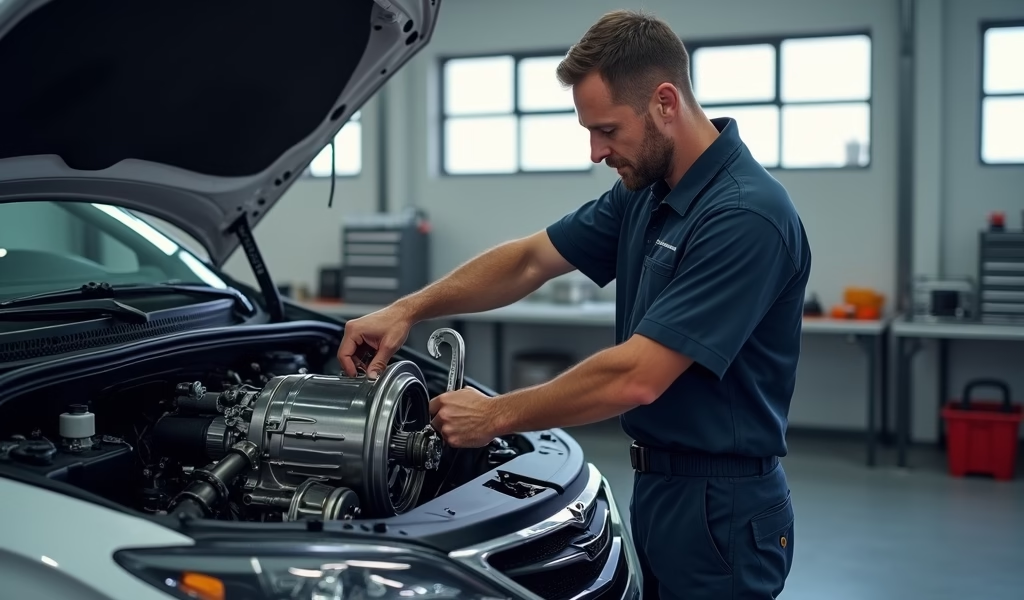
Consider the vehicle’s overall condition and value. If your Voyager is in excellent shape with under 150,000 miles on the odometer, investing in a transmission replacement often makes financial sense compared to buying a new vehicle. For older, high-mileage vehicles with multiple systems showing age, it might be time to move on.
Weigh repair costs against replacement. Sometimes, addressing individual components like solenoids or sensors makes sense, particularly when the transmission isn’t slipping and doesn’t have internal debris. Once metal particles are circulating inside the transmission, however, complete replacement or rebuild is usually necessary.
Explore all replacement options. You have several choices when replacing a Voyager transmission:
- Factory new transmissions offer the greatest reliability but come with the highest price tag (typically $3,500-4,500 installed)
- Remanufactured transmissions provide a good balance of reliability and cost ($2,500-3,500 installed)
- Used transmissions offer the lowest upfront cost but highest risk ($1,500-2,500 installed)
When shopping for a replacement, remember that not all remanufactured units are created equal. The best remanufacturers completely disassemble, clean, and inspect every component, replacing all wear parts and addressing known design weaknesses. This approach produces a transmission that often exceeds the durability of the original.
Consider updated components when replacing. Many aftermarket transmissions include improved valve bodies, stronger clutch materials, or enhanced lubrication systems that address the factory design limitations. These upgrades can significantly extend the service life of your replacement unit.
Don’t forget about the torque converter. When replacing a transmission, always include a new or remanufactured torque converter. Reusing the old converter often leads to premature failure of the new transmission, as wear patterns and contamination transfer from the old unit.
Cost Breakdown
Let’s talk money – specifically, what you can expect to pay for different Chrysler Voyager transmission services. I’ve always believed in transparency about costs because it helps you plan and make informed decisions:
Basic transmission service (fluid and filter change) typically runs $150-300 depending on your location and whether you choose a dealership or independent shop. This preventative maintenance should be performed every 30,000-40,000 miles.
Solenoid pack replacement costs around $400-800. This repair addresses many common shifting problems without requiring complete transmission disassembly. It’s particularly effective when caught early, before internal damage occurs.
Valve body replacement or rebuild ranges from $600-1,200. This more involved repair requires partial transmission disassembly but can resolve many pressure-related shifting problems.
Complete transmission rebuild, where your existing transmission is disassembled, inspected, and rebuilt with new components, typically costs $1,800-2,800 installed. This option allows your mechanic to address all wear items while keeping some of your original components.
Full transmission replacement with a remanufactured unit usually runs $2,500-3,500 installed. This is often the most practical approach when internal damage has occurred, offering the best balance of cost and reliability.
Factory new transmission installation is the premium option at $3,500-4,500. While expensive, it provides the greatest peace of mind and typically includes the longest warranty coverage.
Don’t forget to factor in related repairs that often make sense during transmission service. Adding an auxiliary cooler ($150-250) during a rebuild or replacement can help prevent a repeat failure. Similarly, replacing transfer case components while the transmission is out can save substantial labor costs later.
Extending Transmission Life
Beyond regular maintenance, your driving habits significantly impact transmission longevity. Here are my top tips for extending your Chrysler Voyager’s transmission life:
Warm up your vehicle before driving, especially in cold weather. Allow the engine to idle for about 30 seconds, then drive gently for the first few minutes. This gives the transmission fluid time to reach proper operating temperature and viscosity.
Come to a complete stop before shifting between Drive and Reverse. This simple habit reduces stress on the transmission’s clutches and bands, particularly the reverse clutch pack which is often the first to fail in Voyager transmissions.
Avoid “power braking” – holding the brake while pressing the accelerator. This practice generates excessive heat while providing no benefit. It’s particularly damaging to automatic transmissions.
Use lower gears when driving downhill instead of riding the brakes. This technique, known as “engine braking,” reduces brake wear while preventing transmission overheating. Your Voyager’s transmission will thank you for it.
Don’t overload your Voyager beyond its rated capacity. Exceeding the manufacturer’s weight limits puts tremendous strain on the transmission. If you regularly carry heavy loads or tow, consider upgrading your cooling capacity.
Be gentle when towing. If your Voyager is equipped for towing, accelerate slowly, maintain steady speeds, and consider using the “Tow/Haul” mode if equipped. This modified shift pattern reduces heat buildup during demanding conditions.
Addressing small problems promptly prevents them from becoming big ones. That slight hesitation when shifting into drive? That unusual noise during acceleration? Don’t wait for it to “fix itself” – it won’t. Early intervention often means the difference between a $200 repair and a $2,000 replacement.
Conclusion
Your Chrysler Voyager’s transmission doesn’t have to be its downfall. With proper maintenance, careful driving, and prompt attention to small issues, you can avoid costly breakdowns and extend your transmission’s life significantly.
Remember, the most expensive transmission repair is the one you could have prevented. Regular fluid changes, attention to warning signs, and respecting your vehicle’s limitations can save you thousands in the long run.
If you’re currently experiencing transmission issues, don’t panic. Start with a proper diagnosis from a qualified transmission specialist. Many problems that feel catastrophic – like harsh shifting or engagement delay – can be resolved without complete replacement.
For those facing a replacement decision, weigh your options carefully. Consider your Voyager’s overall condition, how long you plan to keep it, and choose a repair approach that aligns with those plans. A quality remanufactured unit often provides the best value for vehicles you plan to keep long-term.
Ultimately, your Chrysler Voyager can provide many years of reliable service when its transmission is properly maintained. The knowledge you’ve gained here puts you ahead of most owners – use it to make informed decisions about your vehicle’s care, and you’ll enjoy many more miles of trouble-free driving.
Frequently Asked Questions
How long should a Chrysler Voyager transmission last?
With proper maintenance, a Voyager transmission typically lasts 120,000-150,000 miles. Regular fluid changes every 30,000 miles can extend this significantly, while neglected maintenance often leads to failure before 100,000 miles.
What are the first signs of Voyager transmission failure?
The earliest warning signs include delayed engagement when shifting from Park to Drive, unusual noises during shifting, and fluid leaks. Address these symptoms promptly to prevent more serious damage.
Is it worth fixing a Chrysler Voyager transmission?
For vehicles in otherwise good condition with under 150,000 miles, transmission repair or replacement is usually worthwhile. Compare the $2,500-3,500 repair cost against your vehicle’s value and expected remaining lifespan.
Can I drive with a slipping transmission?
Driving with a slipping transmission will cause accelerated wear and eventual failure. Limit driving to essential trips and avoid high speeds or heavy loads until repairs can be completed.
What’s the average cost to replace a Chrysler Voyager transmission?
Expect to pay $2,500-3,500 for a quality remanufactured transmission installed. Factory new units run $3,500-4,500, while used transmissions cost $1,500-2,500 but carry higher risk.