
Overview
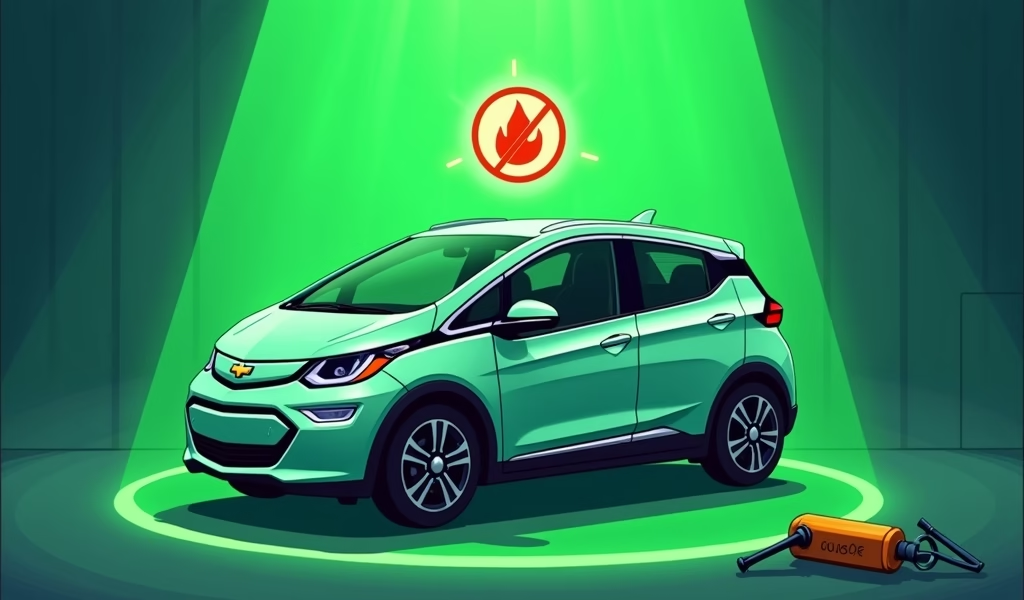
GM’s recall of Chevrolet Bolt EVs (2017-2022) addresses rare manufacturing defects where torn anode tabs and folded separators can cause battery fires, with the company implementing a full battery replacement program for all affected vehicles. Owners awaiting replacement should follow specific safety protocols—including limiting charging to 90%, maintaining minimum range levels, and parking outdoors after charging—while those who receive new battery modules will benefit from improved technology and a reset 8-year warranty.
Table of Contents
- Understanding the Chevrolet Bolt Battery Issue
- What Causes Bolt Battery Fires?
- Identifying Warning Signs
- GM’s Response and Recall Process
- Safety Precautions for Bolt Owners
- Battery Replacement Process
- Long-Term Maintenance Tips
- Impact on Resale Value and Insurance
- Conclusion
- Frequently Asked Questions
Understanding the Chevrolet Bolt Battery Issue
The Chevrolet Bolt battery fire situation has caused quite a stir in the EV community, and rightfully so. As someone who’s been elbow-deep in these systems for years, I can tell you this isn’t your average recall. These lithium-ion battery packs can store an enormous amount of energy – great for driving range, not so great when something goes wrong.
The issue affects nearly all Chevrolet Bolt EVs manufactured between 2017 and 2022, including the Bolt EUV models. GM identified rare manufacturing defects in the battery cells that, under specific conditions, could lead to a fire even when the vehicle is parked and turned off.
What makes these fires particularly concerning is their unpredictable nature. Unlike traditional vehicle fires that often start with obvious warning signs, lithium-ion battery fires can ignite suddenly and are notoriously difficult to extinguish. Once thermal runaway begins (where heat from one cell triggers failure in adjacent cells), temperatures can exceed 1,000°F, and the fire can persist for hours.
The good news? These events are extremely rare, and GM has developed a comprehensive plan to address the issue. Understanding how electric cars work helps put this problem in perspective – it’s a manufacturing defect, not an inherent flaw in EV technology itself.
What Causes Bolt Battery Fires?

Let’s get technical for a moment. The Bolt’s battery pack contains hundreds of individual lithium-ion cells manufactured by LG Energy Solution. After extensive investigation, GM identified two specific manufacturing defects that, when present simultaneously in the same cell, significantly increase fire risk.
The first defect is a torn anode tab – basically a small piece of metal that helps collect current from the cell. The second is a folded separator, which normally keeps the positive and negative components from touching. When both defects occur together, they can create an internal short circuit.
This short circuit generates heat, and in a lithium-ion battery, heat is the enemy. Once a cell reaches a critical temperature (around 130°C/266°F), the chemical reaction inside becomes self-sustaining. In layman’s terms, it starts cooking itself and can’t stop.
Most battery management systems can detect abnormal conditions, but this particular failure mode can develop too rapidly for the safety systems to respond effectively. It’s like having a smoke detector that works perfectly but can’t detect a specific type of fire until it’s already spread.
According to NHTSA data, these defects appear in a small percentage of cells, which explains why relatively few vehicles (about a dozen out of 140,000+) have actually experienced fires. Still, even one is too many when people’s safety is at stake.
Identifying Warning Signs
While battery fires can occur with little advance warning, there are some potential indicators that your Bolt’s battery might be developing problems. Catching these early could be the difference between a simple service appointment and a catastrophic event.
First, pay attention to any battery-related warning lights or messages on your dashboard. The Bolt has sophisticated diagnostic capabilities, and warnings like “Service Battery Charging System” or “Propulsion Power is Reduced” shouldn’t be ignored, even if the vehicle seems to be operating normally.
Unexpected drops in range can also signal battery issues. If your Bolt suddenly shows significantly less range than usual (beyond normal weather-related variations), it could indicate degraded cells. The myChevrolet app provides detailed battery health information worth monitoring.
Unusual odors are another red flag. A sweet, chemical smell (especially during charging) might indicate electrolyte leakage. Any burning smell demands immediate attention – disconnect from charging and move away from the vehicle if it’s safe to do so.
Listen for unusual sounds during charging or operation. While EVs are naturally quiet, any popping, hissing, or gurgling noises from the battery area warrant investigation. Similarly, if portions of the floor feel excessively warm, particularly when the vehicle isn’t charging, professional inspection is advised.
The most concerning sign is any smoke or vapor coming from underneath the vehicle. If you observe this, move a safe distance away immediately and call emergency services. Don’t attempt to move the vehicle or extinguish a battery fire yourself – these require specialized firefighting techniques and equipment.
GM’s Response and Recall Process
Give credit where it’s due – GM hasn’t taken this situation lightly. After identifying the defects, they launched one of the most comprehensive EV recalls in automotive history, promising to replace battery modules in every affected vehicle regardless of age or mileage.
The recall evolved in phases. Initially, GM pushed software updates limiting charge capacity to 90% as a stopgap measure. When that proved insufficient (some updated vehicles still experienced fires), the company expanded to include all model years and committed to full battery replacement.
This replacement program represents an enormous logistical challenge – sourcing new battery modules for 140,000+ vehicles isn’t like ordering brake pads. The estimated cost exceeds $1.8 billion, though GM has secured reimbursement from LG for much of this expense.
To check if your Bolt is included, visit Chevrolet’s recall page and enter your VIN. Even if you’ve received no official notice, virtually all 2017-2022 Bolt EVs and EUVs are affected.
While awaiting replacement, GM recommends several safety measures, including parking outdoors after charging, limiting maximum charge to 90%, and maintaining at least 70 miles of remaining range. These precautions significantly reduce fire risk but don’t eliminate it entirely.
Some owners have opted for GM’s buyback program in states with strong lemon laws, while others have chosen to follow the safety protocols and continue driving their Bolts. Your local dealer can provide guidance on the options available in your region.
Safety Precautions for Bolt Owners
If you’re driving a Bolt while awaiting battery replacement, these safety protocols aren’t optional – they’re essential for protecting yourself and your property. Let’s break them down into simple, actionable steps.
For charging, set your maximum charge limit to 90% using the “Target Charge Level” feature (or “Hilltop Reserve” on 2017-2018 models). Avoid letting the battery drop below 70 miles of remaining range – this keeps the cells in a safer middle charge range where the risk is lower.
Regarding parking, always park outdoors after charging. If you must park in a garage, do so only when the battery is in the recommended range (30-90%) and move it outside immediately after charging completes. Maintain at least 50 feet between your parked Bolt and any buildings or other vehicles when feasible.
Monitor your battery religiously. The myChevrolet app allows remote battery status checks and can send alerts for unexpected changes. Perform visual inspections regularly, looking for any damage to the charging port or unusual conditions under the vehicle.
Proper car battery care tips are crucial during this period. Consider more frequent but shorter charging sessions rather than deep discharges followed by long charges. This reduces stress on the battery and minimizes high-charge periods where risk is elevated.
Keep emergency contacts handy. Program your local fire department, GM’s EV Concierge service (1-833-EVCHEVY), and roadside assistance into your phone. If you notice anything concerning, err on the side of caution – professional evaluation is always preferable to unnecessary risk.
Battery Replacement Process

When your turn for battery replacement arrives, here’s what to expect. The process begins with GM notifying you that replacement modules are available for your specific vehicle. Prioritization typically follows a risk-based approach, with older models and certain battery manufacturing dates addressed first.
The actual replacement is comprehensive – technicians won’t just swap a few cells. They’ll install entirely new battery modules with improved chemistry and manufacturing processes. The procedure takes 1-2 days of shop time once parts are available.
During the replacement, technicians will remove the vehicle’s underbody shield to access the battery pack, disconnect high-voltage connections (following strict safety protocols), and exchange all modules. After installation, they’ll run extensive diagnostics to ensure everything functions correctly before returning your vehicle.
The new battery comes with a fresh 8-year/100,000-mile warranty, essentially resetting the clock on the most expensive component in your vehicle. Many owners report improved range and performance after replacement, as the new cells often outperform their partially degraded predecessors.
While waiting for your appointment, continue following all safety recommendations. Some dealers offer loaner vehicles during the replacement process, though availability varies by location. Ask about this option when scheduling your service appointment.
After replacement, you can return to normal charging and parking habits. The new batteries don’t contain the manufacturing defects that caused the recall, so the fire risk returns to the extremely low level associated with properly manufactured EV batteries.
Long-Term Maintenance Tips
Once your Bolt receives its new battery, implementing proper maintenance habits will help maximize its lifespan. Unlike vehicles that do electric cars use oil or traditional fluids, battery care focuses on charging patterns and temperature management.
For everyday charging, the 20-80% rule is a good guideline. Keeping your battery in this middle range most of the time reduces stress on the cells. Save 100% charges for long trips when you need maximum range, rather than making it your daily routine.
Temperature management matters tremendously for lithium-ion longevity. Extreme heat accelerates degradation, so parking in shade during summer helps preserve battery health. In winter, using preconditioning while plugged in warms the battery efficiently without depleting range.
When it comes to charging speed, Level 2 (240V) home charging represents the sweet spot for battery longevity. DC fast charging generates more heat and stress on the battery – it’s great for road trips but best used sparingly for regular charging.
Regular software updates are crucial, even after battery replacement. GM continues refining the battery management software to optimize performance and safety. These updates often arrive wirelessly, but some require dealer installation.
Finally, annual battery health checks are worth the time. Many dealers include battery diagnostics in regular service, allowing them to spot potential issues before they affect performance or safety. Think of it as preventative medicine for your EV’s most vital system.
Impact on Resale Value and Insurance
Let’s talk dollars and cents – how does this recall affect your Bolt’s value? Initially, the news hit hard, with values dropping 20-30% almost overnight. The market feared the worst, and some owners found themselves with vehicles worth significantly less than they owed.
The outlook has improved as the replacement program progresses. Bolts with documented battery replacements have regained much of their value, sometimes selling at a premium compared to unrepaired models. They essentially offer a brand new battery with full warranty – a significant benefit for used EV buyers concerned about degradation.
Insurance implications vary by carrier. Some insurers increased premiums for affected Bolts, while others added special provisions about parking locations. A few even refused to cover unreplaced vehicles, though this remains rare. After battery replacement, most insurance situations normalize.
If you’re selling your Bolt, documentation matters. Keep all recall service records, particularly the battery replacement paperwork. These documents reassure potential buyers and support higher asking prices. Mention the new battery prominently in any listings – it’s a major selling point.
For buyers considering a used Bolt, this recall actually presents an opportunity. Models with documented battery replacements offer excellent value, essentially providing a refreshed power system in an otherwise proven vehicle. Just verify the replacement has been completed before purchasing.
The Bolt’s long-term value prospects remain solid. Despite the recall, these vehicles offer impressive range and features at competitive prices. As battery replacements continue and the issue fades from headlines, market perception will continue improving.
Conclusion
The Chevrolet Bolt battery fire situation represents one of the more significant growing pains in the EV revolution, but it’s important to maintain perspective. The actual fire risk, while serious, affects a small percentage of vehicles. GM’s comprehensive response demonstrates their commitment to making things right.
For current owners, following safety protocols while awaiting battery replacement is crucial. The temporary inconvenience of modified charging and parking habits is a small price for ensuring safety. Once replacement is complete, you’ll have a vehicle with a brand new battery pack and full warranty protection.
The lessons learned from this recall have already improved battery design and manufacturing across the industry. The detailed forensic analysis of failure modes has led to enhanced quality control protocols, benefiting all EV owners through safer, more reliable batteries.
Looking ahead, the Bolt’s story will likely be remembered as an important chapter in EV development rather than a defining failure. These vehicles continue offering excellent efficiency, performance, and value – especially after receiving their updated battery systems.
For potential EV buyers, this recall illustrates both a challenge and an opportunity. The thoroughness of the response demonstrates that automakers stand behind these new technologies, even when problems arise. As with any technological transition, there are occasional setbacks, but the path forward remains clear and promising.
Frequently Asked Questions
How do I know if my Chevrolet Bolt is affected by the battery recall?
Virtually all Chevrolet Bolt EVs and EUVs from model years 2017-2022 are included in the recall. You can verify your specific vehicle by entering your VIN on GM’s recall website or contacting your local Chevrolet dealer.
Can I still drive my Bolt while waiting for battery replacement?
Yes, GM confirms it’s safe to continue driving affected Bolts while following their safety guidelines. These include limiting charging to 90%, maintaining at least 70 miles of remaining range, and parking outdoors after charging.
How long does the battery replacement process take?
The actual replacement takes 1-2 days once parts are available and your appointment is scheduled. Wait times for parts vary by region and production capacity, with some owners receiving replacements within weeks while others wait months.
Will my insurance cover damage if a battery fire occurs?
Most auto insurance policies cover fire damage regardless of cause, including battery fires. However, some insurers have added specific provisions regarding vehicles under active safety recalls, so it’s advisable to check with your specific carrier.
Will the replacement battery restore my original driving range?
Yes, and possibly improve it. The replacement batteries are brand new and typically provide the full EPA-estimated range (238-259 miles depending on model year), sometimes exceeding the performance of the partially degraded original battery.