

Overview
Just like skipping doctor visits leads to health issues, ignoring your vehicle’s certification maintenance requirements can void your warranty and lead to catastrophic repairs that cost far more than regular upkeep. Following manufacturer-specified service schedules—including oil changes, transmission service, timing belt replacements, and fluid flushes—not only protects your investment but also ensures optimal performance, safety, and longevity, potentially saving you thousands while extending your vehicle’s life well beyond 200,000 miles.
Table of Contents
- Understanding Certification Maintenance Requirements
- Why Following Maintenance Requirements Matters
- Key Maintenance Items You Shouldn’t Skip
- Warning Signs Your Vehicle Needs Attention
- Cost Comparison: Preventive Maintenance vs. Major Repairs
- DIY vs. Professional Maintenance: Making the Right Choice
- Common Maintenance Myths Debunked
- Creating Your Maintenance Schedule
- Conclusion
- Frequently Asked Questions
Understanding Certification Maintenance Requirements
Let me tell you something I’ve learned after 25 years under the hood: certification maintenance requirements aren’t suggestions—they’re lifelines for your vehicle. These manufacturer-specified service intervals are carefully calculated to keep your car running smoothly for years to come.
When you drive your vehicle off the lot, that warranty booklet isn’t just paperwork—it’s a contract. The manufacturer promises to cover specific repairs if components fail prematurely, but only if you’ve held up your end of the bargain by following the maintenance schedule. This isn’t the dealership trying to make extra money; it’s the engineering team’s roadmap for your vehicle’s longevity.
Think of your vehicle maintenance like healthcare. Just as you wouldn’t skip doctor visits and expect optimal health, your vehicle needs regular check-ups to catch small issues before they become major problems. Certification maintenance covers everything from oil changes to timing belt replacements, each service designed to address components before they reach critical wear points.
Different vehicles have different requirements. For example, many modern cars with synthetic oil can go 7,500-10,000 miles between oil changes, while older vehicles or those using conventional oil might need service every 3,000-5,000 miles. Your specific requirements are outlined in your owner’s manual, which I always tell my customers is the most valuable (and most overlooked) resource they have.
Why Following Maintenance Requirements Matters
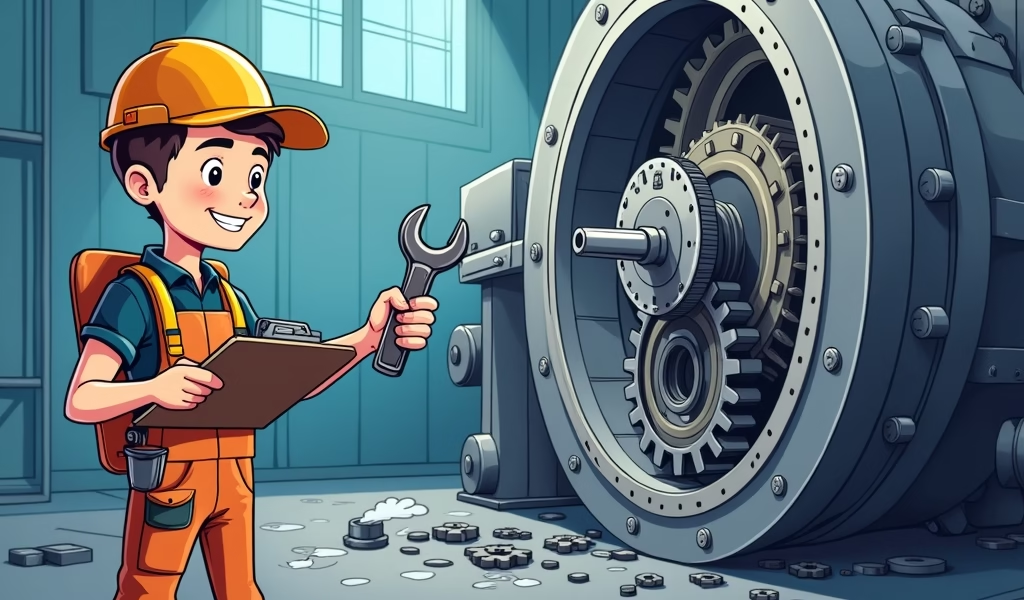
The most immediate benefit of following certification maintenance is warranty protection. Miss a required service, and you might find yourself paying out-of-pocket for repairs that would otherwise be covered. I’ve seen it happen too many times—a $100 oil change skipped leads to a $5,000 engine replacement with no warranty coverage.
Beyond warranty protection, proper maintenance dramatically extends vehicle lifespan. Modern vehicles can easily reach 200,000+ miles when properly maintained. That $30,000 investment can deliver a decade or more of reliable service with proper care. Essential maintenance tasks keep all systems operating within their designed parameters, preventing the accelerated wear that leads to premature failure.
Your safety is another crucial factor. Many required maintenance items involve inspection of safety-critical systems like brakes, steering components, and suspension parts. These inspections catch wear before it becomes dangerous. According to the National Highway Traffic Safety Administration, vehicle maintenance issues contribute to thousands of accidents annually.
Finally, there’s the financial aspect. Regular maintenance is predictable and budget-friendly compared to emergency repairs. It’s much easier to plan for a $150 brake service than to suddenly need $1,200 for a complete brake system overhaul because the pads wore down to the rotors.
Key Maintenance Items You Shouldn’t Skip
After working on thousands of vehicles, I can tell you the maintenance items that cause the most expensive problems when neglected:
- Oil and filter changes: Engine oil breaks down over time, losing its protective properties. Without fresh oil, internal engine components experience increased friction and heat, leading to accelerated wear. Modern synthetic oils last longer, but still need regular replacement.
- Transmission service: Transmission fluid transfers power and lubricates internal components. As it ages, it loses viscosity and protective properties. Most manufacturers recommend transmission service every 30,000-60,000 miles.
- Timing belt replacement: This is the big one that causes catastrophic damage when neglected. Most timing belts need replacement every 60,000-100,000 miles. When they fail, pistons and valves collide, often resulting in thousands in engine damage.
- Brake fluid flush: Brake fluid absorbs moisture over time, leading to reduced braking performance and internal corrosion. Most manufacturers recommend replacement every 2-3 years regardless of mileage.
- Cooling system service: Coolant loses its corrosion inhibitors over time, leading to radiator and internal engine damage. Most require replacement every 30,000-50,000 miles.
The certification maintenance requirements in your owner’s manual are designed by engineers who know exactly how each component wears and when it needs attention. Using car maintenance apps can help you track these crucial services and ensure nothing falls through the cracks.
Remember, these aren’t arbitrary guidelines—they’re based on extensive testing and real-world data. When a manufacturer says to replace your timing belt at 90,000 miles, they know that failure rates increase significantly beyond that point.
Warning Signs Your Vehicle Needs Attention
Your vehicle communicates when something’s wrong, but you need to know how to listen. Here are the warning signs I tell my customers never to ignore:
- Warning lights: That check engine light isn’t a suggestion—it’s a direct communication from your vehicle’s computers that something needs attention. Modern vehicles have sophisticated monitoring systems that detect problems before they cause damage.
- Unusual noises: Grinding, squealing, knocking, or clicking sounds are your vehicle’s way of crying for help. Each type of noise indicates a different issue: grinding often means brake problems, knocking usually indicates engine issues, and clicking can signal CV joint failure.
- Fluid leaks: Clean fluid shouldn’t be leaving your vehicle. Different fluids have distinct colors: red/brown (transmission), green/orange (coolant), brown/black (oil), and clear/brown (brake fluid). Even small leaks deserve attention before they become major.
- Vibrations: Whether it’s in the steering wheel, floor, or seat, vibrations indicate components operating outside their designed parameters. Common causes include unbalanced tires, worn suspension parts, or brake issues.
- Reduced performance: If your vehicle hesitates when accelerating, struggles up hills, or gets noticeably worse fuel economy, something’s wrong. These are often early indicators of issues that will get more expensive if ignored.
When you notice these warning signs, consulting your maintenance schedule is the first step. Often, the solution is a maintenance service that was coming due anyway. Addressing these issues promptly not only prevents more expensive repairs but also maintains your certification requirements for warranty purposes.
I’ve seen too many customers ignore minor symptoms until they become major problems. That faint grinding noise from your brakes? It’s much cheaper to replace just the pads now than to replace pads, rotors, and possibly calipers later.
Cost Comparison: Preventive Maintenance vs. Major Repairs
Let me break down the numbers to show you why preventive maintenance makes financial sense:
Regular maintenance over 100,000 miles typically includes:
- Oil changes (10-20 services): $500-1,000
- Transmission service (2-3 services): $300-600
- Timing belt replacement (1 service): $500-900
- Brake fluid flushes (3-4 services): $300-500
- Cooling system services (2-3 services): $200-450
- Various filters and inspections: $500-800
Total preventive maintenance: approximately $2,300-4,250 over 100,000 miles
Now, let’s compare that to potential repair costs from neglected maintenance:
- Engine replacement due to oil starvation: $3,500-7,000
- Transmission replacement due to fluid breakdown: $2,500-4,500
- Engine damage from timing belt failure: $2,000-4,000
- Major cooling system repair from neglected coolant: $1,000-2,500
Just one of these major repairs typically costs more than all the preventive maintenance combined. Plus, these repairs often come with unexpected downtime, towing costs, and the stress of emergency repairs.
According to Consumer Reports, vehicle owners who follow maintenance schedules spend an average of 31% less on repairs over their vehicle’s lifetime compared to those who only address problems as they arise.
Remember that certification maintenance isn’t just about preventing failures—it’s about optimizing performance, fuel efficiency, and vehicle longevity. The financial benefits extend beyond just avoiding repairs.
DIY vs. Professional Maintenance: Making the Right Choice
Many maintenance items can be performed yourself if you have the knowledge, tools, and inclination. Here’s my guidance on what’s DIY-friendly and what’s best left to professionals:
DIY-friendly maintenance:
- Oil and filter changes (with proper disposal methods)
- Air filter replacement
- Wiper blade replacement
- Battery maintenance and replacement
- Brake pad replacement (for those with mechanical aptitude)
- Fluid level checks and top-offs
Best left to professionals:
- Timing belt replacement (requires specialized tools and precise timing)
- Transmission services (proper flushing and filter replacement)
- Cooling system pressure testing and repair
- Electrical system diagnosis and repair
- Engine internal repairs
- Anything involving refrigerant (A/C service)
If you choose DIY maintenance, remember that documentation is crucial for warranty purposes. Keep detailed records including:
- Date and mileage of service
- Exact products used (oil type, filter part numbers)
- Procedures performed
- Photos of completed work (helpful for warranty claims)
The most important thing to remember is that DIY doesn’t mean cutting corners. Follow manufacturer specifications for fluid types and capacities. Use quality parts that meet or exceed OEM specifications. And always properly dispose of used fluids according to local regulations.
Even if you prefer professional service, understanding your vehicle’s needs helps you become an informed consumer. You’ll know when a service advisor is recommending necessary maintenance versus upselling unnecessary services.
Common Maintenance Myths Debunked
Let me clear up some persistent myths about vehicle maintenance that I hear in my shop almost daily:
Myth: You must get service at the dealer to maintain your warranty.
Truth: The Magnuson-Moss Warranty Act protects your right to have maintenance performed anywhere without voiding your warranty. The key is ensuring the service meets manufacturer specifications and keeping proper documentation.
Myth: Modern synthetic oil needs changing every 3,000 miles.
Truth: Most modern vehicles using full synthetic oil can go 7,500-10,000 miles between changes. Always follow your manufacturer’s recommendations, which are based on extensive testing with your specific engine.
Myth: Transmission fluid is lifetime and never needs changing.
Truth: “Lifetime” usually means the expected lifetime of the transmission assuming ideal conditions. Most transmission specialists recommend service every 30,000-60,000 miles for maximum longevity, especially in severe driving conditions.
Myth: Premium fuel improves performance in all vehicles.
Truth: Only use premium fuel if your vehicle requires it. Using higher octane fuel in an engine designed for regular provides no benefit and wastes money. Your owner’s manual specifies the correct fuel type.
Myth: Engine flushes and fuel system cleaners are necessary maintenance.
Truth: While these services have their place for specific issues, they’re rarely required as regular maintenance. Many are upsells that don’t provide significant benefits for most vehicles.
Following essential car maintenance tips from your manufacturer—not myths or well-meaning but outdated advice—is the best way to ensure your vehicle’s longevity and maintain your warranty coverage.
Creating Your Maintenance Schedule
Developing a personalized maintenance schedule keeps your vehicle in top condition while helping you budget for upcoming services. Here’s how I recommend approaching it:
First, locate your manufacturer’s maintenance schedule in your owner’s manual. Many are now available online through the manufacturer’s website if you don’t have the physical copy. For modern vehicles, you can also find this information in your vehicle’s infotainment system.
Determine whether your driving habits fall under “normal” or “severe” conditions. Most people don’t realize they qualify for severe service. You’re in this category if you:
- Drive mostly short trips (less than 10 miles)
- Drive in extremely hot or cold weather
- Drive in dusty conditions or on unpaved roads
- Tow or carry heavy loads regularly
- Experience stop-and-go traffic frequently
Create a digital or physical maintenance log that includes:
- Vehicle details (make, model, year, VIN)
- Current mileage
- Schedule of upcoming services by mileage and date
- Record of completed services with date, mileage, and provider
- Notes on any issues or observations
Set calendar reminders for time-based maintenance items like brake fluid flushes (typically every 2-3 years) or belt inspections. Mileage-based reminders can be set in many modern vehicles, or through third-party apps that track your maintenance.
The digital revolution has made maintenance tracking easier than ever. I recommend using specialized vehicle maintenance apps that can send alerts when service is due, store digital copies of receipts, and even provide maintenance histories when selling your vehicle.
When scheduling services, try to group them efficiently. For example, if you’re due for an oil change at 30,000 miles and a transmission service at 32,000, it might make sense to do both at once to save a trip to the shop.
Conclusion
Following certification maintenance requirements isn’t just about keeping your warranty valid—it’s about protecting one of your most significant investments. The few hours and dollars spent on regular maintenance pay dividends in vehicle reliability, safety, longevity, and resale value.
I’ve seen too many preventable failures in my career. The hardest conversations are always the ones where I have to tell someone their engine needs replacing because of missed oil changes, or their transmission failed because they never changed the fluid. These major repairs could have been prevented with simple, scheduled maintenance.
Your vehicle was designed by engineers who knew exactly what it needs and when. Trust their expertise, follow the maintenance schedule, and keep meticulous records. Your wallet—and your future self—will thank you when you’re still driving a reliable vehicle long after it’s paid off.
Remember that certification maintenance isn’t a suggestion—it’s a requirement for warranty coverage and a blueprint for vehicle longevity. The choice is simple: pay a little now for maintenance, or pay a lot later for repairs.
Frequently Asked Questions
What exactly is certification maintenance?
Certification maintenance refers to the manufacturer-specified service intervals and procedures required to maintain your vehicle’s warranty coverage. It includes regular fluid changes, inspections, and component replacements designed to prevent premature failures.
Will missing one oil change void my warranty?
A single missed oil change typically won’t void your entire warranty, but could affect coverage for engine-related issues if the manufacturer can prove the missed service caused the failure. Consistent maintenance is your best protection against warranty disputes.
Can I use aftermarket parts and still maintain my certification?
Yes, you can use quality aftermarket parts that meet or exceed OEM specifications without affecting your warranty. The Magnuson-Moss Warranty Act protects your right to use aftermarket parts as long as they aren’t the cause of a failure.
How do I know which maintenance schedule applies to my driving habits?
If you frequently drive in stop-and-go traffic, extreme temperatures, dusty conditions, or make mostly short trips under 10 miles, you should follow the “severe” maintenance schedule. Most drivers fall under the severe category without realizing it.
Is the dealership maintenance schedule just a way to make more money?
While dealerships do profit from service, the maintenance schedule itself comes from the manufacturer’s engineering team based on extensive testing. The schedule is designed to maximize vehicle longevity and prevent costly failures.