
Overview
Who knew that your car warranty was more high-maintenance than your ex? This article outlines seven critical strategies to maintain your vehicle warranty, including following manufacturer maintenance schedules, keeping detailed service records, using approved parts and fluids, addressing warning lights immediately, performing regular inspections, choosing qualified service providers, and driving responsibly.
Table of Contents
- Understanding Car Warranties
- Follow Manufacturer’s Maintenance Schedule
- Keep Detailed Service Records
- Use Approved Parts and Fluids
- Address Warning Lights Immediately
- Perform Regular Visual Inspections
- Choose Qualified Service Providers
- Drive Responsibly
- Conclusion
- Frequently Asked Questions
Your vehicle represents one of your biggest investments, and understanding how to protect that investment through proper maintenance isn’t just smart—it’s essential. As a master technician with over 20 years of experience, I’ve seen countless warranty claims denied because owners inadvertently violated their maintenance terms. This car warranty guide will help you avoid those costly mistakes.
Car warranties serve as your financial safety net when unexpected problems arise. But like any contract, they come with conditions—the most important being that you properly maintain your vehicle. Let me walk you through seven proven maintenance strategies that will keep both your car and its warranty in prime condition.
After working on thousands of vehicles, I’ve identified these maintenance practices as the most critical for preserving your warranty protection. These aren’t just suggestions—they’re the difference between a covered repair and an expensive out-of-pocket bill.
Understanding Car Warranties
Before diving into maintenance specifics, it’s important to understand what your warranty actually covers. That booklet in your glove compartment isn’t just paperwork—it’s a detailed contract outlining what’s protected and what isn’t.
Most new vehicles come with several types of coverage:
- Bumper-to-bumper warranty (typically 3 years/36,000 miles)
- Powertrain warranty (often 5 years/60,000 miles or more)
- Corrosion warranty (varies widely)
- Emissions warranty (legally mandated coverage)
What most warranties enthusiastically cover: manufacturing defects, premature component failure, and specific systems that fail under normal use. What they typically exclude: wear items (brakes, wipers, etc.), accident damage, and—here’s the critical part—failures resulting from improper maintenance.
This last point is where many owners accidentally void their protection. Skipping essential maintenance is like telling the warranty administrator, “Please deny my claim.” Let’s make sure that doesn’t happen to you.
Follow Manufacturer’s Maintenance Schedule
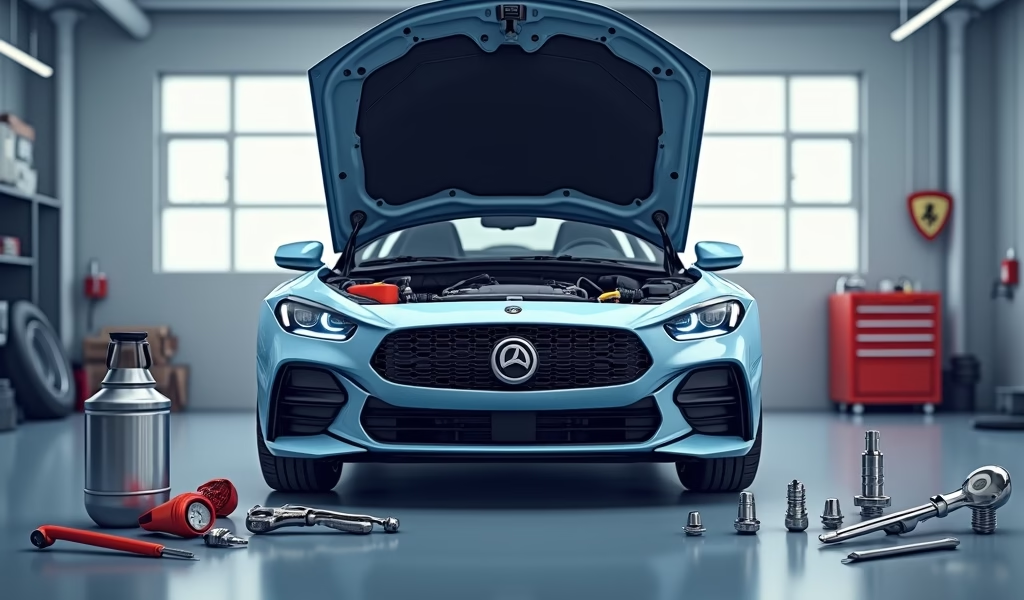
Your vehicle’s maintenance schedule isn’t a suggestion—it’s a requirement for warranty protection. Think of it as your car’s prescription for a long, healthy life.
Finding Your Vehicle’s Maintenance Schedule
This vital information lives in your owner’s manual, typically in a section called “Maintenance” or “Service Schedule.” Lost your manual? Most manufacturers provide digital versions online, or you can request one from your dealership.
The schedule outlines exactly what services your vehicle needs and when. This isn’t guesswork—it’s based on extensive testing and engineering knowledge specific to your make and model.
Critical Service Intervals
While schedules vary by manufacturer, most follow similar patterns:
- Every 3,000-10,000 miles: Oil and filter change, tire rotation, basic inspections
- Every 15,000-30,000 miles: Air filter replacement, brake inspection, cooling system check
- Every 60,000 miles: Timing belt inspection/replacement, transmission service
- Every 100,000 miles: Spark plug replacement, major fluid services
Many modern vehicles also have two different schedules: one for “normal” driving conditions and another for “severe” conditions. Surprisingly, most drivers fall under severe conditions without realizing it. Short trips, stop-and-go traffic, extreme temperatures, and dusty environments all qualify as severe driving conditions according to AAA’s vehicle maintenance guidelines.
Consequences of Skipped Maintenance
The implications of missed maintenance go beyond potential mechanical failures. From a warranty perspective, manufacturers can—and frequently do—deny claims if they determine you’ve neglected scheduled service.
That $4,000 transmission repair could become your financial responsibility if you can’t prove you changed the transmission fluid according to schedule. I’ve witnessed this scenario play out hundreds of times during my career, and it’s always a painful lesson for vehicle owners.
Keep Detailed Service Records
If maintenance is the backbone of warranty protection, documentation is the proof that makes it enforceable. When you file a warranty claim, the first question you’ll face is: “Can you prove this vehicle was properly maintained?”
Essential Information to Record
For each maintenance visit, ensure your records include:
- Date of service and current mileage
- Detailed description of services performed
- Parts replaced and their part numbers
- Fluids used (including specifications)
- Service provider’s name and contact information
- Technician notes about vehicle condition
This level of detail might seem excessive, but I’ve seen warranty claims hinge on whether a specific type of transmission fluid was used. These details matter tremendously when thousands of dollars are at stake.
Record-Keeping Options
The days of stuffing receipts in your glove box are over. Consider these more reliable alternatives:
- Digital maintenance apps with cloud storage
- Spreadsheets with service details
- Photos of all receipts (before they fade)
- Dealer online service portals
For maximum protection, I recommend using both digital and physical methods. When dealing with warranty claims, redundancy isn’t overkill—it’s smart strategy.
Use Approved Parts and Fluids
Using the wrong parts or fluids in your vehicle can compromise your warranty protection and lead to premature component failure. This is particularly true for today’s sophisticated engines and transmissions, which are designed with tight tolerances and specific fluid requirements.
OEM vs. Aftermarket Parts
While the Magnuson-Moss Warranty Act prevents manufacturers from requiring you to use only their parts, there are important considerations:
- OEM parts are guaranteed to meet manufacturer specifications and won’t compromise warranty coverage
- Aftermarket parts vary widely in quality and may affect warranty claims if they contribute to a failure
For warranty-critical components like timing components, electronic parts, and emission systems, OEM parts provide the safest option. For wear items like wiper blades or cabin air filters, quality aftermarket parts typically suffice.
Fluid Specifications Matter
Modern vehicles are incredibly sensitive to fluid specifications:
- Engine oils must meet exact viscosity and performance standards
- Many transmissions require specific formulations that aren’t interchangeable
- Coolants vary by chemistry and shouldn’t be mixed
Using incorrect fluids can cause serious damage that warranty won’t cover. Always check your owner’s manual for the proper specifications before any fluid service. The few dollars saved on budget fluids might cost you thousands in repair bills—a gamble that never pays off in my experience working with vehicles.
Address Warning Lights Immediately
Those colorful dashboard lights aren’t just decorative—they’re your vehicle’s way of communicating potential problems. Ignoring them can lead to warranty-voiding damage and costly repairs.
Critical Warning Lights
Some warnings demand immediate attention:
- Check Engine Light: Indicates emission or engine performance issues
- Oil Pressure Warning: Signals potentially catastrophic lubrication problems
- Temperature Warning: Shows dangerous overheating that can warp heads or blow gaskets
- Battery/Charging Light: Reveals electrical system problems
From a warranty perspective, continuing to drive with active warning lights can be particularly problematic. Many manufacturers specifically state in their warranty terms that damage resulting from operation after warning lights appear may not be covered.
Proper Response to Warnings
When a warning light illuminates:
- Consult your owner’s manual immediately
- For red warnings (oil, temperature), stop driving as soon as safely possible
- For yellow warnings, get the vehicle checked promptly
- Document when the light appeared and what actions you took
Addressing warning lights promptly not only protects your warranty but potentially saves thousands in repair costs. In my years as a technician, I’ve seen countless small problems turn into major repairs because warning lights were ignored for too long.
Perform Regular Visual Inspections
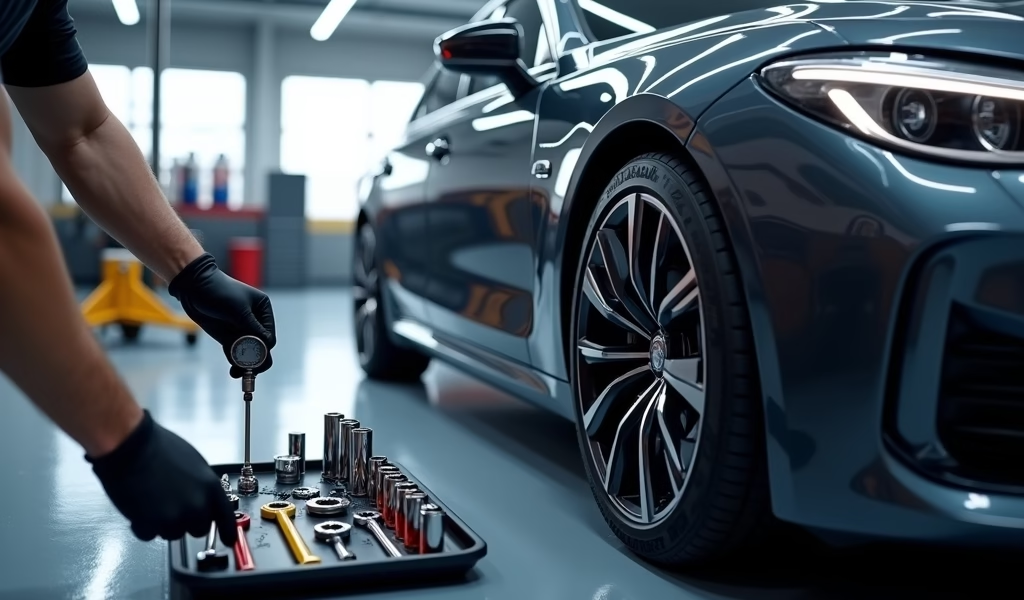
Between service visits, your vehicle benefits from regular visual check-ups. These quick inspections can catch developing issues before they become warranty-voiding problems.
Monthly Check Points
Even if you’re not mechanically inclined, you can easily monitor:
- Tire pressure and tread wear
- Fluid levels (oil, coolant, washer fluid)
- Exterior lights functionality
- Windshield wipers condition
- Visible leaks under the vehicle
These five-minute inspections can identify problems early, when they’re typically covered under warranty and before they cause secondary damage that might not be covered.
Warning Signs Anyone Can Spot
You don’t need mechanical training to recognize these red flags:
- New noises (grinding, squealing, knocking)
- Unusual smells (burning, fuel, sweet coolant)
- Fluid spots on your driveway
- Changes in handling, braking, or acceleration
- Excessive exhaust smoke
When these symptoms appear, document them and get your vehicle checked promptly. Such proactive approach not only preserves your warranty but often reduces repair costs by catching issues early.
In my experience, the most expensive repairs I’ve performed have typically been on vehicles where owners ignored early warning signs. A $20 hose replacement can quickly become a $2,000 engine repair if leaking coolant isn’t addressed promptly.
Choose Qualified Service Providers
Where you get your vehicle serviced can significantly impact your warranty protection. Not all service providers are created equal when it comes to warranty-compliant maintenance.
Dealerships vs. Independent Shops
Each option offers different benefits:
- Dealership advantages: Direct manufacturer connection, specialized training, proper documentation
- Independent shop advantages: Often more affordable, potentially more personal service, flexibility
For warranty protection, dealership service provides the clearest documentation path, but qualified independent shops can perform warranty-compliant service if they follow manufacturer procedures and use approved parts and fluids.
If you’re buying a used car with remaining warranty, check if the previous maintenance aligns with manufacturer requirements. This could affect your warranty coverage moving forward.
Verifying Shop Qualifications
Before entrusting your vehicle to any facility, verify:
- ASE (Automotive Service Excellence) certifications
- Experience with your specific vehicle make
- Access to current technical information and equipment
- Willingness to use manufacturer-approved parts and fluids
- Proper documentation practices
I recommend asking direct questions about their familiarity with your warranty requirements and how they document services. A qualified shop will welcome these questions and provide clear, confident answers.
Drive Responsibly
How you drive directly affects both your vehicle’s longevity and warranty coverage. Certain driving habits can void warranty protection even if your maintenance is perfect.
Warranty-Voiding Behaviors
Manufacturers can deny warranty claims for:
- Modifications that alter performance or emissions
- Racing or competitive driving
- Towing beyond rated capacity
- Commercial use of personal vehicles
- Continued operation with active warning lights
These restrictions exist because such activities place extreme stress on vehicle components, often exceeding their design parameters. I’ve seen numerous warranty claims denied when evidence of these activities was discovered during inspection.
New Vehicle Break-In
The first 1,000 miles are crucial for long-term durability. During this period:
- Avoid sustained high speeds and rapid acceleration
- Don’t tow heavy loads
- Vary engine speeds rather than using cruise control extensively
- Consider an earlier first oil change (around 500-1,000 miles)
Proper break-in establishes correct wear patterns in engine and drivetrain components, potentially extending their lifespan by years. When comparing leasing versus buying a car, proper break-in is especially important if you plan to purchase the vehicle long-term.
According to research from Consumer Reports, vehicles that receive proper break-in and responsible driving typically enjoy significantly longer lifespans than those subjected to aggressive driving styles.
Conclusion
Your car’s warranty represents significant financial protection, but it requires your active participation to remain valid. The seven maintenance strategies we’ve covered create a comprehensive approach to preserving both your vehicle and its warranty coverage:
- Follow your manufacturer’s maintenance schedule religiously
- Keep detailed service records for warranty verification
- Use only approved parts and fluids for critical systems
- Address warning lights promptly before secondary damage occurs
- Perform regular visual inspections between service visits
- Choose qualified service providers who understand warranty requirements
- Drive responsibly to avoid warranty-voiding behaviors
These practices do more than protect your warranty—they extend your vehicle’s useful life, improve reliability, and maintain resale value. The small investment in proper maintenance typically returns three to five times its cost through reduced repairs and extended vehicle life.
Remember that warranty protection isn’t just about following rules—it’s about partnering with the manufacturer to ensure your vehicle delivers the performance, reliability, and value you expect. By implementing these maintenance practices, you’re taking control of your automotive investment and setting the stage for years of trouble-free driving.
Frequently Asked Questions
Does regular maintenance at an independent shop void my warranty?
No, independent shops can perform warranty-compliant maintenance if they follow manufacturer procedures and use approved parts and fluids. The Magnuson-Moss Warranty Act protects your right to choose your service provider.
How often should I check my vehicle’s fluid levels?
Check engine oil, coolant, and washer fluid monthly or before any long trip. Transmission, power steering, and brake fluids can be checked quarterly unless you notice performance issues.
Can using synthetic oil void my warranty?
No, using synthetic oil that meets manufacturer specifications will not void your warranty. In fact, many manufacturers now recommend or require synthetic oil for certain engines.
What should I do if my check engine light comes on?
Have the code read promptly using an OBD-II scanner, document when it occurred, and seek professional evaluation. Continuing to drive with this light on could potentially void warranty coverage for related components.
Is the dealership always the best place for warranty service?
Dealerships offer direct manufacturer connection and guaranteed warranty compliance, making them ideal for warranty repairs. For routine maintenance, qualified independent shops can provide comparable service, often at lower cost.