
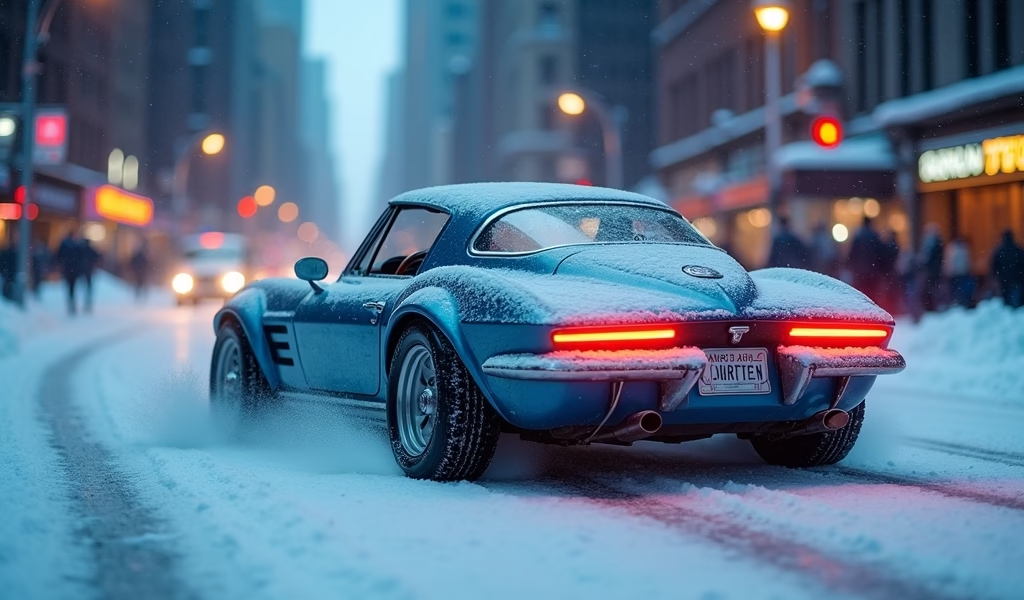
Overview
Turns out NYC winters aren’t just a chance to perfect your involuntary ice dancing skills—this comprehensive guide details five effective road treatments for icy conditions, from traditional rock salt to eco-friendly magnesium chloride, with practical application tips and preventative measures. The article emphasizes that combining the right treatments with proper vehicle preparation and adjusted driving techniques is essential for navigating New York’s treacherous winter streets safely.
Table of Contents
- Surviving NYC’s Icy Roads: Not Just for Bumper Cars
- Understanding Ice Formation on NYC Roads
- Treatment #1: Rock Salt – The Old Reliable
- Treatment #2: Calcium Chloride – The Cold Weather Champion
- Treatment #3: Sand and Gravel – Traction When You Need It
- Treatment #4: Magnesium Chloride – The Eco-Friendly Option
- Treatment #5: DIY Emergency Mixtures – When You’re in a Pinch
- Preventative Measures Before the Big Freeze
- Conclusion: Taking Control on NYC’s Icy Roads
- Frequently Asked Questions
Surviving NYC’s Icy Roads: Not Just for Bumper Cars
Let’s face it – when winter hits New York City, our streets can transform into something that feels like bumper cars on ice. NYC drivers know the drill: that heart-stopping moment when your vehicle starts sliding, and suddenly you’re less of a driver and more of a passenger on an impromptu ice capade. I’ve been fixing cars for over 15 years, and I can’t tell you how many fender benders roll into my shop after the first real freeze.
But here’s the thing – you don’t have to white-knuckle it through winter. The right road treatments can be the difference between confidently cruising through a winter wonderland and starring in your own personal demolition derby. Trust me, your car (and your insurance premiums) will thank you for reading this.
Having worked with countless NYC drivers who’ve slipped and slid their way into my garage, I’ve gathered the real scoop on what actually works when the city streets turn treacherous. No fluff, no nonsense – just proven solutions from someone who’s seen what happens when ice wins the battle.
Understanding Ice Formation on NYC Roads
Before we dive into solutions, let’s talk about the enemy. Ice on NYC roads isn’t just about snow falling and freezing. It’s a whole complex drama involving temperature fluctuations, humidity levels, and our city’s unique urban heat island effect.
NYC’s microclimate creates some weird ice patterns you won’t see in more rural areas. We get this nasty phenomenon called “black ice” – that nearly invisible slick surface that forms when moisture freezes in a thin layer on asphalt. What makes it especially devious in the city is how it forms in patches rather than covering entire roads, giving you false confidence until – bam! – you’re suddenly sliding.
Another NYC special is the freeze-thaw cycle. Our temperatures often hover around freezing, creating daytime melt that refreezes at night. This is why even driving in the snow sometimes feels safer than navigating our roads after a sunny winter day turns into a frigid evening.
Understanding these patterns helps you anticipate where and when ice will form, but knowing which treatments work best in which conditions? That’s where the real magic happens.

Treatment #1: Rock Salt – The Old Reliable
Rock salt (sodium chloride) is the granddaddy of ice treatments, and for good reason. It’s what you’ll see those giant NYC sanitation trucks spreading across major roads before and during winter storms. Here’s why it’s stood the test of time:
Rock salt works by lowering the freezing point of water, preventing ice formation down to about 15°F (-9°C). When temperatures drop below that, though, its effectiveness takes a nosedive. This is crucial to remember in those brutal January cold snaps we sometimes get.
The beauty of rock salt is its price and availability. You can grab a bag at practically any hardware store in the city, and it won’t break the bank. For personal use, keep a small bucket in your trunk for those moments when you’re stuck in a slippery parking spot or your driveway resembles an ice rink.
Application tip: Spread rock salt before ice forms whenever possible. It’s much more effective as a preventative measure than as a cure. And remember – more isn’t always better. About a handful per square yard is plenty; excess salt just washes away and harms our waterways.
The downside? Salt is corrosive as heck. It’ll eat away at your car’s undercarriage faster than a Times Square hot dog disappears at lunchtime. After driving on heavily salted roads, do yourself a favor and get an undercarriage wash as soon as possible. Your future self (and your car’s resale value) will thank you.
Treatment #2: Calcium Chloride – The Cold Weather Champion
When temperatures plummet and rock salt starts waving the white flag, calcium chloride steps up to the plate. This is the heavy-duty stuff that works in temperatures as low as -25°F (-32°C). If you’re wondering why it’s not used everywhere, two words: it’s expensive.
Calcium chloride comes in white pellets or flakes and actually generates heat as it dissolves, actively melting ice rather than just preventing it from forming. For those truly brutal cold snaps where nothing else seems to work, this is your go-to solution.
The application process is similar to rock salt, but you need less of it – about half as much does the trick. It’s also less corrosive to vehicles, though it can still do damage over time. What makes it particularly valuable for NYC is its effectiveness in our freeze-thaw cycles; it continues working even when temperatures drop overnight.
For personal use, calcium chloride is worth the extra cost if you frequently need to clear your own space quickly or live on one of those notoriously shady streets where ice lingers for days. Just store it properly – this stuff loves to absorb moisture from the air, which can turn your storage container into a solid brick if you’re not careful.
One major advantage for New Yorkers: calcium chloride is less harmful to pets’ paws than rock salt. Given how many dog walkers navigate our icy sidewalks, that’s no small consideration. Your furry neighbors will appreciate your choice!
Treatment #3: Sand and Gravel – Traction When You Need It
Sometimes the goal isn’t to melt ice but to give yourself traction despite it. That’s where sand and gravel shine, especially when temperatures drop too low for salt-based solutions to be effective. The city often uses a salt-sand mix on roads for this very reason.
Unlike salt products, sand doesn’t melt anything – it simply provides grip by embedding into ice and snow. Think of it as creating tiny speed bumps that your tires can catch onto. This makes it perfect for those steep hills in neighborhoods like Washington Heights or parts of Staten Island where even a slight incline becomes treacherous in winter.
For personal emergency use, kitty litter can serve the same purpose. Keep a small bag in your trunk alongside your other winter emergency supplies. When you’re stuck and spinning your wheels, a strategic application around your tires can give you just enough grip to escape.
The downside to sand is the cleanup. Come spring, that sand ends up in storm drains and can cause clogging issues. That’s why you’ll often see street sweepers working overtime as winter transitions to spring – they’re collecting all that traction material before it causes flooding problems.
For environmentally conscious New Yorkers, sand is less damaging to vegetation and waterways than chemical de-icers. If you’re treating areas near garden spaces or storm drains, consider this option even if it requires a bit more elbow grease to apply effectively.
Treatment #4: Magnesium Chloride – The Eco-Friendly Option
Magnesium chloride has been gaining popularity in recent years as cities become more environmentally conscious. It works similarly to calcium chloride but with a smaller environmental footprint. It’s effective down to about -13°F (-25°C) – not quite as impressive as calcium chloride but still much better than rock salt.
What makes magnesium chloride particularly attractive for NYC is its reduced impact on vegetation. Anyone who’s seen those brown, dead patches of grass along sidewalks and streets in spring knows the environmental toll traditional de-icers can take. For treating areas near the city’s parks or your own greenery, this is a kinder option.
It’s also less corrosive to vehicles and infrastructure. The MTA and other city agencies have been gradually increasing their use of magnesium chloride precisely because it causes less damage to bridges, subway entrances, and other critical infrastructure that already takes enough beating from the elements.
Application rates are similar to calcium chloride, making it reasonably economical despite the higher upfront cost. You’ll find it at specialty home improvement stores or online, usually marketed as a “pet-friendly” or “environmentally friendly” ice melt.
One unique advantage: magnesium chloride leaves a much less visible residue than other treatments, which means less of that white, crusty stuff getting tracked into your home or business. If you’ve ever had to repeatedly clean salt residue from your floors during winter, you’ll appreciate this feature!

Treatment #5: DIY Emergency Mixtures – When You’re in a Pinch
Sometimes winter catches you off-guard, or you find yourself in a situation where commercial products aren’t immediately available. In these cases, knowing a few DIY mixtures can save the day. These won’t replace commercial products for large areas, but they can help in emergency situations.
The simplest DIY de-icer is a mixture of water and rubbing alcohol in a 2:1 ratio. The alcohol lowers the freezing point of water significantly. Pour it into a spray bottle, and you’ve got a quick solution for frozen locks, windshields, or small icy patches. The alcohol evaporates quickly, so there’s less risk of refreezing.
Another effective homemade mixture combines one part water, one part vinegar, and a splash of dish soap. The vinegar lowers the freezing point while the soap helps the mixture adhere to ice surfaces. This won’t work in extreme cold, but it’s handy for those hovering-around-freezing days that are so common in NYC winters.
For traction in an absolute emergency, everyday items can substitute for sand or gravel:
- Bird seed (bonus: the birds will thank you come spring)
- Coffee grounds (environmentally friendly and biodegradable)
- Fireplace ash (if you’re lucky enough to have a working fireplace in your NYC apartment)
Remember that these DIY solutions are stop-gaps, not replacements for proper treatments. They’re what you use to get yourself out of a jam, not what you rely on for long-term ice management. But in a city where winter emergencies can strike without warning, having these tricks up your sleeve can be invaluable.
Preventative Measures Before the Big Freeze
The smartest approach to dealing with ice isn’t just treating it – it’s preparing before it forms. New York’s Department of Sanitation has figured this out, which is why you’ll often see salt trucks out before a single snowflake falls. You can apply the same proactive thinking to your own situation.
First, consider your vehicle prep. The best vehicle for snow performance starts with proper maintenance. Make sure your tires have adequate tread – the standard “penny test” (inserting a penny into your tread with Lincoln’s head down; if you can see all of his head, you need new tires) is a good start, but for NYC winters, you really want deeper treads than minimum.
Winter tires make a dramatic difference on ice, even more than all-wheel drive. Many New Yorkers skip them because of storage issues in tiny apartments, but several shops around the city offer seasonal tire storage services. If you’re serious about safer winter driving, this investment pays dividends in control and peace of mind.
Beyond your vehicle, applying preventative treatments before predicted freezes can save you enormous headaches. Even a light application of any de-icer before snow or freezing rain begins will create a barrier that prevents ice from bonding to pavement, making later clearing much easier.
For apartment dwellers, speak with your building management before winter hits to understand their ice treatment protocol. Many buildings are legally required to clear sidewalks, but knowing their timeline and methods can help you plan your comings and goings more safely.
Finally, consider your route planning. How to drive in snow and ice often comes down to avoiding the worst conditions altogether. NYC’s microclimate means some areas freeze first and thaw last. Bridge approaches, shaded streets, and higher elevations like parts of the Bronx tend to be more treacherous. When possible, alter your route to stick to major roads that receive priority treatment from city services.
With a combination of vehicle preparation, preventative treatments, and smart navigation, you can dramatically reduce your risk of turning your daily commute into an unplanned bumper car experience.
Conclusion: Taking Control on NYC’s Icy Roads
When winter transforms New York City into what feels like a frozen bumper car track, the difference between disaster and safely reaching your destination often comes down to preparation and knowledge. The five treatments we’ve covered – rock salt, calcium chloride, sand and gravel, magnesium chloride, and DIY emergency mixtures – each have their place in your winter survival toolkit.
Remember that no single solution works for all conditions. The savvy NYC driver keeps multiple options available and chooses based on temperature, location, and environmental concerns. Sometimes that means splurging on calcium chloride for those polar vortex days; other times, it’s as simple as tossing some kitty litter under your tires when you’re stuck.
Beyond treatments, never underestimate the importance of adjusting your driving technique. Slow, deliberate movements, increased following distances, and gentle braking are just as important as any chemical de-icer when it comes to preventing your car from mimicking a hockey puck on the FDR Drive.
Winter in New York tests us all, but with these tools and techniques, you can navigate with confidence instead of fear. Your car will thank you, your insurance company will thank you, and most importantly, you’ll arrive safely at your destination – which is something we all deserve, regardless of what Mother Nature throws our way.
Stay safe out there, New York. The bumper cars belong at Coney Island, not on our winter streets.
Frequently Asked Questions
What makes NYC roads particularly dangerous in winter?
NYC’s urban heat island effect creates unpredictable freeze-thaw cycles that lead to patchy ice formation. The city’s dense traffic patterns also compact snow into ice more quickly than in less-traveled areas.
How early should I apply ice treatments before a storm?
Ideally, apply treatments 2-3 hours before precipitation begins. This gives the chemicals time to dissolve and create a barrier that prevents ice from bonding to the pavement.
Are there eco-friendly alternatives to traditional salt?
Yes, magnesium chloride and calcium magnesium acetate (CMA) are more environmentally friendly options. Beet juice extracts are also being tested by some municipalities as organic alternatives.
How can I protect my car from salt damage?
Regular undercarriage washes throughout winter are essential for preventing salt corrosion. Consider applying a protective wax coating before winter begins and reapplying mid-season.
Where can I find real-time information about NYC road treatments during storms?
The NYC Department of Sanitation offers a PlowNYC tracking tool on their website that shows which streets have been plowed and salted. Local news stations also provide updates during major weather events.