
Overview
Brake drums need love too, folks, not just those flashy disc brakes getting all the attention at car parties! This article shares five money-saving hacks for brake drum maintenance including DIY inspection techniques, finding affordable services, adopting proper driving habits, making smart repair-versus-replace decisions, and following a preventative maintenance schedule to extend drum life and ensure safety.
Table of Contents
- Introduction
- What is Brake Drum Turning?
- Hack #1: DIY Inspection Techniques
- Hack #2: Finding Affordable Professional Services
- Hack #3: Extending Drum Life Through Proper Driving Habits
- Hack #4: The Repair vs. Replace Decision
- Hack #5: Preventative Maintenance Schedule
- Conclusion
- Frequently Asked Questions
Introduction
Brake drums are critical to your vehicle’s safety system, even if they don’t get much attention. These unassuming cylindrical components work with brake shoes to create the friction needed to bring your vehicle to a stop when you press the brake pedal.
With today’s rising repair costs, knowing how to maintain your brake drums properly can save you hundreds of dollars while ensuring your vehicle stops reliably every time. As a professional mechanic with over 15 years of experience, I’ve seen countless drivers overpay for brake repairs that could have been avoided with some basic knowledge.
In this guide, I’ll share five practical hacks to help you maintain your brake drums without breaking the bank. These tips have helped my customers save money while keeping their vehicles safe on the road. Let’s get started with understanding what brake drum turning actually involves.
What is Brake Drum Turning?
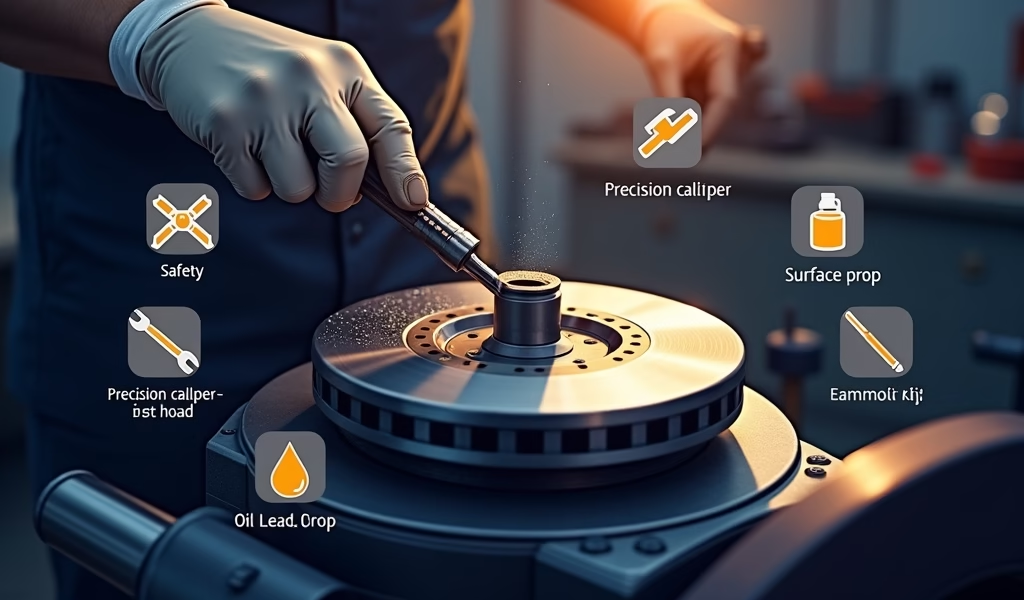
Brake drum turning (sometimes called “machining”) is a maintenance procedure where a mechanic uses a specialized lathe to resurface the inner surface of your brake drums. This process removes imperfections like grooves, scoring, and uneven wear that develop over time.
When you press your brake pedal, brake shoes push outward against the drum’s inner surface. After thousands of stops, this surface can develop irregularities that reduce braking efficiency and create annoying symptoms like vibrations and squealing.
Turning restores a smooth, even surface for the brake shoes to contact, improving braking performance and extending the useful life of your drums. It’s a cost-effective alternative to complete replacement, typically costing $15-30 per drum plus labor, versus $30-80 each for new drums.
Not every drum can be turned, though. There are minimum thickness specifications set by manufacturers to ensure safety. This is where the first hack comes in handy.
Hack #1: DIY Inspection Techniques
You don’t need to be a professional mechanic to determine if your brake drums need attention. Your vehicle will usually tell you through some clear warning signs:
- High-pitched squealing when braking
- Vibration or pulsation through the brake pedal
- Longer stopping distances than normal
- A grinding noise when applying brakes
- Vehicle pulling to one side when braking
For a basic visual inspection, gather these items:
- A bright flashlight
- Jack and jack stands (never work under a vehicle supported only by a jack)
- Basic hand tools to remove wheels
- A clean shop rag
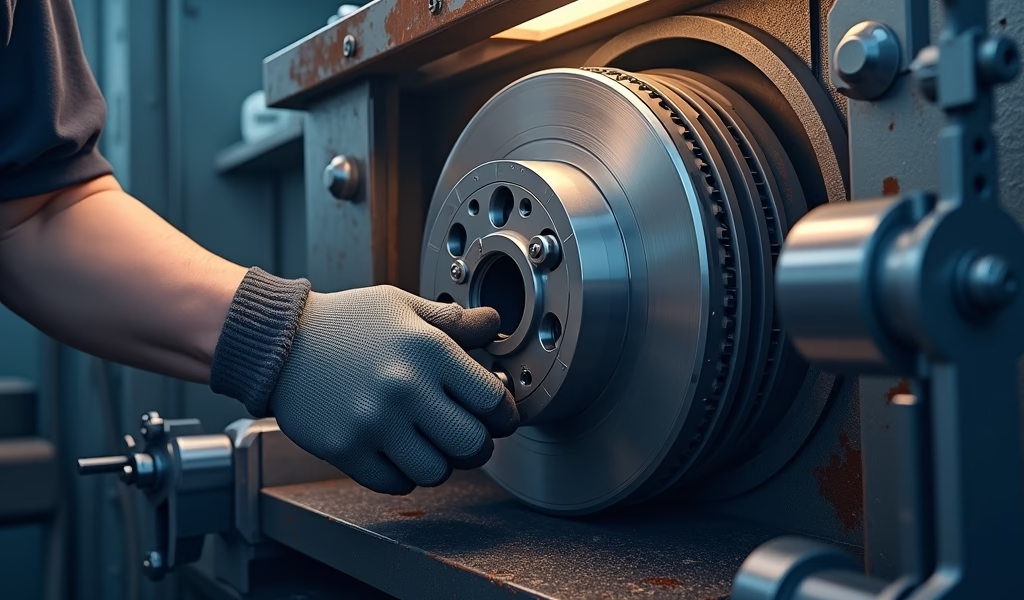
After safely securing your vehicle on jack stands, remove the wheel and look for any visible scoring, grooves, or uneven wear patterns on the drum surface. Check for any signs of overheating like blue discoloration or cracks. These are indicators that turning might be necessary – or in severe cases, replacement.
I recommend checking your brake system every 10,000 miles or during regular tire rotations. According to the National Highway Traffic Safety Administration, routine brake inspection is one of the most effective ways to prevent accidents caused by brake failure.
Hack #2: Finding Affordable Professional Services
When professional service is necessary, knowing how to shop around can save you significant money. I always tell my customers to call at least three repair shops and ask these specific questions:
- “What’s your complete price for brake drum turning, including labor?”
- “Do you measure the drums before and after turning to ensure they remain within spec?”
- “What warranty do you offer on this service?”
Here’s an insider tip: independent shops typically offer better prices than chain stores. In my experience, you’ll pay between $15-30 per drum for turning, though labor costs vary by location. The total job usually costs between $80-150 for a pair of drums.
Don’t overlook auto parts stores as a resource. Many offer free or discounted drum turning when you purchase other brake components from them. I’ve had customers save up to 50% by bundling services this way.
Always ask if the shop will measure your drums’ thickness before turning. A responsible mechanic won’t turn drums that are already close to the minimum thickness specification. This prevents dangerous situations and saves you from paying for a service that would only provide a short-term fix.
Hack #3: Extending Drum Life Through Proper Driving Habits
Your driving habits have a tremendous impact on how quickly your brake drums wear. Adopting these simple techniques can double the lifespan of your braking system:
- Practice anticipatory driving – look ahead and coast to slow down before braking
- Maintain a proper following distance (at least 3 seconds behind the vehicle ahead)
- Avoid riding your brakes, especially downhill (downshift instead)
- Distribute your vehicle’s load evenly to prevent uneven brake wear
Excessive heat is the enemy of brake components. When you brake hard repeatedly, the drums can overheat, causing warping and accelerated wear. By developing smoother braking habits, you keep temperatures lower and extend drum life.
Weather conditions matter too. After driving through deep water, tap your brakes lightly several times to dry them out. This prevents moisture-related issues like rust that can create uneven wear patterns on your drums.
These essential maintenance tips might seem small, but they add up to significant savings over time. I’ve seen careful drivers get over 100,000 miles from their brake drums, while aggressive drivers might need service at 30,000 miles.
Hack #4: The Repair vs. Replace Decision
Sometimes turning your brake drums isn’t the most economical option in the long run. Every drum has a manufacturer-specified minimum thickness that ensures safety. Once your drums approach this limit, turning them may not be possible or practical.
Here’s a simple decision framework I share with my customers:
- If drums show cracks, heat damage (blue discoloration), or severe scoring – replace them
- If drums have already been turned previously – replacement is usually better
- If turning would bring the drum close to minimum thickness – opt for replacement
- If drums are still well above minimum thickness – turning is economical
New drums typically cost $30-80 each plus installation labor. While this is more expensive than turning, high-quality new drums might last 60,000-80,000 miles with proper care, making them more cost-effective per mile than turning drums that are near their service limit.
The Brake and Front End journal notes that drums should be measured with a specialized tool called a brake drum micrometer before making this decision. Any reputable shop should perform this measurement as standard practice.
Hack #5: Preventative Maintenance Schedule
Creating and following a preventative maintenance schedule for your braking system is the ultimate money-saving hack. Here’s what I recommend to my clients for maximum brake drum longevity:
- Visual brake inspection every 3 months or 3,000 miles
- Comprehensive brake check with each oil change
- Brake fluid flush every 2 years (moisture in old fluid accelerates component wear)
- Seasonal brake inspections before winter and summer driving conditions
Keep a simple maintenance log in your glove compartment. Record dates, mileage, and services performed. This creates a valuable history that helps identify patterns and predict when service might be needed.
Remember that brake drums are just one component in an interconnected system. Having your brake fluid, wheel cylinders, and shoes checked regularly ensures that the entire system functions properly. This is among the essential car maintenance tasks that every driver should prioritize.
Research from the Car Care Council shows that vehicles with documented maintenance histories not only last longer but also command higher resale values – sometimes 10-15% more than comparable vehicles without service records.
Conclusion
Brake drum maintenance doesn’t have to drain your wallet. By implementing these five money-saving hacks, you can extend the life of your braking system while ensuring your vehicle stops safely every time you press the pedal.
Remember, regular inspections, smart driving habits, and knowing when to turn versus replace your drums can save you hundreds of dollars over your vehicle’s lifetime. The small investment of time in preventative maintenance pays dividends in both safety and savings.
While DIY inspection and maintenance practices are valuable, always prioritize safety. When in doubt, consult with a qualified mechanic, especially for critical safety systems like brakes. No amount of savings is worth compromising your ability to stop effectively.
Take a few minutes this weekend to check your braking system using the techniques we’ve discussed. Your wallet—and potentially your safety—will thank you.
Frequently Asked Questions
How do I know if my brake drums need turning?
Signs include squealing or grinding noises, vibration when braking, and increased stopping distance. A visual inspection may reveal scoring, grooves, or uneven wear on the drum surface.
How much does brake drum turning typically cost?
Expect to pay between $15-30 per drum for the turning service itself, plus labor costs. The total job usually runs $80-150 for both rear drums.
Can all brake drums be turned?
No, drums cannot be turned if they’re cracked, have heat damage, or have already been machined to near their minimum thickness specification. Manufacturer specs determine when a drum must be replaced instead of turned.
How often should brake drums be inspected?
Inspect your brake system every 10,000 miles or during regular tire rotations. More frequent checks are recommended if you notice any braking issues or drive in severe conditions.
Is it better to turn drums or replace them?
If drums are relatively new and the wear is minor, turning is more economical. When drums approach minimum thickness specifications or show significant damage, replacement provides better long-term value and safety.