

Overview
BMW’s valvetronic motor—that little component you never think about until it leaves you stranded with a $2,000 repair bill—controls how your 5-Series engine breathes by precisely adjusting intake valve lift instead of using a traditional throttle plate. Understanding early warning signs like acceleration hesitation and rough idling, performing more frequent oil changes than BMW’s recommended intervals, and establishing a relationship with a knowledgeable specialist can help extend your valvetronic system’s life beyond the typical 80,000-100,000 mile range while preserving that distinctive BMW driving experience.
Table of Contents
- Understanding the BMW 5-Series Valvetronic Motor
- How the Valvetronic System Works
- Warning Signs of Valvetronic Motor Failure
- Common Causes of Valvetronic Motor Problems
- Preventative Maintenance to Extend Valvetronic Life
- Replacement Costs and Options
- DIY vs. Professional Repair Considerations
- Conclusion
- Frequently Asked Questions
Understanding the BMW 5-Series Valvetronic Motor
The BMW 5-Series valvetronic motor is a crucial component that many owners don’t think about until it fails – often leading to a repair bill that can exceed $2,000. As a mechanic who’s replaced hundreds of these units, I can tell you this isn’t just another part on your Bimmer.
This sophisticated little motor controls BMW’s variable valve lift system, a technology that fundamentally changes how your engine breathes and performs. Unlike traditional engines that use a throttle plate to control airflow, the valvetronic system adjusts the intake valve lift to regulate how much air enters the combustion chambers.
First introduced in the early 2000s, this technology has become standard across the 5-Series lineup, including popular models like the 528i, 535i, and 550i. What makes this component so important is that when it fails, your luxury sedan doesn’t just run poorly – it might not run at all.
The frustrating reality is that valvetronic problems often strike without extensive warning signs. You might be cruising confidently one day, then stranded with a check engine light the next. This sudden nature of failure makes understanding this system not just helpful but essential for any 5-Series owner who wants to avoid unexpected breakdowns and budget-busting repairs.
How the Valvetronic System Works
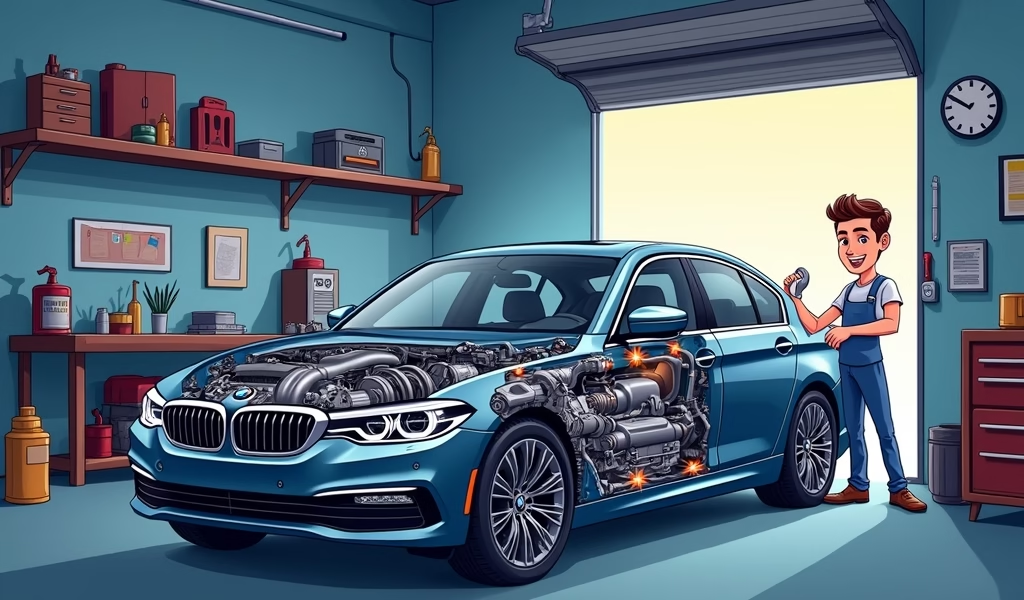
Let me break down this engineering marvel in simple terms. The valvetronic motor is an electric motor that connects to your engine’s valve system through an eccentric shaft and a series of levers. When you press the accelerator, the motor precisely adjusts how far the intake valves open – from barely cracked (about 0.3mm) to fully open (around 9.9mm).
This infinite adjustability is what sets BMW’s system apart from conventional engines. Traditional engines maintain fixed valve lift and use a throttle plate that creates vacuum resistance – essentially making your engine work against itself. The valvetronic eliminates this inefficiency by directly controlling airflow at the valve, resulting in better fuel economy, more responsive power delivery, and reduced emissions.
The system works in perfect harmony with BMW’s Double VANOS (variable camshaft timing). Think of VANOS as controlling when valves open, while valvetronic controls how much they open. Together, they create an intelligent “breathing” system that adapts to your driving needs in milliseconds.
This technology delivers tangible benefits: improved fuel efficiency (up to 10% better than comparable non-valvetronic engines), smoother idle characteristics, and more immediate throttle response. That distinctive BMW driving feel – where power seems to arrive the instant you think about it – owes much to this sophisticated valve control system.
The valvetronic motor operates in a challenging environment, dealing with extreme temperature variations while performing high-precision movements thousands of times per minute. It’s connected to the engine control wiring harness and receives commands from your car’s Digital Motor Electronics (DME) control module – the brain that orchestrates your engine’s performance.
Warning Signs of Valvetronic Motor Failure
After working on countless BMW 5-Series vehicles, I’ve noticed some reliable patterns that signal valvetronic trouble brewing. Catching these early can save you from being stranded – and potentially save thousands in repair costs.
The most common early warning sign is hesitation during acceleration. Your normally responsive BMW might suddenly feel like it’s “thinking about” whether to accelerate or not. This hesitation is especially noticeable at medium throttle positions – not when flooring it or barely touching the pedal, but in that everyday driving range.
Rough idling is another red flag. A healthy 5-Series should idle smoothly with barely perceptible vibration. If your car begins to shudder slightly at stoplights or you notice the tachometer needle wavering more than usual, the valvetronic system might be struggling to maintain proper valve positions.
Of course, the check engine light is an obvious indicator. Specific BMW fault codes to watch for include:
- 2A87 (Valvetronic eccentric shaft sensor plausibility)
- 2A82 (Valvetronic positioning error)
- 2A94 (Valvetronic mechanical fault)
These codes won’t show up on basic code readers from auto parts stores – you’ll need a BMW-specific scanner or a visit to a shop with proper diagnostic equipment to uncover them. Using a quality engine diagnostic app with BMW capabilities can help catch these issues early.
Unusual noises from the top of the engine are particularly telling. Listen for a subtle clicking or whirring sound that changes with engine RPM. This often indicates the valvetronic motor is straining to maintain proper valve positions.
In advanced failure cases, your 5-Series might suddenly enter “limp mode” – dramatically reducing power to protect the engine. This safety feature prevents further damage but can leave you limping to the nearest exit or service station. If your BMW suddenly feels like it’s running on half its cylinders, valvetronic issues could be the culprit.
Common Causes of Valvetronic Motor Problems
After diagnosing hundreds of valvetronic failures, I’ve identified several common culprits behind these expensive repairs. Understanding these can help you take preventative measures to extend your system’s lifespan.
Electrical issues rank at the top of the list. The valvetronic motor depends on precise electrical signals, and problems with its wiring harness or connector can cause erratic operation. Heat cycling and engine vibration gradually degrade these connections, creating resistance that affects signal quality long before complete failure occurs.
Oil quality and change intervals play a surprisingly significant role. The valvetronic system’s eccentric shaft and bearings rely on clean engine oil for lubrication. When oil becomes contaminated or degrades, these precision components experience accelerated wear. This is why BMW’s 10,000-mile oil change interval might not be sufficient for long-term valvetronic health – especially in vehicles driven primarily on short trips where oil never fully warms up.
Mechanical wear affects the system’s physical components, particularly in higher-mileage vehicles. The eccentric shaft operates in a high-stress environment, and its bearings can wear prematurely if other maintenance has been neglected. I’ve seen failures as early as 60,000 miles, though many units last well beyond 100,000 with proper care.
Environmental factors also contribute significantly. BMWs operated in extremely hot climates experience accelerated degradation of electrical components due to heat stress. Similarly, vehicles in cold climates that make frequent short trips never allow the engine to reach proper operating temperature, creating condensation that contaminates oil and accelerates wear.
Software issues can sometimes mimic physical valvetronic failures. The DME module might develop corrupted calibration parameters that cause erratic valvetronic operation even when hardware is sound. BMW has released numerous software updates over the years to address these issues, particularly for 2010-2014 models.
According to expert discussions on BimmerForums, certain production years show higher failure rates than others. The F10 generation (2010-2016) 535i models appear particularly prone to valvetronic issues around the 70,000-mile mark.
Preventative Maintenance to Extend Valvetronic Life
The good news is that proper maintenance can significantly extend your valvetronic system’s lifespan. Here are the most effective preventative measures I recommend to my customers:
First and foremost, adopt more conservative oil change intervals. While BMW officially recommends changes every 10,000 miles, I strongly suggest 5,000-7,000 miles instead – particularly if you make frequent short trips or experience stop-and-go driving regularly. Always use high-quality synthetic oil meeting BMW’s LL-01 specifications.
Regular diagnostic scanning can catch issues before they become serious. Even without warning lights, subtle changes in valvetronic operation parameters can indicate developing problems. Consider having a BMW-specific diagnostic scan performed annually, which can detect declining performance before catastrophic failure.
Keep your cooling system in excellent condition. Excessive heat accelerates wear on all engine components, including the valvetronic system. Ensure coolant is changed at recommended intervals and address any overheating issues immediately. The hybrid models in the BMW lineup can be particularly sensitive to cooling system condition due to their complex thermal management requirements.
Listen to your engine. Becoming familiar with your BMW’s normal sounds helps you identify changes early. The valvetronic motor makes a subtle whirring sound during normal operation – changes in this sound can indicate developing issues before they trigger warning lights.
Keep software updated. BMW periodically releases control module updates that improve valvetronic operation. These updates often adjust timing parameters and failure detection thresholds, potentially preventing issues before they develop. Ask your service provider to check for available updates during routine maintenance.
According to BMW specialist shops, having the valvetronic motor’s electrical connector inspected during routine valve cover service can identify early signs of heat damage or corrosion before they cause operational problems.
Replacement Costs and Options
When valvetronic issues can’t be prevented or repaired, replacement becomes necessary. Understanding the costs and options helps you make informed decisions rather than panicked ones.
The valvetronic motor itself typically costs $600-900 for a genuine BMW part, while aftermarket alternatives from reputable manufacturers like VDO can reduce this to $450-650. Labor represents the largest expense – typically 6-8 hours at shop rates ranging from $120-200 per hour depending on your location and whether you choose a dealership or independent specialist.
All told, expect to pay between $1,800-2,500 for a complete valvetronic motor replacement at a BMW dealership. Independent BMW specialists typically charge 20-30% less while often providing comparable expertise and sometimes better personalized service.
When weighing repair options, consider the complete picture. Sometimes the motor isn’t the only component requiring attention – the eccentric shaft, position sensor, or wiring harness might also need replacement. A comprehensive repair addressing all potential failure points might cost more initially but provides better long-term value.
For owners of older 5-Series models (8+ years), it’s worth considering the repair cost against the vehicle’s current value. I’ve had frank conversations with clients about whether investing $2,000 in a vehicle worth $8,000 makes financial sense, especially if other major components are approaching their end of life.
Some shops offer “remanufactured” valvetronic motors that can save 20-30% over new units. Quality varies widely with these options, so I recommend choosing shops that offer solid warranties on both parts and labor. A reputable BMW specialist should stand behind their work with at least a 12-month/12,000-mile warranty.
As noted in the FCP Euro parts catalog, some online retailers offer lifetime replacement warranties on genuine BMW valvetronic motors, which can provide significant long-term value despite higher initial costs.
DIY vs. Professional Repair Considerations
As someone who’s replaced countless valvetronic motors, I’m often asked whether this is a suitable DIY project. My honest answer is: it depends on your experience level and available tools.
The physical replacement process requires removing numerous components to access the valvetronic motor, including the intake manifold, valve cover, and various brackets and harnesses. This demands intermediate to advanced mechanical skills and a comprehensive set of tools including torque wrenches, BMW-specific timing tools, and specialized socket sets.
The real challenge isn’t removing and installing the motor – it’s the critical calibration procedure afterward. Without BMW’s proprietary diagnostic software (ISTA, INPA, or equivalent), you cannot perform the necessary adaptation procedures to “teach” the new motor its proper positions. This software typically costs thousands of dollars, making it impractical for occasional use.
For the determined DIYer with mechanical experience, a practical compromise exists: perform the physical replacement yourself, then have a professional shop handle the calibration procedure. This approach can save 30-40% off the total repair cost while ensuring proper system function.
If attempting this work yourself, budget 8-12 hours for your first attempt, work with a detailed repair manual or video guide, and be meticulously organized with parts and fasteners. The procedure involves precise timing and positioning – errors can lead to more extensive engine damage.
Remember that valvetronic system repair is considered an advanced procedure even among professional mechanics. Many general automotive shops refer these repairs to BMW specialists because of the specialized knowledge and equipment required. If your regular mechanic seems hesitant about tackling this job, that’s actually a positive sign of professional integrity – seek out a dedicated BMW specialist instead.
Conclusion
The BMW 5-Series valvetronic motor represents both the brilliance and occasional frustration of German engineering – a sophisticated system that delivers tangible performance benefits when working properly, but requires specialized knowledge and potentially expensive repairs when things go wrong.
With proper preventative maintenance, most owners can expect 80,000-100,000 miles of trouble-free operation from their valvetronic systems. The key takeaways for extending system life include more frequent oil changes with high-quality synthetic oil, regular diagnostic scanning, and addressing minor issues before they escalate.
When problems do arise, having an established relationship with a knowledgeable BMW specialist can save both money and headaches. The difference between a comprehensive diagnosis and a parts-throwing approach can easily amount to thousands of dollars.
Remember that the valvetronic system’s complexity means repair costs will never be trivial – but understanding the system helps you make informed decisions rather than panic-driven ones when issues arise. Being proactive about maintenance and attentive to early warning signs remains your best defense against unexpected breakdowns and budget-busting repair bills.
Your BMW 5-Series represents precision engineering designed for performance and driving pleasure. With the right care and attention, its valvetronic system can provide years of trouble-free service, maintaining that distinctive BMW driving experience that makes ownership so rewarding.
Frequently Asked Questions
What exactly does the valvetronic motor do in my BMW 5-Series?
The valvetronic motor controls your engine’s breathing by adjusting how far the intake valves open. This replaces the traditional throttle plate as the primary means of controlling engine power, improving efficiency and throttle response.
How long should a BMW valvetronic motor last?
With proper maintenance, most valvetronic motors last between 80,000-100,000 miles. Regular oil changes every 5,000-7,000 miles with high-quality synthetic oil can significantly extend this lifespan.
Can I drive with a failing valvetronic motor?
Driving with a failing valvetronic motor is possible for short distances but not recommended for extended periods. Your vehicle may enter “limp mode” with reduced power, making driving potentially unsafe in demanding traffic conditions.
How can I tell if my valvetronic motor is failing?
Common symptoms include engine hesitation during acceleration, rough idling, check engine light illumination, unusual noises from the top of the engine, and decreased fuel economy. In advanced cases, the vehicle may suddenly enter limp mode with dramatically reduced power.
Is valvetronic motor replacement a DIY-friendly repair?
Valvetronic motor replacement is considered an advanced repair not suitable for beginner mechanics. The physical replacement requires extensive disassembly, and the crucial calibration afterward requires expensive BMW-specific diagnostic software rarely available to DIYers.