

Overview
Just like your skin needs regular cleansing and moisturizing, your car’s leather seats require consistent cleaning with pH-balanced products and conditioning to prevent cracks, especially in harsh climates. This detailed guide provides a complete maintenance schedule—from essential supplies and proper cleaning techniques to addressing common stains and avoiding costly mistakes—ultimately helping you preserve your vehicle’s luxurious interior and resale value for years beyond the average ownership experience.
Table of Contents
- Understanding Leather Seats
- Signs Your Leather Seats Need Attention
- Essential Supplies for Leather Care
- Step-by-Step Cleaning Process
- Conditioning: The Key to Preventing Cracks
- Dealing with Common Stains and Problems
- Creating a Leather Maintenance Schedule
- Climate Considerations for Leather Care
- Common Mistakes to Avoid
- Conclusion
- Frequently Asked Questions
Understanding Leather Seats
Leather seats are like the crown jewels of your car’s interior. They look great, feel luxurious, and can significantly boost your vehicle’s value. But here’s the thing – leather isn’t just a set-it-and-forget-it upgrade. It’s actually a natural material that requires regular attention, much like your own skin.
I’ve been working on cars for over 20 years, and I can tell you that leather comes in several varieties, each with its own care requirements. Most vehicles feature one of these types:
Full-grain leather is top-tier stuff – minimally processed with natural markings intact. It’s durable but needs consistent care to maintain its character.
Top-grain leather has been sanded to remove imperfections, making it more uniform but slightly less breathable than full-grain.
Corrected-grain leather undergoes significant processing and coating. It’s easier to clean but lacks the rich character of higher grades.
Many modern vehicles use what manufacturers call “leather-appointed” or “leatherette” seating – typically a combination of real and synthetic materials or completely synthetic options designed to mimic leather’s look and feel.
Understanding what type of leather you’re dealing with helps determine the best care approach. Check your owner’s manual if you’re unsure – it’s worth knowing exactly what you’re sitting on before you start treating it.
Signs Your Leather Seats Need Attention

Your leather seats will tell you when they need some TLC – if you know what to look for. As a mechanic who’s restored countless leather interiors, I’ve learned to spot the early warning signs before serious damage occurs.
The most obvious indicator is appearance change. Healthy leather has a subtle sheen and consistent color. When it starts looking dull, developing dark spots (especially on seams or high-contact areas), or showing uneven coloration, it’s crying out for attention.
Next, pay attention to how the leather feels. Run your hand across the surface – it should feel smooth and supple. If you notice stiffness, roughness, or that “crunchy” texture, your leather is drying out. This is the stage right before cracking begins, so consider it an urgent call to action.
Those tiny hairline cracks along seams or wrinkles are particularly concerning. They might seem minor, but they’re actually the beginning of more serious structural deterioration. Once leather starts cracking, it’s much harder (and more expensive) to restore.
Keep an eye on these common problem areas:
- Driver’s seat bolsters (where you slide in and out)
- Steering wheel rim
- Center console armrest
- Headrests (where hair products and oils make contact)
The driver’s seat typically shows wear first, so make it your canary in the coal mine. If you notice changes there, it’s time to treat all your leather surfaces before the damage spreads. Early intervention will save you substantial money and heartache down the road.
Essential Supplies for Leather Care
Let’s talk about what you’ll need in your leather care toolkit. I always tell my customers that investing in the right supplies upfront saves hundreds in potential repairs later. You don’t need fancy equipment – just the right products for the job.
For effective cleaning and conditioning, here’s my recommended starter kit:
- pH-balanced leather cleaner (specifically formulated for automotive use)
- Leather conditioner (matching your leather type)
- UV protectant (if your car sees regular sunlight)
- Microfiber towels (at least 3-4 dedicated just for leather)
- Soft-bristled detailing brushes (for textured areas and seams)
- Foam or microfiber applicator pads
Quality matters when it comes to leather care products. Proper cleaning supplies typically cost $15-30 each, but they’re concentrated and last for multiple applications. A complete kit might set you back $50-75 initially, but it’s a small price compared to the $500+ professional restoration you might need if you neglect your leather.
What you don’t use is just as important as what you do use. Avoid household cleaners, even mild ones like dish soap. According to leather conservation research, inappropriate cleaning agents can break down leather’s natural oils and protective coatings. Also steer clear of silicone-based products that look good initially but seal in dirt and prevent leather from “breathing.”
If budget is a concern, focus on getting a quality cleaner and conditioner first. You can use clean cotton t-shirts instead of microfiber towels in a pinch, though dedicated microfibers are ideal for preventing lint and ensuring gentle application.
Step-by-Step Cleaning Process
Now for the main event – properly cleaning your leather seats without damaging them. I’ve refined this process over thousands of vehicles, and it works for everything from your daily commuter to high-end luxury cars.
Start by parking in a shaded area – never clean leather in direct sunlight or extreme heat. Remove any loose items from the seats and between cushions. Good ventilation helps too, so keep doors or windows open.
Begin with a gentle vacuum using a soft brush attachment. Pay special attention to seams and perforated areas where dirt accumulates. For those tiny crevices, a clean makeup brush can work wonders for dislodging trapped particles.
Before applying any product to visible areas, test it on a hidden section first – perhaps under the seat or in a corner. Wait 5 minutes to ensure there’s no discoloration or adverse reaction.
Now for the cleaning technique:
- Apply a small amount of cleaner to your microfiber cloth – never directly onto the leather
- Work in small sections using gentle circular motions
- For textured or perforated areas, use a soft brush with minimal cleaner
- The leather should be damp, not wet – excessive moisture is the enemy
- Immediately wipe away excess cleaner with a clean, dry microfiber towel
- Allow seats to air dry naturally – never use heat sources to speed drying
For stubborn dirt or body oil buildup (common on headrests and armrests), allow the cleaner to dwell for 30-60 seconds before gently agitating. Don’t be tempted to scrub harder – multiple gentle applications are better than aggressive scrubbing.
If you’re dealing with perforated leather, be extra cautious with liquid. Apply cleaner to your cloth first, wring until barely damp, then clean with light pressure. You don’t want moisture seeping into the perforation holes where it can cause problems beneath the surface.
After cleaning, the leather should look clean but not soaking wet. Allow it to dry completely before moving on to conditioning. This typically takes 30 minutes to 2 hours depending on your climate and humidity levels.
Conditioning: The Key to Preventing Cracks
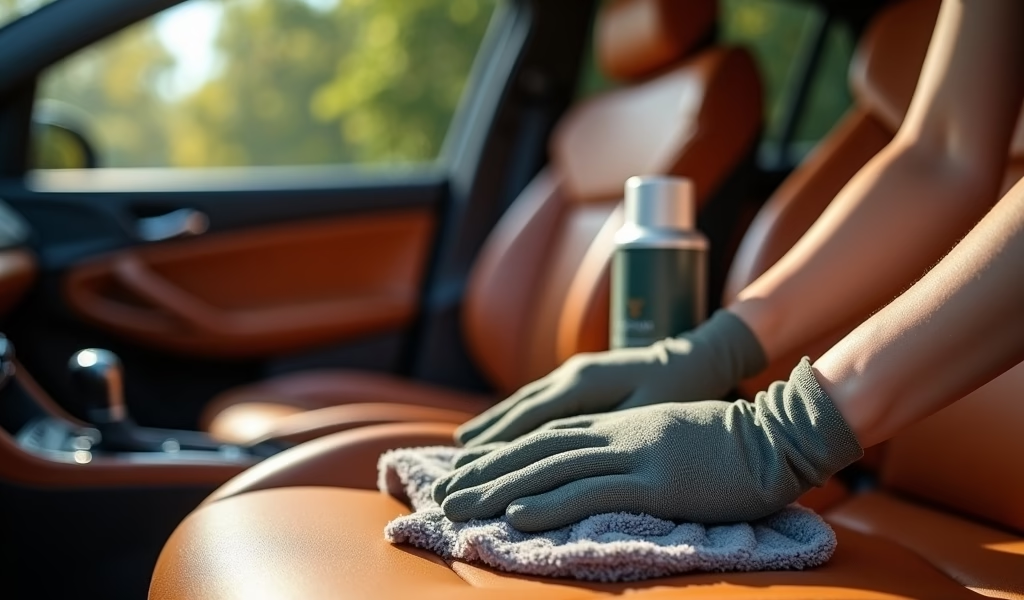
Conditioning is where most DIY leather care goes wrong. Many folks clean their leather but skip this crucial step. Think of conditioning like moisturizing your skin – it replaces essential oils that keep the material supple and prevents the dreaded cracking that ruins leather seats.
Conditioning frequency depends on your climate and how often you drive:
- Hot, dry climates: Every 1-2 months
- Moderate climates: Every 3-4 months
- Humid, cooler climates: Every 4-6 months
Cars regularly parked outdoors need more frequent conditioning than those kept in garages. The conditioning process is straightforward but requires patience:
- Start with completely clean, dry leather
- Apply a small amount of conditioner to an applicator pad
- Work in small sections using light, even pressure
- Use minimal product – a thin, even coat is better than a heavy application
- Pay extra attention to high-stress areas like bolsters and seams
The magic happens during absorption. After application, allow the conditioner to penetrate for the time recommended by the manufacturer (typically 10-30 minutes). Then gently buff away any excess with a clean microfiber cloth.
Properly conditioned leather should feel soft and supple, not greasy or sticky. If it feels slick or shiny after buffing, you’ve applied too much. Remove the excess with a clean cloth before it attracts dirt.
For severely dried leather, you might need two light conditioning treatments spaced a few days apart rather than one heavy application. This allows the leather to gradually rehydrate without becoming oversaturated.
Cleaning leather car seats without following up with conditioning is like washing your face without moisturizing – you’re setting yourself up for premature aging and damage.
Dealing with Common Stains and Problems
Even with regular maintenance, accidents happen. Here’s how to tackle common leather seat issues I see in my shop almost weekly.
For water-based stains (coffee, soda, juice), blot immediately with a clean, dry cloth. Avoid rubbing, which can push the liquid deeper into the leather. Once you’ve absorbed as much as possible, clean the area with leather cleaner, then condition after drying.
Oil-based stains (food grease, makeup, body oils) require a different approach. Use a leather-specific degreaser applied sparingly to a cloth, working from the outside of the stain inward. These products help lift oils without drying out the leather. Always follow with conditioning.
Ink stains are particularly tricky. For fresh ink, blot (don’t rub!) with a dry cloth to remove excess. Then use a specialized leather ink remover applied with a cotton swab – work precisely on just the stained area. Regular household cleaners like alcohol can damage leather’s finish, so avoid the temptation to use them.
For minor surface cracks, conditioning may improve their appearance significantly. Apply conditioner directly to the cracked area and allow it to absorb completely (sometimes overnight). Repeated applications over several weeks can sometimes diminish early-stage cracking.
Addressing color fading requires specialized products. Leather-specific dyes and pigments can restore color to worn edges and faded areas. These come in DIY kits with color-matching guides, but require patience and a steady hand. Always test in an inconspicuous area first.
For perforated leather with embedded dirt in the tiny holes, I recommend a soft toothbrush with minimal cleaner, followed by compressed air (on low setting) to help remove loosened particles. Be extremely gentle to avoid damaging the perforations.
Remember that significant damage – deep cracks, tears, or severe color loss – often requires professional restoration for the best results. DIY repairs can work well for minor issues, but knowing when to call in the experts will save you frustration.
Creating a Leather Maintenance Schedule
Consistency is the secret weapon for keeping leather looking showroom-fresh for years. Based on my experience maintaining luxury vehicle fleets, here’s a practical schedule that works for most drivers.
Weekly quick care takes just 2-3 minutes:
- Wipe down seats with a clean, dry microfiber cloth
- Check for any new spills or stains to address immediately
- Remove visible surface dust and debris
Monthly deeper attention (15-20 minutes):
- Vacuum thoroughly with a soft brush attachment
- Perform a light cleaning with proper leather cleaner
- Inspect for early signs of wear or drying
Quarterly maintenance (30-45 minutes):
- Complete thorough cleaning
- Apply leather conditioner according to product directions
- Pay special attention to high-wear areas
Seasonal considerations should influence your approach. In summer, increase conditioning frequency and religiously use sunshades. During winter, wipe away salt and moisture promptly. Spring is perfect for a deep cleaning to remove winter grime.
For long-term protection, consider these additional strategies:
- Install window tint (within legal limits) to block UV rays
- Use quality sunshades whenever parked outdoors
- Consider seat covers during extremely harsh conditions or when transporting pets
The financial perspective is compelling: regular DIY maintenance costs around $60-100 annually in supplies. Professional detailing runs $150-250 per service. Over five years, the DIY approach typically saves $500-900 while providing comparable or better protection.
Properly maintaining your leather car seats isn’t just about aesthetics – it significantly impacts resale value. Well-kept leather can add hundreds or even thousands to your vehicle’s value when it’s time to sell or trade in.
Climate Considerations for Leather Care
Your location plays a huge role in determining how to best care for your leather seats. After working in shops across various climate zones, I’ve seen firsthand how environmental factors impact leather aging.
In hot, sunny environments, UV radiation and heat are your biggest enemies. The scientific literature on leather degradation shows that ultraviolet light breaks down leather’s structure at a molecular level, while heat accelerates this process by evaporating essential oils.
If you live in a sun-drenched area like Arizona or Florida:
- Use windshield sun protectors religiously
- Apply UV protectant products monthly
- Condition leather every 4-6 weeks
- Try to park in shaded areas or garages
- Consider ceramic window tinting to block UV rays
For cold, dry climates like Minnesota or Colorado:
- Avoid using seat heaters for extended periods
- Apply richer conditioners designed for dry environments
- Allow your car to warm gradually before sitting on very cold leather
- Consider a humidifier in your garage during winter months
Humid coastal regions present different challenges:
- Check regularly for mildew or mold, especially in creases
- Choose lighter conditioners that won’t trap moisture
- Ensure seats dry completely after cleaning
- Consider moisture-absorbing products for your vehicle
Regardless of climate, temperature fluctuations are particularly hard on leather. The material expands and contracts with temperature changes, which can accelerate aging. Maintaining a consistent environment when possible helps extend your leather’s life.
For those who garage their vehicles, aim for moderate temperature (40-75°F is ideal) and humidity levels between 40-60%. This “Goldilocks zone” minimizes stress on the leather while preventing issues like mildew growth in high humidity or excessive drying in arid conditions.
Common Mistakes to Avoid
After fixing countless leather disasters in my shop, I’ve identified the most common DIY mistakes that turn minor maintenance into major repair jobs.
Using household cleaners tops the list. Products like Windex, multipurpose cleaners, or dish soap might seem harmless, but they strip away protective finishes and disrupt leather’s natural pH balance. I’ve seen beautiful saddle-brown leather turn blotchy orange after one cleaning with household “all-purpose” spray.
Excessive water comes in close second. Leather is skin – it needs some moisture, but oversaturation causes serious problems. When water penetrates below the surface, it can cause warping, water stains, and accelerate deterioration of the backing materials. Your cleaning cloth should be damp, never dripping.
Harsh scrubbing techniques damage leather’s surface finish. I’ve watched customers use everything from kitchen scrub pads to magic erasers on their luxury car interiors. These abrasives remove not just dirt but also the protective top coat that keeps leather safe from damage.
Many folks clean their leather but skip conditioning – like washing your face without moisturizing. This leaves the material vulnerable to drying and cracking. Always follow cleaning with appropriate conditioning.
Silicone-based products provide an impressive temporary shine but create long-term headaches. They seal in dirt, prevent leather from breathing properly, and break down the material over time. That $7.99 dashboard shine spray might look great today but cause $500 in damage by next year.
Finally, ignoring small problems until they become big ones is a costly mistake. That tiny crack along the seam or slight fading on the bolster won’t fix itself – and will only get worse without intervention. Early action prevents minor issues from becoming major restoration projects.
Conclusion
Taking care of leather seats doesn’t require professional expertise – just the right knowledge, quality products, and consistent attention. By following the steps outlined in this guide, you’ll keep your vehicle’s interior looking and feeling luxurious for years beyond what most owners experience.
Remember that leather care is preventative maintenance, not just cosmetic cleanup. Regular cleaning removes contaminants before they can cause damage, while conditioning maintains the essential moisture balance that prevents cracking and premature aging. The small investment of time and money in proper care pays massive dividends in both aesthetics and vehicle value.
Climate, usage patterns, and leather type all influence your optimal care routine, so be willing to adjust your approach based on your specific situation. The core principles remain the same: clean gently, condition regularly, and protect consistently.
Your leather seats represent both a luxury upgrade and a significant investment in your vehicle. With the knowledge you’ve gained from this guide, you’re now equipped to preserve that investment and enjoy the comfort, beauty, and value that well-maintained leather provides. Your seats – and your wallet – will thank you for it.
Frequently Asked Questions
How often should I clean my leather car seats?
Clean your leather seats monthly for normal use, and immediately address any spills or stains. Increase frequency to bi-weekly if you have children, pets, or frequently eat in your car.
Can I use household products like vinegar or olive oil on leather?
Never use household products on automotive leather, including vinegar, olive oil, or dish soap. These can damage leather’s protective finish and natural pH balance, leading to drying and cracking.
What’s the difference between cleaning and conditioning leather?
Cleaning removes dirt and contaminants from the surface, while conditioning replenishes essential oils to prevent drying and cracking. Both steps are necessary for proper leather maintenance.
How do I remove ink stains from leather seats?
Use a leather-specific ink remover applied with a cotton swab, working from the outside of the stain inward with gentle pressure. Avoid alcohol-based products which can damage leather’s protective finish.
Are leather seat covers worth the investment?
Quality leather seat covers can be worthwhile if you frequently transport children, pets, or work in dirty conditions. However, window tinting and regular maintenance often provide better protection for your investment.