

Overview
Like a first date with suspiciously perfect teeth, a used car’s mileage doesn’t tell the whole story—it’s the maintenance history that reveals the true character underneath. The article explains that proper maintenance in seven key areas (oil, transmission, cooling system, timing belt, suspension, fuel system, and electrical components) is far more important than the odometer reading when evaluating a used car’s value and potential longevity.
Table of Contents
- Understanding Mileage on Used Cars
- Maintenance Fix #1: Regular Oil Changes
- Maintenance Fix #2: Transmission Care
- Maintenance Fix #3: Cooling System Maintenance
- Maintenance Fix #4: Timing Belt/Chain Replacement
- Maintenance Fix #5: Suspension System Upkeep
- Maintenance Fix #6: Fuel System Cleaning
- Maintenance Fix #7: Battery and Electrical System Care
- Conclusion
- Frequently Asked Questions
When customers roll into my shop asking about the best mileage for a used car, I often smile because there’s so much more to the story than just a number on the odometer. After 20 years under the hood, I’ve seen 200,000-mile vehicles running smoother than some neglected 60,000-mile cars. The secret? Proper maintenance.
Today, I’m sharing what truly matters when evaluating a used car’s mileage, along with seven proven maintenance fixes that can transform a high-mileage vehicle from a potential nightmare into a reliable daily driver. Whether you’re shopping for your next vehicle or trying to extend the life of your current ride, these insights might save you thousands in unexpected repairs.
Understanding Mileage on Used Cars
The conventional wisdom suggests that 12,000-15,000 miles per year is average driving, making a five-year-old car with 60,000-75,000 miles perfectly reasonable. But here’s something many buyers miss: low mileage isn’t always better.
That 10-year-old car with suspiciously low 30,000 miles? It might have spent years sitting idle, with rubber components drying out and fluids degrading. Cars are designed to be driven, and long periods of inactivity can cause just as many problems as high mileage.
Context matters more than the raw number on the odometer. A 100,000-mile highway-driven car with complete service records is typically a better investment than a 50,000-mile vehicle used for short stop-and-go trips with spotty maintenance. Highway miles are easier on everything from the engine to the transmission, while short trips never allow the engine to reach optimal operating temperature.
When evaluating a used car purchase, consider these factors beyond just the odometer reading:
- Maintenance history (documented service records are gold)
- Driving conditions (highway vs. city)
- Climate (cars in extreme conditions age differently)
- Storage conditions (garaged vs. street-parked)
- Number of previous owners (fewer is generally better)
Maintenance Fix #1: Regular Oil Changes
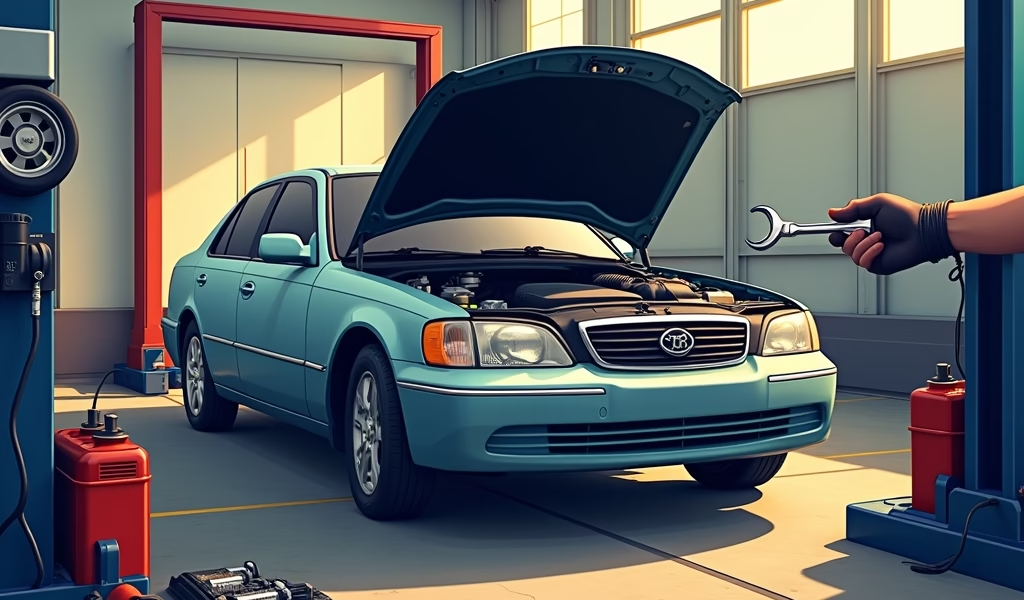
Neglected oil changes in a high-mileage vehicle are like running a marathon without water – technically possible but catastrophically unwise. Old oil transforms from a slick lubricant into abrasive goop, accelerating engine wear exponentially.
For vehicles under 75,000 miles, following the manufacturer’s recommended intervals (typically 5,000-7,500 miles) works fine. But once you cross that threshold, consider shortening the interval to every 3,000-5,000 miles, especially if the vehicle shows signs of oil consumption.
Higher-mileage engines benefit from specialized high-mileage formulations containing seal conditioners and additives that help rejuvenate gaskets and seals. According to a study by the Society of Automotive Engineers, these formulations can reduce oil consumption by up to 50% in older engines.
When buying a used car, immediately change the oil and filter unless there’s documentation proving it was done recently. This simple step provides a clean baseline and can reveal valuable information about the engine’s condition.
Maintenance Fix #2: Transmission Care
Transmission issues announce themselves with warning signs that shouldn’t be ignored: delayed engagement, hard shifts that jolt the vehicle, mysterious fluid puddles, or the dreaded check engine light.
Most manufacturers recommend transmission fluid changes every 30,000-60,000 miles, but many owners neglect this crucial service. On a used car with unknown history, changing the transmission fluid should be one of your first priorities unless the mileage exceeds 150,000 without documentation of previous changes.
However—and this is important—if a high-mileage transmission has never had its fluid changed, sometimes it’s better to leave well enough alone. The new fluid’s detergents can dislodge accumulated debris that was actually plugging leaks, turning a functioning transmission into an expensive paperweight. This automotive catch-22 requires professional assessment.
For automatic transmissions, consider these maintenance steps:
- Regular fluid inspection (check color and smell)
- Pan drop and filter replacement every 30,000-60,000 miles
- Full fluid exchange for transmissions with documented maintenance history
- External transmission cooler addition for vehicles used for towing
For manual transmissions, gear oil changes are less frequent but equally important, typically recommended every 60,000-90,000 miles depending on the vehicle’s engine type and usage.
Maintenance Fix #3: Cooling System Maintenance
Cooling system failures rank among the leading causes of catastrophic engine damage in used vehicles. Over time, coolant loses its anti-corrosion and lubricating properties, leading to internal corrosion and water pump failure.
A complete cooling system service includes:
- Draining old coolant
- Flushing the system to remove deposits
- Inspecting hoses for cracks and bulges
- Testing the thermostat, radiator cap, and water pump
- Refilling with the correct coolant mixture
For higher-mileage vehicles, preventive replacement of rubber hoses and the water pump around 100,000 miles can prevent being stranded on the roadside. An overheating engine can warp cylinder heads and blow head gaskets, turning a $150 maintenance job into a $1,500+ repair.
When purchasing a used vehicle, check cooling system components thoroughly. A radiator should be free of leaks and corrosion, hoses should be firm but flexible, and the coolant should be clean with the proper color for the vehicle type.
Maintenance Fix #4: Timing Belt/Chain Replacement
The timing belt or chain is the automotive equivalent of a heart—critical, hidden from view, and catastrophic when it fails. Many buyers forget to verify this crucial maintenance item when purchasing a used vehicle.
Most timing belts need replacement between 60,000-100,000 miles (depending on manufacturer), while timing chains typically last longer but still require inspection of tensioners and guides. When buying a used car in this mileage range, verification of timing belt replacement should be non-negotiable.
The cost comparison speaks volumes: preventive timing belt replacement typically costs $500-$1,000 depending on the vehicle. If it breaks? You’re looking at $2,500-$5,000+ for engine repairs or replacement in interference engines (where valves and pistons occupy the same space at different times in the combustion cycle).
When purchasing a used car, factor the timing belt/chain status into your negotiation:
- If due for replacement soon, deduct the cost from your offer
- If recently replaced with documentation, consider this added value
- If unknown status near replacement interval, budget for immediate service
Maintenance Fix #5: Suspension System Upkeep
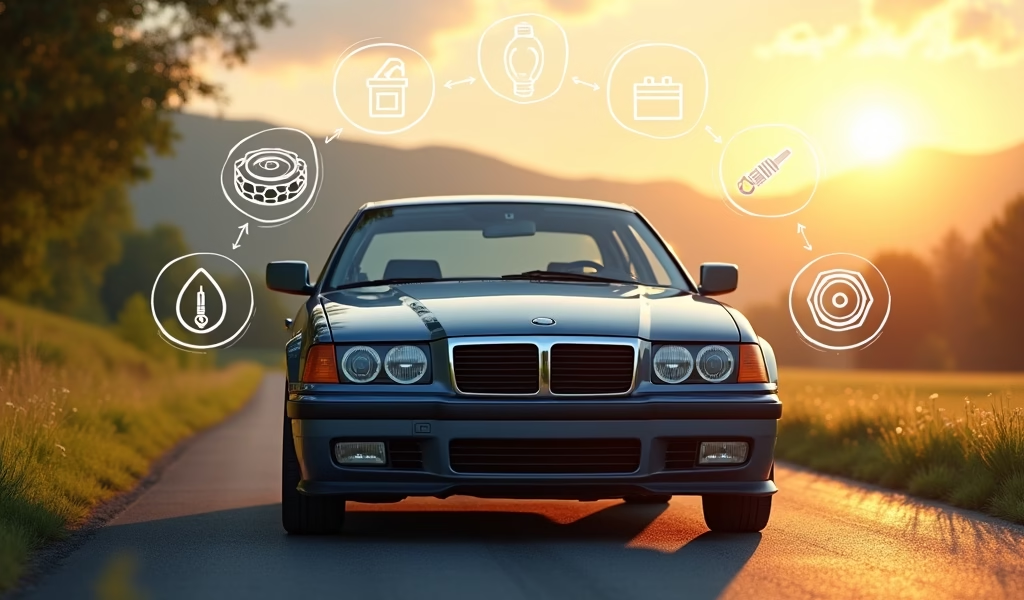
Worn suspension components announce themselves through uneven tire wear, unsettling noises over bumps, and a ride quality that resembles a shopping cart with a wobbly wheel. The suspension affects more than comfort—it’s essential for handling, braking distance, and tire longevity.
Budget-friendly suspension maintenance includes regular rotation and balancing of tires every 5,000-7,000 miles, checking alignment annually, and promptly replacing worn components rather than waiting for catastrophic failure.
During a test drive, listen for these suspension warning signs:
- Clunking or knocking when going over bumps (ball joints/control arms)
- Squeaking during low-speed turns (strut mounts/bushings)
- “Bottoming out” over dips (worn shocks/struts)
- Vehicle pulling to one side (alignment issues)
Many buyers overlook suspension issues during test drives, mistaking them for “normal” characteristics of an older car. Don’t fall into this trap—suspension problems only worsen over time, affecting safety and leading to cascading issues with other components.
Maintenance Fix #6: Fuel System Cleaning
Carbon buildup in higher-mileage engines is like plaque in arteries—a silent, performance-robbing accumulation that happens gradually. This is especially common in direct-injection engines, which have become prevalent in the last decade.
While DIY fuel system cleaners offer some benefits, they can’t match professional services. A comprehensive fuel system cleaning addresses:
- Intake valve cleaning (particularly crucial for direct-injection engines)
- Fuel injector service to restore proper spray patterns
- Throttle body cleaning to improve airflow
- Combustion chamber cleaning to restore compression
The benefits include improved throttle response, better fuel economy, reduced emissions, and smoother idle quality. For direct-injection engines, many hybrid and modern efficient vehicles suffer from carbon buildup on intake valves since fuel no longer washes over them as in port injection systems.
When evaluating a used car, rough idle, hesitation under acceleration, or decreased fuel economy could indicate fuel system issues that a professional cleaning might resolve at a fraction of the cost of component replacement.
Maintenance Fix #7: Battery and Electrical System Care
The electrical system in modern vehicles is the nervous system controlling everything from engine management to safety features. Battery life in used vehicles often varies widely, with an average lifespan of 3-5 years depending on climate and usage patterns.
Beyond the battery itself, alternators typically last 100,000-150,000 miles before internal components wear out. Starters can fail unpredictably, often choosing the most inconvenient moments to leave you stranded.
Preventing electrical problems starts with basic maintenance:
- Clean battery terminals and connections
- Test charging system output (should be 13.5-14.5 volts with engine running)
- Address minor issues before they escalate into major electrical gremlins
- Consider a battery replacement at 4 years regardless of performance
Modern vehicles depend on proper voltage for everything from engine management to transmission control. According to AAA research, battery failures remain one of the top causes of roadside assistance calls, especially during extreme weather.
Conclusion
After working on thousands of vehicles across my career, I’ve found the sweet spot for used car mileage typically falls between 30,000-80,000 miles. This range often represents the best value—low enough to have substantial life remaining, but high enough that the initial depreciation has already occurred.
Ultimately, maintenance history trumps mileage every time. A 100,000-mile car with complete records and timely maintenance will likely outlast and outperform a 60,000-mile vehicle with neglected care. The best approach? Budget for immediate maintenance when purchasing unless documentation proves these services have been performed.
Remember, buying a used car isn’t just acquiring someone else’s asset—it’s also inheriting their maintenance decisions, for better or worse. By focusing on these seven key maintenance areas, you can significantly extend the life of a higher-mileage vehicle and avoid costly surprises down the road.
Choose wisely, maintain diligently, and that higher-mileage vehicle might just become the most reliable car you’ve ever owned, proving that like many things in life, proper care matters more than age.
Frequently Asked Questions
What is the ideal mileage when buying a used car?
Between 30,000-80,000 miles typically offers the best balance of value and remaining life. However, maintenance history is ultimately more important than the specific odometer reading.
Is a 10-year-old car with 50,000 miles a good buy?
Not necessarily, as cars with unusually low mileage for their age often suffer from sitting too long. Rubber components deteriorate and fluids degrade even when a vehicle isn’t driven.
Should I avoid cars with over 100,000 miles?
Not if they have excellent maintenance records and major components like timing belts have been replaced. Modern vehicles regularly exceed 200,000 miles with proper care.
How can I verify maintenance history when buying a used car?
Request service records, check for dealership or repair shop stickers, and run a vehicle history report. You can also have a mechanic inspect for evidence of maintenance like new parts or clean fluids.
What maintenance should I perform immediately after buying a used car?
Change all fluids (oil, transmission, coolant, brake) unless documented as recently done, replace the air filter, and have a professional inspection to establish a baseline of current condition. This provides peace of mind and reveals any hidden issues.