

Overview
Before slapping that sweet spoiler on your sedan, this veteran mechanic hilariously reminds us that a crumbling car won’t magically transform into a track beast with fancy add-ons. The article emphasizes mastering five essential maintenance areas—oil changes, tire care, brake maintenance, air filtration, and fluid management—as the critical foundation before pursuing performance modifications that will actually work as intended.
Table of Contents
- Understanding Your Vehicle Before Modifying
- Essential Maintenance Tip #1: Regular Oil Changes
- Essential Maintenance Tip #2: Tire Care and Rotation
- Essential Maintenance Tip #3: Brake System Maintenance
- Essential Maintenance Tip #4: Air Filter Replacement
- Essential Maintenance Tip #5: Fluid Levels and Quality
- From Maintenance to Modifications
- Conclusion
- Frequently Asked Questions
Ready to transform your daily driver into a head-turner? Before diving into the world of performance upgrades and aesthetic enhancements, there’s critical groundwork to cover. As a master technician with 20 years in the shop, I’ve seen too many enthusiastic beginners pour money into modifications while neglecting the basics—only to end up with expensive problems down the road.
Think of your car as a house—you wouldn’t add a second story to a crumbling foundation. The same principle applies to beginner car mods. Establishing proper maintenance habits not only preserves your vehicle’s reliability but also creates the perfect platform for future modifications.
In this guide, I’ll walk you through five essential maintenance practices every aspiring car modifier should master. These fundamentals will save you thousands in preventable repairs and ensure your modifications deliver their intended performance benefits. Let’s build that foundation right.
Understanding Your Vehicle Before Modifying
Before ordering a single performance part, take time to truly understand what you’re working with. Every vehicle has unique characteristics, strengths, and limitations that will influence your modification journey.
Start by retrieving that owner’s manual from your glove compartment. This often-overlooked resource contains vital specifications about your vehicle’s systems. Next, research your specific make and model online. Vehicle-specific forums are gold mines of information where enthusiasts share common issues, modification successes, and lessons learned the hard way.
Learn to perform basic diagnostics. How does your engine normally sound? What’s your typical idle RPM? How does your suspension feel over varied road surfaces? Establishing this baseline will help you detect problems early and measure the impact of future modifications.
Consider learning basic car maintenance through hands-on experience. Understanding how systems interact provides crucial insight before modifying them. The knowledge you gain now will pay dividends throughout your modification journey.
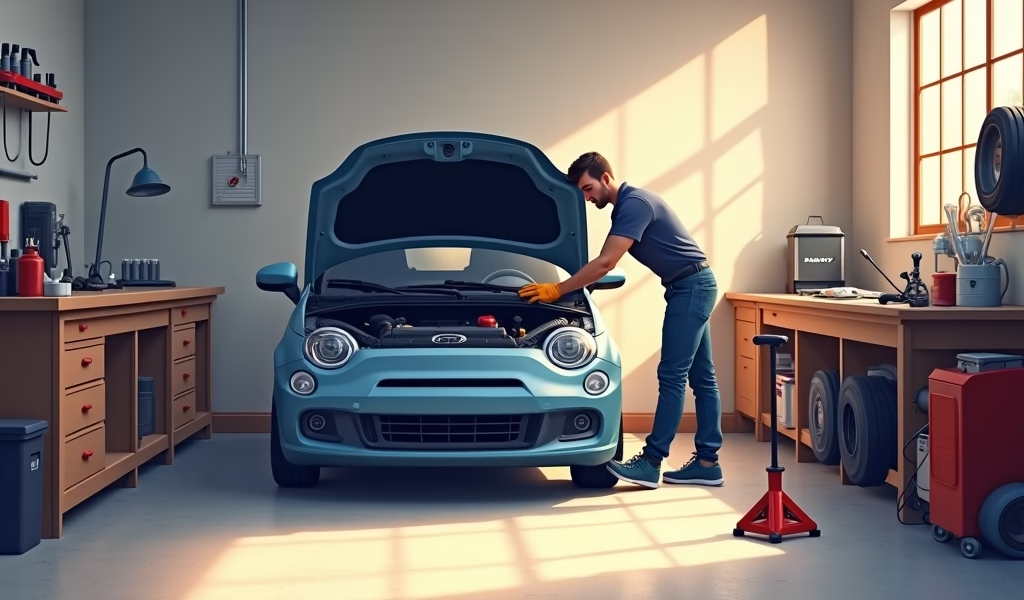
Essential Maintenance Tip #1: Regular Oil Changes
Engine oil is your vehicle’s lifeblood. It lubricates moving components, reduces friction, transfers heat, and carries away contaminants. As oil ages, its ability to perform these functions diminishes dramatically.
For modification enthusiasts, maintaining fresh oil is even more critical. Modified engines often operate under increased stress and heat, accelerating oil breakdown. Using the correct viscosity (those numbers like 5W-30) isn’t just a recommendation—it’s essential for protecting your investment.
Modern synthetic oils offer superior protection for modified vehicles. Though more expensive upfront, they maintain their protective properties longer and perform better under extreme conditions. For heavily modified engines, consider shortening your oil change intervals below manufacturer recommendations.
DIY oil changes are straightforward and cost-effective. You’ll need:
- The correct oil type and quantity for your vehicle
- A quality oil filter
- Basic tools (wrench, drain pan)
- Approximately 45 minutes of time
For those new to performing oil changes, video tutorials specific to your vehicle can provide excellent step-by-step guidance. Remember to properly dispose of used oil at local recycling centers.
Monitor your oil level between changes, particularly after installing performance modifications. Some upgrades may affect oil consumption patterns. A quick dipstick check every few fuel stops can prevent catastrophic engine damage.
Essential Maintenance Tip #2: Tire Care and Rotation
Tires represent your only physical connection to the road. Even the most powerful engine mods are worthless without proper rubber to transfer that power to the pavement. Tire maintenance affects every aspect of vehicle performance—from acceleration and braking to handling and ride comfort.
Check your tire pressure monthly and before any performance driving. Underinflated tires flex excessively, creating heat and increasing the risk of blowouts. Overinflated tires reduce contact patch size, compromising grip. The correct pressure is typically listed on a sticker inside your driver’s door jamb, not the maximum PSI printed on the tire sidewall.
Invest in a quality digital pressure gauge. The convenience store air station gauges are notoriously inaccurate. For performance applications, consider adjusting pressures for specific driving conditions—slightly lower for maximum grip on dry pavement, slightly higher for improved fuel economy during highway cruising.
Inspect tread depth regularly using the penny test: insert a penny with Lincoln’s head upside down into your tread groove. If you can see all of Lincoln’s head, your tires need replacement. Uneven wear patterns indicate alignment or suspension issues that should be addressed before adding performance modifications.
Rotate your tires every 5,000-7,000 miles to ensure even wear. The correct rotation pattern depends on your drivetrain configuration (FWD, RWD, or AWD) and tire directional design. Your owner’s manual will specify the appropriate pattern for your vehicle.
When you’re ready for tire upgrades, research thoroughly. Tire performance categories offer different balances between grip, longevity, comfort, and wet-weather capability. Often, a quality tire upgrade delivers more real-world performance improvement than many engine modifications.
Essential Maintenance Tip #3: Brake System Maintenance
Any discussion about making a car faster must include making it stop effectively. The brake system requires regular inspection and maintenance, especially when planning performance modifications that increase speed capabilities.
Warning signs of brake issues include squealing or grinding noises, pulsation through the brake pedal, increased stopping distance, or pulling to one side during braking. These symptoms demand immediate attention—your safety depends on it.
Visually inspect your brake pads periodically through the wheel spokes. Most modern vehicles allow this without wheel removal. Look for at least 3-4mm of pad material remaining. Many pads include wear indicators—small metal tabs that contact the rotor when pads need replacement.
Brake fluid absorbs moisture over time, lowering its boiling point and compromising braking performance under heavy use. For this reason, manufacturers recommend replacing fluid every 2-3 years regardless of mileage. This is especially important if you plan any performance driving.
When replacing brake components, consider upgrading to higher-performance options. Quality ceramic pads offer improved stopping power and reduced brake dust compared to standard formulations. Cross-drilled or slotted rotors provide better heat dissipation during aggressive driving.
For those considering how to replace spark plugs and other maintenance items, the brake system follows similar principles—careful attention to detail prevents serious problems later.
Essential Maintenance Tip #4: Air Filter Replacement
Your engine needs clean air just as much as it needs clean oil. The air filter prevents contaminants from entering the combustion chambers while allowing sufficient airflow for optimal performance.
A clogged filter restricts airflow, forcing your engine to work harder and consume more fuel. Most manufacturers recommend replacing paper air filters every 15,000-30,000 miles, but inspect yours more frequently if you drive in dusty conditions.
Checking your air filter is simple and requires no tools in most vehicles:
- Locate the air box (usually a black plastic housing with clips or screws)
- Open the housing and remove the filter
- Hold it up to a light source—if light doesn’t pass through easily, it’s time for replacement
- While the housing is open, clean any debris from the box
When considering intake modifications, remember that filtration quality remains critical. Some aftermarket intake systems prioritize airflow at the expense of filtration, which can accelerate engine wear. Look for systems that maintain or improve both aspects.
High-performance reusable filters from reputable brands like K&N or AEM offer good balance between increased airflow and proper filtration. These washable filters typically last the lifetime of your vehicle with proper maintenance, though they require periodic cleaning and re-oiling.

Essential Maintenance Tip #5: Fluid Levels and Quality
Your vehicle relies on several specialized fluids beyond engine oil, each serving critical functions. Monitoring and maintaining these fluids prevents expensive damage and ensures consistent performance.
Coolant prevents your engine from overheating and provides freeze protection in winter. Check levels when the engine is cold by examining the transparent overflow reservoir. Most manufacturers recommend complete coolant replacement every 2-5 years, as the corrosion inhibitors deteriorate over time.
Transmission fluid lubricates and cools your transmission components. For vehicles with dipsticks, check the fluid when the engine is warm and running. Healthy automatic transmission fluid should be reddish and free from a burnt smell. Manual transmission fluid and differential oils typically don’t have dipsticks but should be changed according to your maintenance schedule.
Brake fluid and power steering fluid should maintain consistent levels in their respective reservoirs. Both systems are sealed and shouldn’t lose fluid under normal conditions. If levels drop, investigate for leaks immediately.
When performing fluid maintenance:
- Always use fluids that meet manufacturer specifications
- Keep fluids clean and free from contamination during service
- Pay attention to fill levels—both underfilling and overfilling cause problems
- Document maintenance to establish proper service intervals
For vehicles approaching higher mileage (75,000+ miles), consider transmission and differential fluid changes even if the manufacturer lists them as “lifetime” fluids. This preventive service often extends component life significantly, especially if you plan to increase power output.
From Maintenance to Modifications
With a solid maintenance foundation established, you’re ready to explore modifications that enhance your vehicle’s performance, appearance, and driving experience.
Start with simple bolt-on modifications that offer tangible benefits without major mechanical changes:
- Quality tires appropriate for your driving style
- Performance brake pads and rotors
- Rear sway bar for improved handling balance
- Cat-back exhaust system for modest power gains and improved sound
- High-flow air intake system
Create a modification roadmap that builds systematically rather than randomly adding parts. Consider how modifications will interact with each other and prioritize upgrades that address your vehicle’s weaknesses first.
Be realistic about your vehicle’s potential. A family sedan won’t transform into a race car regardless of modifications. Work within your platform’s strengths while respecting its limitations.
Document performance baselines before and after each modification. This helps evaluate real-world benefits and identifies unexpected issues quickly. Simple metrics like 0-60 times, quarter-mile performance, or skidpad grip can be measured with smartphone apps.
Remember that modifications may affect maintenance requirements. More aggressive driving styles, increased power, or altered suspension geometry can accelerate wear on various components. Adjust your maintenance schedule accordingly.
Conclusion
While beginner car mods might conjure images of flashy wheels and booming exhausts, true enthusiasts understand that proper maintenance forms the bedrock of any successful modification journey. The five essentials we’ve covered—oil changes, tire care, brake maintenance, air filtration, and fluid management—create the reliable foundation upon which meaningful performance improvements can be built.
By mastering these maintenance basics, you’ll not only extend your vehicle’s lifespan but also enhance the effectiveness of future modifications. Your wallet will thank you for avoiding the expensive lessons that come from neglecting these fundamentals.
Remember that vehicle modification is a marathon, not a sprint. Take time to understand your car’s systems, address maintenance needs proactively, and research thoroughly before making changes. This methodical approach leads to a more capable, reliable, and enjoyable vehicle.
What maintenance areas do you prioritize before modifying your vehicle? Share your experiences in the comments below, and let’s learn from each other’s journeys in the fascinating world of automotive performance.
Frequently Asked Questions
What are the best first modifications for beginners?
Quality tires and a high-flow air intake provide the best performance-per-dollar for beginners. These simple upgrades improve handling, acceleration, and sound without requiring advanced mechanical knowledge.
Will modifying my car void the warranty?
Modifications may void specific portions of your warranty if the dealer can prove they caused a failure. The Magnuson-Moss Warranty Act protects consumers from blanket warranty denials based solely on the presence of aftermarket parts.
How much horsepower will I gain from basic mods?
Basic bolt-on modifications typically yield 5-15 horsepower gains on naturally aspirated engines. The subjective improvement in throttle response and sound often feels more significant than the numbers suggest.
Should I modify a car that’s still under loan or lease?
Leased vehicles should receive only easily reversible modifications as they must be returned to stock condition. For financed vehicles, consider how modifications might affect resale value if you need to sell before the loan is paid.
Do I need to tell my insurance company about my car modifications?
Yes, you should notify your insurance company about performance modifications. Failing to disclose modifications could result in denied claims or policy cancellation if discovered after an incident.