

Overview
Just when you thought your Audi Allroad’s sophisticated air suspension system was an engineering marvel, those pesky leaks appear around 60,000-100,000 miles, leaving you with three options: professional repairs costing up to $6,000, DIY fixes for $800-1,200 in parts, or a permanent conversion to traditional coil springs for about $1,500 installed. Understanding common leak points and early warning signs like uneven ride height, overworked compressors, and warning lights can save thousands through preventative maintenance or timely intervention, whether you choose dealer service, independent shops, self-repair, or the increasingly popular conversion kits that eliminate air suspension headaches entirely.
Table of Contents
- Understanding Audi Allroad Air Suspension
- Common Air Suspension Leak Symptoms
- Diagnosing Air Suspension Leaks
- Major Leak Points in Audi Allroad Suspension
- DIY Repair Options
- Professional Repair vs. DIY
- Preventive Maintenance Tips
- Conversion Kits: A Permanent Solution
- Cost Comparison Breakdown
- Conclusion
- Frequently Asked Questions
Understanding Audi Allroad Air Suspension
The Audi Allroad air suspension system is an engineering marvel that provides a remarkable balance between comfort and performance. As a mechanic who’s worked on countless European vehicles, I’ve seen firsthand how these sophisticated systems transform the driving experience by automatically adjusting ride height based on driving conditions. At its core, the Allroad’s pneumatic suspension consists of air springs at each wheel, a compressor, air lines, height sensors, and a control module that orchestrates this mechanical symphony.
When functioning properly, this system is brilliant. It allows your Allroad to lower itself at highway speeds for improved aerodynamics and raise itself for additional ground clearance when traversing rough terrain. It’s the kind of innovation that made these wagons so desirable when introduced in the early 2000s.
Unfortunately, these sophisticated systems aren’t immune to the passage of time. The rubber components gradually deteriorate, and what starts as a minor air suspension leak can escalate into a significant issue. Most Allroad owners will encounter suspension problems somewhere between 60,000 to 100,000 miles, though environmental factors and driving habits can affect this timeline considerably.
Common Air Suspension Leak Symptoms
Recognizing the early warning signs of Audi Allroad air suspension problems can save you thousands in repair costs. The symptoms typically develop gradually, making them easy to miss if you’re not paying attention. Let me walk you through what to watch for.
The most noticeable symptom is uneven ride height. Your Allroad might start to sag in one corner, particularly after being parked overnight. This happens because the system can’t maintain pressure, allowing air to slowly escape through compromised components. You might also notice your vehicle settling lower overall when parked for extended periods.
Listen for your air compressor working overtime. A healthy system only needs to run occasionally to maintain pressure, but when leaks develop, that poor compressor struggles constantly to keep up. This not only signals a problem but accelerates wear on the compressor itself, potentially leading to its premature failure.
Other telltale signs include:
- Dashboard warning lights (usually “suspension fault” or similar messages)
- Unusually harsh or bouncy ride quality
- The inability to change ride height settings
- Noticeable tilt when cornering
- Compressor noise that continues longer than 1-2 minutes
Many owners report hearing their compressor run for several minutes after starting the vehicle – a clear indication that your system is fighting to compensate for leaks. Pay attention to how your Allroad feels when driving over bumps or through corners. If it feels less controlled than before, your suspension may be compromised.
Diagnosing Air Suspension Leaks
Before diving into repairs, you’ll need to pinpoint exactly where those pesky leaks are occurring in your Audi Allroad air suspension system. This detective work requires some patience, but it’s essential for effective repairs. The good news? You don’t necessarily need fancy equipment to get started.
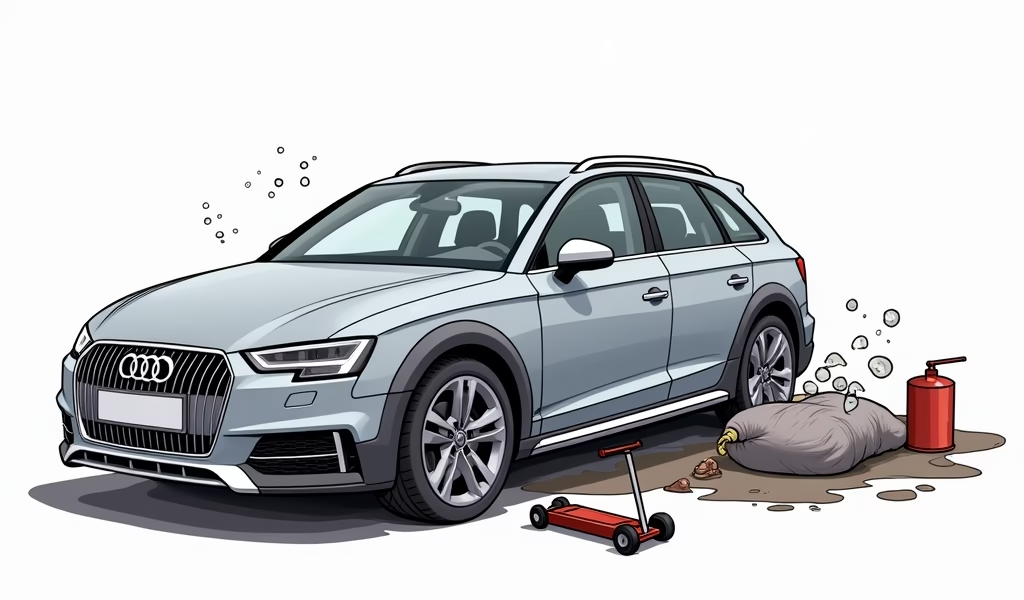
Begin with a visual inspection while the vehicle is safely supported on jack stands (never rely solely on a jack). Look for obvious signs of damage or deterioration in the air springs, which resemble rubber bellows. Pay special attention to the seams and connection points, as these are common failure areas. Aging air springs often develop small cracks that may be visible to the naked eye.
For a more thorough investigation, create a simple soapy water solution (dish soap works great) and apply it to suspected leak areas while the system is pressurized. Bubbles will form where air is escaping. This old-school technique is surprisingly effective for finding leaks in air lines and connection points.
If you’re comfortable with more advanced diagnostics, consider using a diagnostic scanner capable of reading Audi suspension codes. These tools can often identify which corner is losing pressure or if the control module is detecting system irregularities. Some scanners can even command the system to perform self-tests, cycling through different height settings to stress test components.
When diagnosing, remember to check these often-overlooked components:
- Air line connections at each air spring
- The valve block assembly (usually located near the rear of the vehicle)
- Solenoid valves within the valve block
- Height sensors and their linkages
- The air dryer (it prevents moisture from damaging internal components)
Document what you find during diagnosis – this information will guide your repair strategy and help you determine whether DIY fixes are feasible or if professional intervention is warranted.
Major Leak Points in Audi Allroad Suspension
After diagnosing thousands of Audi Allroad air suspension systems throughout my career, I’ve identified several common culprits when it comes to air leaks. Understanding these weak points can save you considerable time during diagnosis and repair.
Air springs (often called air bags or bellows) are the most frequent offenders. These rubber components flex constantly with every bump and expansion/contraction cycle. Over time, microscopic cracks develop along stress points, particularly near the top and bottom seams where the rubber connects to metal end pieces. Environmental factors accelerate this deterioration – extreme temperatures, road salt, and UV exposure are particularly harmful.
The air lines themselves present another vulnerable area. These narrow tubes connect all system components, transferring pressurized air throughout. They’re typically made of plastic that becomes brittle with age, particularly at connection points where they bend or are exposed to heat from the exhaust system. One small crack or loose fitting can depressurize your entire system overnight.
Don’t overlook the valve block assembly. This central distribution point contains multiple solenoid valves that control air flow to different corners of the vehicle. Internal seals within this component frequently fail, allowing air to escape from the system even when everything appears intact externally. When the valve block fails, you’ll often notice multiple corners of the vehicle affected simultaneously.
The compressor and its associated dryer unit round out the major failure points. The compressor works incredibly hard in a leaking system, causing accelerated wear and eventual failure. Meanwhile, the dryer (which removes moisture from compressed air) can become saturated over time, allowing damaging moisture into the system that corrodes fittings and damages seals.
DIY Repair Options
Rolling up your sleeves to tackle Audi Allroad air suspension leaks can save substantial money, but it requires mechanical aptitude and patience. Let’s explore practical DIY approaches that many owners have successfully implemented.
For minor air line leaks, repair kits containing specialized fittings and line sections are available from various suppliers. These allow you to cut out damaged sections and replace them with new components. The process is similar to working with brake lines but requires careful attention to ensure airtight connections. High-quality air line repair kits typically cost between $50-100 and include the necessary tools for proper installation.
If you’ve identified leaky air springs, replacement options range from genuine Audi parts (the most expensive) to quality aftermarket alternatives. Arnott Industries and Strutmasters produce reliable air spring replacements specifically designed for Allroads at roughly half the dealer cost. Installation requires moderate mechanical skill – you’ll need to safely support the vehicle, remove wheels, disconnect air lines, and carefully install new components without damaging surrounding parts.
For those comfortable with more complex repairs, valve block rebuilding kits address internal leaks in this crucial component. These kits contain new O-rings and seals that commonly fail. The rebuilding process involves careful disassembly, cleaning, seal replacement, and reassembly. While intricate, this repair can save hundreds compared to replacing the entire unit.
DIY repair steps generally follow this pattern:
- Safely support the vehicle and relieve system pressure
- Remove and inspect components, identifying all leak points
- Clean all connection surfaces thoroughly
- Replace damaged parts with new components
- Carefully reassemble, ensuring proper torque on all fittings
- Perform a pressure test before returning the vehicle to service
Remember that system calibration may be necessary after repairs. Some owners use VAG-COM/VCDS tools to communicate with the suspension control module, resetting adaptation values and calibrating height sensors. This step ensures your newly-repaired system operates correctly.

Professional Repair vs. DIY
Deciding between professional repair and DIY approaches for your Audi Allroad air suspension leak requires honest assessment of your mechanical abilities, available time, and budget. Let me break down the considerations that should guide your decision.
Professional repairs offer expertise and efficiency. A qualified Audi specialist or suspension shop will diagnose problems more quickly and accurately than most DIYers. They’ll have specialized tools like pressure testers and diagnostic equipment that can pinpoint issues without trial and error. Additionally, reputable shops typically provide warranties on their work, offering peace of mind that DIY repairs simply can’t match.
However, this expertise comes at a premium. Labor rates at dealerships often exceed $150 per hour, with independent shops ranging from $90-130 hourly. A complete air suspension overhaul at a dealership can easily reach $4,000-6,000, while independent specialists might complete the same work for $2,500-4,000.
DIY repairs, by contrast, only require parts costs and your time investment. Replacing all four air springs and related components might cost $800-1,200 in parts alone, representing significant savings over professional installation. The trade-off is time – expect to spend a full weekend on comprehensive repairs if you’re methodical and well-prepared.
The complexity factor cannot be overstated. Some repairs, like replacing air lines or a single air spring, are reasonably approachable for mechanically-inclined owners. Others, like compressor replacement or valve block rebuilding, require greater technical knowledge and specialized tools. Always remember that mistakes during DIY repairs can create additional problems, potentially erasing any cost savings.
I generally recommend this decision framework:
- Choose professional repair if your mechanical experience is limited, you lack proper workspace/tools, or you depend on the vehicle daily
- Consider DIY if you have moderate to advanced mechanical skills, appropriate workspace/tools, and a backup vehicle during repairs
- For compromise seekers, consider doing simpler repairs yourself while outsourcing complex components to professionals
Preventive Maintenance Tips
An ounce of prevention is worth a pound of cure, especially with sophisticated systems like the Audi Allroad air suspension. Implementing these preventive measures can dramatically extend the lifespan of your suspension components and help you avoid those dreaded suspension warning lights.
First, develop a habit of visually inspecting your suspension components quarterly. Look for early signs of cracking or deterioration in the air springs and check air lines for rubbing against other components. Small abrasions can develop into leaks over time, but catching them early often means a simple repair rather than complete replacement.
Keep your compressor healthy by minimizing unnecessary cycling. The height adjustment feature is impressive at cars and coffee events, but constantly raising and lowering your Allroad places additional strain on the compressor and connections. Similarly, avoid carrying maximum loads for extended periods when possible, as this forces the system to work harder maintaining ride height.
Consider using corrosion inhibitors on metal components of the system, particularly in regions where road salt is common. A light application of ACF-50 or similar products to fittings and metal portions (not the rubber components) creates a protective barrier against moisture and salt. This small step pays dividends by preventing seized fittings and corroded connections.
For owners in extreme climates, garaging your Allroad whenever possible helps immensely. Extreme temperature cycles accelerate rubber deterioration, while protection from UV exposure extends component lifespan significantly. If garage storage isn’t an option, a quality car cover provides meaningful protection during extended parking.
Finally, don’t ignore minor issues hoping they’ll resolve themselves. That occasional warning light or slight sag in one corner won’t improve on its own. Addressing minor problems promptly prevents the domino effect where one failing component places additional strain on others, ultimately leading to system-wide failures.
Conversion Kits: A Permanent Solution
For some Audi Allroad owners, especially those facing repeated air suspension issues, conversion kits offer a permanent escape from the air suspension repair cycle. These ingenious systems replace the entire pneumatic setup with traditional coil springs and struts, effectively eliminating all air-related components.
Conversion kits like those from Arnott and Strutmasters have become increasingly popular solutions. They provide a fixed ride height (typically designed to match the normal driving position of the original air suspension) while maintaining reasonable ride quality. Modern kits have evolved significantly from early offerings, with progressive-rate springs that provide a surprisingly comfortable ride despite lacking the adjustability of the original system.
The primary advantage is reliability. With no air springs to leak, no compressor to fail, and no lines to crack, you’re essentially installing a worry-free suspension system. This approach particularly appeals to owners of higher-mileage Allroads who prioritize dependability over original functionality. Many converted owners report their vehicles feeling more connected to the road, with more consistent handling characteristics.
Installation complexity varies by kit manufacturer. Most require moderate mechanical skill, similar to replacing conventional struts. The process typically involves:
- Removing the original air suspension components
- Installing the new coil spring and strut assemblies
- Disabling the air suspension control module (either physically or electronically)
- Addressing any warning lights with programming or simple electronic modules
Quality conversion kits typically cost between $700-1,200 – often less than replacing just the air springs in the original system. Labor costs for professional installation add another $600-900, making the total investment significantly lower than comprehensive air suspension repairs.
The primary drawback is losing the adjustable ride height functionality. Your Allroad will no longer lower at highway speeds or raise for additional ground clearance. For many owners, however, this trade-off is well worth the reliability and long-term cost savings the conversion provides. As one satisfied customer told me, “I’d rather have a vehicle that drives the same every time than one that’s impressive when working but unpredictable when it isn’t.”
Cost Comparison Breakdown
When facing Audi Allroad air suspension issues, understanding the financial implications of different repair approaches helps make an informed decision. Let’s break down the costs in practical, real-world terms.
Dealership repair represents the premium option. A complete air suspension overhaul at an Audi dealer typically ranges from $4,000-6,000, depending on your location and exactly which components require replacement. Individual air springs from the dealer cost approximately $600-800 each, while a new compressor can exceed $1,200. Add labor at $150+ per hour, and costs escalate quickly.
Independent shop repairs offer meaningful savings while maintaining professional installation. These specialists typically charge 30-40% less than dealerships, bringing a complete system overhaul into the $2,500-4,000 range. Many independent shops also offer the option of using quality aftermarket parts, which can reduce parts costs by 40-50% compared to OEM components.
The DIY approach delivers the greatest savings but requires your time investment. A complete air spring kit from quality aftermarket suppliers costs approximately $800-1,200, while individual components like air lines ($30-50) and valve blocks ($200-350) remain reasonably affordable. Factor in specialized tools you might need to purchase or rent, and a comprehensive DIY overhaul typically costs $1,000-1,500 in parts.
Conversion kits present a different value proposition. The initial investment ($700-1,200 for the kit plus $600-900 for professional installation) is comparable to a single comprehensive air suspension repair. However, the long-term value becomes apparent when you consider that traditional coil springs typically last 100,000+ miles with no maintenance required.
To illustrate the lifetime cost differences, consider this: A typical Allroad owner might face complete air suspension repairs every 60,000-80,000 miles. Over a 200,000-mile vehicle lifespan, that’s potentially 2-3 complete repairs. By contrast, a one-time conversion to conventional springs eliminates these recurring costs entirely.
For many owners, the decision ultimately hinges on how long they plan to keep the vehicle. Those committed to long-term ownership often find conversion kits or comprehensive DIY repairs the most economical, while those planning to sell within a few years might opt for targeted professional repairs of only the failing components.
Conclusion
Dealing with Audi Allroad air suspension leaks doesn’t have to mean financial devastation or abandoning a vehicle you otherwise love. Throughout this guide, we’ve explored how these sophisticated systems work, why they fail, and the various approaches to addressing problems when they inevitably arise.
The key takeaway should be empowerment through knowledge. Understanding the symptoms of air suspension problems allows for early intervention, potentially saving thousands in repair costs. Whether you choose professional repairs, DIY solutions, or conversion to conventional springs depends on your unique situation – your mechanical aptitude, budget constraints, and how you use your vehicle all factor into that decision.
Remember that preventive maintenance significantly extends component life. Those quarterly visual inspections and mindfulness about how you use your Allroad’s adjustable height features pay dividends in system longevity. For the mechanically inclined, learning to address minor issues before they escalate can transform an expensive burden into a manageable aspect of ownership.
Finally, consider your long-term plans for the vehicle. If your Allroad holds a special place in your garage and you intend to keep it for years to come, investing in quality repairs or conversion solutions makes financial sense. These remarkable vehicles offer a unique blend of versatility, performance, and luxury that continues to win dedicated fans despite their known suspension quirks.
With the right approach, your Audi Allroad can provide many more years of enjoyable service without breaking the bank when suspension issues arise. The sophisticated air ride system that makes these vehicles special doesn’t have to be their financial downfall.
Frequently Asked Questions
How long do Audi Allroad air suspension components typically last?
Most Audi Allroad air suspension components last between 60,000-100,000 miles under typical driving conditions. Environmental factors like extreme temperatures and road salt can significantly reduce this lifespan.
Can I drive with a leaking air suspension?
It’s not recommended to drive extensively with leaking air suspension as it forces the compressor to work constantly, leading to premature failure. Short drives to a repair facility are usually acceptable if the vehicle maintains safe ride height.
Will a suspension conversion kit affect my Allroad’s handling?
Conversion kits typically provide more consistent handling characteristics but lose the adjustability of the original system. Quality kits maintain good ride comfort while eliminating the unpredictability of failing air components.
How can I temporarily fix an air suspension leak?
Temporary fixes include sealing small air line leaks with specialized air suspension sealant products. These solutions should only be used to get your vehicle to a proper repair facility, not as long-term fixes.
Does converting to coil springs affect resale value?
Converting to coil springs can reduce resale value for collectors seeking original equipment, but may increase value for practical buyers concerned about reliability. Many buyers actually prefer converted vehicles for their lower maintenance requirements.