
Overview
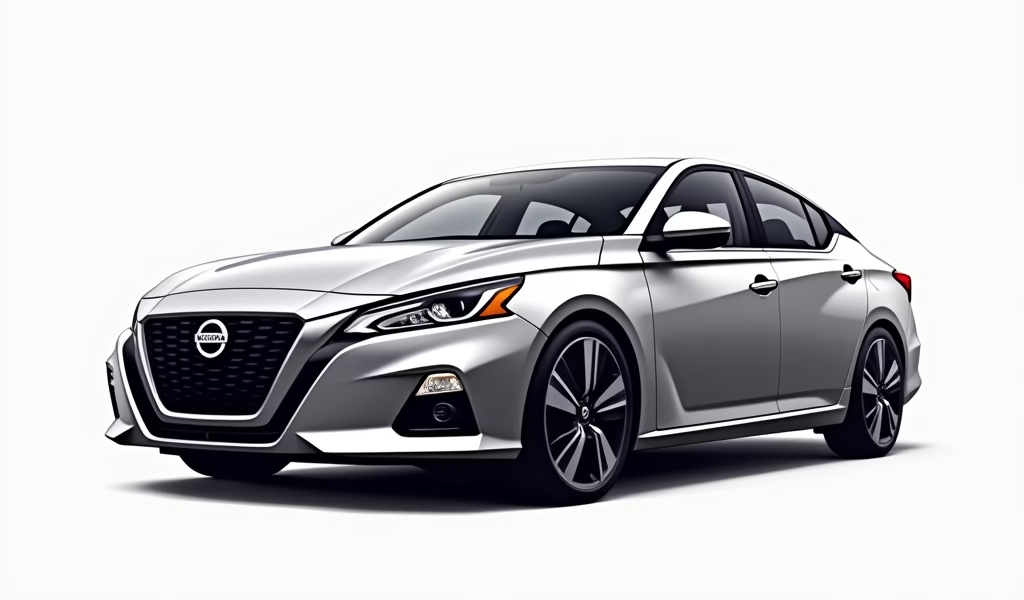
Turns out the Nissan Altima isn’t just the car your neighbor’s college dropout chooses for reckless driving—it’s actually a decent midsize sedan with good fuel economy and comfort, though plagued by notorious CVT transmission issues in older models (especially 2013-2016). The article provides an honest assessment of Altima reliability, maintenance needs, and ownership costs, concluding that while not perfect, newer models (2017+) offer good value when properly maintained with regular transmission fluid changes and proactive attention to common problem areas.
Table of Contents
- Introduction: The Nissan Altima’s Reputation
- Nissan Altima Reliability: What the Data Shows
- Understanding the CVT Transmission Concerns
- 7 Proven Maintenance Tips for Nissan Altima Owners
- Cost of Ownership: What to Expect
- What to Look for When Buying a Used Altima
- Comparable Alternatives to the Nissan Altima
- Conclusion: Is a Nissan Altima Right for You?
- Frequently Asked Questions
Introduction: The Nissan Altima’s Reputation
Are Nissan Altimas good cars? It’s a question I hear almost daily in my shop. The Nissan Altima has been a staple in the midsize sedan market since 1992, offering a blend of affordability, comfort, and decent fuel economy that appeals to many drivers. But like any vehicle, it comes with its own set of strengths and weaknesses.
As someone who’s had their hands under the hoods of hundreds of Altimas over the years, I can tell you they’re not simply “good” or “bad” cars – the reality is more nuanced. The Altima has evolved significantly through six generations, with each iteration addressing previous issues while occasionally introducing new ones.
Today, we’ll dive deep into what makes these vehicles tick, explore their common issues, and share seven proven maintenance tips that can help extend the life of your Altima. Whether you’re considering purchasing one or looking to better maintain the one in your driveway, this guide aims to give you the straight facts without the dealership fluff.
Nissan Altima Reliability: What the Data Shows
Let’s talk numbers. According to Consumer Reports, the Nissan Altima typically scores slightly above average in reliability ratings. Recent models (2019-2023) have received reliability scores ranging from 3-4 out of 5, which puts them on par with competitors like the Honda Accord and slightly above the Toyota Camry in some years.
J.D. Power has awarded the 2022 and 2023 Altima models with above-average quality and reliability scores of 82 out of 100. That’s respectable in a segment where the average hovers around 79.
What’s particularly interesting is the longevity data. With proper maintenance, Altimas regularly reach the 200,000-mile mark. I’ve personally worked on several with over 250,000 miles that still run smoothly. This longevity often surprises owners who may have heard mixed reviews about Nissan’s durability.
The Altima shines in certain areas: fuel efficiency (especially in the 2.5L models), comfortable seating, and decent technology integration in newer models. The available all-wheel drive system in models since 2019 is also a standout feature not offered by all competitors in this class.
However, reliability data shows consistent weak points across generations. The most significant is the continuously variable transmission (CVT), which we’ll discuss in detail next. Other common issues include excessive oil consumption in some 2.5L engines (particularly 2013-2016 models) and premature wear of suspension components.
For those considering buying a used vehicle, it’s worth noting that the 2010-2012 and 2017-2018 model years generally show better reliability scores than other years, making them potentially smarter used car purchases.
Understanding the CVT Transmission Concerns
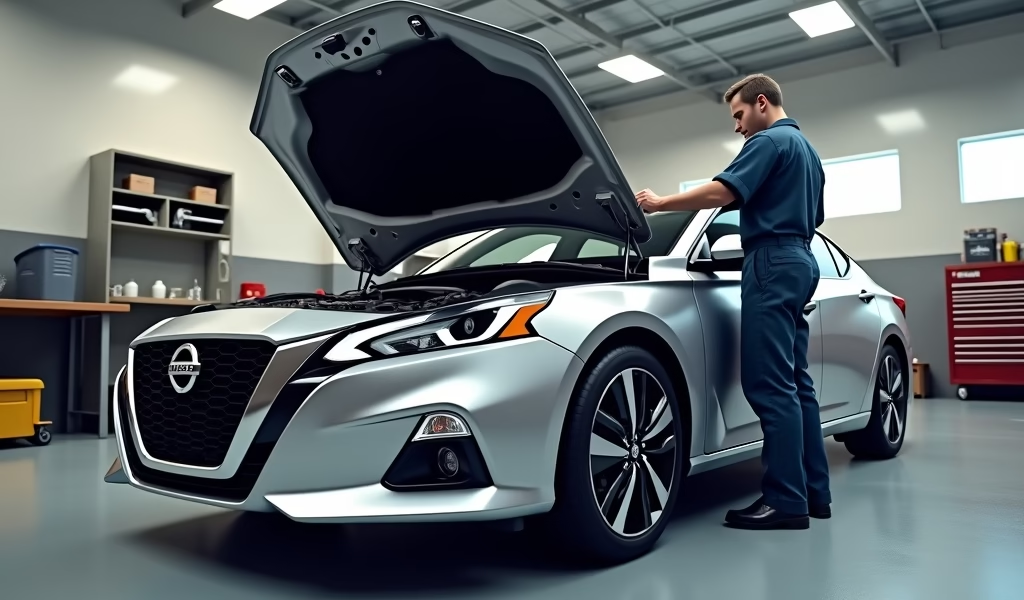
The elephant in the room when discussing Nissan Altimas is undoubtedly the Continuously Variable Transmission (CVT). Nissan pioneered widespread adoption of CVTs in mainstream vehicles, and the Altima has used this technology since 2007.
CVTs offer theoretical advantages: smoother acceleration, better fuel economy, and fewer moving parts than traditional automatics. However, early iterations in Altimas (particularly 2013-2016 models) developed a concerning reputation for premature failure, often between 60,000-100,000 miles.
Common symptoms of CVT issues include:
- Shuddering or jerking during acceleration
- A noticeable delay when shifting from park to drive
- “Slipping” sensations during acceleration
- Unexplained RPM fluctuations
- Transmission overheating warnings
The good news? Nissan has continually refined their CVT technology. According to Car and Driver’s analysis, models after 2017 show significantly improved reliability. Additionally, Nissan extended their CVT warranty to 10 years/120,000 miles for many affected vehicles (2003-2010 models).
As a mechanic, I’ve noticed the CVTs in 2019 and newer Altimas are substantially more robust. Nissan implemented stronger internal components, better cooling systems, and updated control software. These improvements have reduced failure rates substantially, though I still recommend extra attention to transmission maintenance for any Altima owner.
If you’re concerned about a CVT in an Altima you own or are considering, there are proactive steps you can take:
- Change transmission fluid more frequently than the manual suggests (every 30,000 miles instead of 60,000)
- Avoid aggressive driving, particularly rapid acceleration from a stop
- Allow the car to warm up properly in cold weather
- Consider aftermarket transmission coolers for high-stress driving conditions
With these precautions, even the earlier CVTs can deliver acceptable service life. And remember, not all Altimas experience transmission failures – they just receive disproportionate attention online because satisfied owners rarely post about transmissions working normally.
7 Proven Maintenance Tips for Nissan Altima Owners
Based on my years working on these vehicles, here are seven maintenance practices that can significantly extend the life of your Nissan Altima:
1. Prioritize CVT Transmission Care
Regardless of what your owner’s manual says, change your CVT fluid every 30,000 miles. Use only Nissan NS-3 fluid for 2013+ models (NS-2 for older ones). This simple practice can potentially add years to your transmission’s life. Have a shop with Nissan experience perform this service, as the procedure requires specific techniques and fluid levels must be precisely set.
2. Monitor Oil Consumption Closely
Particularly in 2.5L models from 2013-2016, check your oil level every two weeks for the first few months of ownership. If you notice it dropping more than a half-quart between 3,000-mile oil changes, begin monitoring more frequently. Some engines burn oil without obvious external leaks or blue smoke. Using synthetic oil can help reduce consumption.
3. Replace the PCV Valve Regularly
A failing Positive Crankcase Ventilation valve often contributes to oil consumption issues in Altimas. Replace this inexpensive part every 30,000 miles as preventive maintenance. It’s an easy DIY job on most Altima engines, located on top of the valve cover and accessible with basic hand tools.
4. Address Small Problems Promptly
Ignoring minor issues like unusual sounds, vibrations, or warning lights often leads to more expensive repairs down the road. I’ve seen countless minor problems escalate into major repairs when owners delay maintenance. For example, a $20 serpentine belt that begins squealing can cause a $500+ alternator failure if ignored.
5. Maintain the Cooling System
Altima engines run hot, particularly the V6 models, and cooling system failures can be catastrophic. Flush the coolant every 60,000 miles, check for leaks regularly, and replace the thermostat and radiator cap preventively at 100,000 miles. The cooling system also directly impacts CVT longevity, as the transmission fluid is cooled through a heat exchanger in the radiator.
6. Pay Attention to Suspension Components
Altimas are known for wearing through front control arm bushings and sway bar links faster than some competitors. Listen for clunking noises over bumps and have the suspension inspected annually. Catching these issues early prevents uneven tire wear and more extensive damage. A $200 control arm replacement now can save $800 in premature tire replacements.
7. Use Fuel System Cleaners Quarterly
Both the 2.5L and 3.5L engines are prone to carbon buildup on intake valves and injectors. Using a quality fuel system cleaner every 3-4 months helps maintain fuel efficiency and prevents rough idle issues. This is especially important if you do primarily short-trip driving or use lower-quality fuels.
Following these maintenance practices won’t make your Altima bulletproof, but they’ll address the most common failure points I see in my shop. Many affordable cars require similar attention, but these tips are specifically tailored to the Altima’s known weak points.
Cost of Ownership: What to Expect
Understanding the true cost of owning an Altima goes beyond the purchase price. Let’s break down what you can expect to spend throughout your ownership experience.
According to Edmunds True Cost to Own calculations, a 5-year ownership period for a new Nissan Altima will typically cost between $33,000-$38,000 total, depending on trim level and options. This includes depreciation, financing, insurance, taxes, fuel, maintenance, and repairs.
Maintenance costs specifically run about $4,000-$5,000 over that 5-year period, which is slightly lower than the Toyota Camry and Honda Accord. However, repair costs (unscheduled service) tend to be about $500-$800 higher than those competitors over the same period.
Insurance costs for Altimas are generally moderate for the class. The Insurance Institute for Highway Safety rates most recent Altima models well for safety, which helps keep premiums reasonable. However, it’s worth noting that older Altima models (2002-2015) have historically had higher theft rates than average, which can impact insurance costs in some areas.
Fuel economy is a bright spot for the Altima. The 2.5L models consistently deliver real-world economy in the 31-34 mpg range in mixed driving, which is excellent for a midsize sedan. Even the more powerful V6 models manage respectable efficiency at 26-28 mpg combined.
When it comes to depreciation, Altimas historically lose 50-55% of their value in the first five years – slightly worse than the segment average of 45-50%. This makes them less ideal as new car purchases if you plan to sell after a few years, but creates good value opportunities in the used market.
Parts availability and costs are generally favorable. As a high-volume model sold for decades, aftermarket support is strong, and parts are widely available at reasonable prices. Even specialized components like alternators and power steering pumps typically cost 15-20% less than equivalent parts for European brands.
From my experience, Altima owners who follow the maintenance tips outlined above can expect to add about $200-300 per year to the manufacturer’s recommended maintenance schedule, but may save $1,000+ in avoided repairs later. It’s a worthwhile investment considering these cars can reliably provide transportation well beyond 200,000 miles when properly maintained.
What to Look for When Buying a Used Altima
If you’re in the market for a used Altima, here’s my professional advice on how to avoid the lemons and find a winner:
First, target the right years. The most reliable modern Altimas tend to be from the 2017-2018 model years (late in the fifth generation when many issues were addressed) and 2020+ models (after the sixth generation’s initial quality issues were resolved). The 2019 model year, being the first of a new generation, experienced more problems than subsequent years.
When inspecting a potential purchase, pay special attention to these Altima-specific concerns:
- CVT health: Take a test drive of at least 20 minutes. The transmission should shift smoothly without shuddering, especially during steady acceleration from 25 to 45 mph. Listen for unusual whining noises that increase with speed.
- Oil level and condition: Check the dipstick before and after your test drive. The oil should be at the proper level and not appear excessively dark or smell burnt. Ask for maintenance records showing regular oil changes.
- Steering response: Altimas with worn steering rack mounts develop a characteristic looseness in the steering. When driving straight, gently move the wheel back and forth – excessive play may indicate expensive repairs are needed.
- Warning lights: Be especially wary of any transmission, engine, or ABS warning lights. Even if a seller claims it’s “just a sensor,” these often indicate more serious underlying issues.
- Suspension noises: Drive over speed bumps slowly and listen for clunking sounds, which often indicate worn control arms or stabilizer links – common wear items on Altimas.
Always check the vehicle history report for any CVT-related repairs or replacements. If the transmission has been replaced under warranty, that’s potentially good news – you’ll have newer components with updated designs.
For models with push-button start (2013+), test all key functions. The intelligent key systems can develop issues where the car occasionally fails to detect the key, leading to no-start situations. Replacement keys are expensive ($200-400 programmed).
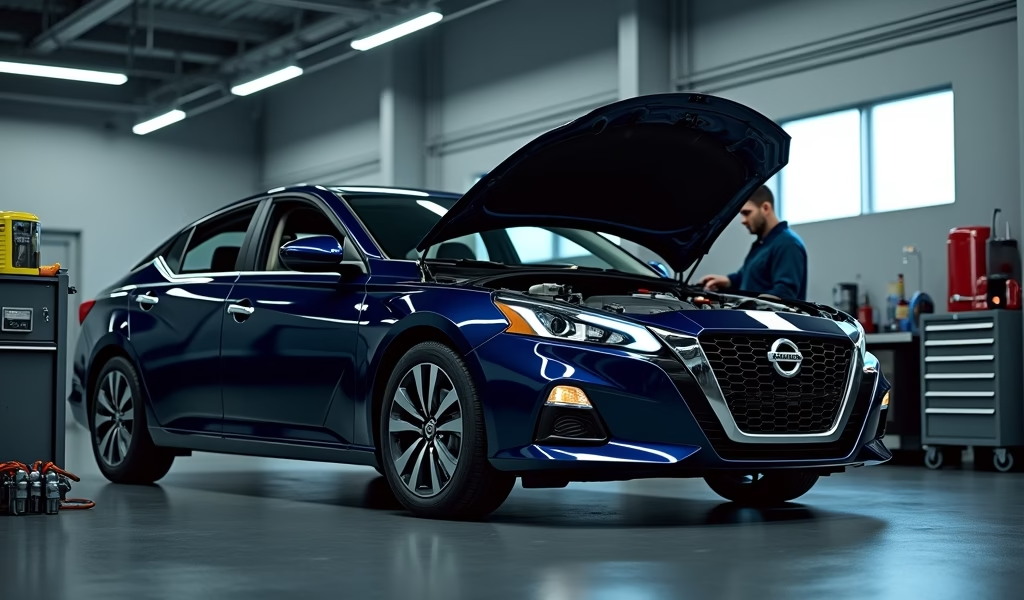
If possible, have a pre-purchase inspection done by a mechanic familiar with Nissans. They can spot red flags that might not be obvious during a test drive. The $100-150 cost could save you thousands in surprise repairs.
Lastly, if you’re looking at the best cars of 2025, note that the newest Altimas include improved technology and safety features like ProPilot Assist driver assistance, which adds significant value to newer models.
Comparable Alternatives to the Nissan Altima
While the Altima has its merits, it’s always wise to consider alternatives before making a purchase decision. Here are some comparable models and how they stack up:
The Honda Accord is typically priced 5-10% higher than an equivalent Altima but offers slightly better reliability scores across all recent years according to Consumer Reports. The Accord’s conventional automatic transmission doesn’t have the CVT concerns, but it sacrifices 2-3 mpg in fuel economy. Honda’s resale value typically exceeds the Altima’s by 7-10% after five years.
Toyota’s Camry represents the benchmark for reliability in this segment. While it lacks the engaging handling of the Altima, it delivers exceptional longevity with lower maintenance costs over time. The Camry hybrid option also outperforms the Altima in efficiency, though at a higher purchase price. For those prioritizing long-term ownership, the Camry’s superior reliability record makes it worth considering despite its somewhat bland driving dynamics.
The Mazda6 (through 2021) and Mazda3 (current) offer more engaging driving experiences than the Altima with comparable reliability and slightly higher purchase prices. Mazda’s interiors also generally feel more premium than the Altima’s, though rear seat space is more limited.
Hyundai’s Sonata and Kia’s K5 have made tremendous strides in quality while offering more features for the money than the Altima. Their 10-year/100,000-mile powertrain warranties exceed Nissan’s 5-year/60,000-mile coverage. However, their long-term reliability beyond the warranty period remains less proven than Japanese alternatives.
For those attracted to the Altima’s available AWD system (2019+), the Subaru Legacy is worth consideration. It offers standard AWD at a similar price point with comparable reliability ratings and fuel economy.
Each alternative brings its own set of strengths and compromises. The Altima’s unique selling proposition remains its balance of space, comfort, fuel economy, available AWD, and value pricing. Whether these advantages outweigh the potential CVT concerns depends on your specific needs, driving habits, and risk tolerance.
Conclusion: Is a Nissan Altima Right for You?
So, are Nissan Altimas good cars? After thoroughly examining their reliability, maintenance needs, ownership costs, and alternatives, I can offer this conclusion: Altimas are good cars for specific buyers, but not universally ideal for everyone.
The Altima makes the most sense for buyers who:
- Prioritize initial value and feature content over ultimate reliability
- Plan to keep up with diligent maintenance
- Need a spacious, comfortable sedan with good fuel economy
- Want available AWD without stepping up to a luxury brand
- Are shopping for newer models (2017+) when considering used vehicles
On the other hand, the Altima might not be ideal for:
- Drivers who tend to neglect regular maintenance
- Those planning to keep their vehicle well beyond 150,000 miles without major repairs
- Buyers who prioritize highest possible resale value
- Enthusiasts seeking engaging handling and performance
When properly maintained using the seven tips outlined in this article, a Nissan Altima can provide reliable, comfortable, and economical transportation for many years. The CVT concerns, while valid, are often magnified by poor maintenance practices and can be mitigated with proper care.
Remember that vehicle reliability is a spectrum, not a binary measure. With reasonable expectations and appropriate maintenance, an Altima can serve you well while offering good value for your transportation dollar. Just be sure to select the right model year, inspect used examples carefully, and budget for slightly more proactive maintenance than some competitors might require.
Ultimately, the right car for you depends on your specific priorities, driving habits, and maintenance practices. For many buyers, a well-chosen Nissan Altima represents a smart balance of initial cost, features, comfort, and reasonable reliability.
Frequently Asked Questions
How long do Nissan Altimas typically last?
With proper maintenance, Nissan Altimas typically last 200,000-250,000 miles. Some well-maintained examples have exceeded 300,000 miles, though major components like the transmission may need replacement during the vehicle’s lifetime.
Are Nissan Altima CVT transmissions really that unreliable?
Earlier Altima CVTs (2007-2016) had higher-than-average failure rates, but models after 2017 show significant improvement. Regular transmission fluid changes every 30,000 miles can substantially improve CVT longevity.
What’s the best year for a used Nissan Altima?
The 2017-2018 model years are generally considered the most reliable for used Altima purchases. These later fifth-generation models benefited from numerous reliability improvements while avoiding first-year issues of the redesigned 2019 model.
Does the Nissan Altima hold its value well?
Altimas typically depreciate slightly faster than class leaders like the Honda Accord and Toyota Camry. They lose approximately 50-55% of their value in the first five years compared to 45-50% for their top Japanese competitors.
Is the Nissan Altima expensive to maintain?
The Nissan Altima has average maintenance costs for its class, with scheduled maintenance running about $4,000-$5,000 over a five-year period. Following the preventive maintenance tips in this article may add $200-300 annually but can prevent more costly repairs.