

Overview
Who knew that babysitting a car with two hearts could be so rewarding? This article provides seven essential maintenance tips for hybrid car owners—from understanding battery systems and scheduling professional inspections to optimizing regenerative braking and practicing smart driving habits—all confirming that properly maintained hybrids deliver superior fuel economy, lower emissions, and excellent longevity that make their higher initial cost worthwhile.
Table of Contents
- Are Hybrid Cars Worth It? The Full Breakdown
- Maintenance Tip #1: Understand Your Hybrid’s Battery System
- Maintenance Tip #2: Schedule Regular Professional Inspections
- Maintenance Tip #3: Optimize Your Regenerative Braking System
- Maintenance Tip #4: Keep Your Hybrid’s Software Updated
- Maintenance Tip #5: Maintain Proper Tire Pressure
- Maintenance Tip #6: Use the Right Fluids
- Maintenance Tip #7: Practice Smart Driving Habits
- Conclusion
- Frequently Asked Questions
Are Hybrid Cars Worth It? The Full Breakdown
After 15 years as a certified hybrid technician, I can tell you that the question “Are hybrid cars worth it?” comes up in my shop almost daily. With rising fuel costs and growing environmental concerns, more drivers are eyeing these gas-electric vehicles with curiosity and caution.
The short answer? Yes, hybrid cars are typically worth the investment for most drivers—but like any vehicle, proper maintenance is the key to maximizing that value. At Knows Your Car, we’ve serviced thousands of hybrids and have seen firsthand how proper care transforms these technological marvels into reliable, efficient machines.
When considering if a hybrid is worth it for your situation, let’s break down the key factors:
Initial Cost vs. Long-Term Savings
Hybrid vehicles generally cost $2,000-$5,000 more than comparable conventional models upfront. However, the average hybrid owner recoups this premium within 3-5 years through significant fuel savings. If you drive more than 15,000 miles annually or live in an area with high gas prices, your payback period could be even shorter.
According to a Consumer Reports study, hybrid owners typically save $3,000-$6,000 in operating costs over a 10-year ownership period.
Maintenance Considerations
Contrary to popular belief, hybrid cars don’t always cost more to maintain. In fact, hybrids often experience less wear on braking systems thanks to regenerative braking, and their engines typically run less than conventional vehicles, potentially extending engine life.
The hybrid battery remains the biggest maintenance concern for most buyers. While replacement can be expensive ($1,500-$3,500), modern hybrid batteries routinely last 150,000-200,000 miles with proper care. Many manufacturers offer 8-10 year warranties on these components, providing peace of mind.
Environmental Impact
If reducing your carbon footprint matters to you, hybrids deliver measurable benefits. They typically produce 25-35% fewer emissions than conventional vehicles. For city drivers, this advantage is even more pronounced, as hybrids excel in stop-and-go traffic where traditional cars are at their least efficient.
Driving Experience and Performance
Modern hybrids have shed their reputation as underpowered eco-boxes. Today’s models offer responsive acceleration thanks to electric motors that deliver instant torque. While they won’t satisfy dedicated performance enthusiasts, most drivers find hybrids provide ample power for everyday driving situations.
Resale Value
Well-maintained hybrids from reliable manufacturers like Toyota and Honda typically retain their value better than conventional vehicles. After five years, hybrids generally depreciate 5-10% less than their non-hybrid counterparts, adding another financial advantage to the ownership equation.
Maintenance Tip #1: Understand Your Hybrid’s Battery System
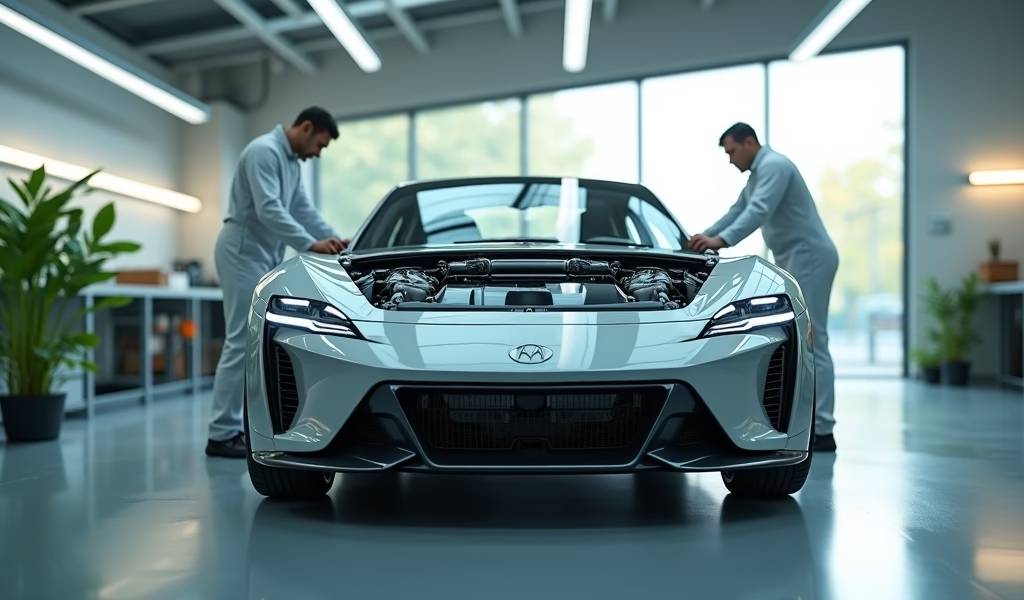
Your hybrid’s high-voltage battery isn’t just another component—it’s the heart of the entire hybrid system. Unlike conventional car batteries that simply start the engine, hybrid batteries power propulsion and store energy recovered during braking.
Most hybrid batteries are designed to last the lifetime of the vehicle, but their performance can degrade over time if not properly maintained. Here’s what you need to know:
Signs of Battery Degradation
- Declining fuel economy (more than 5 mpg drop from your usual average)
- Engine running more frequently or at unexpected times
- Battery charge level fluctuating unusually
- Warning lights on dashboard (particularly the hybrid system or check engine light)
- Reduction in acceleration or overall performance
Extending Battery Life
Based on thousands of hybrid services at our shop, these strategies consistently help maximize battery lifespan:
- Drive your hybrid regularly—inactivity is the enemy of hybrid batteries
- Avoid extreme temperatures when possible (garage parking helps)
- Keep your hybrid’s software updated (more on this in Tip #4)
- Maintain moderate speeds—high-speed driving forces the gas engine to work harder
- Follow the manufacturer’s recommended maintenance schedule
For Toyota Prius owners specifically, we’ve found that checking the battery cooling system’s air filter every 30,000 miles prevents overheating issues that can shorten battery life. This simple $30 maintenance item can potentially save thousands in premature battery replacement costs.
Maintenance Tip #2: Schedule Regular Professional Inspections
While DIY maintenance has its place, hybrid vehicles benefit tremendously from professional inspections by technicians who understand these complex systems. Regular checkups can catch small issues before they develop into expensive problems.
Finding Qualified Technicians
Not all mechanics are created equal when it comes to hybrid expertise. Look for:
- ASE Hybrid/Electric Vehicle Specialist certification (L3)
- Manufacturer-specific hybrid training (especially important for dealership alternatives)
- Shops with dedicated hybrid-specific diagnostic equipment
- Technicians with several years of hybrid-specific experience
What Professional Inspections Should Include
A thorough hybrid inspection goes beyond the basics of conventional vehicles. Make sure your service includes:
- High-voltage insulation testing
- Battery pack cell balance evaluation
- Cooling system efficiency testing (for both engine and battery systems)
- Regenerative braking performance assessment
- Power inverter and converter inspection
- 12V auxiliary battery condition check
At Knows Your Car, we recommend comprehensive hybrid-specific inspections annually or every 15,000 miles, whichever comes first. This frequency provides the best balance between cost and preventative care.
I’ve seen countless cases where regular professional inspections caught minor issues that would have developed into $2,000+ repairs if left unaddressed. One Honda Insight owner saved over $3,500 when we identified early signs of inverter failure during a routine inspection, allowing for a simpler repair before catastrophic damage occurred.
Maintenance Tip #3: Optimize Your Regenerative Braking System
One of the most ingenious features of hybrid vehicles is their regenerative braking system, which recaptures energy during deceleration. This system not only improves efficiency but also reduces wear on your conventional brakes.
How Regenerative Braking Works
When you apply the brakes in a hybrid, the electric motor temporarily works in reverse, becoming a generator that converts kinetic energy into electricity instead of wasting it as heat. This electricity recharges the battery while simultaneously slowing the vehicle.
The system is brilliant, but it requires different driving techniques to maximize its effectiveness.
Techniques to Maximize Regenerative Braking
- Anticipate stops early and begin gentle braking sooner
- Watch your vehicle’s energy display to find the “sweet spot” that maximizes regeneration
- Use the brake pedal gradually rather than suddenly
- In vehicles with paddle shifters that control regeneration (like the Chevy Bolt or Honda Clarity), use these to your advantage
- Practice “pulse and glide” technique on highways—gently accelerating then coasting to maximize efficiency
Maintenance Considerations
Because regenerative braking reduces wear on conventional brakes, you’ll likely replace brake pads less frequently—sometimes lasting twice as long as in conventional vehicles. However, this reduced use creates its own maintenance needs:
- Have brake fluid flushed every 2-3 years regardless of mileage (stagnant fluid absorbs moisture)
- Periodically exercise your conventional brakes with several moderate stops to prevent rotor corrosion
- During routine maintenance, ensure the brake system is thoroughly inspected for signs of sticking calipers
In my workshop, I’ve seen 10-year-old Toyota Prius models with original brake pads still at 50% thickness—a testament to how effective regenerative braking can be when properly utilized and maintained.
Maintenance Tip #4: Keep Your Hybrid’s Software Updated
Modern hybrids rely heavily on complex computer systems to optimize performance, efficiency, and battery life. Just like your smartphone, these systems benefit from regular updates.
Why Software Updates Matter
Manufacturers frequently release software updates that can:
- Improve hybrid system efficiency by 2-5%
- Extend battery life through better charge/discharge algorithms
- Fix known bugs or performance issues
- Enhance the operation of regenerative braking systems
- Improve climate control efficiency (a significant energy consumer in hybrids)
How to Check for Updates
Unlike your phone that constantly prompts for updates, vehicle software updates are less obvious. Here’s how to stay current:
- Ask about available updates during regular service visits
- Register your vehicle on the manufacturer’s owner website for notifications
- For newer vehicles with connectivity features, enable automatic update notifications
- Check technical service bulletins (TSBs) for your specific model
Some updates require dealer-level equipment, but others can be performed by independent shops with the right diagnostic tools. At Knows Your Car, we maintain manufacturer-level programming equipment for all major hybrid brands.
The most dramatic example I’ve seen involved a 2017 Ford Fusion Hybrid that gained nearly 4 MPG after a comprehensive powertrain control module update. Over that vehicle’s lifetime, this simple software update will save the owner hundreds of gallons of fuel.
Maintenance Tip #5: Maintain Proper Tire Pressure

While this tip applies to all vehicles, it’s especially critical for hybrids where efficiency is paramount. Proper tire inflation is one of the simplest yet most effective ways to maintain your hybrid’s fuel economy.
The Efficiency Connection
According to U.S. Department of Energy studies, underinflated tires can lower fuel economy by about 0.2% for each 1 PSI drop in pressure. That might seem minor, but with tires commonly running 5-10 PSI below recommendations, you could be losing 1-2 MPG—negating a significant portion of your hybrid advantage.
Beyond efficiency, proper inflation also:
- Extends tire life by promoting even tread wear
- Improves handling and safety
- Reduces strain on your hybrid’s powertrain
Best Practices
Based on our service experience with hundreds of hybrids yearly:
- Check pressure monthly and before any long trips
- Always check when tires are cold (before driving more than a mile)
- Use the manufacturer’s recommended pressure (found on the driver’s door jamb sticker), not the maximum pressure on the tire sidewall
- Consider seasonal adjustments (add 2-3 PSI in winter months when temperatures drop)
- Invest in a quality digital tire gauge for accuracy
Tire Selection Matters
When it’s time for replacement, choose tires designed to complement your hybrid’s efficiency:
- Low rolling resistance (LRR) tires reduce energy loss
- All-season tires typically offer better efficiency than performance models
- Maintain the original tire size and load rating
- Consider noise ratings, as tire noise is more noticeable in quiet hybrid vehicles
One surprising fact: a set of premium low rolling resistance tires can improve your hybrid’s fuel economy by up to 7% compared to standard tires. While they may cost slightly more upfront, they often pay for themselves through improved efficiency and longer tread life.
Maintenance Tip #6: Use the Right Fluids
Hybrid vehicles often have specialized fluid requirements that differ from conventional vehicles. Using the correct fluids is crucial for system longevity, efficiency, and safety.
Hybrid-Specific Fluid Requirements
Through years of servicing hybrids, I’ve found these fluid-related issues are most critical:
- Engine oil: Hybrids often require lower viscosity oils (0W-20 or even 0W-16) specifically formulated for hybrid applications
- Transmission fluid: Many hybrids use unique fluid for their electrically controlled continuously variable transmissions (eCVT)
- Coolant: Hybrids typically have separate cooling systems for the engine and the hybrid components, each requiring specific coolant types
- Brake fluid: Some hybrids have particular requirements due to their regenerative braking systems
The Cost of Using Incorrect Fluids
Using the wrong fluids in a hybrid isn’t just suboptimal—it can be catastrophic. I’ve seen incorrect transmission fluid destroy a hybrid transaxle, turning what should have been a $120 fluid change into a $4,000 repair.
For Toyota and Lexus hybrids specifically, the specialized “WS” transmission fluid is absolutely critical. Generic fluid substitutes have led to numerous transmission failures in our repair experience.
Fluid Maintenance Schedule
Based on our service records of hybrids with exceptional longevity:
- Engine oil: Every 5,000-7,500 miles (despite some manufacturers suggesting longer intervals)
- Transmission/transaxle fluid: Every 60,000 miles for most models
- Engine coolant: Every 100,000 miles or 10 years
- Hybrid system coolant: Every 150,000 miles or 15 years
- Brake fluid: Every 2-3 years regardless of mileage (absorbs moisture over time)
- Power steering fluid (in applicable hybrids): Every 30,000 miles
Remember that while manufacturer recommendations provide a baseline, driving conditions matter. Vehicles used in extreme temperatures, stop-and-go traffic, or for frequent short trips may require more frequent fluid services.
Maintenance Tip #7: Practice Smart Driving Habits
How you drive your hybrid dramatically impacts both its efficiency and longevity. After servicing thousands of hybrids, I’ve observed that owner driving habits often predict which vehicles will reach 200,000+ miles with minimal issues.
Hybrid vehicles respond differently to driving styles than conventional cars. Understanding hybrid powertrains helps you optimize your driving approach.
Efficiency-Maximizing Techniques
- Accelerate gently to keep the system in electric mode when possible
- Maintain steady speeds rather than constant acceleration and braking
- Use cruise control on highways
- Watch your vehicle’s energy display to understand power flow
- Pre-condition the cabin while plugged in (for plug-in hybrids)
- Plan routes to avoid traffic and steep hills when possible
Habits That Reduce Hybrid Longevity
These driving patterns put unnecessary stress on hybrid systems:
- Frequent short trips that don’t allow the engine to reach operating temperature
- Aggressive acceleration that constantly forces the gasoline engine to engage
- Extended idling (hybrids are designed to shut off when stationary)
- Ignoring dashboard warnings assuming they’re just “hybrid quirks”
- Running the battery to empty or keeping it at 100% charge for extended periods (plug-in hybrids)
Seasonal Considerations
Your driving approach should adapt with the seasons:
- Winter: Allow longer warm-up periods for the gasoline engine in extreme cold
- Summer: Minimize A/C usage or pre-cool the cabin while plugged in
- Spring/Fall: Take advantage of moderate temperatures that allow maximum electric operation
I’ve witnessed firsthand how driving habits impact hybrid longevity. Among our customers, those who follow these principles consistently see 20-30% better fuel economy and significantly fewer hybrid-specific repairs over their ownership period.
Conclusion
After nearly two decades of working with hybrid vehicles, I can confidently say that for most drivers, hybrid cars are absolutely worth the investment—when properly maintained. These seven maintenance tips represent the collective wisdom gained from servicing thousands of hybrids in our shop:
- Understand and care for your battery system
- Schedule regular professional inspections with hybrid-certified technicians
- Optimize your regenerative braking through proper driving techniques
- Keep your hybrid’s software updated
- Maintain proper tire pressure and choose efficiency-focused tires
- Use the manufacturer-recommended fluids
- Practice smart driving habits that maximize efficiency and longevity
The hybrid owners who follow these guidelines consistently achieve 200,000+ miles of reliable service, often with minimal repairs beyond routine maintenance. Their real-world operating costs typically end up significantly lower than comparable conventional vehicles, even accounting for the higher purchase price.
The environmental benefits are equally compelling. A properly maintained hybrid produces substantially fewer emissions over its lifetime while consuming significantly less fossil fuel.
If you’re on the fence about hybrid ownership, remember that these vehicles aren’t the complex, maintenance-intensive machines they’re often portrayed to be. With the right care approach, they’re often more reliable and less expensive to maintain than conventional vehicles—while delivering that satisfying feeling of driving past gas stations more often than your neighbors.
At Knows Your Car, we’re passionate about helping hybrid owners maximize their vehicles’ potential. Whether you’re a seasoned hybrid enthusiast or considering your first electrified purchase, proper maintenance transforms these technological marvels from complex machines into reliable partners for your driving future.
Frequently Asked Questions
Do hybrid batteries really need replacement, and how much does it cost?
Most modern hybrid batteries last 150,000-200,000 miles with proper maintenance. Replacement costs range from $1,500-$3,500 depending on model, but many third-party rebuilders offer more affordable options around $1,000-$1,800.
Are hybrid cars more expensive to maintain than regular cars?
Contrary to popular belief, hybrids often cost less to maintain due to reduced wear on brakes and engines. The one potential exception is battery replacement, but this typically occurs well beyond 150,000 miles if properly maintained.
Do hybrid cars perform well in extreme weather?
Hybrid performance can decrease slightly in extreme temperatures, particularly cold weather. However, modern hybrids have sophisticated thermal management systems that minimize these effects compared to earlier models.
How long does it take for a hybrid to pay for itself?
Most hybrid owners recoup the price premium within 3-5 years, depending on driving habits and fuel prices. Drivers with longer commutes or who drive primarily in city conditions typically see faster payback periods.
Can I take my hybrid to any mechanic?
While routine maintenance can be performed anywhere, hybrid-specific issues should be addressed by technicians with hybrid certification and experience. Specialized diagnostic equipment and safety training are required for working on high-voltage hybrid systems.