
Overview
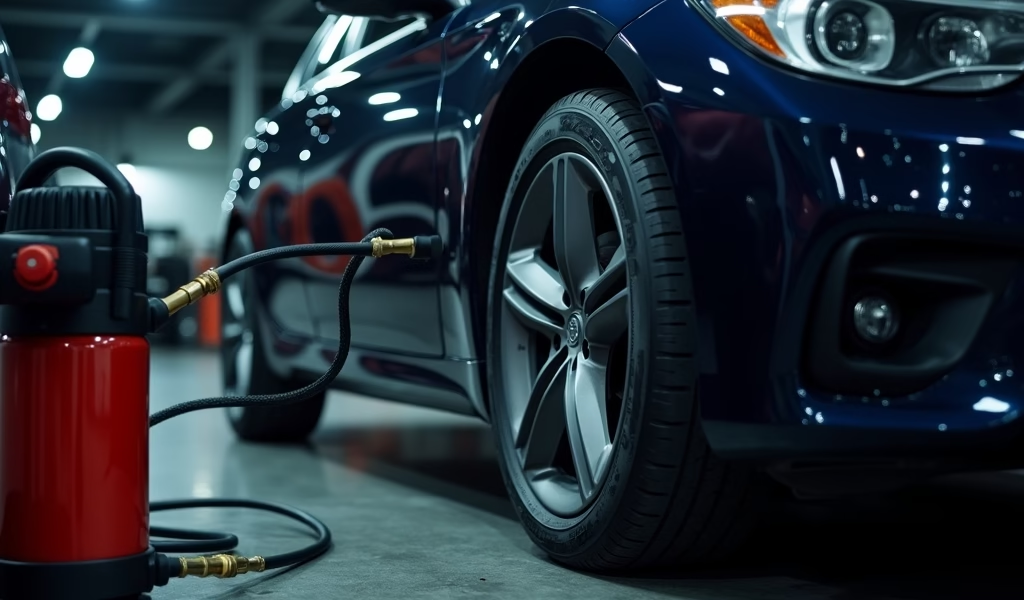
That air compressor collecting dust in your garage isn’t just a one-trick pony for inflating flat basketballs—it’s actually your car’s secret weapon against premature aging and empty wallets. This article details seven practical applications of air compressors for vehicle maintenance, from maintaining optimal tire pressure and cleaning hard-to-reach engine components to emergency tire repairs and DIY paint touch-ups, all of which can significantly extend your vehicle’s lifespan while saving you substantial money on professional services.
Table of Contents
- The Unexpected Powerhouse in Your Garage: Your Air Compressor
- Maintaining Proper Tire Pressure – The Foundation of Fuel Economy
- Cleaning Hard-to-Reach Areas – Because Dust Doesn’t Belong in Engines
- Painting and Touch-Up Work – From Eyesore to Eye-Catching
- Inflating Sports Equipment and Accessories – Your Compressor’s Double Life
- Emergency Tire Repair – Your Roadside Guardian Angel
- Air Filter Maintenance – Because Your Engine Deserves Clean Air
- Brake System Inspection – Because Stopping Is Non-Negotiable
- The Air Advantage: Why Every Car Owner Needs a Compressor
- Frequently Asked Questions
The Unexpected Powerhouse in Your Garage: Your Air Compressor
Let’s be honest – car maintenance often feels like solving a complex puzzle while your wallet slowly empties. But there’s an unsung hero sitting in many garages that can transform your approach to vehicle care: the air compressor connection. This versatile tool isn’t just gathering dust beside your holiday decorations; it’s waiting to revolutionize how you maintain your vehicle.
After 15 years as a professional mechanic, I’ve seen countless vehicles age prematurely simply because their owners never realized how an air compressor could extend their car’s lifespan. It’s not just for inflating tires (though it excels at that). It’s the Swiss Army knife of automotive maintenance that can save you substantial money while keeping your ride in prime condition.
Today, I’ll share seven practical ways your air compressor can become your car’s new best friend. These aren’t complicated procedures – they’re straightforward techniques that even beginners can master with a bit of guidance.
Maintaining Proper Tire Pressure – The Foundation of Fuel Economy
Proper tire pressure isn’t just a recommendation – it’s the bedrock of vehicle efficiency. When your tires run underinflated, they create excessive rolling resistance, forcing your engine to work harder and consume more fuel. According to the U.S. Department of Energy, properly inflated tires can improve gas mileage by up to 3% – small numbers that add up to significant savings over a year.
Beyond fuel savings, correctly inflated tires enhance safety by improving handling and reducing stopping distances. They also wear more evenly, extending their lifespan considerably – and we all know quality tires aren’t cheap.
Using an air compressor to check and adjust tire pressure is straightforward:
- Find your vehicle’s recommended tire pressure (usually listed on the driver’s side door jamb)
- Remove the valve cap
- Press the air compressor nozzle firmly onto the valve stem
- Add air until you reach the recommended PSI
- If you overinflate, use the small pin in most tire pressure gauges to release excess air
Check your tire pressure at least monthly and before any road trips. For the most accurate reading, check when tires are cold – ideally in the morning before driving. This simple five-minute routine can save hundreds in fuel and tire replacement costs.
Cleaning Hard-to-Reach Areas – Because Dust Doesn’t Belong in Engines
Your car’s nooks and crannies collect surprising amounts of debris. From the french fry fragments wedged in seat crevices to the dust coating delicate engine components, these accumulations aren’t just unsightly – they can impact performance.
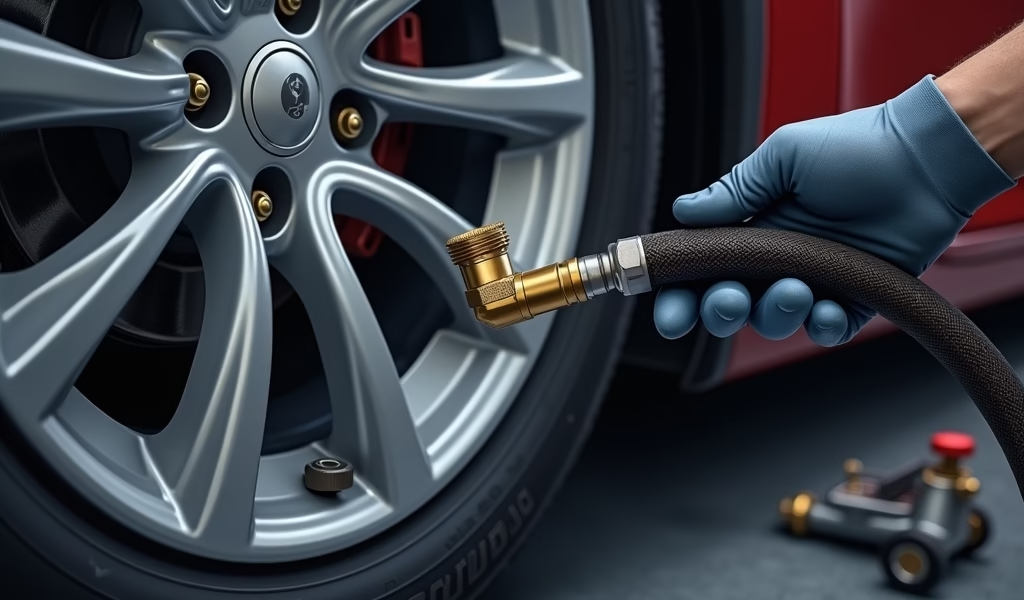
An air compressor with a blower nozzle transforms into a precision cleaning tool that can access areas even the most determined vacuum couldn’t reach. It’s particularly valuable for engine bay cleaning, where moisture from traditional cleaning methods could damage sensitive electronics.
When using compressed air for cleaning:
- Always wear safety glasses – airborne particles are no joke
- Use moderate pressure (30-40 PSI) to avoid damaging sensitive electronics
- Keep a safe distance of 6-8 inches from components
- Never blow compressed air directly at sensors or electrical connections
- Ensure the engine is cool before starting
Regular cleaning prevents dust buildup that can affect everything from your HVAC system’s efficiency to your engine’s cooling capabilities. I’ve seen overheating issues resolved simply by removing dust that had accumulated on cooling fins – a five-minute fix that prevented a potential four-figure repair bill.
Painting and Touch-Up Work – From Eyesore to Eye-Catching
There’s something uniquely disappointing about discovering a new scratch on your car’s finish. But before resigning yourself to living with the blemish or paying hundreds at a body shop, consider this: your air compressor paired with an inexpensive paint sprayer can deliver remarkably professional results.
For small touch-ups, a compressed air spray gun offers precision that brush applications simply can’t match. With proper preparation, you can blend new paint seamlessly with the existing finish – making that parking lot battle scar virtually disappear.
For best results:
- Thoroughly clean and lightly sand the damaged area
- Mask surrounding areas carefully (painter’s tape is your friend)
- Thin paint according to manufacturer specifications
- Practice your spray technique on cardboard first
- Apply in light, even coats rather than one heavy layer
- Maintain consistent distance and movement while spraying
You’ll need an HVLP (High Volume Low Pressure) spray gun for your compressor, appropriate paint matching your vehicle’s color code, primer, and clear coat for the finishing touch. Remember, preparation is 90% of a successful paint job – the actual spraying is just the final step in your meticulous process.
Inflating Sports Equipment and Accessories – Your Compressor’s Double Life
Your air compressor isn’t confined to automotive duties – it’s also the unsung hero of weekend recreation. From flat basketballs to bike tires that have surrendered to gravity, your compressor can resurrect them all with minimal effort.
This versatility makes it particularly valuable on camping trips or outdoor excursions where access to inflation sources might be limited. I’ve seen a portable compressor save many a family vacation when air mattresses needed inflation far from electrical outlets.
For maximum versatility, invest in an adapter kit with various nozzles:
- Needle adapters for sports balls
- Presta valve adapters for high-end bike tires
- Broad nozzles for air mattresses and inflatables
- Cone adapters for pool toys
If you’re an outdoor enthusiast, consider a portable air compressor that runs off your vehicle’s 12V power outlet. These compact units can be stored in your trunk, ready for action whether you’re at a soccer game with deflated balls or dealing with a flat tire on a remote trail.
Emergency Tire Repair – Your Roadside Guardian Angel
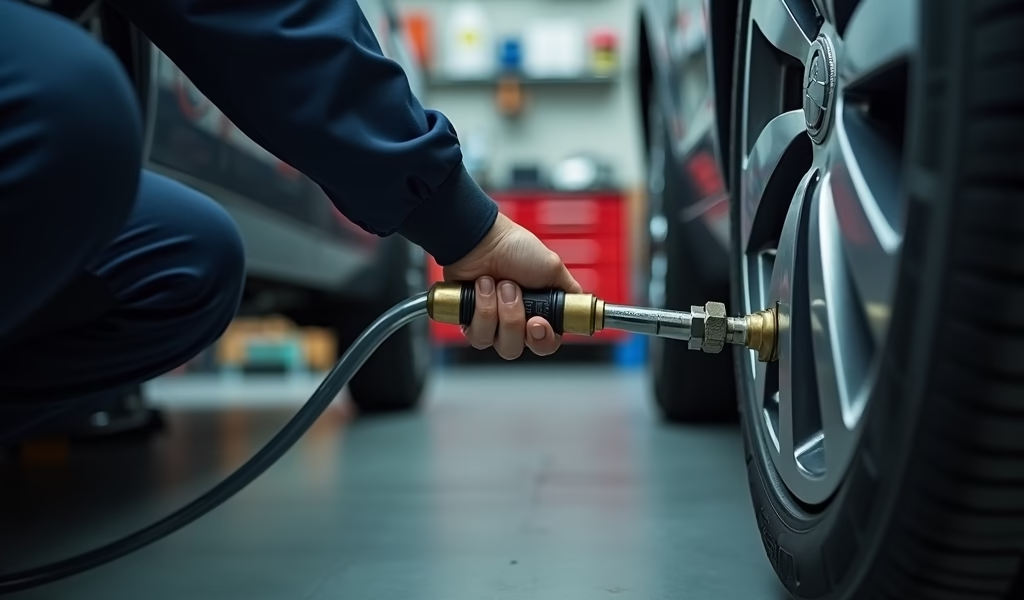
Picture this: You’re miles from civilization when that dreaded “thump-thump-thump” announces a flat tire. In pre-compressor days, this meant either a sweaty session with a manual pump or an expensive tow truck call. But with a portable compressor and tire sealant, you’ve got yourself a roadside rescue kit.
Modern tire sealant products combined with an air compressor can provide temporary repairs for many common punctures. These sealants work by coating the inner tire surface and plugging small holes from the inside. While not a permanent solution, they can buy you enough time to reach safety.
For emergency tire repairs:
- Locate the puncture if possible
- Follow the tire sealant product instructions (typically involving injection through the valve stem)
- Use your compressor to inflate the tire to the recommended pressure
- Drive cautiously for a short distance to distribute the sealant
- Check pressure again and top up if necessary
Remember that sealant repairs are temporary measures, most effective for small punctures (less than 1/4 inch) in the tread area. Sidewall damages or larger punctures will still require professional attention. Think of sealant as the automotive equivalent of a bandage – perfect for minor wounds but not suitable for major injuries.
Air Filter Maintenance – Because Your Engine Deserves Clean Air
Your engine breathes through its air filter, and just like your own breathing, it works best when that air is clean. A clogged air filter forces your engine to work harder, increasing fuel consumption and reducing power output. New car owners often overlook this simple maintenance item, but experienced mechanics know it’s fundamental to engine health.
Many modern vehicles use reusable air filters that can be cleaned rather than replaced, saving both money and reducing waste. Your air compressor is the perfect tool for this maintenance task, blasting away accumulated dirt from filter elements.
To properly clean a reusable air filter:
- Remove the filter according to your vehicle’s manual
- Tap it gently to remove loose debris
- From the clean side (engine side) outward, use low-pressure compressed air (20-30 PSI) to blow out trapped particles
- For oiled filters, re-oil according to manufacturer specifications after cleaning
- Allow to dry completely before reinstallation
How do you know when cleaning isn’t enough? If your filter appears damaged, has tears, or remains visibly dirty after cleaning, it’s replacement time. A clean air filter can improve fuel efficiency by up to 10% according to EPA studies and extends engine life by preventing abrasive particles from entering the combustion chambers.
Brake System Inspection – Because Stopping Is Non-Negotiable
There’s an old saying in my shop: “Speed is optional, but stopping is mandatory.” Your brakes are arguably the most important safety system in your vehicle, yet many drivers neglect them until warning signs appear – often when significant damage has already occurred.
Compressed air can be invaluable when inspecting brake components, allowing you to clean away surface dust for better visibility without introducing moisture (which can contaminate brake fluid and reduce braking effectiveness).
When using compressed air for brake inspection:
- Use low pressure (20-30 PSI) to avoid disturbing brake pad material
- Never blow directly at brake fluid reservoirs or open hydraulic lines
- Look for uneven wear patterns on pads
- Check for scoring or grooving on rotors
- Inspect for signs of leaking brake fluid
- Pay attention to excessive rust on components
Warning signs that warrant immediate attention include grinding noises, pulsation in the brake pedal, pulling to one side when braking, or increased stopping distances. While basic inspection is DIY-friendly, actual brake repairs often require professional skills. This is one area where knowing when to consult a professional can literally be a lifesaver.
The Air Advantage: Why Every Car Owner Needs a Compressor
Like a trusted tool in a mechanic’s arsenal, an air compressor connection stands ready to help you tackle the ongoing saga of car maintenance. The initial investment pays for itself many times over through extended vehicle life, improved performance, and fewer service visits.
Throughout my career, I’ve seen countless vehicles achieve impressive longevity simply because their owners embraced preventative maintenance. An air compressor is the cornerstone of that approach – versatile enough to handle multiple tasks yet simple enough for even novice DIYers to master.
Modern vehicles are sophisticated machines designed to run optimally under specific conditions. Every time you use your compressor to maintain proper tire pressure, clean vital components, or inspect critical systems, you’re helping your vehicle achieve its full potential – in performance, efficiency, and lifespan.
The most valuable benefit might be the confidence you’ll gain. There’s something deeply satisfying about handling your own maintenance and knowing exactly what’s happening with your vehicle. That knowledge eliminates the uncertainty many feel when dealing with automotive issues and empowers you to make informed decisions about your car’s care.
So dust off that air compressor or consider investing in one if you haven’t already. Your car – and your wallet – will thank you for years to come. After all, in the world of automotive maintenance, a little compressed air goes a remarkably long way.
Frequently Asked Questions
What PSI should I set my air compressor to for car tires?
Set your compressor to about 5-10 PSI above your vehicle’s recommended tire pressure (typically found on the driver’s door jamb or owner’s manual). This provides enough pressure to inflate without excessive wait time.
Can I use any air compressor for automotive tasks?
Most home air compressors with at least 2-3 CFM (cubic feet per minute) and 90 PSI capability will handle basic automotive tasks. For painting or continuous tool operation, look for 4+ CFM models.
How often should I clean my car’s air filter with compressed air?
Inspect your air filter every 5,000-7,500 miles and clean it if visibly dirty. In dusty environments, you may need more frequent cleaning every 3,000 miles.
Is it safe to use compressed air on electronic components?
Yes, if you use low pressure (30 PSI or less) and maintain a safe distance of 6-8 inches. Never direct compressed air at exposed connections or sensitive sensors.
Can I fix any flat tire with a compressor and sealant?
Compressors with sealant can temporarily fix small punctures (under 1/4 inch) in the tire tread area. Sidewall damage, large punctures, or blowouts require professional repair or tire replacement.