
Overview
That annoying clicking sound when turning your steering wheel is your car’s way of flagging one of several common issues—most likely worn CV joints, tie rods, ball joints, or strut components that need attention before they become more serious problems. With proper diagnosis techniques and basic mechanical skills, many of these repairs can be handled at home, potentially saving hundreds in repair costs while ensuring your vehicle remains safe and reliable on the road.
Table of Contents
- Understanding Clicking Noises When Turning
- Common Causes of Clicking Noises
- How to Diagnose the Source of the Clicking
- DIY Fixes for Clicking Noises
- Prevention Tips to Avoid Future Issues
- When to See a Professional
- Conclusion
- Frequently Asked Questions
Understanding Clicking Noises When Turning
That distinctive clicking sound when turning your steering wheel is more than just annoying – it’s your vehicle’s way of communicating that something needs attention. As a mechanic with over 15 years in the field, I’ve seen countless drivers worried about these noises, and for good reason.
Most clicking noises while turning stem from worn components in your steering system, suspension, or drivetrain. While some causes are minor and inexpensive to fix, others could potentially lead to more serious issues if ignored. The good news? Many of these problems are perfectly manageable with some basic DIY skills.
Think of these clicks as early warning signals rather than immediate disaster alerts. They typically start quietly and gradually become more noticeable – giving you valuable time to diagnose and address the underlying issue before it develops into a costly repair or safety concern.
In this guide, I’ll walk you through the most common causes of those mysterious clicks, how to pinpoint where they’re coming from, and straightforward fixes you can tackle in your driveway with basic tools. By understanding what’s happening under your vehicle, you’ll save money and gain confidence in maintaining your car’s health.
Common Causes of Clicking Noises
CV Joints
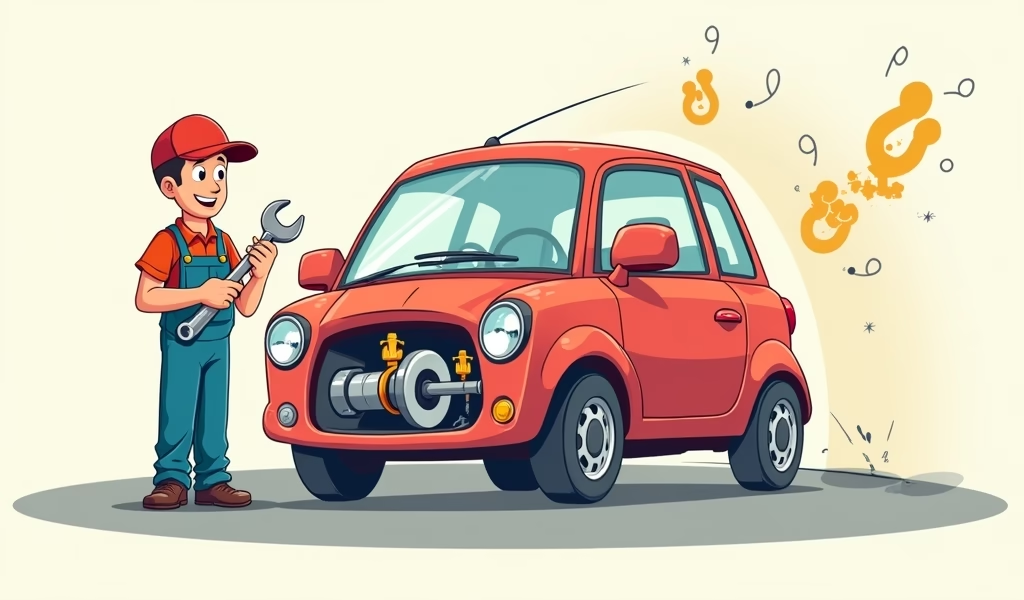
The most common source of clicking during turns is failing CV (Constant Velocity) joints. These crucial components are part of your drivetrain system and allow power to flow from your transmission to your wheels, even as the suspension moves up and down.
CV joints are covered by protective rubber boots filled with grease. When these boots crack or tear, the lubricating grease escapes and dirt gets in. Without proper lubrication, the metal parts inside begin grinding against each other during turns, creating that telltale clicking noise.
The clicking from bad CV joints typically gets louder during sharper turns and at lower speeds. You might notice it’s more pronounced when turning in one direction versus the other – that’s because you’re hearing the outer CV joint on the opposite side of the direction you’re turning.
Tie Rods and Ball Joints
Your steering system contains several moving parts that can wear out over time. Tie rods connect your steering rack to the wheels, while ball joints allow your suspension to move up and down while maintaining steering control.
When these components wear out, they develop slight play or movement. During turns, this excess movement creates clicking or popping sounds as metal surfaces slip against each other. Unlike CV joint noise, ball joint clicks might happen over bumps as well as during turns.
Ball joint and tie rod issues are particularly important to address promptly, as they’re critical to maintaining steering control. According to a study by the National Highway Traffic Safety Administration, steering component failures contribute to thousands of accidents annually.
Strut Bearings and Mounts
The top of each strut (part of your suspension system) is secured to your vehicle’s chassis with a bearing that allows the strut to rotate when you turn the steering wheel. When these bearings wear out, they can produce a distinct clicking or creaking noise.
Unlike CV joints or ball joints, strut bearing noise is often more noticeable at low speeds in parking lots and might be accompanied by increased steering effort. You’ll typically hear the noise coming from directly in front of you, beneath the dashboard.
Other Possible Causes
While the above issues are most common, several other components can create clicking during turns:
- Loose or damaged sway bar links
- Worn steering rack mounts
- Power steering pump issues
- Damaged wheel bearings (though these usually make more of a humming noise)
- Loose lug nuts or wheels
Each of these problems has slightly different symptoms, which we’ll explore in the diagnosis section. Understanding the exact source of your clicking is crucial for applying the right fix and avoiding unnecessary repairs.
How to Diagnose the Source of the Clicking
Listen Carefully
The first step in diagnosis is simply paying close attention to exactly when and where the clicking occurs. Grab a notepad and document these details:
- Does it happen only during turns, or also when driving straight?
- Is it louder during left or right turns?
- Does it occur at all speeds or only when driving slowly?
- Can you feel anything in the steering wheel when you hear it?
- Does the frequency or volume change with sharper turns?
These observations can significantly narrow down potential causes. CV joint noises almost always occur only during turns and get worse with sharper turns. Suspension issues like ball joints often make noise during both turns and when going over bumps.
Visual Inspection
With the car safely parked on level ground, perform these simple visual checks:
For CV joint issues, look for grease splattered on the inside of your wheels or along the inner wheel wells. This is a telltale sign of a torn CV boot. You might need to get underneath the vehicle (always using proper jack stands) to see the boots clearly.
For suspension and steering components, check for any obvious looseness, damage, or leaking fluids. Grab the tire at the top and bottom and try to rock it in and out – any noticeable movement could indicate worn ball joints or tie rods.
Inspect all rubber components for cracks, tears, or deterioration. The various parts of your suspension system are connected by rubber bushings and boots that can fail over time.
Test Drive Techniques
A strategic test drive can help pinpoint the exact source of clicking:
Find an empty parking lot where you can perform tight turns safely. Drive in complete circles (both directions) at low speed while listening carefully for the clicking. If it’s louder when turning in one direction, the problem is likely on the opposite side of the car.
Try turning while slightly accelerating versus coasting. CV joint noise is often more pronounced during acceleration in turns.
If possible, have a friend slowly drive while you walk alongside (at very low speed) to better locate the source of the noise. This can help determine if it’s coming from the front or rear, and left or right side.
DIY Fixes for Clicking Noises
Fixing CV Joint Issues
If you’ve determined that your CV joints are the culprit, you have two main repair options:
The first option is replacing just the CV boot if you catch the problem early, before the joint itself is damaged. This is the more economical approach and involves removing the axle, cleaning off the old grease, installing a new boot, and repacking with fresh grease. This typically requires some specialized tools and moderate mechanical skill.
The more common solution is replacing the entire CV axle assembly, which includes both the inner and outer CV joints. While this costs more in parts, it’s often simpler to install and provides a more reliable long-term fix. Most modern vehicles use bolt-in axle assemblies that can be replaced with basic hand tools.
For a CV axle replacement, you’ll need to:
- Safely raise and support the vehicle
- Remove the wheel
- Remove the axle nut (usually requires a large socket)
- Disconnect the tie rod and lower ball joint
- Pull the knuckle away to free the axle
- Extract the inner CV joint from the transmission
- Install the new axle in reverse order
A quality replacement CV axle costs between $75-150 for most vehicles, and the job typically takes 1-2 hours per side for a DIY mechanic. According to Popular Mechanics, this repair saves approximately $200-400 compared to professional service.
Repairing Steering Components
For tie rod or ball joint issues, replacement is usually the only viable solution:
Tie rod ends are relatively straightforward to replace. After raising and securing the vehicle, you’ll remove the cotter pin and castle nut, separate the tie rod from the steering knuckle using a puller or separator tool, unscrew the old tie rod, and install the new one.
Important note: Count the exact number of turns it takes to remove the old tie rod end to ensure you thread the new one in the same position. This helps maintain your alignment until you can get to a shop for a proper alignment service.
Ball joint replacement varies by vehicle design. Some ball joints are pressed into the control arm and require specialized tools, while others are bolted on. This job ranges from moderate to difficult depending on your vehicle and may require spring compression in some cases.
Addressing Strut and Suspension Issues
Clicking from the top of the strut assembly typically requires replacing the strut mount or bearing:
This job involves compressing the coil spring to safely remove the strut assembly, replacing the bearing/mount at the top, and reinstalling everything. Spring compression is potentially dangerous work that requires proper tools and careful attention to safety.
For sway bar link noises, replacement is usually quick and simple. These small components typically connect with just two bolts and can be replaced in 20-30 minutes with basic tools.
Prevention Tips to Avoid Future Issues
Regular Maintenance
Preventive care can significantly extend the life of your steering and suspension components:
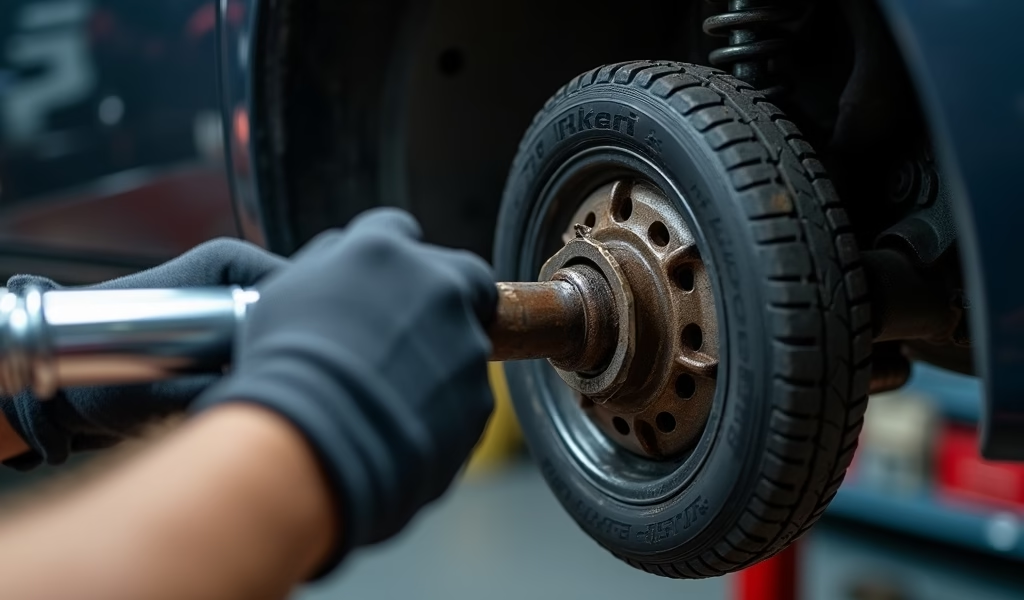
Ensure your vehicle gets regular wheel alignments, ideally every 15,000 miles or after any suspension work. Proper alignment reduces stress on steering components and prevents premature wear.
Check for grease fittings on your suspension components – many ball joints and tie rods can be lubricated periodically. A simple grease gun and a few minutes of work can add years to these parts.
During routine oil changes, make it a habit to visually inspect CV boots, ball joint boots, and tie rod ends for tears or cracks. Early detection of these issues can save hundreds in repair costs.
Driving Habits
Your driving style directly impacts how quickly steering and suspension components wear out:
Avoid aggressive driving, particularly harsh acceleration during turns, which places extra stress on CV joints. Take speed bumps and potholes at appropriate speeds – sudden impacts accelerate wear on ball joints and tie rods.
Be especially careful in winter conditions. Road salt accelerates corrosion of metal components, while extreme cold can make rubber boots more brittle and prone to cracking.
When parking, avoid turning the steering wheel to full lock and holding it there, which places maximum stress on your power steering system and CV joints. Instead, make wider turns when possible.
When to See a Professional
Safety Concerns
While many steering and suspension issues can be handled at home, some situations warrant professional attention:
If you notice excessive play in the steering wheel (more than an inch of movement before the wheels respond), get your vehicle checked immediately. This could indicate dangerous steering component failure.
When clicking noises are accompanied by vibrations, pulling to one side, or uneven tire wear, these are signs of more serious alignment or suspension issues that require professional diagnosis.
If you’re experiencing multiple symptoms or can’t confidently diagnose the source of the noise, a professional inspection (typically $50-100) can save you from making expensive parts-changing guesses.
Specialized Equipment Needs
Some repairs require tools that aren’t practical for occasional DIY mechanics:
Wheel alignment is essential after replacing tie rods or ball joints but requires specialized equipment not available to home mechanics. Budget $80-120 for a proper four-wheel alignment after steering component replacement.
Press-in ball joints require hydraulic presses or specialized pullers that can be expensive to purchase for a one-time job. While these tools can be rented from some auto parts stores, the learning curve might not be worth it for infrequent repairs.
If your vehicle has advanced driver assistance systems (ADAS) like lane-keeping assist or adaptive cruise control, these systems often require professional recalibration after alignment or suspension work.
Conclusion
That clicking noise when turning your steering wheel doesn’t have to remain a mystery or cause unnecessary anxiety. In most cases, it points to one of several common wear items that are part of normal vehicle maintenance – CV joints, tie rods, ball joints, or strut components.
By taking the time to properly diagnose the source of the clicking, you can make informed decisions about repairs. Many of these fixes are well within the capabilities of a DIY mechanic with basic tools and careful attention to detail. Even if you choose professional repairs, understanding the likely cause helps you communicate effectively with your mechanic and avoid unnecessary work.
Remember that addressing these noises promptly can prevent more expensive damage down the road. A $20 CV boot replacement today might save you from a $300 CV axle replacement next month. Similarly, replacing a worn tie rod end for $40 could prevent damage to your steering rack – a $800+ repair.
With the information in this guide, you’re well-equipped to tackle those annoying clicks and keep your vehicle running smoothly and safely for miles to come. Your car will thank you with quieter, more confident handling, and your wallet will appreciate the savings from timely DIY maintenance.
Frequently Asked Questions
Is it dangerous to drive with clicking noises when turning?
Mild CV joint clicking is generally not immediately dangerous but should be fixed soon to prevent complete failure. However, clicking from ball joints or tie rods can be serious safety concerns as these components affect steering control and should be addressed immediately.
How much does it cost to fix a clicking noise when turning?
Professional repairs range from $250-800 depending on the cause, with CV axle replacement averaging $300-500 per side. DIY repairs can reduce costs by 50-70%, with parts typically costing $75-200 depending on the component and vehicle.
How do I know if the clicking is coming from a CV joint or suspension?
CV joint clicking typically occurs only during turns (especially sharper turns) and gets worse when accelerating through the turn. Suspension-related clicking often happens over bumps as well as during turns and may be accompanied by looseness in the steering.
Can clicking noises go away on their own?
Clicking noises almost never resolve themselves and typically worsen over time as components continue to wear. In cold weather, some noises might temporarily diminish after the vehicle warms up, but this doesn’t mean the underlying issue is fixed.
How long can I drive with a clicking CV joint?
A clicking CV joint might last hundreds of miles or fail completely tomorrow – it’s impossible to predict with certainty. The safest approach is to plan for repair within a few weeks of first noticing the noise to prevent being stranded when the joint fails completely.