
Overview
While your car silently depends on coolant to prevent thousands of dollars in potential engine damage, a proper coolant flush removes harmful contaminants and replaces degraded fluid that simple draining can’t address. Regular maintenance—typically every 30,000-50,000 miles depending on your vehicle—ensures optimal engine temperature, prevents corrosion, and extends the life of critical components like your radiator, water pump, and heater core.
Table of Contents
- What is a Coolant Flush?
- Why Coolant Flushes Matter: Protecting Your Engine
- Signs You Need a Coolant Flush
- Coolant Flush vs. Coolant Drain: Understanding the Difference
- DIY Coolant Flush: Step-by-Step Guide
- Professional Coolant Flush: When to Call the Experts
- Coolant Flush Cost: What to Expect
- Choosing the Right Coolant for Your Vehicle
- Recommended Coolant Flush Maintenance Schedule
- Conclusion
- Frequently Asked Questions
What is a Coolant Flush?
A coolant flush is a maintenance procedure that involves completely removing old coolant from your vehicle’s cooling system and replacing it with fresh fluid. Unlike a simple coolant drain, a proper flush cleans out accumulated contaminants, rust, scale, and debris that build up over time. Think of it as giving your cooling system a deep cleanse rather than just changing its fluids.
The process typically includes draining the old coolant, flushing the system with water or a cleaning solution to remove deposits and contaminants, and then refilling with new coolant. This comprehensive service helps maintain your engine’s optimal operating temperature and prevents overheating – one of the most common causes of serious engine damage and costly repairs.
When performed at the right intervals, a coolant flush is more than just routine maintenance; it’s preventative medicine for your vehicle. The cooling system is your engine’s lifeline during hot summer drives and freezing winter conditions. Without properly functioning coolant, your engine temperature can quickly spiral out of control, potentially leading to a roadside breakdown or worse – a complete engine failure.
Why Coolant Flushes Matter: Protecting Your Engine
Your vehicle’s cooling system works tirelessly to maintain optimal engine temperature. Engine coolant (also called antifreeze) circulates through your engine, absorbing heat before traveling to the radiator where that heat dissipates. This continuous cycle keeps your engine from overheating while also preventing freezing in cold temperatures.
Over time, coolant breaks down and becomes less effective. The protective additives that prevent corrosion, lubricate the water pump, and raise the boiling point gradually deplete. When this happens, your cooling system becomes vulnerable to several serious issues:
- Corrosion and rust formation inside radiators, heater cores, and engine passages
- Scale and sediment buildup that restricts coolant flow
- Decreased heat transfer efficiency
- Water pump damage due to inadequate lubrication
- Increased risk of overheating
The consequences of neglecting coolant flushes can be severe and expensive. A properly functioning cooling system prevents thousands of dollars in potential repairs. For instance, replacing a blown head gasket typically costs between $1,500-$2,000, while a complete engine replacement can run upwards of $4,000-$10,000 depending on your vehicle.
According to a study by AAA, cooling system failures are among the top causes of vehicle breakdowns. Regular coolant flushes significantly reduce this risk while extending the life of your radiator, water pump, and other cooling system components.
Signs You Need a Coolant Flush
Your vehicle often provides clear indicators when it’s time for a coolant flush. Being attentive to these warning signs can help you avoid more serious problems down the road. Here are the key symptoms to watch for:
Visual Warning Signs
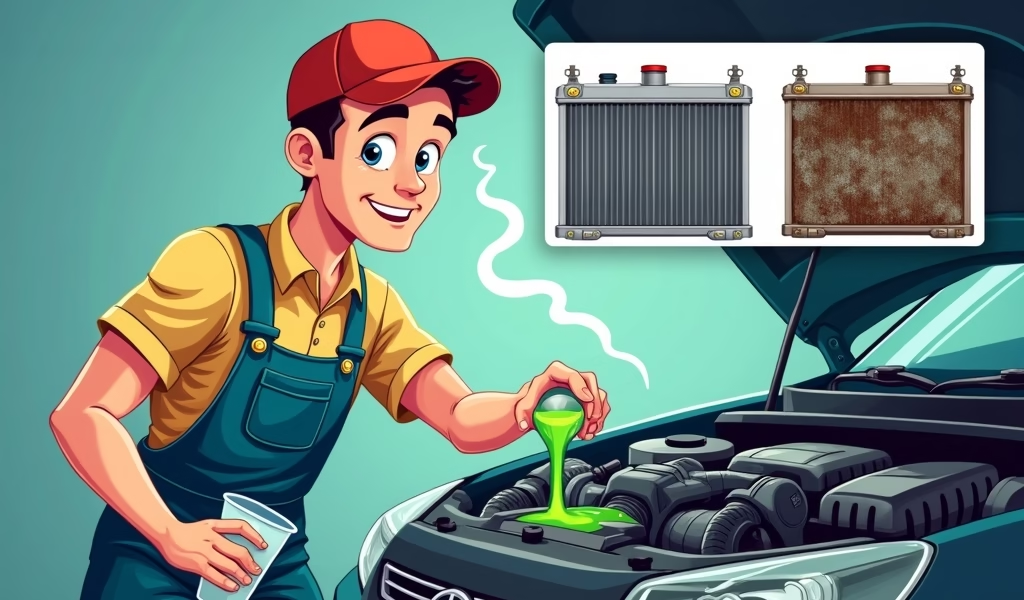
Take a moment to check your coolant’s condition. Fresh coolant typically has a bright color (green, orange, pink, or yellow, depending on the type). If your coolant appears rusty, brownish, or contains floating particles, it’s definitely time for a flush. Similarly, if you notice a layer of grime or oil film on the surface, this indicates contamination that a flush will address.
Another visual indicator is the coolant level. If you find yourself needing to add coolant frequently, there may be an issue with your cooling system that a flush could resolve – or at least help diagnose.
Performance Warning Signs
Your vehicle’s behavior can also signal coolant issues. If the temperature gauge reads higher than normal or fluctuates unpredictably, your cooling system may be struggling. Similarly, if your heater isn’t producing adequate heat in winter, it could indicate restricted coolant flow that a flush might correct.
Strange smells shouldn’t be ignored either. A sweet, syrupy odor (especially with the heater running) often indicates leaking coolant. Additionally, if your vehicle has overheated even once, a coolant flush should be performed as part of addressing the problem.
Maintenance-Based Indicators
Sometimes, the need for a coolant flush isn’t based on symptoms but on preventative maintenance schedules. Most manufacturers recommend coolant flushes every 30,000 to 50,000 miles or every 2-5 years, depending on your vehicle and the type of coolant used.
If you can’t remember when your last coolant flush was performed, or if you’ve purchased a used vehicle without maintenance records, it’s usually wise to perform a flush as a precautionary measure. This establishes a fresh starting point for your cooling system maintenance.
Coolant Flush vs. Coolant Drain: Understanding the Difference
Many vehicle owners confuse a coolant drain with a proper coolant flush, but they’re quite different procedures with varying effectiveness. Let me explain why a flush provides superior protection for your engine.
A coolant drain is exactly what it sounds like – draining the coolant from the radiator through the drain valve. While this removes some of the old coolant, it leaves behind a significant amount (often 40-60%) trapped in the engine block, heater core, and various passages. When you refill after a simple drain, you’re diluting the old coolant rather than truly replacing it.
In contrast, a complete coolant flush forces all the old coolant out of every part of the system. This is typically done using specialized equipment that pushes cleaning solution and fresh coolant through the entire system under pressure. The process removes virtually all old coolant along with the contaminants, rust particles, and scale that have accumulated over time.
Here’s why the distinction matters:
- A flush removes nearly 100% of old coolant; a drain removes only 40-60%
- A flush cleans out contaminants and deposits; a drain leaves most behind
- A flush can reveal potential problems like clogged passages; a drain might mask them
- A flush provides better protection for water pump and heater core components
- A flush often includes inspection of hoses, clamps, and other cooling system components
While a drain is better than no maintenance at all, a proper flush provides significantly more protection for your cooling system and engine. According to Consumer Reports, regular complete coolant flushes are one of the most important maintenance procedures for extending vehicle lifespan and preventing catastrophic engine failures.
DIY Coolant Flush: Step-by-Step Guide
For the mechanically inclined, performing your own coolant flush can save money while giving you greater insight into your vehicle’s condition. Before starting, remember that coolant is toxic to humans and pets, and must be disposed of properly according to local regulations. Never drain coolant onto the ground or into storm drains.
Here’s a straightforward approach to flushing your cooling system at home:
Materials You’ll Need
- New coolant (check your owner’s manual for the correct type and amount)
- Distilled water
- Radiator flush cleaning solution (optional but recommended)
- Large drain pan (at least 2-gallon capacity)
- Basic hand tools (wrench, screwdriver, pliers)
- Funnel
- Safety glasses and gloves
- Shop towels or rags
Step-by-Step Process
1. Preparation: Ensure the engine is completely cool. Working on a hot cooling system can result in serious burns. Position your drain pan under the radiator drain valve.
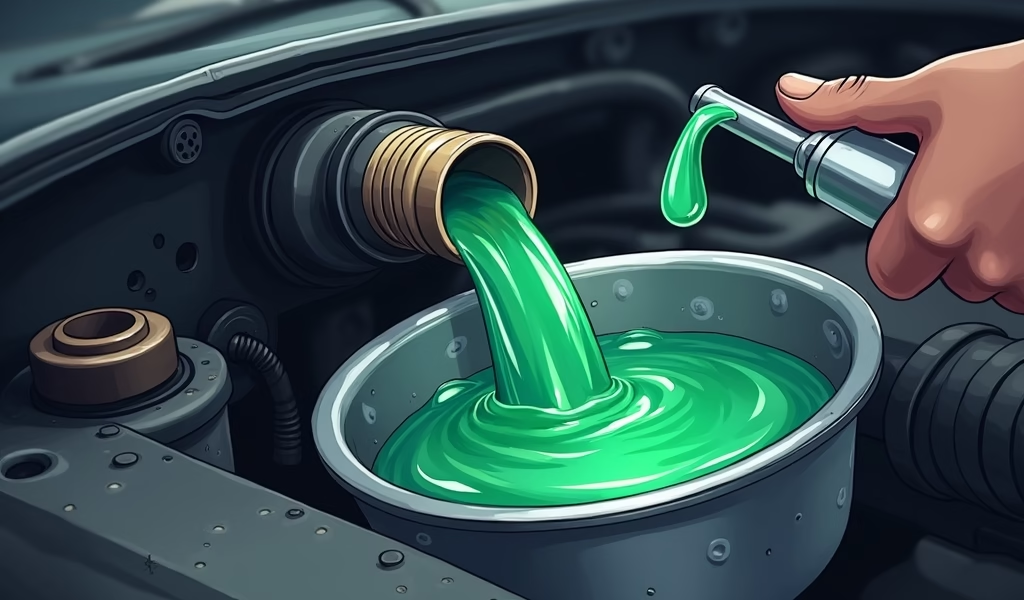
2. Drain the old coolant: Locate the drain valve (usually at the bottom of the radiator) and open it to drain the old coolant into your pan. You may also need to remove the radiator cap to improve flow.
3. Close the drain valve: Once the radiator has emptied, close the drain valve securely.
4. Add cleaning solution: Pour the radiator flush cleaning solution into the radiator, followed by distilled water until full. Replace the radiator cap.
5. Run the engine: Start the engine and run it until it reaches normal operating temperature, usually 10-15 minutes. This circulates the cleaning solution throughout the system. Monitor the temperature gauge to ensure it stays in the normal range.
6. Cool down and drain again: Turn off the engine and let it cool completely. Then drain the cleaning solution by reopening the drain valve.
7. Rinse the system: Fill the radiator with distilled water, run the engine again until warm, cool down, and drain. You may want to repeat this step 2-3 times for a thorough cleaning.
8. Add new coolant: With the drain valve closed, add the new coolant mixture (typically a 50/50 mix of antifreeze and distilled water, but check your owner’s manual). Fill slowly to avoid air pockets.
9. Bleed the system: Most modern vehicles have specific bleeding procedures to remove air from the cooling system. Consult your owner’s manual for the correct procedure for your vehicle.
10. Final check: Run the engine, check for leaks, and monitor the temperature gauge to ensure proper operation.
While DIY flushing is possible, don’t hesitate to consult a professional if you encounter any difficulties or if your vehicle has special requirements. Remember that proper disposal of old coolant is essential – most auto parts stores and service centers accept used coolant for recycling.
Professional Coolant Flush: When to Call the Experts
While a DIY coolant flush is certainly possible for many vehicle owners, there are distinct advantages to having this service performed by professionals. Modern vehicles often have complex cooling systems with multiple drain points, air bleed procedures, and specialized requirements that can challenge even experienced home mechanics.
Professional coolant flushes typically employ specialized equipment that connects to your cooling system and forces out old coolant while simultaneously introducing new coolant. This power flushing equipment can:
- Remove virtually all old coolant from the system (not just what drains from the radiator)
- Dislodge and remove stubborn deposits that a DIY flush might miss
- Properly bleed air from the entire system, including hard-to-reach areas
- Test the system under pressure to identify potential leaks or weaknesses
- Properly dispose of old coolant in an environmentally responsible manner
Beyond the equipment advantage, professional technicians also bring valuable expertise. They can spot early signs of cooling system problems that might otherwise go unnoticed until they become serious. This might include deteriorating hoses, a weak water pump, a failing thermostat, or early indications of head gasket issues.
Consider professional service especially if:
- Your vehicle has over 100,000 miles
- You’ve experienced any overheating episodes
- Your cooling system hasn’t been serviced in 5+ years
- You notice any unusual cooling system behavior (temperature fluctuations, sweet smells, etc.)
- Your vehicle has a history of cooling system problems
Many professional coolant flushes also include a complete inspection of all cooling system components, including pressure testing to check for internal or external leaks that might not be obvious during normal operation. This comprehensive approach can identify potential issues before they lead to roadside emergencies or expensive repairs.
Coolant Flush Cost: What to Expect
Understanding the typical costs associated with coolant flushes can help you budget appropriately and recognize when you’re getting a fair price. The cost varies based on several factors, including your vehicle make and model, your location, and whether you choose DIY or professional service.
For a professional coolant flush at a reputable service center, you can typically expect to pay:
- Standard passenger vehicles: $100-$150
- Luxury or performance vehicles: $150-$200
- Large SUVs and trucks: $150-$200
- Vehicles with specialized cooling systems: $200-$300
These prices generally include the labor, new coolant, disposal fees, and basic inspection of cooling system components. Some shops may charge additional fees for premium coolant types or for addressing minor issues discovered during the service.
If you choose the DIY route, your costs will primarily be for materials:
- Coolant/antifreeze: $15-$60 (depending on type and quantity needed)
- Radiator flush chemical: $5-$20
- Distilled water: $3-$10
- Disposal fee for old coolant: $0-$10 (varies by location)
While DIY is certainly less expensive upfront, it’s important to consider the value of professional expertise and equipment. A professional flush that identifies an early issue with your water pump, for instance, could save you from a much more costly breakdown later.
When comparing prices between service centers, be sure you’re comparing equivalent services. Some shops advertise low-priced “coolant exchanges” that are actually just partial drains, not complete flushes. Always ask exactly what’s included in the quoted price and whether they’ll be using the correct coolant type for your specific vehicle.
Remember that a proper coolant flush is an investment in your vehicle’s longevity. When you consider that it helps prevent thousands of dollars in potential repair costs, the service price becomes quite reasonable as preventative maintenance.
Choosing the Right Coolant for Your Vehicle
Not all coolants are created equal, and using the wrong type can actually cause more harm than good. Modern vehicles have specific coolant requirements based on their cooling system materials and design. Using the incorrect formulation can lead to accelerated corrosion, component failure, and in severe cases, engine damage.
Coolant types are generally categorized by color, though the color alone isn’t always a reliable indicator of compatibility. The major types include:
- Inorganic Acid Technology (IAT) – Traditional green coolant, typically used in older vehicles (pre-2000). Needs replacement every 2 years/30,000 miles.
- Organic Acid Technology (OAT) – Often orange, red, or purple. Common in GM, Saab, and some European vehicles. Lasts about 5 years/150,000 miles.
- Hybrid Organic Acid Technology (HOAT) – Usually yellow or orange. Used in many Ford, Chrysler, and European vehicles. Typically good for 5 years/100,000 miles.
- Phosphate Hybrid Organic Acid Technology (P-HOAT) – Often blue or turquoise. Common in many Asian vehicles, particularly Honda and Toyota.
- Silicate Hybrid Organic Acid Technology (Si-OAT) – Purple or pink. Used in many modern European vehicles, especially German brands.
The best way to determine the correct coolant for your vehicle is to consult your owner’s manual. The manual will specify not only the type of coolant but also the proper mixture ratio (typically 50/50 with distilled water, but some require different concentrations).
Many essential fluids need regular checking, and coolant is no exception. When choosing coolant, avoid these common mistakes:
- Mixing different coolant types (this can cause precipitation and clogging)
- Using universal or “all makes, all models” coolant without verifying compatibility
- Using tap water instead of distilled water (minerals in tap water can cause deposits)
- Ignoring the manufacturer’s specified coolant-to-water ratio
- Choosing coolant based solely on color without checking the chemical formulation
If you’re unsure about which coolant to use, consult with a dealership service department or a qualified mechanic familiar with your vehicle make. The small extra cost for the correct coolant is insignificant compared to the potential damage from using an incompatible type.
Recommended Coolant Flush Maintenance Schedule
Knowing when to flush your coolant isn’t always straightforward, as recommendations vary based on vehicle make, model, age, and the type of coolant used. While your owner’s manual should be the primary reference, here’s a general guideline to help you establish an appropriate maintenance schedule:
By Vehicle Age and Type
- Older vehicles (pre-2000): These typically use traditional green IAT coolant and need flushing every 2 years or 30,000 miles, whichever comes first.
- Modern vehicles (2000-2010): Many use OAT or HOAT coolants that generally require flushing every 5 years or 100,000 miles.
- Newer vehicles (2010 and newer): These often use extended-life coolants that may last up to 10 years or 150,000 miles, though a 5-year inspection is still recommended.
- Heavy-duty or performance vehicles: These may need more frequent service, typically every 30,000-60,000 miles due to higher operating temperatures and stresses.
By Driving Conditions
Your driving habits and environment can significantly impact coolant life. Consider more frequent flushes if:
- You regularly drive in extremely hot climates
- You frequently tow or carry heavy loads
- You make primarily short trips (engine doesn’t reach full operating temperature)
- You drive in dusty or off-road conditions
- You’ve experienced any overheating incidents
In these “severe” driving conditions, reducing the interval by 25-50% is a prudent approach to protecting your engine.
Creating Your Schedule
The most effective approach is to create a personalized maintenance schedule that accounts for your specific vehicle and driving conditions. Start with the manufacturer’s recommendations, then consider:
- Annual coolant inspections, regardless of mileage
- Testing coolant pH and freeze protection levels at each oil change
- Adjusting intervals based on coolant appearance (darkening, particles, etc.)
- Consulting with a trusted mechanic familiar with your specific vehicle
Remember that coolant flush intervals are not just arbitrary numbers – they’re based on how coolant degrades over time and use. Following these guidelines helps ensure your cooling system remains effective in protecting your engine from damaging temperature extremes.
Conclusion
Understanding what a coolant flush is and implementing it into your regular maintenance routine is one of the smartest investments you can make in your vehicle’s longevity. This simple procedure prevents a cascade of potentially expensive problems while ensuring your engine operates at its optimal temperature range in all conditions.
The cooling system is truly the unsung hero of your vehicle – quietly doing its job until something goes wrong. By being proactive with coolant flushes, you’re not just maintaining fluid; you’re protecting vital components from corrosion, preventing scale buildup, and ensuring efficient heat transfer throughout the system.
Whether you choose the DIY approach or trust the job to professionals, what matters most is that the service is performed regularly and correctly. The relatively modest cost of a coolant flush pales in comparison to the potential expenses of overheating damage, water pump failure, or radiator replacement.
Remember to always use the correct coolant type for your specific vehicle, follow appropriate disposal procedures for old coolant, and pay attention to the warning signs that might indicate it’s time for a flush outside of your regular schedule. Your engine – and your wallet – will thank you for this preventative care for many miles to come.
Frequently Asked Questions
How often should I get a coolant flush?
Most manufacturers recommend a coolant flush every 30,000-50,000 miles or every 2-5 years, depending on your vehicle model and coolant type. Check your owner’s manual for the specific recommendation for your car.
How much does a coolant flush typically cost?
A professional coolant flush typically costs between $100-$200, depending on your vehicle and location. DIY materials will cost about $30-$80 if you choose to do it yourself.
Can I just top off my coolant instead of doing a flush?
Topping off coolant addresses level issues but doesn’t remove contaminants or degraded fluid. Only a proper flush removes harmful deposits and replaces depleted additives that protect your engine.
What happens if I don’t flush my coolant?
Neglecting coolant flushes leads to corrosion, scale buildup, reduced cooling efficiency, and potentially overheating. This can result in expensive repairs like head gasket failure or even complete engine damage.
Can I mix different colors of coolant?
Never mix different coolant types as this can cause chemical reactions leading to gelling or precipitation. Always use the manufacturer-recommended coolant type specified in your owner’s manual.