
Overview
When your car stalls at a stoplight, it’s usually due to one of three key culprits: idle air control valve issues, fuel system problems, or electrical failures that interrupt the essential combustion process. Understanding these common issues and their warning signs allows drivers to perform simple DIY fixes like cleaning throttle bodies or checking for vacuum leaks, while knowing when professional help is needed for more complex problems like fuel pump failures or sensor malfunctions.
Table of Contents
- Understanding Why Cars Stall at Stoplights
- Common Culprits Behind Stoplight Stalling
- Idle Air Control Valve Issues
- Fuel System Problems
- Electrical Issues That Cause Stalling
- How to Diagnose Stalling Issues
- DIY Fixes You Can Try Today
- When to Seek Professional Help
- Preventing Future Stalling Problems
- Conclusion
- Frequently Asked Questions
Understanding Why Cars Stall at Stoplights
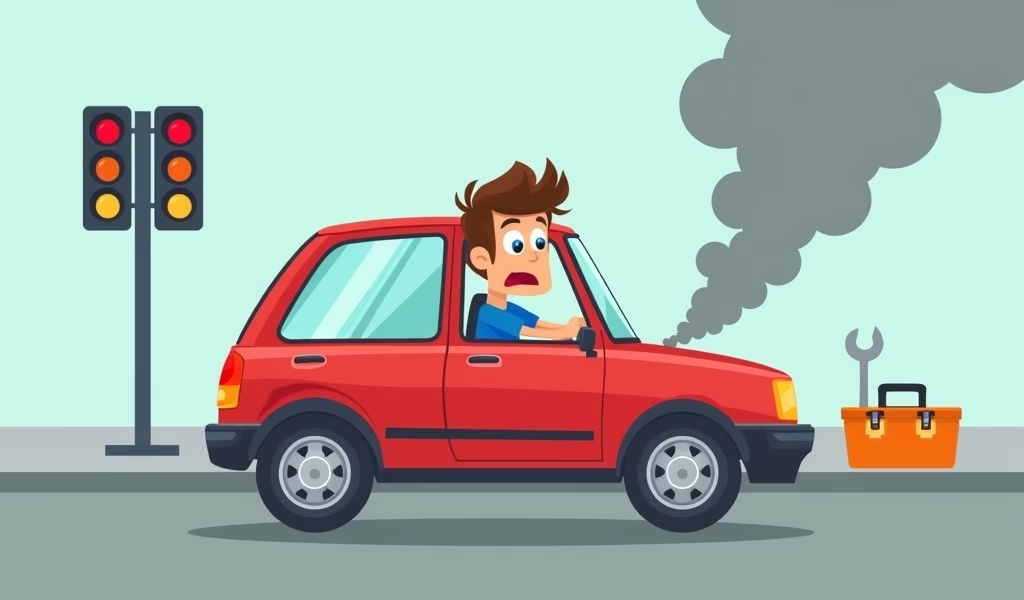
We’ve all been there – you’re sitting at a red light, and suddenly your engine sputters and dies. The light turns green, horns blare behind you, and panic sets in as you frantically try to restart. Few automotive situations create more immediate stress than when your car stalls at a stoplight.
At its core, engine stalling happens when the combustion process is interrupted. Your engine needs three things to run properly: fuel, air, and spark. When one of these elements is compromised, especially during idle when the engine is most vulnerable, stalling occurs.
When you’re cruising down the road, your engine operates at higher RPMs where minor issues might go unnoticed. But at a stoplight, everything slows down – including your engine speed. This low-RPM state is where problems become apparent.
What makes stoplight stalling particularly frustrating is that it often indicates different problems depending on when and how it happens. A cold-weather stall might suggest different issues than one that occurs only after your engine has warmed up. Understanding these patterns is the first step in diagnosing car problems effectively.
Common Culprits Behind Stoplight Stalling
In my 25 years as a mechanic, I’ve found that stoplight stalling typically stems from a handful of common issues. While modern vehicles have become increasingly complex, the basic principles remain the same.
The most frequent causes include:
- Idle air control valve problems
- Fuel delivery issues
- Electrical system faults
- Vacuum leaks
- Sensor malfunctions
- Carbon buildup in the throttle body
Each of these problems affects your engine’s ability to maintain a stable idle when you come to a stop. The good news? Many of these issues are relatively inexpensive to fix—if caught early.
Let’s break down each of these potential culprits so you can better understand what might be happening under your hood.
Idle Air Control Valve Issues
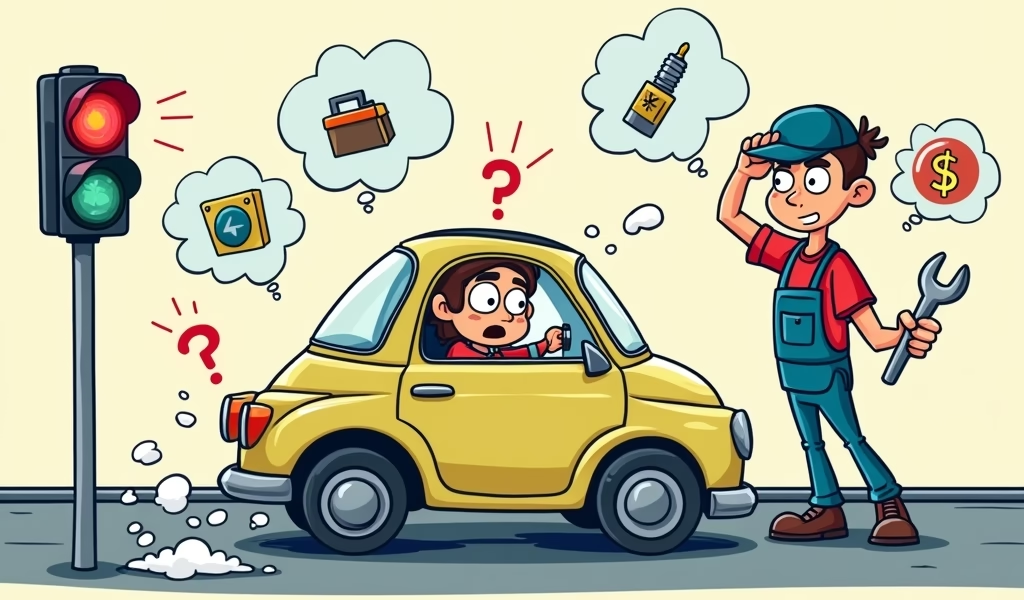
The idle air control valve (IAC) is often the primary suspect when your car stalls at stoplights. This small but mighty component regulates how much air enters your engine during idle, effectively controlling your idle speed.
Think of the IAC as the conductor of your engine’s idle symphony. When you release the gas pedal and come to a stop, the throttle plate closes. Without the IAC, your engine would get almost no air and stall immediately. The IAC creates a bypass channel that allows just enough air to keep the engine running smoothly at idle.
Over time, this valve can become gummed up with carbon deposits, making it sticky or unresponsive. When this happens, your engine might not get enough air when you come to a stop, resulting in a stall.
The symptoms of a problematic IAC valve include:
- Fluctuating idle speed (your RPM needle bouncing around)
- Stalling immediately after coming to a stop
- Engine struggles more when the A/C is turned on at idle
- Stalling that improves if you slightly press the gas pedal
The good news is that IAC valve issues can often be resolved with a simple cleaning. In more severe cases, replacement is relatively affordable compared to other engine repairs, typically costing between $70-250 depending on your vehicle make and model, according to RepairPal’s cost estimates.
Fuel System Problems
When it comes to stoplight stalling, fuel system issues are the second most common culprit I encounter in my shop. Your engine needs precisely the right amount of fuel to maintain idle – too much or too little, and it will sputter out.
A failing fuel pump is often the root cause. Located in your gas tank, the pump is responsible for pushing fuel to your engine under pressure. As pumps age or get contaminated with debris, they lose pressure – particularly when hot. This explains why some cars run fine when cold but stall at lights after driving for a while.
Clogged fuel injectors can also trigger stalling. Over time, deposits build up in injectors, disrupting their spray pattern. When you’re driving, higher fuel pressure might overcome partial clogs, but at idle, the reduced flow becomes critical.
Other fuel system issues to consider include:
- Dirty fuel filter restricting flow
- Faulty fuel pressure regulator
- Vapor lock (in hot weather conditions)
- Low-quality fuel with contaminants
How can you tell if fuel delivery is your problem? Listen for your fuel pump when you turn the key to the “on” position before starting. You should hear a brief humming sound as the pump pressurizes the system. No hum could indicate a dead pump.
Many common engine faults related to fuel delivery can be prevented with regular maintenance. Replacing your fuel filter every 30,000 miles and occasionally using fuel system cleaners can prevent many stalling issues before they start.
Electrical Issues That Cause Stalling
Modern vehicles rely heavily on electrical systems to control nearly every aspect of engine operation. When electrical components fail, stalling at stoplights is a common symptom.
The ignition system is particularly susceptible to causing idle stalls. Worn spark plugs might create enough spark at higher RPMs but fail to provide adequate ignition at idle speeds. This creates misfires that can lead to stalling when you come to a stop.
Sensor problems are another major electrical culprit. Your engine computer makes split-second decisions based on data from dozens of sensors. When essential vehicle sensors provide incorrect information, the computer might make adjustments that cause your engine to stall.
Key sensors that commonly cause stalling include:
- Mass Airflow Sensor (MAF) – measures incoming air volume
- Throttle Position Sensor (TPS) – reports throttle plate position
- Crankshaft Position Sensor – tells the computer when to fire spark plugs
- Oxygen Sensors – help determine fuel mixture adjustments
Even something as simple as a weak battery can cause stalling. At idle, your alternator produces less charging power. If your battery is marginal, it might not provide enough reserve power to run all electrical systems, leading to stalling when additional loads (like headlights or A/C) are activated.
Diagnosing electrical problems often requires specialized equipment, but you can check for obvious issues like corroded battery terminals or loose wiring connections. Clean battery terminals and tight connections are essential for proper electrical system function.

How to Diagnose Stalling Issues
Diagnosing why your car stalls at stoplights starts with recognizing patterns. Pay attention to when the stalling occurs, as this provides valuable clues about the underlying cause.
Does your car only stall when cold? This might indicate issues with the choke system or cold-start enrichment. Stalling only when hot often points to vapor lock or a weak fuel pump that can’t handle heat stress.
Consider if environmental factors play a role. Air conditioning puts additional load on the engine, so stalling only when the A/C is on might indicate an idle speed that’s set too low or an IAC valve that can’t compensate for the extra load.
One simple diagnostic approach is listening to your engine before it stalls. A sputtering sound suggests fuel delivery problems, while a smooth shutdown might indicate an electrical issue cutting power suddenly.
For more definitive diagnosis, consider these steps:
- Check for check engine lights and retrieve trouble codes with a scanner
- Monitor fuel pressure with a fuel pressure gauge (if accessible)
- Inspect spark plugs for signs of fouling or improper gap
- Check for vacuum leaks using carb cleaner spray (engine speed will change when sprayed near a leak)
- Test battery voltage at idle (should be 13.5-14.5 volts)
Remember that stalling rarely has multiple causes simultaneously. Focus on finding the single most likely culprit based on your vehicle’s symptoms and maintenance history.
DIY Fixes You Can Try Today
Before heading to the shop, there are several DIY approaches that might solve your stoplight stalling problem. These fixes address the most common causes and require only basic tools.
Start with cleaning your IAC valve – it’s often the quickest fix with the highest success rate. Locate the valve (typically attached to the throttle body) and remove it. Spray it thoroughly with throttle body cleaner, making sure not to damage any electrical connections. A toothbrush can help remove stubborn deposits before reinstallation.
Another simple fix is cleaning your throttle body. Carbon buildup on the throttle plate can prevent proper closing and disrupt idle air control. Remove the air intake hose and carefully clean the throttle body with appropriate cleaner. Be gentle around sensors and avoid getting cleaner on electrical components.
Check for vacuum leaks by listening for hissing sounds around the engine bay. Cracked vacuum hoses are easy to replace and often cause irregular idle and stalling. Small leaks can be temporarily patched with silicone sealant until proper replacement parts arrive.
If your stalling seems fuel-related, try using a quality fuel system cleaner. Pour it into your tank before filling up, then drive normally for a tank or two. This can often clear minor injector clogs and improve fuel delivery.
For electrical issues, start with the basics:
- Clean battery terminals with a wire brush and baking soda solution
- Inspect spark plug wires for cracks or damage
- Check that all electrical connectors near the engine are firmly seated
- Replace the air filter if it’s dirty (restricted airflow affects idle quality)
Remember that DIY fixes shouldn’t include guesswork. Random parts replacement without proper diagnosis often leads to wasted money and continued problems.
When to Seek Professional Help
While DIY troubleshooting can resolve many stalling issues, there comes a point when professional help becomes the more economical option. Here’s when to hand over the keys to a trusted mechanic.
First, if your car stalls unpredictably while driving (not just at stoplights), consider this a safety issue requiring immediate professional attention. Stalling in traffic or on highways creates dangerous situations that shouldn’t be ignored.
Second, if you’ve tried basic maintenance items (cleaning IAC, new air filter, fuel system cleaner) without improvement, deeper diagnosis is needed. Professional shops have specialized equipment like lab scopes, pressure testers, and advanced scanners that can pinpoint problems beyond the reach of DIY tools.
Complex fuel system problems, particularly those involving the fuel pump or pressure regulator, typically require professional service. Modern fuel systems operate under high pressure and have safety concerns that make DIY work risky.
Internal engine problems like vacuum leaks from intake gaskets or sophisticated electrical issues also warrant professional diagnosis. The cost of diagnosis (typically $75-150) is worthwhile to avoid the “parts cannon” approach of replacing components based on guesswork.
When selecting a shop, look for ASE-certified technicians with experience on your specific make. Ask if they have factory-level diagnostic equipment for your vehicle brand, as this often makes diagnosis faster and more accurate.
Preventing Future Stalling Problems
The best way to handle stoplight stalling is to prevent it from happening in the first place. A consistent maintenance schedule is your best defense against the embarrassment and safety risks of stalling in traffic.
Follow these preventative measures to keep your engine running smoothly:
- Change your fuel filter according to manufacturer recommendations (typically every 30,000 miles)
- Use top-tier gasoline from reputable stations to prevent fuel system contamination
- Have your battery and charging system checked annually
- Replace spark plugs at recommended intervals
- Clean your throttle body and IAC valve every 30,000 miles
- Address check engine lights promptly rather than waiting for problems to worsen
- Change your air filter regularly to ensure proper airflow
Pay attention to how your car idles between maintenance intervals. Early warning signs like subtle idle fluctuations or momentary hesitations can indicate developing problems before they lead to complete stalling.
Consider using fuel system cleaners quarterly, especially if you frequently make short trips or drive in stop-and-go traffic. These conditions promote carbon buildup that affects idle quality.
Lastly, keep detailed maintenance records. Knowing exactly when components were last serviced helps identify patterns and potential causes when problems do arise.
Conclusion
Stalling at stoplights is more than just an inconvenience—it’s your car’s way of telling you something needs attention. Whether it’s a simple maintenance issue or a more complex system failure, addressing the problem promptly can save you from costly repairs down the road.
Remember that most stalling issues stem from one of three essential elements: fuel delivery problems, air intake issues, or electrical/ignition failures. By understanding these basic systems and recognizing the warning signs, you can often diagnose and sometimes even fix the problem yourself.
For those situations beyond DIY repair, don’t hesitate to seek professional help. The cost of proper diagnosis is almost always less than the expense of randomly replacing parts or dealing with a breakdown in traffic.
With regular maintenance and prompt attention to developing issues, you can keep your engine running smoothly and avoid the stress of stalling at the next red light. Your wallet—and the drivers behind you—will thank you.
Frequently Asked Questions
Why does my car only stall when the engine is cold?
Cold stalling typically indicates issues with the cold-start enrichment system or a faulty coolant temperature sensor. These problems prevent proper fuel mixture adjustment during the critical warm-up period.
Can low oil cause my car to stall at stoplights?
Yes, severely low oil can cause stalling if it triggers the oil pressure safety switch or creates internal engine damage. Check your oil level immediately if you suspect this might be the cause.
Why does my car stall when I turn on the air conditioning?
The A/C compressor creates additional load on your engine that can expose idle control problems. Your IAC valve should compensate by increasing idle speed when the A/C engages, but if it’s not working properly, stalling can occur.
How much does it typically cost to fix a car that stalls at stoplights?
Repair costs range widely from $50 for simple fixes like cleaning an IAC valve to $800+ for fuel pump replacement. The average repair falls between $150-300 depending on the specific cause.
Is it safe to drive a car that occasionally stalls at stoplights?
Driving a car that stalls presents safety risks, particularly in busy intersections or heavy traffic. Even occasional stalling should be addressed promptly as it typically indicates a developing problem that will worsen over time.