
Overview
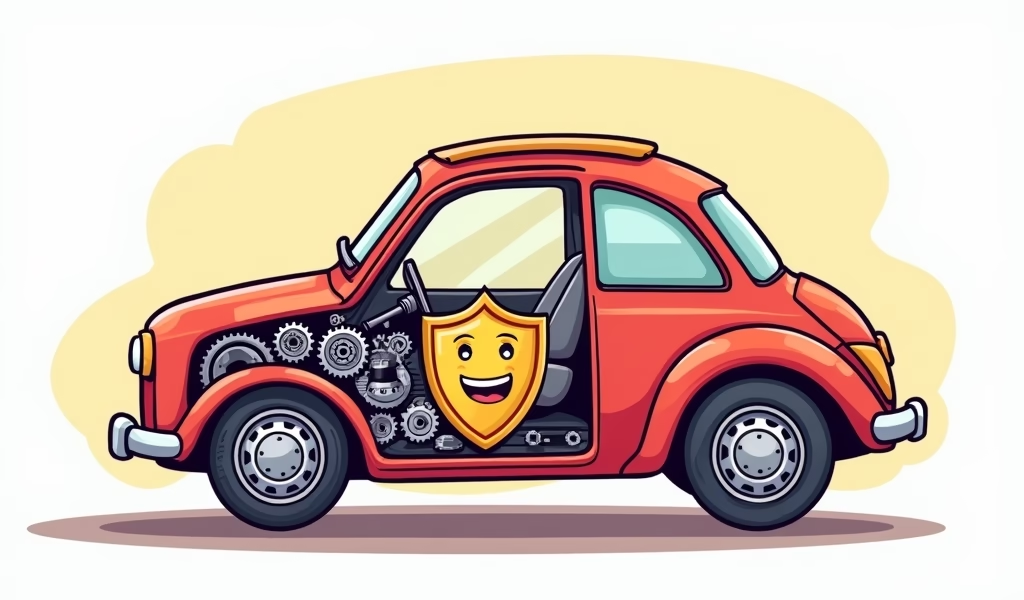
Ever wondered why your car doesn’t skid during turns? Your differential—that unsung hero of your drivetrain—allows wheels on the same axle to rotate at different speeds while transmitting power from the engine, with various types (open, limited-slip, locking) serving different driving needs and requiring regular maintenance to prevent costly failures.
Table of Contents
- What is a Differential?
- How Differentials Work: The Mechanics Explained
- Types of Differentials: Finding the Right Match for Your Vehicle
- Common Differential Problems and Warning Signs
- Essential Differential Maintenance Tips
- When to Repair or Replace Your Differential
- DIY vs. Professional Differential Maintenance
- Conclusion
- Frequently Asked Questions
What is a Differential?
The differential is one of those vehicle components that does crucial work but rarely gets the spotlight it deserves. Put simply, a differential is a gear train with three shafts that allows the wheels on the same axle to rotate at different speeds while still receiving power from the engine. If you’ve ever wondered what makes it possible for your car to smoothly round corners without the tires skidding or hopping, you can thank your differential for that.
When your vehicle turns a corner, the outside wheels need to travel a greater distance than the inside wheels. Without a differential, your wheels would be forced to rotate at the same speed, causing tire scrubbing, difficult steering, and excessive wear on your drivetrain components. The differential solves this problem by allowing the necessary speed difference between wheels, hence the name “differential.”
Located typically between the drive wheels, this ingenious mechanical device is a fundamental component in virtually all modern vehicles, whether you drive a compact sedan with front-wheel drive capabilities or a rugged off-roader with four-wheel drive. Understanding what a differential is and how it functions is the first step toward proper maintenance and avoiding costly breakdowns that could leave you stranded.
How Differentials Work: The Mechanics Explained
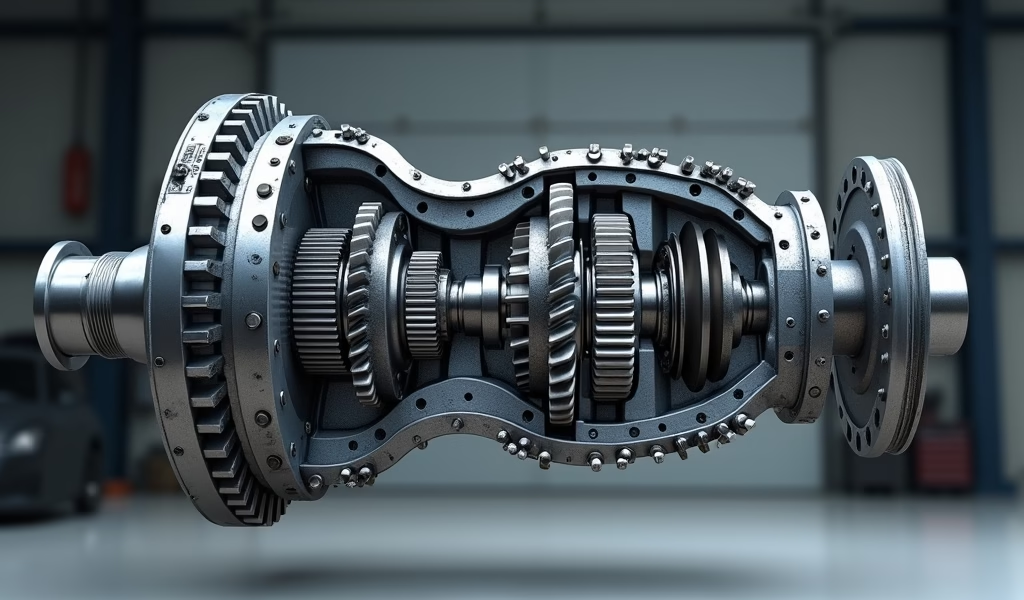
Inside a differential is a fascinating arrangement of gears that would make any engineering enthusiast smile. The main components include a ring gear, pinion gear, spider gears, and side gears. When your vehicle moves in a straight line, the spider gears don’t rotate on their axes, and both drive wheels spin at the same speed. It’s elegantly simple in this scenario.
The real magic happens when you turn. As you steer into a corner, the outer wheel needs to spin faster than the inner wheel. The spider gears begin to rotate on their axes, transferring more rotational force to the outer wheel while allowing the inner wheel to slow down proportionally. This differential action prevents your tires from fighting against each other and ensures smooth cornering.
To visualize this, imagine walking around a circular track with a friend. You’re on the inside lane, and your friend is on the outside lane. To complete one lap simultaneously, your friend has to walk faster than you because they’re covering more distance. Your differential performs this exact calculation mechanically, allowing for harmonious wheel rotation during turns.
Different vehicle designs place the differential in different locations. In front-wheel drive vehicles, the differential is usually integrated into the transmission assembly. Rear-wheel drive vehicles typically have the differential in a housing on the rear axle. And vehicles with all-wheel or four-wheel drive have multiple differentials – one for each driven axle and sometimes a center differential to distribute power between the front and rear axles.
Types of Differentials: Finding the Right Match for Your Vehicle
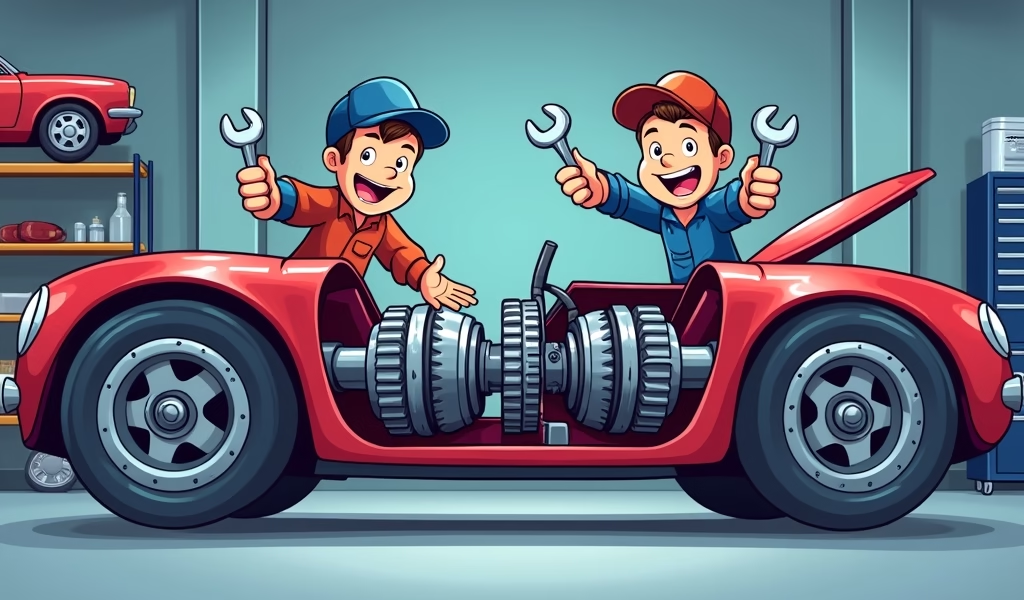
Not all differentials are created equal, and various designs serve different driving needs. Let’s break down the main types you’ll encounter:
Open Differential
This is the standard differential found in most passenger vehicles. An open differential provides the basic function of allowing wheels to rotate at different speeds during turns. The downside? When one wheel loses traction (like on ice or mud), the open differential sends power to the path of least resistance – meaning all the power goes to the slipping wheel, leaving you potentially stuck.
Limited-Slip Differential (LSD)
A step up from open differentials, limited-slip differentials can transfer torque to the wheel with more traction when needed. This makes them popular in performance vehicles and light trucks. Using either clutch packs or viscous fluids, LSDs provide improved traction while still allowing different wheel speeds during cornering.
According to research by the Society of Automotive Engineers, limited-slip differentials can improve traction by up to 45% in low-grip conditions compared to open differentials.
Locking Differential
Common in off-road and heavy-duty vehicles, locking differentials can lock both wheels on an axle together, forcing them to spin at the same speed regardless of traction conditions. This provides maximum traction in challenging terrain but isn’t ideal for regular on-road driving. They can be automatic, selectable (driver-activated), or permanently locked.
Torsen Differential
Short for “torque-sensing,” Torsen differentials use worm gears to distribute torque proportionally to the wheel with more traction. They’re often found in high-performance vehicles and some SUVs. The beauty of Torsen differentials is their purely mechanical operation – no electronics or clutches to wear out.
Electronic Limited-Slip Differential (eLSD)
The newest evolution in differential technology, eLSDs use electronic controls to actively manage torque distribution between wheels. By monitoring vehicle sensors and driver inputs, these smart differentials can predictively optimize traction for both performance and safety.
The type of differential in your vehicle significantly impacts its handling, performance, and capability in various driving conditions. Most vehicles come with the differential type that best matches their intended use, but aftermarket upgrades are possible for those seeking specific performance improvements.
Common Differential Problems and Warning Signs
Like any mechanical component, differentials can develop problems over time. Being able to recognize the warning signs early can save you from catastrophic failures and expensive repairs. Here are the most common differential issues to watch for:
Unusual Noises
Differentials often announce problems through distinctive sounds:
- Whining or howling during acceleration may indicate worn ring and pinion gears
- Rumbling or growling during coasting could signal worn carrier bearings
- Clunking when starting to drive or shifting from drive to reverse often points to excessive backlash between gears
- Clicking noises during turns might mean damaged spider gears or side gears
Don’t ignore these sounds – they rarely improve on their own and usually indicate progressive damage.
Fluid Leaks
Differential fluid is the lifeblood of this component. It lubricates, cools, and protects the precision gears inside. If you notice dark, thick oil spots under the differential area of your vehicle, you likely have a leak from a damaged gasket, seal, or housing. Even small leaks should be addressed promptly, as running low on fluid accelerates wear and can lead to complete failure.
Vibration and Handling Issues
Worn differential components can create vibrations you’ll feel through the vehicle, particularly during acceleration or at certain speeds. You might also notice the vehicle pulling to one side or behaving unpredictably during turns. These symptoms often overlap with other issues like wheel alignment or tire problems, so proper diagnosis is important.
Difficulty Turning
If your vehicle suddenly becomes harder to steer or feels like it’s fighting against you during turns, the differential could be seizing or binding. This is a serious condition that demands immediate attention before it leads to further damage or safety issues.
According to Motor Magazine’s technical analysis, nearly 65% of differential failures could be prevented if owners responded to the early warning signs rather than waiting for catastrophic failure.
Essential Differential Maintenance Tips
Preventive maintenance is your best defense against differential problems. Following these guidelines can dramatically extend the life of your differential and help you avoid unexpected breakdowns:
Regular Fluid Checks and Changes
Differential fluid degrades over time, losing its protective properties. Check your owner’s manual for the recommended service interval, typically between 30,000 and 60,000 miles for most vehicles. However, if you frequently tow heavy loads, drive in mountainous terrain, or participate in motorsports, you’ll want to change the fluid more frequently.
When checking the fluid, look at both the level and condition. Healthy differential fluid is typically amber to light brown and has a smooth, slick feel. If you find metal particles, a burnt smell, or a milky appearance (indicating water contamination), it’s time for a change regardless of mileage.
Use the Correct Fluid
Not all differential fluids are the same. Vehicles with limited-slip differentials often require special additives or specific fluid formulations to maintain proper clutch operation. Using the wrong fluid can lead to premature wear, noise, or limited-slip malfunction. Always use the fluid type specified in your owner’s manual or by the differential manufacturer.
Check for Leaks Regularly
Make it a habit to look for signs of leaking around your differential when you check other fluids. Early detection of small leaks can prevent bigger problems. Pay special attention to the differential cover gasket, axle seals, and pinion seal, as these are common leak points.
Listen for Changes
Get familiar with how your vehicle normally sounds, and be alert to new or changing noises. The earlier you catch differential noise, the better your chances of addressing the issue before it escalates to a major repair.
Avoid Shock Loading
Sudden, high-torque events like aggressive launches, wheel spin followed by sudden traction, or forceful engagement of locking differentials can damage internal components. Drive smoothly and be especially careful in low-traction conditions.
Following these maintenance practices doesn’t just prevent breakdowns – it also improves your vehicle’s performance, handling, and fuel efficiency. A well-maintained differential operates more smoothly and transfers power more effectively than one that’s been neglected.
When to Repair or Replace Your Differential
Even with proper maintenance, differentials eventually wear out or develop problems that require professional attention. Knowing when to seek repairs can save you from being stranded and often reduces the overall repair cost. Here’s when to take action:
After Identifying Warning Signs
If you’ve noticed any of the warning signs we discussed earlier – unusual noises, leaks, vibrations, or handling issues – don’t delay in getting your differential checked. Small problems tend to cascade into bigger ones when ignored. What might start as a simple seal replacement could turn into a complete differential rebuild if left unaddressed.
Following Water Submersion
If your vehicle has been through deep water that may have reached the differential breather, immediate service is recommended. Water contamination in the differential fluid can cause rapid corrosion and failure of precision components.
After Major Impacts
Significant impacts like hitting a large pothole, curb, or rock while off-roading can damage the differential housing or internal components. Even if everything seems fine afterward, it’s worth having a professional inspection to check for subtle damage that could worsen over time.
During Major Service Intervals
If you’re approaching a significant service interval (like 100,000 miles) or planning other major drivetrain work, it’s often cost-effective to have your differential inspected and serviced at the same time. This preventive approach can identify developing issues before they become failures.
When Upgrading Performance
If you’ve modified your vehicle for more power, changed to larger tires, or altered your driving habits (like beginning to tow regularly), you might need to upgrade your differential to handle the increased stress. An upgraded differential can be a worthwhile investment that prevents premature failure under your vehicle’s new operating conditions.
The decision between repair and replacement often comes down to the extent of damage and the age of your vehicle. Minor issues like a leaking seal or a worn bearing might only require a partial rebuild, while extensive internal damage might make a complete replacement more economical, especially for older vehicles.
DIY vs. Professional Differential Maintenance
When it comes to differential maintenance, where’s the line between what you can handle yourself and what requires a professional’s touch? Let’s break it down:
What You Can Do Yourself
With basic tools and mechanical aptitude, the average DIY enthusiast can handle several differential maintenance tasks:
- Checking fluid levels through the fill plug
- Inspecting for visible leaks
- Changing differential fluid (on most vehicles)
- Replacing the differential cover and gasket
- Visual inspections for damage
These tasks require minimal special tools and can save you labor costs. Just remember to always follow proper procedures, including torque specifications and filling instructions from your service manual.
When to Call the Professionals
Some differential work is best left to those with specialized tools and expertise:
- Internal repairs requiring differential disassembly
- Setting up gear patterns and backlash
- Pinion seal replacement (often requires special pullers and setup tools)
- Bearing replacement and preload adjustment
- Complete differential rebuilds or replacements
- Diagnosing complex noises or vibrations
These procedures require precision measurements, specialized tools, and significant experience. Incorrect setup can lead to rapid wear, excessive noise, or even catastrophic failure.
If you’re considering DIY differential work, be realistic about your skills and tools. Many enthusiasts successfully handle basic maintenance but know when to step back and consult professionals for complex tasks. Even if you choose professional service for major work, understanding your differential helps you communicate effectively with your mechanic and make informed decisions about repairs.
Conclusion
Your vehicle’s differential might not be the most glamorous component, but it’s undeniably one of the most important. This ingenious piece of engineering allows your car to smoothly navigate turns while efficiently transferring power from the engine to your wheels. What is a differential? It’s the unsung hero of your drivetrain that works tirelessly every time you drive.
By understanding how differentials work, recognizing the warning signs of problems, and following a consistent maintenance schedule, you can avoid many of the costly breakdowns that plague neglected vehicles. Remember that differential repairs tend to become more expensive the longer issues are ignored – what starts as a simple fluid leak can escalate to a complete failure that leaves you stranded and facing a major repair bill.
Whether you’re a hands-on DIY enthusiast or prefer to leave maintenance to the professionals, being informed about your differential empowers you to make better decisions about your vehicle’s care. Take the time to check your differential fluid according to your manufacturer’s recommendations, listen for unusual noises, and respond promptly to warning signs.
Your differential doesn’t ask for much – just clean fluid, occasional inspection, and timely attention to developing issues. Give it that modest care, and it will reward you with tens of thousands of miles of smooth, reliable service as you navigate the twists and turns of the road ahead.
Frequently Asked Questions
How often should differential fluid be changed?
Most manufacturers recommend changing differential fluid every 30,000 to 60,000 miles under normal driving conditions. This interval should be reduced if you frequently tow, drive in extreme temperatures, or go off-roading.
What happens if my differential fails completely?
A complete differential failure typically results in the inability to transfer power to the wheels, leaving your vehicle immobile. You may hear loud grinding or clunking noises before total failure occurs.
How much does it cost to repair or replace a differential?
Repair costs vary widely based on vehicle type and damage extent, ranging from $200-$400 for a simple seal replacement to $1,500-$4,000 for a complete rebuild or replacement. Specialty or heavy-duty vehicle differentials can cost even more.
Can I drive with a noisy differential?
Driving with a noisy differential is not recommended as it indicates internal damage that will likely worsen quickly. Continuing to drive can lead to complete failure and potentially dangerous situations while driving.
Are aftermarket differentials better than stock ones?
Aftermarket differentials can offer improved performance, durability, or specialized features for specific uses like off-roading or racing. However, quality varies significantly, so research and choose reputable manufacturers if upgrading from your stock differential.