
Overview
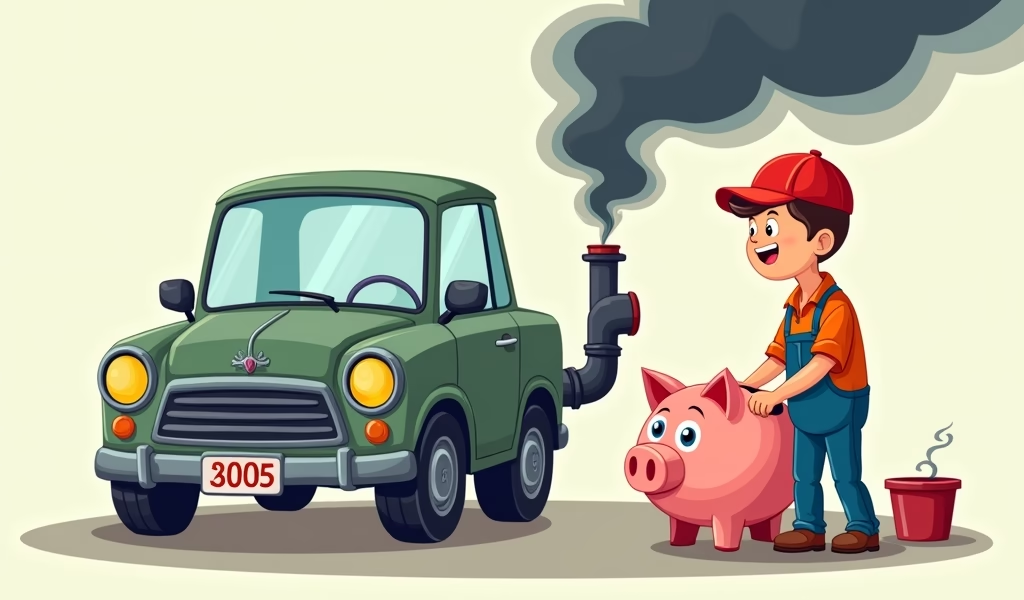
That alarming black smoke billowing from your exhaust is your engine’s distress signal, indicating it’s running too rich with an improper air-fuel mixture that wastes gas and can lead to costly damage. From simple fixes like replacing a dirty air filter to more complex issues with fuel injectors, sensors, or internal engine components, addressing black exhaust smoke promptly can save you hundreds in fuel costs and prevent catastrophic engine failure.
Table of Contents
- Understanding Black Exhaust Smoke
- Why Black Smoke Matters
- Common Causes of Black Exhaust Smoke
- Diagnosing Black Smoke Problems
- Fixing Black Exhaust Smoke
- Prevention Tips
- Cost Considerations
- Conclusion
- Frequently Asked Questions
Understanding Black Exhaust Smoke
You’re cruising down the road when you glance in your rearview mirror and notice something alarming – thick black smoke billowing from your exhaust. That sinking feeling in your stomach is justified – black smoke from your exhaust is never normal, and it’s your engine’s way of waving a red flag. Understanding what causes black smoke from exhaust can save you from costly repairs and keep your vehicle running smoothly.
In a properly functioning engine, the combustion process should be nearly invisible. When you see black smoke, it’s telling you that your engine is burning too much fuel relative to air – what we mechanics call “running rich.” This inefficient combustion not only wastes fuel but can damage critical engine components if left unchecked.
Your vehicle’s engine is designed to mix fuel and air in a specific ratio – ideally about 14.7 parts air to 1 part fuel. When this delicate balance gets disrupted and tilts toward too much fuel, the excess fuel cannot burn completely in the combustion chamber. These unburned fuel particles exit through your exhaust system as black smoke.
Unlike the thin water vapor you might see on cold mornings (which is normal), black exhaust smoke indicates a problem that needs attention. The darker and thicker the smoke, the more severe the fuel-air mixture imbalance usually is.
Why Black Smoke Matters
Beyond the embarrassment of driving a car that looks like it’s auditioning for a monster truck rally, black smoke has serious implications for your vehicle’s health and your wallet.
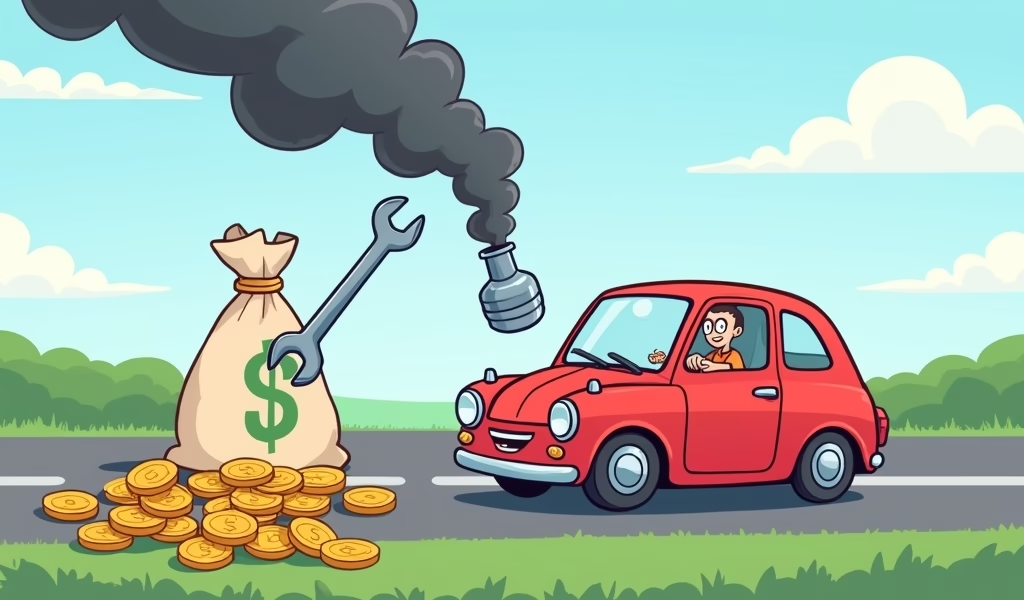
First and foremost, when your engine runs rich, you’re literally watching your money disappear into thin air. A vehicle producing black smoke can use 10-30% more fuel than necessary, making those trips to the gas station more frequent and painful. I’ve seen customers save hundreds of dollars annually just by addressing the underlying causes of black exhaust smoke.
Your engine suffers too. Excess fuel can wash away the protective oil film from cylinder walls, accelerating wear on pistons and rings. Over time, this increased friction leads to reduced compression and potentially catastrophic engine damage. The unburned fuel can also contaminate your engine oil, diminishing its lubricating properties.
There’s also the environmental impact to consider. Car emissions testing is becoming stricter in many areas, and a vehicle producing black smoke will almost certainly fail these tests. According to the EPA, vehicles running rich produce significantly higher levels of carbon monoxide and unburned hydrocarbons, contributing to air pollution.
Finally, ignoring black smoke problems typically leads to more serious and expensive repairs down the road. What might start as a simple clogged air filter could eventually lead to a damaged catalytic converter – turning a $20 fix into a $1,000+ repair bill.
Common Causes of Black Exhaust Smoke
In my 20+ years working on vehicles, I’ve found that black exhaust smoke typically stems from one of three main categories of issues: fuel system problems, air-fuel mixture imbalances, or more serious mechanical engine issues. Let’s break down each category to help you understand what might be happening under your hood.
Fuel System Issues
The fuel system is often the primary culprit when black smoke appears. Here are the most common fuel-related causes:
Dirty or clogged air filters restrict airflow to the engine, creating a rich condition by default. Your engine needs approximately 14.7 parts air to 1 part fuel, and when air can’t flow freely, this ratio gets disrupted. A filter replacement is inexpensive ($10-30) and takes just minutes – making it the first thing you should check.
Faulty fuel injectors that don’t atomize fuel properly or get stuck in the open position will dump too much fuel into the combustion chamber. Modern fuel injection systems are precise instruments, and even small deviations can cause problems. Fuel injectors can become clogged with deposits over time or develop electrical issues that prevent proper operation.
Malfunctioning fuel pressure regulators create too much pressure in the fuel system, forcing excess fuel through the injectors. This component controls the pressure at which fuel is delivered to the engine, and when it fails, it typically allows too much fuel through rather than too little.
Leaking fuel injectors can drip fuel into the intake manifold even when they should be closed, creating a rich condition. This commonly occurs when the rubber O-rings deteriorate on older injectors.
Air-Fuel Mixture Problems
The modern engine relies on several sensors to maintain the proper air-fuel ratio. When these systems fail, black smoke often results:
Faulty oxygen (O2) sensors can’t correctly read the oxygen content in your exhaust, preventing your engine control unit from making proper adjustments to the fuel mixture. Since these sensors are the primary feedback mechanism for the fuel injection system, their failure often results in a rich-running condition.
Malfunctioning mass airflow sensors (MAF) incorrectly measure the amount of air entering your engine. If the sensor reports less air than is actually entering, your engine computer will add too much fuel to compensate. MAF sensors can become contaminated with dirt or oil, causing them to report inaccurate readings.
Problematic engine control units (ECU) might command an overly rich mixture due to software issues or internal damage. While less common, the computer that controls your engine can sometimes develop problems that cause it to miscalculate fuel requirements.
Clogged EGR valves disrupt the exhaust gas recirculation system, which helps control combustion temperatures and emissions. When this system fails, it can contribute to black smoke under certain conditions.
Mechanical Engine Problems
When the black smoke is accompanied by other symptoms like rough running, unusual noises, or significant power loss, mechanical issues might be the cause:
Worn piston rings or cylinder walls reduce engine compression and allow oil to enter the combustion chamber. While this typically causes blue smoke, it can appear black when mixed with a rich fuel condition.
Leaking valve seals allow oil to seep into the combustion chamber through the valve guides, particularly noticeable after the engine has been sitting overnight.
Excessive carbon buildup in the combustion chamber can change the volume and shape of the space, affecting how efficiently the air-fuel mixture burns. This is more common in engines with higher mileage or those that frequently make short trips.
Damaged turbochargers can allow oil to leak into the intake system or fail to provide the proper air pressure, disrupting the air-fuel ratio. Turbo issues typically show up most noticeably under acceleration.
According to research from The AA, mechanical issues account for approximately 35% of black smoke cases, with fuel and sensor problems making up the majority of the remainder.
Diagnosing Black Smoke Problems
Before you start replacing parts, taking a systematic approach to diagnosis can save you time and money. Here’s how I approach black smoke problems in my shop:
Start with observation. Does the black smoke appear only during specific conditions? Black smoke only during cold starts often points to enrichment systems or sensors. Smoke only during acceleration typically indicates fuel delivery issues. Constant black smoke regardless of engine condition suggests more serious mechanical problems.
Check the basics first. Pull out your air filter and hold it up to a light source – if you can’t see light through it, it needs replacement. Look for obvious fuel leaks around injector rails or fuel lines. Check your oil to see if it smells like gasoline, which would indicate fuel is contaminating your oil (a sign of serious internal issues).
Use diagnostic tools if you have access to them. An OBD-II scanner can read error codes from your engine computer that might pinpoint sensor failures. Diagnosing common engine faults often starts with these error codes. If you don’t have a scanner, most auto parts stores will read your codes for free.
Pay attention to other symptoms. Does your vehicle hesitate during acceleration? Does it run rough at idle? Are there unusual knocking or ticking sounds? These additional clues can help narrow down the cause.
Consider your vehicle’s history. Recent maintenance (or lack thereof) can provide clues. Did problems start after a tune-up? Has your vehicle been sitting unused for an extended period? Understanding the timeline can help identify potential causes.
When in doubt, a compression test and fuel pressure test performed by a professional can help rule out mechanical issues and fuel system problems, respectively. These tests provide objective data rather than guesswork.
Fixing Black Exhaust Smoke
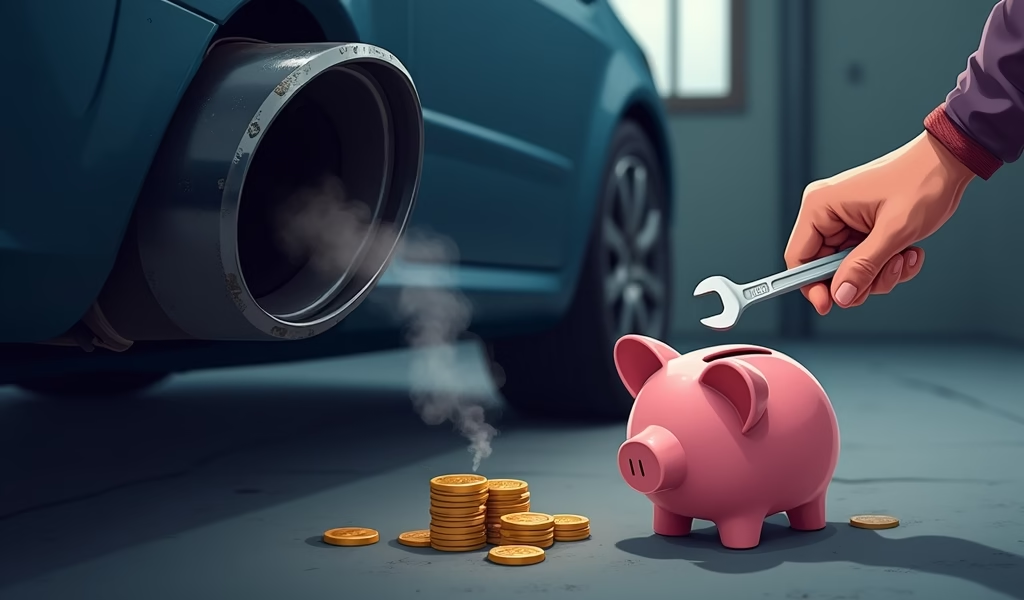
Once you’ve diagnosed the cause of your black exhaust smoke, it’s time to address the issue. Depending on your mechanical skills, budget, and the specific problem, you might tackle the repair yourself or seek professional help.
DIY Solutions
Many black smoke issues can be resolved with basic to intermediate mechanical skills:
Replace the air filter. This simple maintenance item takes just minutes and requires no special tools. A clean air filter can improve fuel economy by up to 10% according to U.S. Department of Energy studies.
Clean the Mass Airflow Sensor. Remove the sensor (usually held in by just a couple of screws), spray it with MAF sensor cleaner (never use regular cleaners), and reinstall. This often resolves rich-running conditions caused by dirty sensors.
Use fuel system cleaners. Quality fuel injector cleaners added to your gas tank can help remove deposits from injectors and intake valves. For best results, use these products every 3,000-5,000 miles as preventative maintenance.
Replace oxygen sensors. While this requires a bit more mechanical knowledge, O2 sensor replacement is within reach for most DIY mechanics. You’ll need an oxygen sensor socket (about $15 at auto parts stores) and potentially penetrating oil for stubborn sensors.
Clean or replace the EGR valve. Removing and cleaning this valve can resolve issues with exhaust gas recirculation. Carbon deposits often prevent these valves from seating properly.
Check and adjust fuel pressure. If you have access to a fuel pressure gauge, you can test whether your fuel system is delivering fuel at the correct pressure. Some regulators are adjustable; others must be replaced if faulty.
When to See a Professional
Some issues are better left to the pros, particularly if you lack specialized tools or experience:
Injector testing and replacement. Professional shops have equipment to test injector spray patterns and flow rates. They can also access OEM-quality parts with proper warranties.
ECU issues. Engine computer problems often require specialized diagnostic equipment and software that’s not available to the average DIYer.
Internal engine work. If your black smoke is caused by worn piston rings, valve seals, or other internal components, the engine will need to be partially or completely disassembled – a job that requires significant expertise and specialized tools.
Turbocharger problems. Turbo repair or replacement is complex and often requires removing multiple components to access the turbocharger.
Remember that proper diagnosis is crucial before replacing parts. I’ve seen too many customers waste money replacing sensors that weren’t actually faulty because they didn’t take the time to properly diagnose the problem first.
Prevention Tips
An ounce of prevention is worth a pound of cure, especially when it comes to your vehicle. Here’s how to prevent black exhaust smoke before it starts:
Stick to regular maintenance schedules. Change your air filter every 15,000-30,000 miles (more frequently in dusty conditions). Replace fuel filters according to manufacturer recommendations – usually every 30,000-50,000 miles.
Use quality fuel. Bargain-basement gas often lacks the detergents that keep fuel injectors clean. Occasionally splurging on top-tier gas brands can help keep your fuel system clean.
Add fuel system cleaners periodically. Using a quality fuel system cleaner every 3-6 months helps prevent carbon buildup on injectors and intake valves.
Address check engine lights promptly. Many sensor issues will trigger a check engine light before black smoke becomes visible. Addressing these warnings early can prevent more serious problems.
Allow your engine to reach operating temperature. Frequent short trips where your engine never fully warms up can lead to carbon buildup and incomplete combustion. Try to combine errands into longer trips when possible.
Change oil regularly. Clean oil helps prevent internal carbon buildup and ensures proper lubrication of engine components.
Cost Considerations
Addressing black exhaust smoke can range from inexpensive to quite costly, depending on the underlying cause:
DIY maintenance items: Air filters ($10-30), fuel injector cleaners ($5-15), and basic tools are relatively inexpensive investments that often resolve minor issues.
Sensor replacements: Oxygen sensors ($40-200 depending on type and location), mass airflow sensors ($80-300), and similar components fall into the moderate price range. DIY installation saves considerable labor costs.
Fuel system components: Fuel injectors ($30-150 each), fuel pressure regulators ($50-300), and fuel pumps ($150-500) represent a more significant investment but are still more economical than major engine work.
Professional diagnostic time: Expect to pay $75-150 for professional diagnosis if you can’t identify the issue yourself. While this might seem expensive, proper diagnosis prevents wasting money on unnecessary parts.
Major mechanical repairs: Internal engine work can run from $500 for valve seal replacement to $3,000+ for piston ring jobs or complete rebuilds. Turbocharger replacement typically costs $1,000-2,500 depending on vehicle.
Always weigh the cost of repairs against the value and expected remaining life of your vehicle. For newer vehicles, proper repairs make financial sense. For older, high-mileage vehicles, sometimes more economical fixes (like using fuel additives regularly) might be the more prudent approach.
Conclusion
Black smoke from your exhaust is your vehicle’s way of crying out for help. It’s telling you something’s wrong with how fuel and air are mixing in your engine. The good news? Most causes of black exhaust smoke are fixable, and many are relatively inexpensive when caught early.
By understanding what causes black smoke, recognizing symptoms, and taking prompt action, you can save yourself from expensive repairs down the road. Whether you’re a DIY mechanic or prefer to leave it to the professionals, addressing black smoke promptly will save you money on fuel, prevent further damage, and keep your vehicle running smoothly for years to come.
Remember that prevention is always easier and less expensive than cure. Stick to your vehicle’s maintenance schedule, use quality fuel and oil, and address minor issues before they become major problems. Your car (and wallet) will thank you for it.
Next time you spot black smoke in your rearview mirror, you’ll know exactly what it means and what steps to take. Happy motoring, and may your exhaust always be clear!
Frequently Asked Questions
Is it safe to drive with black smoke coming from my exhaust?
No, it’s not safe for extended driving. You should only drive to a repair facility as continued operation can cause progressive engine damage and potentially catastrophic failure.
Can black exhaust smoke go away on its own?
Black smoke rarely resolves without intervention. It indicates an underlying issue that typically worsens over time rather than improving.
Will using premium fuel fix my black smoke problem?
Premium fuel alone won’t fix an existing black smoke issue. While higher-quality fuels may help prevent carbon buildup, they won’t address the underlying mechanical or sensor problems causing black smoke.
How much does it typically cost to fix black exhaust smoke?
Repair costs range from $20 for a simple air filter to $3,000+ for major engine work. Most sensor and fuel system repairs fall in the $200-600 range including parts and labor.
Can a clogged catalytic converter cause black smoke?
A clogged catalytic converter typically causes power loss but not black smoke. However, the conditions causing black smoke will eventually damage your catalytic converter, leading to an expensive replacement.