

Overview
Just like how your favorite shoes wear unevenly with use, your car tires need regular rotation every 5,000-8,000 miles to ensure even wear, extended tire life, and improved vehicle safety. This comprehensive DIY guide walks through the entire process—from gathering the proper tools and understanding rotation patterns to step-by-step instructions and common mistakes to avoid—empowering car owners to save money while maintaining optimal tire performance.
Table of Contents
- Understanding Tire Rotation: Why It’s Essential
- Benefits of DIY Tire Rotation
- Tools Needed for Home Tire Rotation
- Preparation Steps Before You Begin
- Step-by-Step Guide to Rotating Your Tires
- Understanding Different Tire Rotation Patterns
- Common Mistakes to Avoid
- When to Seek Professional Help
- Maintenance Tips to Extend Tire Life
- Conclusion
- Frequently Asked Questions
Understanding Tire Rotation: Why It’s Essential
Learning how to rotate tires at home isn’t just about saving a few dollars at the shop—it’s about extending the life of your tires and keeping your vehicle running safely. As a mechanic with over 15 years of experience, I’ve seen countless cases where regular tire rotation could have prevented premature tire wear and costly replacements.
Your vehicle’s tires don’t wear evenly. Front tires typically handle more weight and steering responsibilities, causing them to wear differently than rear tires. On front-wheel-drive vehicles, the front tires bear the brunt of acceleration forces, while rear-wheel-drive vehicles distribute wear differently.
Regular rotation helps distribute this wear evenly, which means all four tires will likely need replacement at the same time rather than in pairs. This isn’t just economical—it’s safer too. Evenly worn tires provide more consistent handling, especially in adverse weather conditions.
According to data from the National Highway Traffic Safety Administration, properly maintained tires can improve fuel economy by up to 3%, which adds up over time. Properly rotated tires also contribute to a smoother ride and improved vehicle handling.
Benefits of DIY Tire Rotation
Taking on tire rotation yourself offers several advantages beyond just saving the $20-$120 you might pay at a service center. For starters, you gain intimate knowledge of your vehicle’s condition. While rotating tires, you’ll naturally inspect other components like brakes, suspension parts, and wheel bearings—potentially catching issues before they become serious problems.
DIY tire rotation also fits into your schedule. No appointments, no waiting rooms, no rushing to pick up your car before the shop closes. You can take your time to do the job right, at your convenience.
There’s also a certain satisfaction in handling your own car maintenance. It builds confidence and helps you become more familiar with your vehicle. Many vehicle owners I’ve advised over the years have found that starting with tire rotation led them to become more comfortable with other maintenance tasks.
Finally, frequent tire inspections during rotation can help you spot abnormal wear patterns that might indicate alignment issues, improper inflation, or suspension problems—potentially saving you from more expensive repairs down the road.
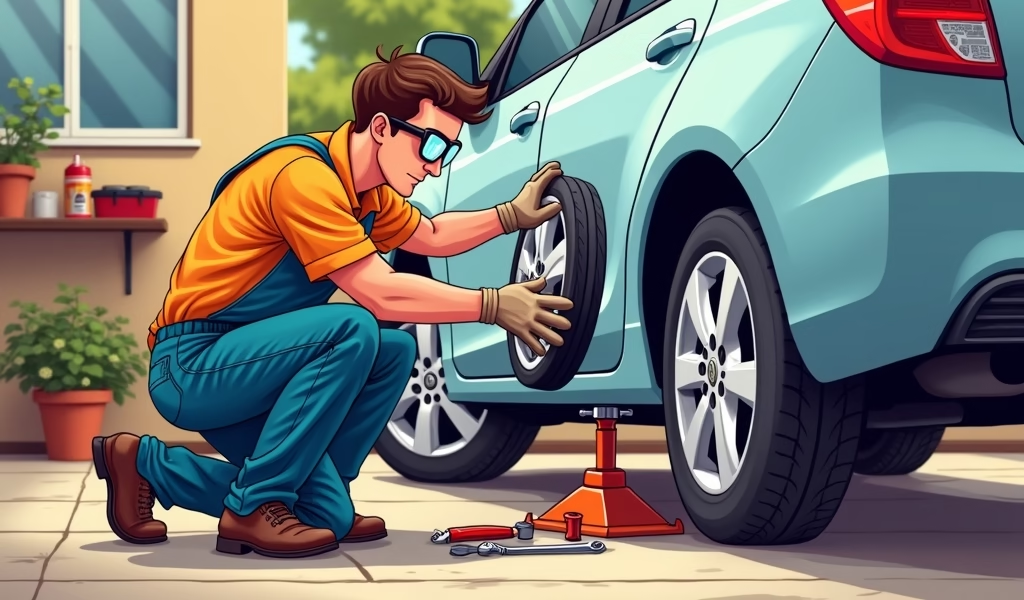
Tools Needed for Home Tire Rotation
Before you begin, gather these essential tools for a safe, efficient tire rotation:
- Jack rated for your vehicle’s weight
- Jack stands (never rely solely on a jack for support)
- Lug wrench or socket set with the correct size for your lug nuts
- Torque wrench (critical for proper tightening)
- Wheel chocks
- Gloves to protect your hands
- Optional but helpful: Mechanic’s creeper, work light, anti-seize lubricant
The jack and jack stands are your most important safety equipment. Never substitute these with makeshift supports like cinder blocks or wood stacks. A proper hydraulic floor jack is ideal, though the emergency jack included with your vehicle can work if necessary.
Your torque wrench doesn’t need to be professional-grade, but it should be accurate. Properly torqued lug nuts are crucial for safety—too tight can strip threads or warp rotors, while too loose can lead to wheels coming loose while driving.
If you don’t already own these tools, consider this: a quality jack, jack stands, and torque wrench might cost around $150-$200 total, but they’ll pay for themselves after just a few tire rotations compared to shop prices, and you’ll have them for all future maintenance needs.
Preparation Steps Before You Begin
Before lifting your vehicle, take these important preparation steps to ensure safety and efficiency:
First, park on a flat, level surface—ideally concrete rather than asphalt or dirt, which can be unstable under a jack. Make sure you have adequate lighting and enough space to move around the vehicle comfortably.
Allow your engine to cool completely if you’ve been driving. This is especially important if you’ll be working near any hot components. While you’re waiting, check your owner’s manual for specific recommendations about jacking points, torque specifications for lug nuts, and the recommended rotation pattern for your vehicle.
Next, gather all your tools and place them within easy reach. This prevents having to stop midway through the job to search for something. Check your tire pressure while the tires are still on the ground—this is a perfect time to make adjustments if needed.
Loosen (but don’t remove) the lug nuts on all wheels while the vehicle is still on the ground. This is much easier than trying to break them loose when the wheel is off the ground. Turn the lug nuts counterclockwise, using your body weight if necessary for stubborn nuts.
Finally, engage your parking brake and check that all tires are properly chocked. For front tire rotation, place chocks behind rear tires; for rear tire rotation, place them in front of the front tires. Chocks should be sturdy and positioned snugly against the tires to prevent any movement.
Step-by-Step Guide to Rotating Your Tires
Now that you’re prepared, let’s walk through the tire rotation process systematically:
- Confirm all lug nuts are loosened and parking brake is engaged.
- Position your jack at the appropriate jacking point for the first wheel you’ll remove (consult your owner’s manual for exact locations).
- Slowly lift the vehicle until the tire is just off the ground.
- Place a jack stand under a secure support point (usually reinforced areas of the frame) near the jack, then lower the vehicle carefully onto the jack stand.
- Remove the lug nuts completely, storing them in a secure container so they don’t roll away.
- Remove the wheel, gripping it at the 9 and 3 o’clock positions.
- Set the removed wheel aside in a position that corresponds to your rotation pattern.
- Repeat steps 2-7 for the remaining wheels, working in a pattern that minimizes repositioning of your jack.
- Once all wheels are removed, clean the mounting surfaces on both the wheels and hubs with a wire brush to remove any rust or debris.
- Install each wheel in its new position according to your rotation pattern.
- Thread lug nuts by hand first to avoid cross-threading, then tighten them slightly with your wrench in a star pattern (not circle).
- Lower the vehicle slightly so tires contact the ground but still bear minimal weight.
- Use your torque wrench to tighten lug nuts to the manufacturer’s specified torque in a star pattern.
- Fully lower the vehicle and remove the jack and stands.
- Double-check all lug nuts with your torque wrench.
Take your time, especially if this is your first rotation. Working methodically reduces mistakes and ensures safety. Remember that the wheel should go on and off the hub easily—never force it, as this could indicate a problem that needs addressing.
After completing the rotation, take the vehicle for a short test drive at moderate speeds, listening for any unusual noises. If you hear or feel anything unusual, return home and check your work again.

Understanding Different Tire Rotation Patterns
Different vehicles require different rotation patterns based on their drivetrain and tire types. Using the correct pattern for your specific vehicle is crucial for even wear and maximum tire life.
For front-wheel-drive vehicles, the standard pattern is the “forward cross.” In this pattern, the front tires move straight back to the rear, while the rear tires move to the opposite sides at the front. This addresses the typically heavier wear on front tires.
Rear-wheel and four-wheel-drive vehicles generally use the “rearward cross” pattern. Here, rear tires move to the opposite sides at the front, while front tires move straight back. This pattern accounts for the different stress patterns in these drivetrains.
If your vehicle has directional tires (with tread designed to rotate in only one direction), you’re limited to a simple front-to-back rotation on the same side. The tire sidewall will have arrows indicating the required direction of rotation.
Vehicles with differently sized tires on the front and rear (common in high-performance cars) also require a side-to-side rotation only. Always consult your owner’s manual for the manufacturer’s recommended pattern.
Many modern vehicles with electronic stability control and tire pressure monitoring systems may require a reset procedure after rotation. Again, your owner’s manual will detail any necessary steps to recalibrate these systems.
Remember that if you have a full-size spare tire of the same type as your other tires (not a temporary “donut” spare), you can include it in your rotation to extend the life of all five tires. A common five-tire rotation involves moving the spare to the right rear position, with other tires shifting accordingly.
Common Mistakes to Avoid
In my years working as a mechanic, I’ve seen several common mistakes during DIY tire rotations that can lead to safety issues or reduced tire life:
The most dangerous mistake is inadequate vehicle support. Never rely solely on a jack without jack stands, and never substitute proper stands with makeshift supports. I’ve seen too many close calls from vehicles slipping off improper supports.
Another frequent error is incorrect torque application. Over-tightening lug nuts can stretch studs, warp rotors, and make future removal difficult. Under-tightening creates a serious safety hazard. Always use a torque wrench set to the manufacturer’s specifications.
Many DIYers also forget to check tire pressure during rotation. This is the perfect time to ensure all tires, including the spare, are properly inflated. Uneven inflation accelerates tire wear and reduces fuel economy.
Some enthusiastic home mechanics inadvertently damage wheels by using improper tools like impact wrenches without torque control. The sudden, high torque can easily damage wheel studs or strip lug nuts.
Finally, a surprisingly common oversight is failing to note the correct rotation pattern before removing tires. Once tires are off, it can be challenging to remember which one goes where, especially if wear patterns aren’t obvious. Make a simple diagram or take photos before starting.
These mistakes are easily avoidable with proper planning and attention to detail. Taking the extra few minutes to double-check your work can save you significant headaches—and potentially dangerous situations—down the road.
When to Seek Professional Help
While DIY tire rotation is achievable for most vehicle owners, certain situations warrant professional attention. Recognizing these scenarios helps prevent damage to your vehicle and ensures your safety.
If you encounter severely rusted or seized lug nuts that won’t budge despite your best efforts, stop rather than risk breaking a stud. Professional shops have specialized tools like impact wrenches and penetrating oils to handle stubborn fasteners.
Should you notice abnormal tire wear patterns—such as excessive wear on inner or outer edges, cupping, or feathering—this likely indicates alignment issues that require professional diagnosis and correction. Rotating tires won’t solve the underlying problem.
If you discover damaged wheels or tires during your rotation, including bulges, significant cracks, or exposed belting, seek immediate professional assessment. These conditions can lead to dangerous blowouts and shouldn’t be ignored.
For vehicles with tire pressure monitoring systems (TPMS), particularly newer models, rotation might require system reprogramming that needs dealer-specific equipment. Check your manual to see if this applies to your vehicle.
Finally, if you’re ever uncertain about any aspect of the tire rotation process or your ability to complete it safely, there’s no shame in consulting a professional. A basic tire rotation service is relatively inexpensive compared to the potential costs of mistakes.
Remember that rotating your tires correctly is fundamentally about safety, not just cost savings. When in doubt, professionals at ASE-certified repair shops have the training and equipment to ensure the job is done right.
Maintenance Tips to Extend Tire Life
Regular rotation is just one aspect of comprehensive tire maintenance. Incorporate these additional practices to maximize your tire investment and ensure optimal safety:
Monthly pressure checks are essential, as both over-inflation and under-inflation accelerate wear and reduce fuel efficiency. Always check pressure when tires are cold for accurate readings, and don’t forget your spare tire.
Inspect your tires visually at least once a month for cuts, bulges, uneven wear, and embedded objects. Early detection of issues can prevent more serious damage. Pay particular attention to the sidewalls, which can develop dangerous bulges that aren’t always obvious.
Maintain proper wheel alignment by having it checked annually or whenever you notice the vehicle pulling to one side. Misalignment causes uneven tire wear that can’t be corrected by rotation alone.
Consider seasonal tire needs seriously. All-season tires are convenient but represent a compromise in extreme conditions. Dedicated winter tires in cold climates and summer tires in hot regions optimize both safety and longevity.
Be mindful of your driving habits, as aggressive acceleration, hard braking, and taking corners at high speeds all increase tire wear. Smooth, defensive driving not only saves fuel but also extends tire life significantly.
Finally, keep track of your tire age. Even with visible tread remaining, most manufacturers recommend replacing tires that are 6-10 years old due to rubber compound degradation. Check the four-digit DOT code on your sidewall—the first two numbers indicate the week of manufacture, and the second two indicate the year.
Conclusion
Learning how to rotate tires at home is a valuable skill that pays dividends in both tire longevity and vehicle safety. With the right tools, preparation, and technique, it’s a manageable task for most vehicle owners that can save hundreds of dollars over the life of your tires.
Regular rotation every 5,000-8,000 miles helps ensure even wear, consistent handling, and maximum tire life. Combined with proper inflation, alignment, and careful driving habits, this simple maintenance task significantly extends your tire investment.
While DIY rotation is approachable for most, remember that it’s also important to recognize when professional help is needed. Unusual wear patterns, damaged components, or specialized vehicle systems sometimes require expert attention.
The confidence and vehicle knowledge you gain from performing your own tire rotations often leads to greater comfort with other maintenance tasks, helping you become a more informed and capable vehicle owner.
If you’re looking for more detailed advice about your specific vehicle or have questions about your tire rotation needs, don’t hesitate to visit our website. Our experienced team is always happy to provide guidance, answer questions, or help you book a service if you decide professional assistance is the right choice for your situation.
Frequently Asked Questions
How often should I rotate my tires?
Most manufacturers recommend rotating tires every 5,000-8,000 miles. Check your owner’s manual for vehicle-specific intervals as recommendations may vary based on drivetrain type and driving conditions.
Can I rotate tires without using jack stands?
No, never perform a tire rotation using only a jack without proper jack stands. Jacks can fail or slip, creating an extremely dangerous situation that could result in serious injury or death.
What’s the correct torque for my lug nuts?
Torque specifications vary by vehicle, typically ranging from 80-100 ft-lbs for passenger cars to 90-140 ft-lbs for trucks and SUVs. Always refer to your owner’s manual for the exact specification for your vehicle.
Should I rotate my tires if they have different tread depths?
Yes, you should still rotate tires with different tread depths following the proper rotation pattern. However, if the difference is extreme (more than 4/32″ variation), consult a professional as this indicates abnormal wear.
Do I need to balance my tires when rotating them?
Tire rotation doesn’t typically require rebalancing unless you notice vibration after rotation. However, having tires balanced during rotation every other time (roughly yearly) is a good preventative practice.