
Overview
That dreaded thump-thump-thump of a flat tire might be inevitable—with drivers experiencing an average of five flats during their driving lifetime—but knowing how to properly respond can transform this roadside emergency from a costly crisis into a manageable inconvenience. This comprehensive guide covers everything from understanding tire punctures and warning signs to emergency repair techniques, cost-saving strategies, and preventative maintenance that will save you money, reduce stress, and give you valuable peace of mind every time you get behind the wheel.
Table of Contents
- The Roadside Emergency Nobody Wants
- Understanding Tire Punctures: What Happens When Your Tire Goes Flat
- Signs of Trouble: How to Know When Your Tire Needs Attention
- Common Causes of Flat Tires: What’s Deflating Your Day
- Tire Lifespan and Prevention: Keeping the Air Where It Belongs
- Emergency Flat Tire Repair: Your Step-by-Step Rescue Plan
- Fix or Replace? Making the Right Call for Your Tire
- Saving Money Without Compromising Safety: The Smart Approach
- DIY vs. Professional Service: When to Call in the Experts
- Common Mistakes to Avoid When Handling Flat Tires
- Conclusion: Take Control of Tire Troubles
- Frequently Asked Questions
The Roadside Emergency Nobody Wants
It always seems to happen at the worst possible moment. You’re cruising down the highway, perhaps already running a bit late, when you hear that unmistakable flapping sound followed by the rhythmic thump-thump-thump. Your stomach drops as you realize you’re dealing with how to fix a flat tire – again.
You’re in good company. The average driver will face about five flat tires during their driving lifetime. AAA responds to over 4 million tire-related calls every year, which breaks down to roughly one flat every 4-5 years for most drivers. Common enough to be inevitable, yet infrequent enough that many of us forget proper handling techniques between occurrences.
Knowing how to handle this common roadside emergency isn’t just about convenience – it’s about your wallet too. The average roadside assistance call runs $75-$125, not counting the actual repair. Add potential towing costs and lost time, and your flat tire could deflate your bank account by hundreds of dollars. Learning to handle this situation yourself can save serious cash, reduce stress, and give you valuable peace of mind every time you get behind the wheel.
Understanding Tire Punctures: What Happens When Your Tire Goes Flat
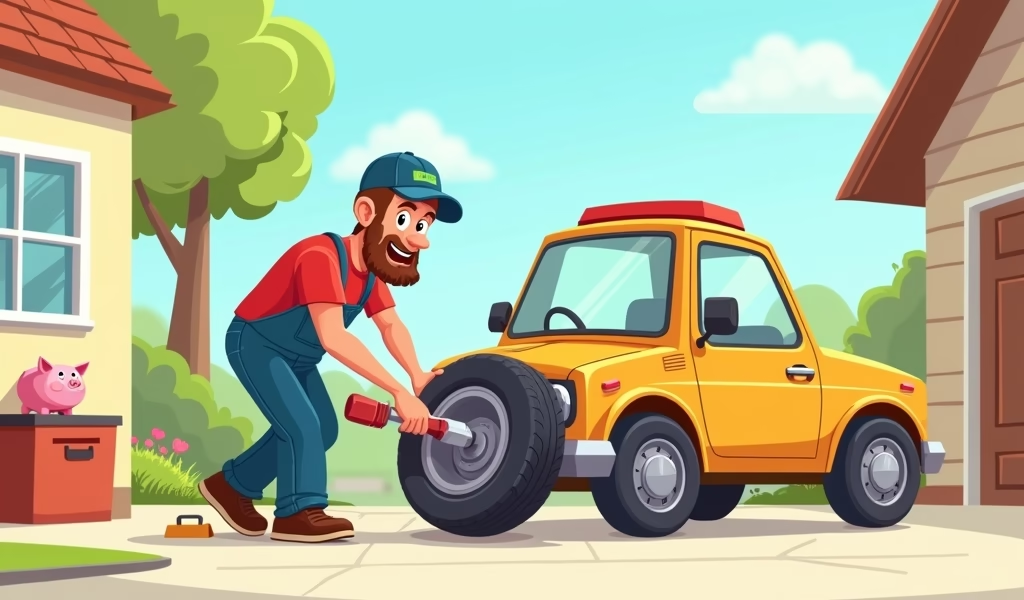
Modern tires are actually engineering marvels when you look under the rubber. They consist of several critical layers: the inner liner that holds air, body plies providing strength, bead bundles securing the tire to the rim, sidewalls for protection, and tread for road grip. When working together properly, these components create a safe, predictable ride.
When a puncture breaks this sealed system, you’ve got more than just an inconvenience – you’re facing a genuine safety issue. A properly inflated tire distributes your vehicle’s weight evenly, maintains crucial traction, and responds correctly to steering input. When pressure drops, all these functions become compromised.
There’s a big difference between a slow leak and a blowout. A slow leak might give you time to find a safe place to pull over, while a blowout demands immediate action as the tire rapidly deflates, potentially causing loss of vehicle control – particularly dangerous at highway speeds.
Perhaps most expensive is the damage from driving on a completely flat tire. Even a few hundred yards can destroy the tire beyond repair and damage your wheel, turning a simple flat tire replacement into a much costlier repair. The rubber normally cushions your expensive wheels from the road – remove that buffer, and metal meets asphalt with predictably poor results.
Signs of Trouble: How to Know When Your Tire Needs Attention
Modern vehicles have made flat tire detection easier than ever before. That tire pressure monitoring system (TPMS) light on your dashboard isn’t just another annoying indicator – it’s an early warning system potentially saving you from a roadside emergency. When it illuminates, at least one tire has dropped below the recommended pressure level, typically by 25% or more.
Even without electronic alerts, your vehicle communicates tire problems through several telltale signs. If your car suddenly pulls to one side while driving straight, a tire might be losing pressure. Vehicles tend to pull toward the underinflated side.
Unusual sounds often signal trouble too. A rhythmic thumping noise that speeds up as you accelerate typically indicates a flat spot or bubble. A hissing sound when stationary might mean air is actively escaping. Don’t ignore these audio warnings – they’re your tire’s way of asking for help.
Visual inspection remains one of the most reliable methods for catching tire issues early. Look for obvious punctures, sidewall bulges (indicating potential structural failure), or uneven wear patterns. Many drivers mistakenly think a tire looks fine until viewing it from multiple angles.
Understanding how tire pressure affects performance explains why these warning signs matter. Under-inflation by just 10% reduces tire life by 15% and decreases fuel efficiency according to NHTSA research. More critically, it extends braking distance and compromises handling – potentially adding several feet to your stopping distance during emergency braking.
Common Causes of Flat Tires: What’s Deflating Your Day
Road hazards are the primary culprits behind flat tires. Nails, screws, and glass account for roughly 75% of all punctures. Construction zones are particularly treacherous, but even quiet residential streets harbor tire-puncturing debris. Most punctures occur in the central tread area and, if addressed promptly, can often be repaired successfully.
Valve stem damage frequently gets overlooked as a cause of air loss. These small rubber components that allow tire inflation can crack from exposure to road chemicals, extreme temperatures, and UV rays. Even the valve caps play a crucial role in keeping dirt and moisture from damaging the valve core.
Bead leaks happen where the tire meets the rim. This seal depends on proper mounting and inflation to remain airtight. Rim corrosion, improper installation, or pothole damage can compromise this seal, resulting in slow but persistent air loss that might be mistaken for a puncture.
Impact damage presents more serious problems. Hitting potholes, curbs, or road debris at speed can cause sidewall bulges or internal belt damage that isn’t always immediately visible. These structural failures usually require complete tire replacement since repairs in the sidewall area are generally unsafe.
Finally, worn tread and aging rubber naturally become more susceptible to punctures and failures. Rubber compounds degrade over time, even with adequate tread depth. Most manufacturers recommend replacement after 6-10 years regardless of tread, and sooner if the tire shows cracking or uneven wear patterns.
Tire Lifespan and Prevention: Keeping the Air Where It Belongs
Tire longevity varies significantly based on type and usage. Standard all-season passenger tires typically last 40,000-60,000 miles, performance tires might only reach 20,000-30,000 miles, while premium touring tires can exceed 80,000 miles. These figures assume ideal conditions and proper maintenance, however.
Several factors dramatically shorten tire life. Improper inflation leads the pack, with underinflated tires wearing out up to 25% faster than properly inflated ones. Aggressive driving, particularly hard cornering and rapid acceleration, can wear tires twice as quickly as gentler driving habits.
Regular pressure checks are your first defense line. Check monthly and before long trips, always when tires are cold (before driving). Remember that tires naturally lose about 1 PSI per month and about 1 PSI for every 10-degree temperature drop. The correct pressure isn’t what’s listed on the tire sidewall – it’s what’s recommended in your vehicle’s owner manual or door jamb sticker.
Rotation schedules help ensure even wear across all four tires. Most manufacturers recommend rotation every 5,000-7,500 miles. The rotation pattern depends on your vehicle’s drive type (front, rear, or all-wheel drive). This simple maintenance step can extend tire life by 20% or more.
Alignment considerations matter equally. Misaligned wheels cause uneven and accelerated tire wear. If you notice your vehicle pulling to one side or your steering wheel isn’t centered when driving straight, it’s time for an alignment check. Most vehicles benefit from alignment checks every 15,000-30,000 miles or after significant impacts like hitting large potholes.
Emergency Flat Tire Repair: Your Step-by-Step Rescue Plan
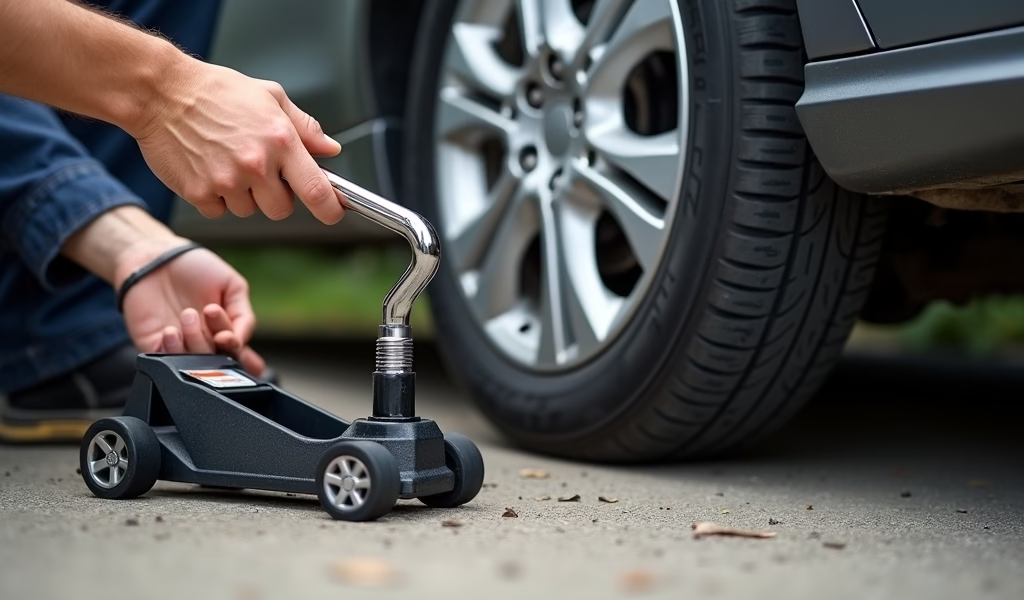
Safety first: When you realize you have a flat, don’t slam your brakes. Keep a firm grip on the steering wheel and gradually reduce speed. Activate your hazard lights and move to the rightmost lane when possible. Look for a level, solid surface away from traffic – even if it means driving slowly on a partially flat tire for a short distance. A damaged rim is preferable to changing a tire in an unsafe location.
For the job, you’ll need several essential tools: a properly sized lug wrench, a car jack rated for your vehicle’s weight, wheel chocks (or bricks/large rocks as alternatives), gloves, and a flashlight if it’s dark. Many vehicles come with basic tools, but checking their condition before you need them is wise.
Using a car jack correctly is crucial for safety. Locate the proper jacking points (specified in your owner’s manual) – using the wrong spot can damage your vehicle or cause the jack to fail. Place wheel chocks on the opposite end of the car from the flat tire. On level ground, apply the parking brake, then position the jack at the correct jacking point. Raise the vehicle just enough to clear the flat tire from the ground – no higher.
To remove the flat tire, first loosen (but don’t remove) the lug nuts while the tire is still on the ground, turning counterclockwise. Once the car is jacked up, remove the lug nuts completely and pull the flat tire straight toward you. Set it aside flat on the ground.
When installing the spare tire, align it with the wheel studs and push it into place. Hand-tighten the lug nuts in a star pattern (opposite sides rather than moving around the circle). Lower the vehicle partially and tighten the lug nuts further with the wrench. Then lower completely and give each nut a final tightening. The proper torque is typically 80-100 foot-pounds – tight enough that you can’t turn them further with moderate force.
If you don’t have a spare, temporary fix options include tire sealant products like Fix-a-Flat, which can seal punctures up to ¼ inch. These work by injecting sealant and air into the tire, allowing you to drive to a repair facility. Remember that these are temporary solutions with speed limitations (usually under 50 mph) and distance restrictions (under 100 miles).
Changing a flat tire step by step might seem intimidating the first time, but with practice, most drivers can complete the process in 15-20 minutes. Consider practicing once in your driveway before you need to do it roadside in less ideal conditions.
Fix or Replace? Making the Right Call for Your Tire
Not all tire damage can be fixed. Generally, punctures in the center tread area smaller than ¼ inch in diameter can be professionally repaired if the tire is otherwise in good condition. Proper repair involves removing the tire from the rim to inspect for internal damage and applying a patch-plug combination from the inside.
Tires are beyond saving when they have sidewall damage, punctures larger than ¼ inch, multiple punctures close together, significant tread wear (less than 2/32″ remaining), or any signs of aging like cracks. If your tire experienced a blowout, internal structure damage likely makes it unrepairable regardless of external appearance.
Driving on a properly repaired tire carries minimal risk if the repair follows industry guidelines from organizations like the U.S. Tire Manufacturers Association. However, repairs in the shoulder or sidewall areas, using string plugs without internal patches, or ignoring manufacturer recommendations can create dangerous conditions.
When choosing a replacement, match the size and load rating exactly to what’s recommended for your vehicle. Consider replacing tires in pairs (both front or both rear) to maintain even handling characteristics. If your vehicle has significant mileage, replacing all four tires simultaneously might provide the best safety and performance.
Saving Money Without Compromising Safety: The Smart Approach
Professional tire repair typically costs between $15-$30 for a standard patch-plug repair. Some shops offer free repairs if you purchased the tires from them. Compare this to the cost of a new tire, and the value of proper repair becomes obvious.
New tire prices vary widely by vehicle type and tire quality. Economy passenger car tires start around $60-$80 each, mid-range tires run $100-$150, and premium tires can exceed $200 each. SUV and truck tires generally cost 30-50% more than comparable passenger car tires. Installation typically adds $15-$25 per tire.
Roadside assistance services average $75-$125 per call, with higher rates during nights, weekends, and in remote areas. Annual membership programs like AAA ($60-$130/year) can be cost-effective if you use them, but learning to change a tire yourself eliminates this expense entirely.
Investing in quality tools and a good spare makes economic sense. A proper full-sized spare tire costs $150-$300 but can save you from being stranded or limited by a temporary donut spare. A quality hydraulic jack ($50-$100) and torque wrench ($20-$50) will last for years and serve multiple vehicles. These investments pay for themselves many times over.
DIY vs. Professional Service: When to Call in the Experts
Many tire-related tasks are well within the average person’s capabilities. Changing to a spare, checking pressure, inspecting for damage, and using temporary sealants are skills most drivers can master with some practice and preparation.
Professional service becomes necessary for permanent repairs, especially those requiring tire removal from the rim. Other situations calling for professional help include damaged rims, TPMS system issues, wheel alignment needs, or when dealing with specialized tires like run-flats or low-profile performance tires.
Tools worth having for regular tire maintenance include a quality pressure gauge (digital ones offer the best accuracy), a portable air compressor that runs off your car’s 12V outlet, valve stem caps, and a tread depth gauge. For those willing to learn more advanced skills, a tire plug kit can be useful for emergency situations when professional help isn’t immediately available.
The most valuable skills to develop are proper jacking techniques, understanding your vehicle’s specific tire pressure requirements, recognizing dangerous tire conditions, and knowing the limitations of temporary repairs. These fundamentals will serve you well in most tire emergencies.
Common Mistakes to Avoid When Handling Flat Tires
Using improper jacking points is perhaps the most dangerous mistake. Placing the jack under the wrong area can damage your vehicle’s frame, brake lines, or fuel system. Worse, it can cause the jack to slip, potentially causing injury or further vehicle damage. Always consult your owner’s manual for exact jacking locations.
Over-tightening or under-tightening lug nuts creates serious safety hazards. Loose nuts can work free, potentially causing wheel separation while driving. Over-tightening can warp brake rotors, damage studs, and make future tire changes extremely difficult. Using a torque wrench to reach manufacturer-specified settings eliminates these risks.
Many drivers ignore warning signs of additional damage after a flat. Vibrations, pulling, or unusual noises after changing to a spare might indicate bent rims, damaged suspension components, or alignment issues. Addressing these promptly prevents more expensive repairs later.
Temporary donut spares have strict limitations – typically 50 mph maximum speed and 50-70 miles maximum distance. Exceeding these limits risks tire failure and vehicle damage. Remember these spares are designed only to get you to a repair facility, not for extended use.
Perhaps the most common oversight is neglecting to check spare tire pressure. Spares lose air over time just like regular tires, and a flat spare defeats the purpose entirely. Check your spare’s pressure monthly along with your regular tires to ensure it’s ready when needed.
Conclusion: Take Control of Tire Troubles
Flat tires are an inevitable part of driving, but they don’t have to be emergencies that leave you stranded or facing expensive repairs. By understanding tire basics, recognizing warning signs, and mastering a few fundamental skills, you transform a potential crisis into a manageable inconvenience.
The confidence from being prepared is invaluable. Knowing you can handle a flat tire means less stress during travel, greater safety for everyone, and significant savings over your vehicle’s life. The 30 minutes spent practicing tire changing or the small investment in proper tools pays enormous dividends the first time you confidently handle a flat tire situation.
Prevention remains your best strategy. Regular pressure checks, rotation, alignment, and visual inspections can catch small problems before they become roadside emergencies. Remember that your tires are the only contact points between your vehicle and the road – their condition directly affects your safety, comfort, and vehicle performance.
Every vehicle should contain an emergency kit with tire-specific essentials: a properly inflated spare, functional jack and lug wrench, tire pressure gauge, flashlight with fresh batteries, reflective triangles or flares, and gloves. For added preparation, consider a portable air compressor and tire sealant for situations where changing a tire isn’t possible.
The small investment in learning how to fix a flat tire and preparing your vehicle properly provides peace of mind that’s invaluable – knowing that when you hear that dreaded flapping sound, you’re ready to handle it safely, efficiently, and economically.
Frequently Asked Questions
How long can I drive on a spare tire?
Temporary donut spares should only be used for 50-70 miles maximum at speeds under 50 mph. Full-size spares can be driven normally but should be inspected for age and condition first.
Can I repair a tire with a sidewall puncture myself?
No, sidewall punctures should never be repaired as this area flexes significantly and repairs are prone to failure. Always replace a tire with sidewall damage.
Is it worth buying run-flat tires to avoid flat tire emergencies?
Run-flat tires allow driving about 50 miles after a puncture but cost 30-40% more and provide a firmer ride. The value depends on your driving habits and how much you prioritize avoiding roadside tire changes.
How do I know if my tire can be repaired or needs replacement?
Tires can typically be repaired if the puncture is in the center tread area, smaller than ¼ inch, and there’s no sidewall damage. Multiple punctures, significant wear, or any sidewall damage means replacement is needed.
What’s the fastest way to fix a flat tire in an emergency?
Tire sealant products like Fix-a-Flat provide the quickest temporary solution for small punctures. Simply connect to the valve stem, inject the product, and drive to a repair facility (under 50 mph).