
Overview
That dreaded moment when your car won’t start—likely due to battery issues, starter problems, alternator failure, or fuel system complications—can be managed through proper diagnosis and preventative maintenance. This guide walks drivers through DIY troubleshooting steps, when to seek professional help, emergency solutions for when you’re stranded, and a cost breakdown of common repairs, ultimately helping you avoid unnecessary expenses and frustration.
Table of Contents
- The Morning Panic: When Your Car Won’t Start
- Understanding Your Car’s Starting System
- Common Reasons Why Your Car Won’t Start
- DIY Diagnosis: What to Check First
- Preventative Maintenance to Avoid Starting Problems
- When to Seek Professional Help
- Emergency Solutions When Stranded
- Car Starting Problem Cost Guide
- Conclusion
- Frequently Asked Questions
The Morning Panic: When Your Car Won’t Start
We’ve all been there. It’s Monday morning, you’re actually on time for once, coffee in hand, ready to conquer the day. You slide into the driver’s seat, turn the key and… nothing. Just silence. Or worse, that sad clicking sound that tells you something’s definitely wrong.
That sinking feeling in your stomach is almost universal—you’re now officially going to be late, and possibly facing an unexpected repair bill. According to AAA research, dead batteries alone cause over 7 million service calls annually, and that’s just one of many reasons your car might refuse to start.
What many folks don’t realize is that the average driver spends between $500-$600 annually on unnecessary car repairs. Many of these could be prevented with some basic knowledge and maintenance. As a mechanic with 20+ years of experience, I’ve seen countless customers who could have saved hundreds if they’d caught the warning signs early.
In this guide, I’ll walk you through everything you need to know about why your car won’t start, how to diagnose common issues yourself, and most importantly, how to prevent these problems before they leave you stranded. Let’s turn that morning panic into a minor inconvenience instead of a day-ruiner.
Understanding Your Car’s Starting System
Before we diagnose problems, let’s understand how your car actually starts. Think of your starting system as a relay race where each component passes the baton to the next:
The Key Players
Battery: This is your starting lineup’s power source. It stores electrical energy and provides the initial jolt needed to get everything moving. Without a healthy battery, nothing else in the sequence works properly.
Starter Motor: When you turn your key, electricity from the battery activates this small but mighty motor. Its job is to physically crank your engine to get things moving. Think of it as the person who pushes a car to get it rolling before jumping in.
Alternator: Once your engine is running, the alternator takes over power generation. It’s like a mini power plant that recharges your battery and powers all electrical systems while your engine runs.
Ignition Switch: This is what you activate when you turn your key or press the start button. It’s the messenger that tells everything else “it’s go time.”
Fuel System: Your engine needs the right amount of fuel delivered at the right time. The fuel pump, lines, filters, and injectors make sure that happens.
Common Reasons Why Your Car Won’t Start
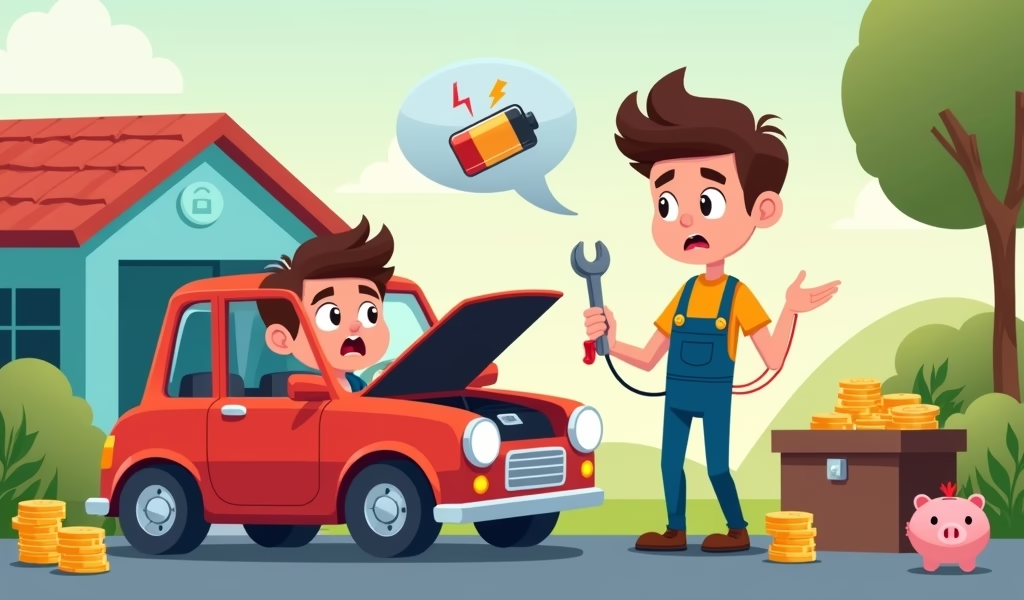
Dead or Weak Battery: The #1 Culprit
If I had a dollar for every “my car won’t start” call that turned out to be a battery issue, I could retire early. Batteries typically last 3-5 years, but extreme temperatures can shorten this lifespan significantly.
Here’s how to spot battery problems:
- Slow, sluggish cranking when you try to start
- Headlights or interior lights that seem dim
- Electronics behaving erratically
- A clicking sound when you turn the key
- The engine cranks but won’t catch
- Battery warning light glowing on your dashboard
The good news? Battery issues are usually easy and relatively inexpensive to fix compared to other starting problems. Testing your battery voltage is a simple way to check its health.
Faulty Starter Motor
When your starter is giving up the ghost, you’ll typically hear a distinct clicking noise when you turn the key, but the engine won’t turn over. In my shop, we see starters typically last around 100,000 to 150,000 miles before causing trouble.
Warning signs include:
- Grinding noises when starting (like metal on metal)
- Freewheeling sound (like the starter isn’t engaging properly)
- Smoke from under the hood during starting attempts
- Intermittent starting problems that become more frequent over time
Alternator Problems
While a bad alternator won’t typically prevent your car from starting the first time, it will fail to recharge your battery, leading to a dead battery situation pretty quickly. It’s like having a phone charger that doesn’t work – eventually, you’ll run out of juice.
Look for these symptoms:
- Battery warning light on the dashboard
- Headlights that dim or brighten as you rev the engine
- Electrical accessories working slowly or erratically
- Battery drains quickly after jump-starting
Fuel System Issues
Your engine needs three things to run: air, fuel, and spark. Without properly delivered fuel, you’re going nowhere. Common fuel system problems include:
- Empty fuel tank (yes, it happens more than you’d think!)
- Faulty fuel pump that fails to deliver gas to the engine
- Clogged fuel filter restricting flow
- Damaged or clogged fuel injectors
If your engine cranks normally but won’t start, and you don’t suspect battery issues, fuel delivery problems are a likely cause.
Ignition System Failures
Modern cars have sophisticated ignition systems with several potential failure points:
- Dead key fob battery in push-button start vehicles
- Faulty ignition switch that doesn’t complete the circuit
- Problems with the immobilizer system (often indicated by a flashing security light)
- Failed spark plugs or ignition coils
DIY Diagnosis: What to Check First
Before calling a tow truck and opening your wallet for a mechanic, here are some diagnostic steps any car owner can take:
Simple Tests Anyone Can Perform
The Lights Test: Turn on your headlights. If they’re bright and strong, your battery probably has some charge. If they’re dim or flickering, suspect a weak battery.
Listen Carefully: Different sounds mean different problems:
- Clicking sound: Usually indicates battery or starter issues
- No sound at all: Likely an electrical connection problem or dead battery
- Engine cranks but won’t start: Fuel or ignition system issue
- Grinding noise: Potentially a starter gear problem
Check for Corrosion: Pop the hood and look at your battery terminals. White or greenish powder buildup is corrosion that can prevent proper electrical connection. Clean it off with a wire brush and a solution of baking soda and water.
Try a Jump Start: If you suspect a battery issue, jumping your car is worth a shot. If it starts and runs, your battery wasn’t holding a charge. If it still won’t start, you’ve likely got a different issue.
Essential Tools for Diagnosis
Every car owner should consider investing in:
- A digital multimeter for testing voltage ($15-30)
- Basic socket set and screwdrivers ($30-50)
- OBD-II scanner for reading error codes ($20-100)
- Jumper cables or portable jump starter ($25-100)
These basic tools (under $100 total) can save you hundreds in tow charges and diagnostic fees over your car’s lifetime.
Preventative Maintenance to Avoid Starting Problems
Battery Care That Makes a Difference
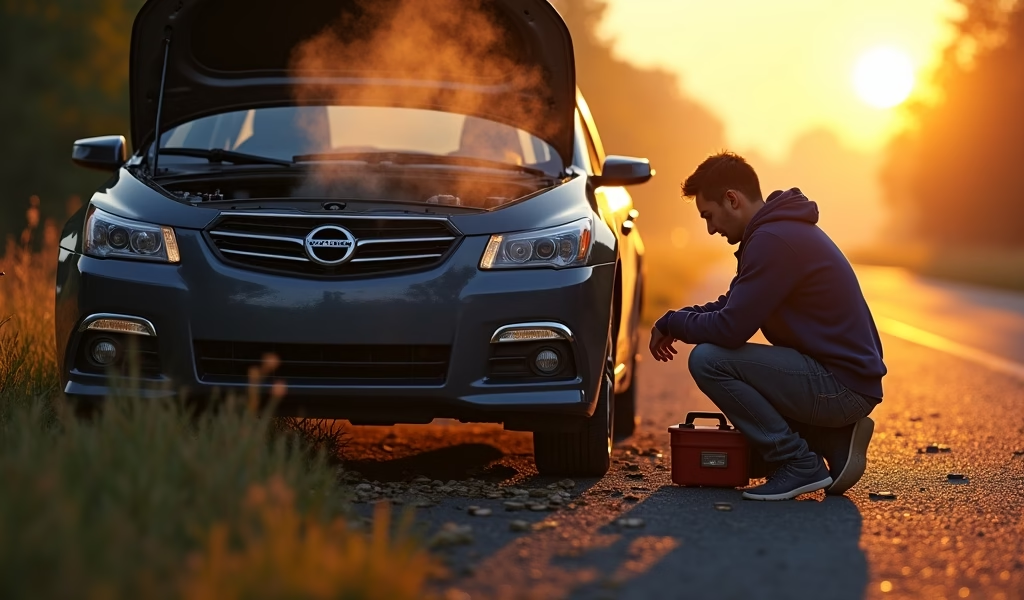
In my 20 years as a mechanic, I’ve seen countless starting issues that could have been prevented with simple battery maintenance. Here’s what I recommend to my customers:
- Have your battery tested annually after it’s 2 years old
- Keep terminals clean by scrubbing with a wire brush and baking soda solution
- Ensure the battery is securely mounted to prevent vibration damage
- Consider a battery tender if your vehicle sits unused for long periods
A $15 terminal cleaning kit can prevent a $150 tow and the hassle of being stranded. That’s what I call a good investment!
Fuel System Maintenance
Your fuel system needs love too:
- Replace the fuel filter according to manufacturer recommendations (typically every 30,000-50,000 miles)
- Use quality fuel from reputable stations
- Keep your tank at least quarter-full to prevent fuel pump overheating
- Consider fuel system cleaners every 10,000-15,000 miles
Simple Maintenance Calendar
Create a basic maintenance schedule:
- Monthly: Visual inspection of battery, check all fluid levels
- Every 3-6 months: Battery terminal cleaning, check belts and hoses
- Yearly: Professional battery test, thorough inspection
- According to your owner’s manual: Tune-ups, spark plug replacement, fuel filter change
When to Seek Professional Help
Signs That DIY Won’t Cut It
Even as someone who encourages DIY maintenance, I recognize there are times when professional help is necessary. Consider calling a pro when:
- You’ve tried jumping the battery and it still won’t start
- Your OBD scanner shows codes you don’t understand
- You notice burning smells or smoke
- There are unusual noises you can’t identify
- You’ve made attempts to fix the issue but it keeps happening
- The repair involves safety systems
Talking to Your Mechanic Effectively
As a mechanic, I appreciate customers who can clearly communicate their car’s symptoms. Here’s how to do it right:
- Describe exactly what happens when you try to start the car
- Note any unusual sounds, smells, or behaviors
- Mention when the problem first occurred and any patterns
- Share what troubleshooting steps you’ve already taken
Good questions to ask your mechanic include:
- “What specific tests did you perform to diagnose the problem?”
- “Can you show me the failed part?”
- “Are there related components I should consider replacing at the same time?”
- “How long should the repair last?”
Emergency Solutions When Stranded
Jump Starting Done Right
Jump starting a car is pretty straightforward, but doing it wrong can damage expensive electronics. Here’s the proper procedure:
- Position the vehicles close but not touching
- Turn off both vehicles completely
- Connect the positive cable to the dead battery’s positive terminal
- Connect the other end to the working battery’s positive terminal
- Connect the negative cable to the working battery’s negative terminal
- Connect the other end to an unpainted metal surface on the dead car (NOT the negative terminal)
- Start the working vehicle and let it run for 2-3 minutes
- Try starting the dead vehicle
- If successful, remove cables in reverse order
- Keep the jumped vehicle running for at least 20 minutes
Push Starting (Manual Transmission Only)
If you drive a manual transmission and have a helper or a hill, you might be able to push-start your car:
- Turn ignition to “on” position
- Press clutch in and shift to 2nd gear
- Have helpers push the car to about 5-10 mph
- Release the clutch quickly while pressing the gas pedal slightly
- The engine should start; press the clutch and give it some gas to keep it running
Emergency Kit Essentials
After seeing countless stranded motorists, I strongly recommend keeping these items in your vehicle:
- Portable jump starter/power bank
- Basic tool kit
- Flashlight with fresh batteries
- Reflective triangles or flares
- Phone charger
- List of emergency contacts and roadside assistance numbers
Car Starting Problem Cost Guide
Understanding potential costs helps you budget and identify unreasonable quotes:
Battery Issues
- DIY battery replacement: $75-$200 for parts
- Professional battery service: $120-$250 including installation
- Simple terminal cleaning: $0-$20 DIY, $30-$50 professional
Starter Problems
- DIY starter replacement: $50-$350 for parts
- Professional starter service: $150-$600 including labor
Alternator Work
- DIY alternator replacement: $100-$350 for parts
- Professional service: $250-$700 including labor
Fuel System Repairs
- Fuel pump replacement: $400-$1,000 professional service
- Fuel filter: $70-$160 professional service
- Fuel injector cleaning: $70-$160
The DIY savings are modest for simple jobs like battery replacement but increase significantly for more complex repairs like starter or alternator replacement, where labor costs are higher.
Conclusion
That moment of panic when your car won’t start doesn’t have to become a financial disaster or ruin your day. With the knowledge you’ve gained from this guide, you’re now equipped to identify common starting problems, perform basic troubleshooting, and make informed decisions about when to DIY and when to seek professional help.
Remember that prevention is always less expensive than repair. Regular maintenance checks, especially of your battery and electrical system, can save you from those dreaded no-start situations. Even simple habits like keeping your battery terminals clean can make a huge difference in your car’s starting reliability.
Your car actually gives you warning signs before major failures—unusual sounds, delayed starting, intermittent issues. Learning to recognize these early signals is the most valuable skill any car owner can develop. When in doubt, consult a professional before you’re stuck with no options.
Safe travels, and may your engine always start on the first try!
Frequently Asked Questions
Why does my car click but won’t start?
A clicking sound typically indicates either a weak battery or a faulty starter. If it’s a rapid clicking, it’s usually the battery; if it’s a single loud click, it’s more likely the starter.
Can a car not start but lights still work?
Yes, this is common because lights require far less power than the starter motor. Your battery might have enough charge to run lights and electronics but not enough to crank the engine.
How do I know if it’s my battery or alternator?
If jump-starting works but the car dies again soon after, it’s likely the alternator. If jump-starting gets the car running and it stays running, the battery wasn’t holding a charge.
How long does a car battery typically last?
Most car batteries last 3-5 years, though extreme temperatures can shorten lifespan. Have your battery tested annually after it reaches 2 years old.
Will a car start with a bad fuel pump?
No, a car won’t start with a completely failed fuel pump because the engine won’t receive the fuel it needs for combustion. You may hear the engine crank normally, but it won’t fire up.