
Overview
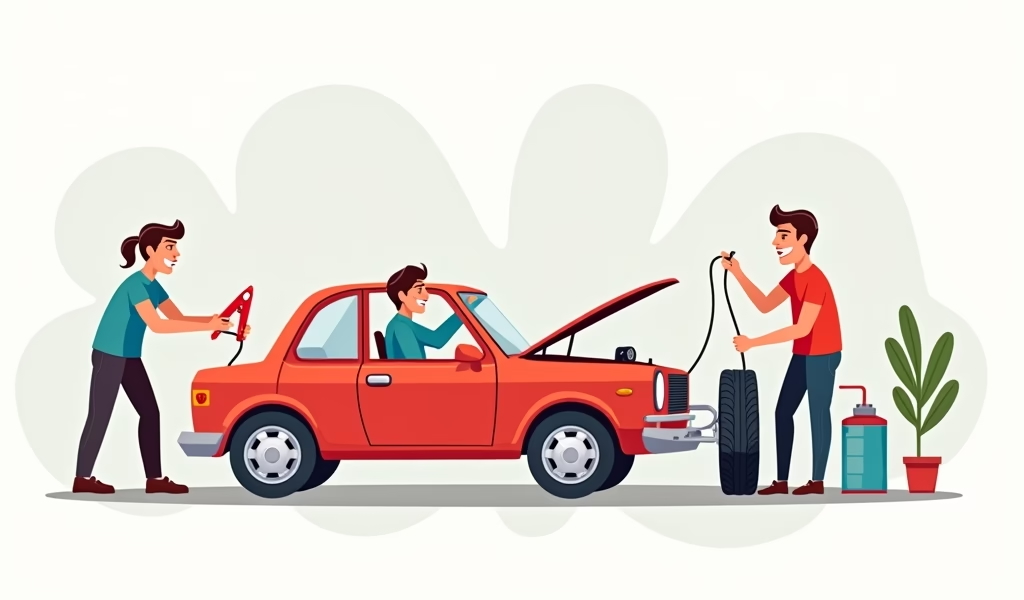
Just when your engine decides to smoke with kids in the backseat and a dying phone, your response in those critical first minutes can transform a potential financial disaster into a manageable situation. This comprehensive guide covers everything from recognizing early warning signs and assembling an essential emergency kit to performing common roadside repairs and implementing preventative maintenance strategies that can save you thousands in emergency repair costs.
Table of Contents
- Emergency Response Basics: The First Critical Minutes
- Recognizing Warning Signs Before Disaster Strikes
- The Essential Emergency Kit Every Driver Needs
- Step-by-Step Procedures for Common Breakdowns
- Preventive Maintenance: Your First Line of Defense
- Roadside Assistance: When to Call the Professionals
- Cost Comparison: Prevention vs. Emergency Repairs
- Conclusion
- Frequently Asked Questions
Emergency Response Basics: The First Critical Minutes
Car troubles never happen at convenient times. That perfect storm of a smoking engine, kids in the backseat, and a rapidly draining phone battery always seems to strike when you’re miles from home on a busy highway.
Your response in those first few minutes can make the difference between a minor inconvenience and a costly disaster. Safety comes first – always. Pull completely off the road if possible, turn on your hazard lights, and place reflective triangles if you have them.
Quick Tip: Never remain in a vehicle that’s smoking or on fire. Get all passengers to a safe location at least 100 feet away from the vehicle, preferably behind a guardrail.
The financial impact of emergency breakdowns extends far beyond the immediate tow truck fee. Emergency repairs typically cost 30-50% more than scheduled maintenance. When you add towing fees, potential hotel stays, and lost workdays, a single breakdown can easily exceed $1,000.
Remember this: The most expensive repair is always the one you weren’t prepared for.
Recognizing Warning Signs Before Disaster Strikes
Your vehicle speaks its own language of clicks, whines, and warning lights. Learning to interpret these signals can save you thousands in repair costs and countless roadside headaches.
Dashboard warning lights aren’t just festive decorations. Red warnings (oil pressure, temperature, brake system) demand immediate action – pull over safely as soon as possible. Yellow or amber lights (check engine, ABS) indicate issues needing attention soon but not necessarily emergency stops.
Quick Tip: If your battery warning light illuminates while driving, your alternator might be failing. Minimize electrical usage (radio, air conditioning) and head to a service center immediately – your vehicle may stop running shortly.
Unusual sounds tell important stories about your vehicle’s health. Squealing during braking typically indicates worn brake pads – an inexpensive fix if addressed early. Grinding suggests the pads are completely worn, with metal-on-metal contact damaging your rotors – a much costlier repair.
Your car should feel predictable every time you drive. Hesitation when accelerating often signals fuel system issues. Hard starting—especially when the engine is already warm—may indicate fuel delivery problems. A vehicle that pulls to one side could have alignment issues or uneven tire pressure.
Fluid leaks vary in severity. Bright green fluid is typically coolant – potentially serious. Red fluid usually indicates transmission fluid, while brown or black oily spots suggest engine oil leaks. Both require prompt attention. Clear water dripping from your air conditioning is normal, especially on hot days.
The Essential Emergency Kit Every Driver Needs
Being prepared isn’t paranoid – it’s practical. A well-stocked emergency kit transforms a potential disaster into a manageable situation. Think of it as insurance you can actually use.
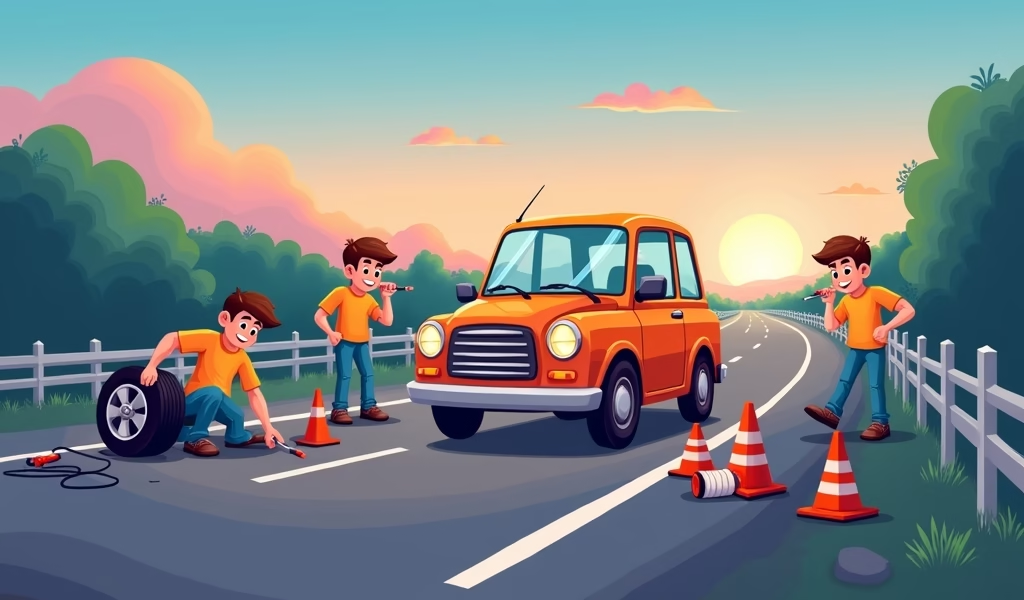
Start with these basics: quality flashlight with extra batteries, jumper cables or portable jump starter, tire pressure gauge, multipurpose tool with pliers and screwdrivers, and the universal temporary fix – duct tape. Add a tire inflator/sealer for minor punctures, basic wrenches, and fuses matched to your vehicle.
Quick Tip: Verify today that you have the proper tools to change a tire – a working jack, lug wrench, and key for locking lug nuts if your vehicle has them. Don’t wait until you’re stranded to discover something’s missing.
Weather-specific preparations can be lifesaving. In cold regions, store a blanket, extra gloves, hand warmers, small shovel, and ice scraper. For hot climates, include extra water, sunscreen, and a windshield sunshade. Regardless of climate, keep a first aid kit, non-perishable snacks, and a reflective emergency blanket.
Your phone is your primary lifeline – protect it with a car charger and fully charged power bank. Consider keeping a prepaid phone as backup or at minimum, a written list of emergency contacts (not just stored electronically).
Documentation is crucial. Beyond the legally required insurance and registration, keep your vehicle’s manual, roadside assistance information, maintenance history, and emergency contact list accessible. Include copies (not originals) of your insurance card and basic medical information listing allergies and conditions.
Step-by-Step Procedures for Common Breakdowns
Engine Overheating
When your temperature gauge enters the red zone or the warning light illuminates, your engine is retaining too much heat. This excessive heat can warp cylinder heads, blow head gaskets, and cause catastrophic engine failure – repairs often running into thousands.
First, turn off your air conditioning and turn on your heater at full blast (yes, even in summer). This pulls heat away from the engine. If in traffic, shift to neutral at stoplights to reduce engine load.
Quick Tip: Never remove a radiator cap on a hot engine – the pressurized coolant can cause severe burns. Wait at least 30 minutes for the engine to cool completely.
If these steps don’t quickly lower the temperature, pull over safely, activate hazard lights, and shut off the engine. After cooling (15+ minutes), check coolant levels if safe. If the gauge returns to normal after restarting, proceed cautiously to a service center, watching the gauge closely.
Call for assistance if: temperature rises again immediately, you notice coolant leaking, smell burning, see steam, or don’t have additional coolant. A tow costs far less than a replacement engine.
Flat Tires and Blowouts
If you experience a blowout or sudden flat, resist the urge to brake hard. Maintain a firm grip on the steering wheel, keep your lane, and gradually reduce speed by easing off the accelerator. Signal and carefully move to the safest nearby location.
Once stopped, activate hazard lights, set the parking brake, and place wheel chocks if available. Before attempting a tire change, ensure you’re on level, stable ground away from traffic.
To change a flat tire safely:
- Loosen lug nuts before jacking (but don’t remove them yet)
- Position the jack at the manufacturer’s recommended lifting point
- Raise the vehicle until the flat tire is about six inches off the ground
- Remove lug nuts and the flat tire
- Mount the spare, replace lug nuts, and hand-tighten in a star pattern
- Lower the vehicle and fully tighten lug nuts
- Check spare tire pressure before driving
Remember that temporary “donut” spares typically have speed limitations (50 mph) and distance restrictions (50-70 miles). Check your owner’s manual for specific guidelines.
Tire sealant products can provide a temporary solution for minor punctures when changing isn’t possible or safe. However, inform your tire technician about any sealant used, as it can complicate permanent repairs.
Battery Failure
Dead batteries rarely fail without warning signs. Dim headlights at idle, slow cranking, electrical quirks, or needing to press the gas to start all suggest battery issues. Any battery over three years old in extreme climates is living on borrowed time.
To safely jump-start a vehicle:
- Position vehicles close without touching
- Turn off both vehicles completely
- Connect red clamp to positive terminal of dead battery
- Connect other red clamp to positive terminal of good battery
- Connect black clamp to negative terminal of good battery
- Connect final black clamp to unpainted metal on dead car’s engine (not the battery)
- Start working vehicle, let run 2-3 minutes
- Attempt to start dead vehicle
- If successful, remove cables in reverse order
- Keep jumped vehicle running 20+ minutes to recharge
Quick Tip: Portable jump starters have become remarkably affordable and effective. These compact units can jump most passenger vehicles several times on a single charge and eliminate the need for a second vehicle.
Check battery terminals regularly for corrosion – a white or greenish powder substance. Clean with a mixture of baking soda and water using a wire brush. In extreme cold regions, battery warmers can help maintain starting power.
Brake System Issues
If your brake pedal goes to the floor with minimal resistance, pump it rapidly several times – this may build enough pressure for some braking. Downshift sequentially to use engine braking and gradually apply the parking brake.
Sound your horn and flash lights to alert other drivers as you reduce speed. Choose your stopping location strategically – uphill inclines naturally slow vehicles, and wide shoulders are preferable to the main roadway.
Once stopped, do not attempt to drive again without professional inspection. According to NHTSA data, brake system failures contribute to approximately 22% of mechanical-failure crashes.
Brake fluid absorbs moisture over time, lowering its boiling point and compromising braking efficiency. Have it replaced every 2-3 years regardless of mileage. Pay attention to pedal feel – any change in height, resistance, or response warrants professional inspection.
Preventive Maintenance: Your First Line of Defense
The most effective emergency response procedure is preventing emergencies altogether. Regular maintenance isn’t just mechanical housekeeping – it’s insurance against being stranded.
Follow your vehicle’s maintenance schedule religiously. These intervals aren’t arbitrary suggestions but carefully calculated recommendations based on engineering data. Modern vehicles can go longer between services, but skipping them entirely is a costly gamble.
Quick Tip: Keep a simple maintenance log in your glove compartment. Record dates, mileage, and services performed. This creates a valuable history for both you and any mechanic diagnosing issues.
Oil changes remain the foundation of vehicle maintenance. Research from Edmunds confirms that regular oil changes significantly extend engine life and prevent catastrophic failures. Modern synthetic oils often allow 7,500-10,000 miles between changes rather than the traditional 3,000.
Timing belts present a special case for preventive maintenance. Unlike many components that gradually fail with warning signs, timing belts typically fail catastrophically without warning. The resulting engine damage often exceeds the vehicle’s value.
Before any significant journey, conduct a basic inspection including tire pressure and tread condition, all fluid levels, battery terminals, lights, and wipers. This 10-minute check can identify developing issues before they become roadside emergencies.
Roadside Assistance: When to Call the Professionals
Sometimes, professional help is the safest and most economical option. Knowing when to call for assistance is as important as knowing basic repairs.
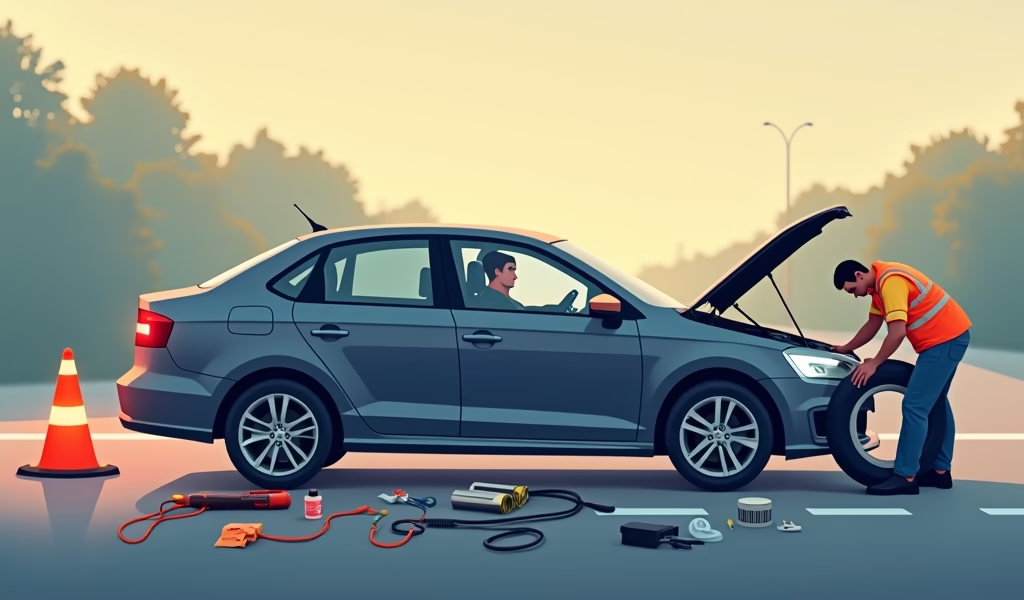
Request professional help when: you’re in an unsafe location, lack necessary tools or physical ability, have multiple flat tires, or the vehicle has severe damage. Additionally, if weather conditions are extreme or you’re unsure about proper procedures, professional assistance becomes worth every penny.
Quick Tip: Program your roadside assistance number as a favorite contact in your phone, and keep your membership number in your wallet. Stress and emergencies make remembering details difficult.
Roadside assistance programs vary widely in coverage, response time, and cost. Compare options from your auto insurance provider, vehicle manufacturer, automobile clubs like AAA, credit card benefits, and even cellular service providers.
Consider factors beyond just cost: service area coverage, towing distance limits, frequency of service calls allowed, and additional benefits like trip interruption coverage or rental car discounts. The cheapest option isn’t always the best when you’re stranded 100 miles from home.
Create an emergency contact list including roadside assistance information, trusted local mechanic, family members who could help, your insurance agent, and local transportation options. Store this both in your phone and on paper in your vehicle.
Cost Comparison: Prevention vs. Emergency Repairs
The financial math couldn’t be clearer: prevention wins every time. Let’s compare the costs with real numbers that illustrate why emergency response procedures should be your last resort, not your maintenance strategy.
Routine maintenance costs are predictable and manageable:
- Oil changes: $40-90 every 5,000-10,000 miles
- Tire rotations: $20-50 every 5,000-8,000 miles
- Coolant flush: $100-150 every 30,000-60,000 miles
- Brake pad replacement: $150-300 per axle every 30,000-70,000 miles
- Timing belt replacement: $500-1,000 every 60,000-100,000 miles
Emergency repairs come with premium pricing that can devastate budgets:
- Roadside tire change (service only): $75-125
- Towing: $75-125 base fee plus $2-4 per mile
- After-hours emergency labor rates: Often 1.5-2x standard rates
- Engine replacement due to overheating: $3,500-7,000
- Transmission replacement: $2,500-6,000
Quick Tip: The hidden costs of breakdowns extend beyond repair bills. Factor in lost wages from missed work (national average $27/hour), accommodations if stranded overnight ($100-250), and rental car expenses ($50-100/day).
A single major breakdown often costs more than an entire year of preventative maintenance. According to Consumer Reports’ research, vehicles maintained on schedule typically require fewer repairs and have longer useful lives, resulting in lower total ownership costs.
Beyond roadside assistance coverage, review how your auto insurance handles breakdown-related expenses. Check towing coverage limits, rental reimbursement coverage, trip interruption benefits, and coverage for damaged personal property during breakdowns.
Conclusion
Emergency response procedures are vital knowledge for every driver, but they represent your last line of defense, not your maintenance strategy. By recognizing warning signs early, maintaining a proper emergency kit, understanding basic response procedures, and prioritizing preventive maintenance, you can avoid most costly roadside emergencies entirely.
Remember that prevention isn’t just about saving money—though the financial case is compelling. It’s about safety, reliability, and peace of mind. No emergency procedure, no matter how well executed, can match the security of preventing the emergency in the first place.
Your vehicle is a complex machine that communicates its needs through sounds, performance changes, and warning lights. Learning this language and responding appropriately is the most effective emergency procedure of all. Drive safely, maintain regularly, and prepare thoroughly—your wallet and your future self will thank you.
Frequently Asked Questions
What should I do first if my car breaks down on a busy highway?
Safety comes first—activate hazard lights and move your vehicle completely off the road if possible. If you can’t exit the vehicle safely, remain buckled inside with hazards on and call for assistance.
How often should I check my emergency kit supplies?
Inspect your emergency kit at least twice yearly, typically before winter and summer. Replace expired items, check battery-powered devices, and update any contact information.
Can I drive on a spare tire for an extended period?
Temporary “donut” spares are designed only for short distances (under 70 miles) at reduced speeds (under 50 mph). Replace with a proper tire as soon as possible to avoid damage to your vehicle’s differential and transmission.
What’s the most common cause of roadside breakdowns?
Battery issues remain the leading cause of roadside assistance calls, followed by tire problems. Regular battery testing and tire inspections can prevent the majority of these incidents.
Is it worth paying for premium roadside assistance coverage?
Enhanced roadside coverage is typically worth the additional cost if you: drive an older vehicle, travel frequently, drive in remote areas, or have limited mechanical knowledge. The expanded towing distance alone often justifies the premium.