
Overview
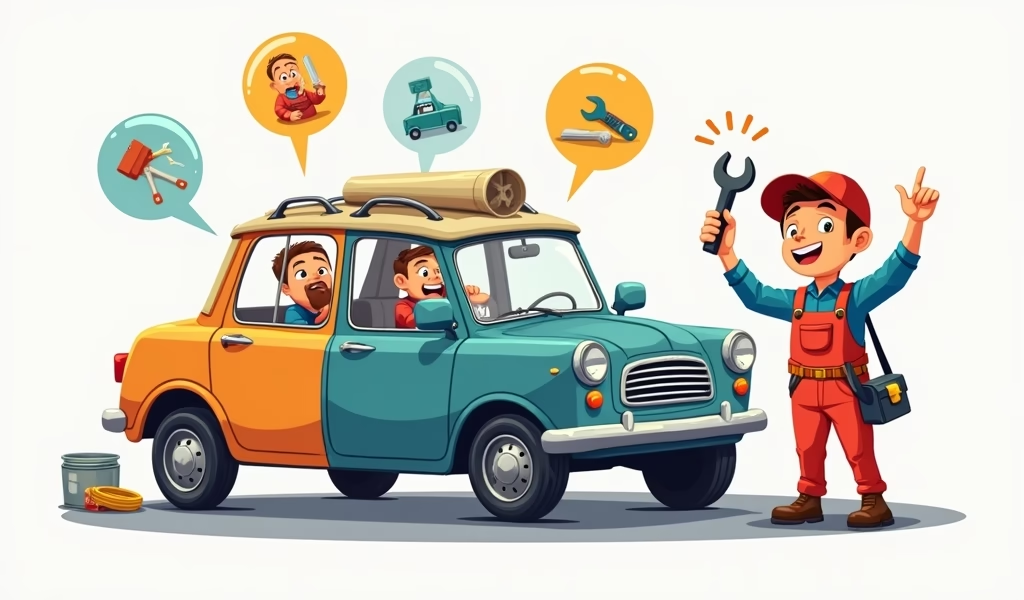
Like Mike who faced a $2,500 repair bill that a simple $150 inspection could have prevented, drivers who neglect regular maintenance end up spending $60 billion annually on avoidable vehicle repairs. This comprehensive guide empowers vehicle owners with practical knowledge about maintenance schedules, critical systems, warning signs, and cost-saving strategies that can save the average driver $1,200 annually while extending vehicle lifespan by 50-100,000 miles.
Table of Contents
- Why Customer Education Matters
- The True Cost of Neglect
- Understanding Your Vehicle’s Maintenance Needs
- Critical Vehicle Systems
- Creating Your Maintenance Schedule
- Cost-Saving Strategies
- Warning Signs You Shouldn’t Ignore
- Maintenance Myths Debunked
- Conclusion
- Frequently Asked Questions
Why Customer Education Matters
Let me tell you about Mike. He pulled into our service bay last month with his 2018 sedan making a sound no car should ever make – that unmistakable metal-on-metal grinding that makes mechanics wince. After a quick look, we discovered his water pump had completely failed, causing his engine to overheat and warp the cylinder head.
The repair bill? $2,500. The kicker? A simple $150 cooling system inspection could have caught the failing pump before it turned into a mechanical disaster.
Mike’s story isn’t unusual in my 20 years turning wrenches. According to the Car Care Council, Americans spend over $60 billion annually on vehicle repairs that proper maintenance could have prevented. That’s not just money – it’s stress, inconvenience, and time that impacts millions of drivers.
This is exactly why our customer education program exists. Knowledge isn’t just power – it’s savings. Understanding your vehicle’s needs isn’t complicated once someone takes the time to explain it properly. Think of this guide as your roadmap to avoiding those painful, expensive repairs that nobody wants to pay for.
The True Cost of Neglect
The math of vehicle maintenance is surprisingly simple: small, regular investments prevent massive, unexpected expenses. That $30 oil change you’ve been putting off? Skip it long enough and you’re looking at a $4,000 engine replacement. Those squeaky brakes? Ignore them until they’re grinding and your $200 pad replacement becomes a $600 rotor repair (or worse).
I’ve seen customers literally save thousands by following basic maintenance schedules. One customer, Sarah, religiously followed her maintenance schedule for 15 years and put 325,000 miles on her sedan before finally trading it in – with its original engine and transmission still running smoothly.
Compare that to her neighbor who bought the same model, skipped maintenance, and needed a complete transmission rebuild at 120,000 miles. The difference? About $3,500 and a whole lot of headaches.
But it’s not just about money. It’s about reliability. It’s knowing your vehicle won’t leave you stranded on a dark highway or during that important job interview. It’s the peace of mind that comes from understanding what your car needs and when it needs it.
Understanding Your Vehicle’s Maintenance Needs
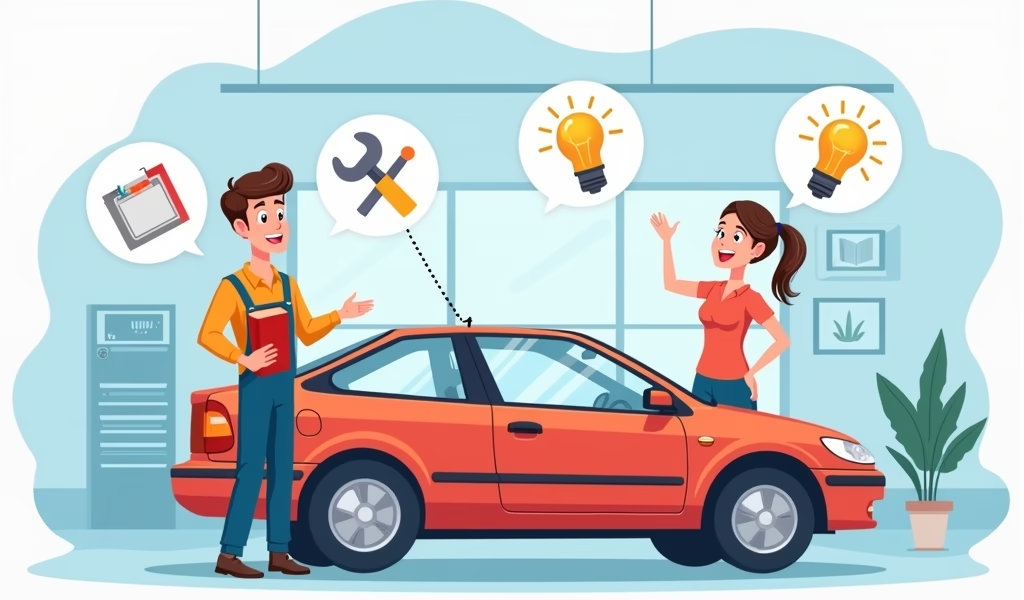
That thick book tucked away in your glove compartment isn’t just taking up space – it’s the definitive guide to your vehicle’s specific needs. I’m always surprised by how many customers have never cracked open their owner’s manual, which contains maintenance schedules tailored specifically to their exact model.
Your manual tells you exactly what your vehicle needs and when it needs it. Different vehicles have different requirements – what works for your neighbor’s truck might not be right for your sedan. The manual also contains fluid specifications, warning light explanations, and recommended service intervals that manufacturers have specifically designed for your car’s optimal performance.
Modern vehicles are essentially computers on wheels, designed to tell you when something’s wrong. Those dashboard lights aren’t just pretty decorations – they’re your car’s way of communicating. Learning car diagnostics can help you understand what your vehicle is trying to tell you before small problems become major repairs.
Your car also communicates through changed driving characteristics, new noises, vibrations, or smells. Pay attention to these subtle signals – they’re often your first warning that something needs attention.
Critical Vehicle Systems
Let’s break down the systems that need regular attention to keep your vehicle running smoothly and prevent those costly repairs:
Engine Oil System
Oil is your engine’s lifeblood. It lubricates, cools, and cleans moving parts. Without proper oil maintenance, these components experience excessive friction and heat, leading to premature failure.
Watch for warning signs like dark, dirty oil on the dipstick, low oil pressure warnings, the engine running louder than normal, or burning oil smells. These are all cries for help from your engine.
Most modern vehicles need oil changes every 5,000-10,000 miles, but this varies by manufacturer. Synthetic oils typically allow longer intervals but cost more upfront – though the protection they offer often justifies the expense.
Brake System
Your brake system includes pads, rotors, calipers, fluid, and lines – all critical for your safety. There’s no system where maintenance matters more.
Warning signs include squealing or grinding noises, vibration during braking, a soft or spongy brake pedal, or your vehicle pulling to one side when braking. Address these immediately – your safety depends on it.
Brake pads typically last 30,000-70,000 miles, depending on driving habits and conditions. Have brake fluid flushed every 2-3 years to prevent moisture accumulation. And please, address squealing brakes promptly – waiting until you hear grinding means you’ve already caused rotor damage that could have been avoided.
Cooling System
Your cooling system prevents your engine from self-destructing due to excessive heat. Components include the radiator, water pump, thermostat, hoses, and coolant.
Watch for temperature gauge readings running high, steam from under the hood, sweet smells (leaking coolant), or engine performance issues. These are all red flags that require immediate attention.
For maintenance, flush and replace coolant every 30,000-60,000 miles. Inspect hoses and the radiator cap annually. Replace the water pump when changing the timing belt (if applicable) – it’s relatively inexpensive when done as part of that service, but much more costly if it fails separately.
Timing Belt/Chain
Many engines use a timing belt or chain to synchronize the crankshaft and camshaft rotation. Failure can be catastrophic – and I mean “engine-destroying” catastrophic.
Timing belts typically require replacement every 60,000-100,000 miles (check your manual for specifics), while chains may last the vehicle’s lifetime but should be inspected regularly. This service typically costs $500-1,000, which might seem expensive until you consider that if it breaks, engine damage can exceed $2,500 and potentially require a complete engine replacement costing $3,000-5,000.
Creating Your Maintenance Schedule
One of the best ways to avoid costly repairs is to create a maintenance calendar based on your specific vehicle’s needs. Start with your owner’s manual to build a master schedule of required services based on both mileage and time intervals.
Remember that severe driving conditions (extreme temperatures, short trips, heavy loads) may require more frequent service. Most people don’t realize they qualify as “severe service” drivers in the manual’s definition – short commutes, stop-and-go traffic, and extreme weather all count.
Several smartphone apps can help track maintenance history and send reminders when service is due. Many modern vehicles also include built-in maintenance reminder systems that alert you based on actual driving conditions rather than just mileage.
Maintaining detailed maintenance records helps provide proof of care if warranty issues arise, increases resale value, identifies potential recurring issues, and helps you plan for upcoming expenses. A simple notebook in your glove box works, but digital records are even better.
Cost-Saving Strategies
Scheduled maintenance typically costs 25-30% less than reactive repairs. For example, regular transmission fluid changes ($150-200) can prevent a $3,000-4,000 transmission replacement. That’s not just savings – that’s smart money management.
Consider your comfort level, available tools, and time when deciding what to handle yourself. Simple tasks like air filter replacement, wiper blade changes, and fluid top-offs can save money with minimal risk. Learning basic car maintenance can save you hundreds of dollars annually.
Finding a trustworthy service provider is perhaps your best cost-saving strategy. Look for ASE-certified technicians, transparent explanations of recommended services, willingness to show you worn parts, facilities that specialize in your vehicle make, and positive reviews specifically mentioning honesty.
Learn to differentiate between necessary maintenance, recommended services, and pure profit-padding. Always ask: Is this safety-critical? What happens if I delay this service? Can you show me the problem? Is this in line with my manufacturer’s recommendations?
Before approving any significant repair, it’s worth getting a second opinion. Many shops offer free inspections, and that small investment of time could save you hundreds. Understanding your car warranty terms can also help you avoid paying for repairs that might be covered.
Warning Signs You Shouldn’t Ignore
Some warning signs demand immediate attention. Never ignore these dashboard warnings:
- Check Engine light (especially if flashing)
- Oil pressure warning
- Temperature warning
- Brake system alerts
- Airbag or safety system warnings
Similarly, stop driving and seek help if you experience grinding or metal-on-metal sounds, burning smells, steering pull or difficulty, brake performance changes, or excessive vibration. These symptoms often indicate problems that will quickly escalate if ignored.
According to the National Highway Traffic Safety Administration, proper tire maintenance alone could prevent thousands of crashes annually. Check your tire pressure monthly and inspect tread depth regularly – your tires are your only connection to the road.
Keep a basic emergency kit including jumper cables, basic tools, flashlight, and contact information for roadside assistance. Know when a problem warrants towing rather than driving to prevent further damage. The cost of a tow is insignificant compared to the potential damage from driving a malfunctioning vehicle.
Maintenance Myths Debunked
Let’s clear up some common misconceptions that cost drivers money:
- “If it ain’t broke, don’t fix it” – Preventative maintenance prevents things from breaking in the first place, and at a fraction of the cost.
- “I need to change my oil every 3,000 miles” – Most modern vehicles can go 5,000-10,000 miles between oil changes. Check your manual for specifics.
- “Lifetime fluids never need changing” – No fluid truly lasts forever. “Lifetime” usually means the expected lifetime of the component, not the vehicle.
- “All maintenance recommendations are just upsells” – While some shops do upsell unnecessary services, most manufacturer-recommended maintenance is designed to protect your vehicle and prevent costly failures.
- “Premium fuel makes my car run better” – Unless your vehicle specifically requires premium fuel, you’re wasting money. Use what your manual recommends.
As Consumer Reports notes, many drivers still follow outdated maintenance advice, wasting money on services their modern vehicles don’t need while missing crucial maintenance they do need.
The key is to follow your specific vehicle’s requirements, not general advice or what worked for your parents’ cars decades ago. Automotive technology has evolved dramatically, and maintenance needs have changed accordingly.
Conclusion
Understanding your vehicle’s needs isn’t just about avoiding repair bills – it’s about reliability, safety, and peace of mind. The average driver who follows manufacturer-recommended maintenance schedules saves about $1,200 annually in repair costs while extending their vehicle’s lifespan by 50-100,000 miles.
Our customer education program is designed to empower you with knowledge that translates directly into savings. We believe an educated driver is a driver who spends less on repairs, experiences fewer breakdowns, and enjoys their vehicle for many more miles.
Remember Mike from the beginning of our story? After his expensive repair, he became one of our most diligent maintenance customers. Two years later, he estimates he’s saved over $1,800 by addressing small issues before they became major problems.
Your vehicle is one of your largest investments. Protecting it with knowledge and proper care delivers returns far beyond the modest cost of maintenance. That’s not just smart car ownership – it’s smart money management.
Frequently Asked Questions
What exactly is a customer education program for car maintenance?
A customer education program teaches vehicle owners about necessary maintenance, warning signs, and how to avoid costly repairs. It empowers drivers with knowledge to make informed decisions about their vehicle’s care.
How much money can proper vehicle maintenance save me?
Regular maintenance typically saves the average driver about $1,200 annually in repair costs. Additionally, it extends vehicle lifespan by 50-100,000 miles, providing significant long-term value.
What maintenance tasks can beginners safely perform themselves?
Beginners can safely handle air filter replacement, wiper blade installation, fluid level checks, and tire pressure monitoring. These simple tasks can save money while building confidence.
How do I know if a mechanic is recommending necessary services or just upselling?
Ask if the service appears in your owner’s manual and request to see the worn/damaged parts. Reputable shops will explain why the service is needed and show you evidence of the issue.
What’s the most important maintenance task that people commonly overlook?
Fluid maintenance beyond just oil changes is frequently overlooked, especially transmission fluid, brake fluid, and coolant. These fluids degrade over time and their neglect can lead to the most expensive repairs.