

Overview
Just like deciphering a foreign language, understanding car repair estimates requires knowing the difference between necessary work and potential upselling, which this guide illuminates through practical steps for getting accurate quotes, recognizing warning signs, and effectively handling unexpected costs. Beyond just avoiding sticker shock, the article empowers vehicle owners to take control of their repair experience by building relationships with trustworthy mechanics, documenting everything, and creating financial buffers for inevitable maintenance needs.
Table of Contents
- Understanding Repair Estimates: What Are You Really Looking At?
- Why Accuracy Matters: Beyond the Numbers
- Common Causes of Estimate Inaccuracies
- Warning Signs: When to Question an Estimate
- Getting Accurate Estimates: A Step-by-Step Guide
- Dealing with Surprises: When Costs Exceed Estimates
- How to Protect Yourself: Practical Tips
- Conclusion: Taking Control of Your Car Repairs
- Frequently Asked Questions
Understanding Repair Estimates: What Are You Really Looking At?
When that piece of paper with numbers lands in your hand at the repair shop, it’s much more than just a price tag. A repair estimate is essentially a roadmap of what’s about to happen to your vehicle—and your wallet.
In my 20 years as a mechanic, I’ve written thousands of these estimates, and I can tell you they’re part science, part educated guess. Every good estimate breaks down into key components: parts, labor, shop supplies, and taxes. The parts section should list specific components being replaced, while labor indicates how many hours the job should take (based on industry-standard labor guides).
Most states have laws requiring written estimates before work begins. These consumer protection measures typically prevent shops from charging more than 10% above the original estimate without your explicit approval. It’s one of those regulations that exists because, well, it needed to.
There are generally two types of estimates you’ll encounter:
- Quick estimates: Given after a visual inspection
- Diagnostic estimates: More detailed, provided after testing and deeper inspection
That second type is almost always more accurate—which brings us to our next point.
Why Accuracy Matters: Beyond the Numbers

Accurate estimates aren’t just nice to have—they’re essential for your financial wellbeing. When estimates are off by hundreds (sometimes thousands) of dollars, it can derail budgets, force difficult decisions, or leave you stranded without transportation.
I’ve seen customers forced to leave their cars at the shop for weeks while they scrambled to find additional funds for unexpected repairs. That’s not a position anyone wants to be in.
Beyond the immediate financial impact, estimate accuracy builds trust. When a shop consistently hits the mark with their estimates, you develop confidence in their assessment and recommendations. This relationship can save you significant money over your car’s lifetime by enabling preventative maintenance rather than catastrophic repairs.
Think of repair estimate accuracy as the foundation of your relationship with your mechanic. Without it, every interaction becomes a potential conflict waiting to happen.
Common Causes of Estimate Inaccuracies
Even the most honest mechanics sometimes miss the mark on estimates. Here’s why that happens:
Limited initial inspection. Cars are complex puzzles with interconnected systems. Sometimes we can’t see the full picture until we start taking things apart. It’s like a doctor who suspects appendicitis but can’t confirm until surgery begins.
Cascading failures. One failing part often damages others. A broken timing belt can bend valves, a leaking water pump might damage an alternator below it, or a simple oil leak can toast a starter motor. These domino effects are impossible to predict with 100% accuracy.
Parts pricing fluctuations. In today’s world of supply chain challenges, parts prices can change between estimate and repair. I’ve had parts increase 30% in price between Monday (when I wrote the estimate) and Wednesday (when I ordered the part).
Labor complications. Ever tried removing a 15-year-old bolt from a vehicle that’s spent its life in the salt belt? What should take 10 minutes can sometimes take two hours. Labor guides assume ideal conditions that rarely exist in real-world repairs.
Diagnostic limitations. Some problems simply don’t reveal themselves until repair work begins. A thorough diagnostic check helps, but it’s not foolproof.
The best shops account for these variables by providing range estimates or clearly communicating potential additional costs before work begins.
Warning Signs: When to Question an Estimate
Not all estimate discrepancies are innocent. Here are red flags that should make you pause:
- Suspiciously low initial estimates (the infamous “bait and switch”)
- Vague line items like “miscellaneous parts” without specifics
- Labor times significantly higher than industry standards
- Parts prices marked up 200-300% above retail
- Sudden “discoveries” of catastrophic problems after you’ve authorized minor work
- Resistance to showing you removed parts or explaining additional charges
I once had a customer come to me for a second opinion after another shop quoted $2,800 for a “complete brake job.” Their estimate included four rotors, four calipers, brake lines, and a master cylinder. After inspection, the vehicle only needed front pads and rotors—a $450 job. This kind of dramatic upselling happens more often than you might think.
If something feels off, trust your instinct and get a second opinion. Reputable shops welcome this practice and stand behind their assessments. According to Consumer Reports, getting multiple estimates on major repairs can save consumers an average of 20% on repair costs.
Getting Accurate Estimates: A Step-by-Step Guide
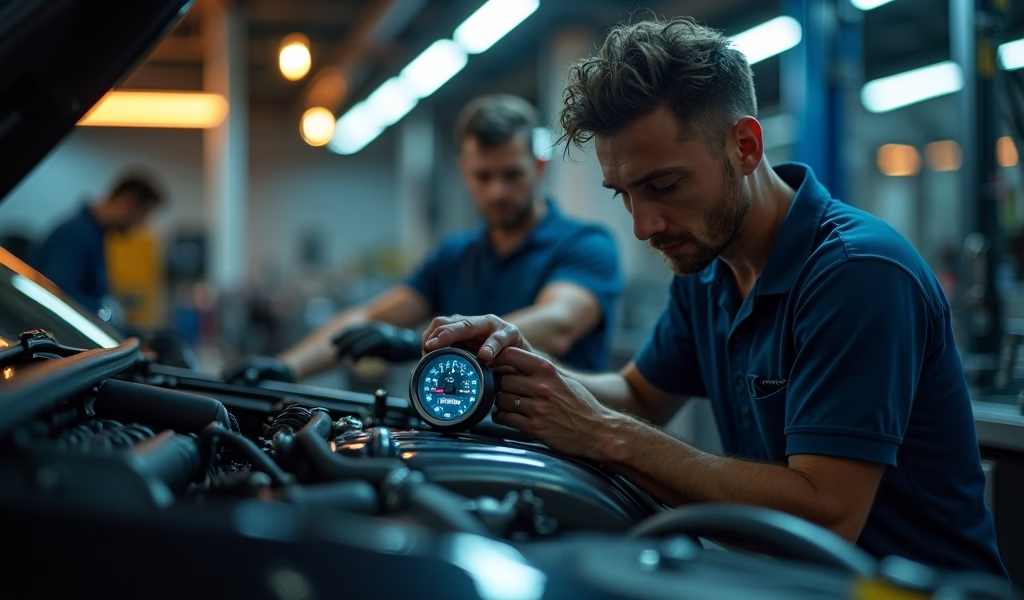
Want to improve your chances of getting an accurate estimate? Follow these mechanic-approved steps:
1. Be specific about symptoms
Don’t just say “it’s making a noise.” Describe when the noise occurs (during acceleration, turning, braking), what type of noise it is (grinding, tapping, squealing), and when you first noticed it. These details help us pinpoint the issue without costly exploratory work.
2. Ask for a diagnostic service first
For complex issues, request a diagnostic service before authorizing repairs. Yes, it might cost $100-150 upfront, but this thorough inspection leads to more accurate estimates and can save hundreds in unnecessary repairs.
3. Request itemized estimates
Every estimate should break down:
- Each part with individual pricing
- Labor hours and rate
- Additional shop supplies or fees
- Taxes and disposal fees
4. Clarify part types
Ask whether quoted parts are OEM (original manufacturer), aftermarket (third-party), or remanufactured. Each has different pricing and quality implications. For instance, an OEM Toyota water pump might cost twice as much as an aftermarket version but last three times longer.
5. Get multiple estimates for major repairs
For repairs exceeding $500, getting 2-3 estimates is well worth your time. Be sure to share the same symptoms and concerns with each shop for comparable quotes. Consider utilizing virtual inspection services to save time if you’re comparing multiple shops.
6. Leverage technology
Use resources like RepairPal or YourMechanic to check if estimates fall within reasonable ranges for your vehicle and location. These online tools provide ballpark figures based on millions of actual repairs.
7. Ask the right questions
Before authorizing work, ask:
- What might you discover once work begins that could change this estimate?
- How will you contact me if additional work is needed?
- What warranties come with this repair?
- What related components might need attention soon?
These conversations set proper expectations and demonstrate that you’re an informed customer who values transparency.
Dealing with Surprises: When Costs Exceed Estimates
Even with the best preparation, surprises happen. When you’re facing a bill higher than expected, take these steps:
Stay calm and ask questions. Request a detailed explanation of why costs increased. Most reputable mechanics can show you the unexpected issues they encountered.
Request visual evidence. Ask to see the additional damaged parts or problems discovered. In today’s digital world, many shops take photos during repairs specifically for this purpose.
Know your rights. In most states, repair shops must contact you for approval before exceeding the estimate by more than 10%. If they didn’t, politely mention this requirement.
Negotiate reasonably. If additional work was legitimately needed but you weren’t properly consulted, many shop managers will meet you halfway on the unexpected costs.
Consider financing options. Many repair shops now offer payment plans or financing through third parties. While not ideal, these options can help manage unexpected costs without compromising on necessary repairs.
Remember that not all estimate discrepancies indicate dishonesty. Sometimes they reflect the complex, unpredictable nature of automotive repair. The American Automobile Association notes that communication breakdowns, not dishonesty, cause most repair disputes.
How to Protect Yourself: Practical Tips
Beyond getting accurate estimates, here are strategies to protect yourself from repair surprises:
Build a maintenance fund. Set aside a small amount monthly (aim for 1% of your vehicle’s value) specifically for repairs and maintenance. This creates a financial buffer for unexpected costs.
Get familiar with your vehicle’s maintenance schedule. Manufacturer-recommended service intervals aren’t suggestions—they’re engineered necessities. Following them prevents many costly repairs.
Learn to prioritize repairs. Not all repairs need immediate attention. Safety items (brakes, steering, tires) should never be postponed, but some repairs can be scheduled strategically to spread out costs. Finding affordable car repair options starts with understanding what needs immediate attention versus what can wait.
Document everything. Keep all estimates, invoices, and records of conversations with repair shops. These become invaluable if disputes arise.
Consider pre-purchase inspections when buying used. Spending $150 on a thorough inspection before buying a used car can save thousands in unexpected repairs.
Develop a relationship with a trusted shop. Loyalty works both ways. When you’re a regular customer, reputable shops often go the extra mile in terms of accurate estimates, priority scheduling, and occasional courtesies.
Learn basic diagnostic skills. Understanding how to describe problems accurately and knowing the difference between normal and abnormal vehicle behavior can significantly improve estimate accuracy.
According to a study from J.D. Power, customers who report high satisfaction with repair experiences cite clear explanations of work and transparent pricing as the top factors in their positive experiences.
Conclusion: Taking Control of Your Car Repairs
Repair estimate accuracy isn’t just about avoiding sticker shock—it’s about taking control of your vehicle ownership experience. When you understand how estimates work and why they sometimes miss the mark, you transform from a passive recipient of repair services into an active, informed consumer.
The best approach combines finding a trustworthy repair facility with developing your own knowledge. A good mechanic welcomes your questions and appreciates your interest in understanding the repair process. After all, educated customers tend to maintain their vehicles better, which makes our jobs easier in the long run.
Remember that perfect estimate accuracy isn’t always possible given the complex nature of modern vehicles. However, reasonable accuracy, transparent communication, and professional integrity should be your minimum expectations from any repair facility.
By implementing the strategies outlined in this guide, you’ll be better positioned to manage repair costs, build a productive relationship with your mechanic, and keep your vehicle running smoothly for years to come.
Your wallet—and your future self—will thank you.
Frequently Asked Questions
How much can a final bill legally exceed the written estimate?
In most states, repair shops cannot exceed written estimates by more than 10% without your explicit authorization. Some states have stricter requirements or different percentages, so check your local consumer protection laws.
Should I always choose the lowest estimate?
No, the lowest estimate often excludes necessary work or uses inferior parts. Focus on value—the best combination of quality parts, proper labor time, reasonable warranty, and fair pricing.
Can I provide my own parts to save money?
Many shops allow this but won’t warranty the repair if the part fails. Some shops refuse customer-supplied parts due to liability concerns or because they can’t verify quality.
What’s the difference between OEM and aftermarket parts?
OEM (Original Equipment Manufacturer) parts are made by or for your vehicle’s manufacturer and are identical to what came on your car. Aftermarket parts are made by third parties and may vary in quality and price.
How often should repair estimates be updated?
Estimates should generally be considered valid for about 30 days, assuming no change in the vehicle’s condition. After that, parts prices, labor rates, or the vehicle’s condition may have changed enough to warrant a revised estimate.