

Overview
That seemingly insignificant hood latch on your car is actually a critical safety system requiring regular maintenance to prevent the terrifying scenario of your hood flying open while driving. The article provides a complete guide to identifying warning signs of failure, performing DIY inspections, understanding repair options ranging from simple lubrication to complete replacement, and implementing preventative maintenance that can save you hundreds in repair costs while keeping you safe on the road.
Table of Contents
- Understanding Hood Locks: What They Are and Why They Matter
- Warning Signs Your Hood Lock Is Failing
- Common Causes of Hood Lock Mechanism Failures
- DIY Inspection: How to Check Your Hood Latch
- Repair Options: From DIY to Professional Help
- Cost-Saving Tips Without Compromising Safety
- Preventative Maintenance to Extend Hood Lock Life
- Emergency Tips: What to Do If Your Hood Opens While Driving
- Conclusion
- Frequently Asked Questions
Understanding Hood Locks: What They Are and Why They Matter
The humble hood lock mechanism is one of those car components we rarely think about—until it fails. As a mechanic with 15 years of experience, I’ve seen firsthand how this seemingly minor part can create major headaches when it stops working properly.
Your vehicle’s hood lock isn’t just a simple latch. It’s actually an integrated safety system designed with multiple components working together. Most cars feature a two-stage locking mechanism: the primary latch you release with the interior lever, and a secondary safety catch that prevents the hood from flying open if the main latch fails.
The entire assembly typically includes a release cable, springs, the latch mechanism itself, and a striker plate mounted to the hood. When functioning properly, these components work in harmony to keep your hood securely closed while driving and allow easy access when needed.
Why does this matter so much? A failing hood lock creates a dangerous situation where your hood could unexpectedly open while driving—potentially blocking your vision entirely and causing an accident. According to the National Highway Traffic Safety Administration, hood-related incidents contribute to hundreds of accidents annually, many resulting from improperly maintained latch systems.
Beyond safety, a properly working hood lock also protects your engine compartment from theft and environmental damage. It’s one of those essential maintenance items for beginners that’s easy to overlook but critical to address.
Warning Signs Your Hood Lock Is Failing
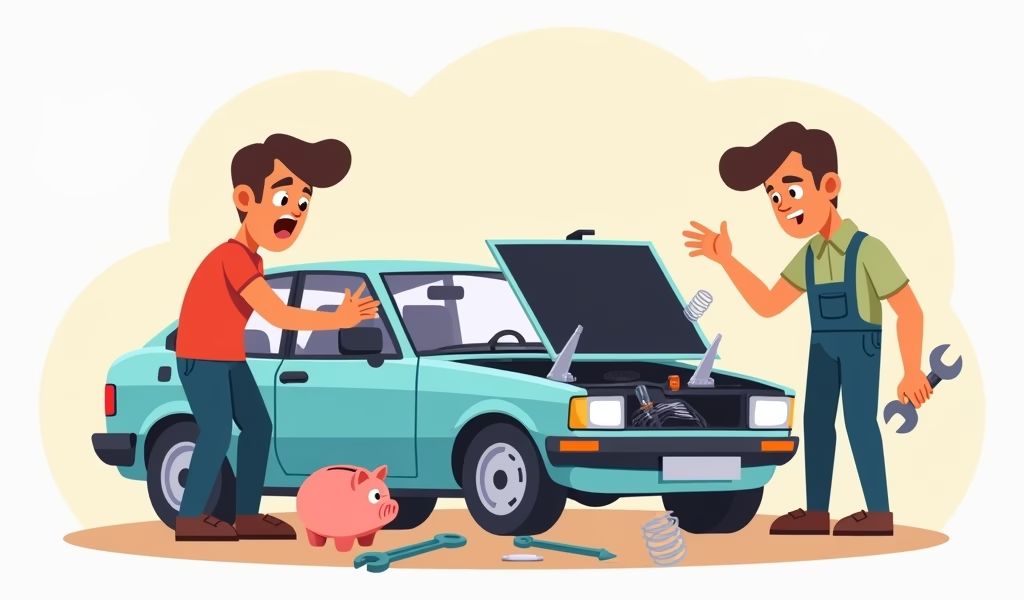
Catching hood latch problems early can save you from roadside emergencies and costly repairs. Here are the telltale signs to watch for:
- Difficulty opening or closing your hood—if you’re struggling with the release lever or the hood doesn’t latch smoothly, something’s amiss
- Unusual noises when operating the hood, like grinding, clicking, or scraping sounds
- A hood that bounces excessively when driving over bumps
- Visible rust or corrosion on latch components
- A loose or “soft” feeling when the hood is closed
- The interior release lever feeling unusually tight or too slack
- Your hood not sitting flush with surrounding bodywork
My customer Tom ignored his increasingly stiff hood release for months. By the time he brought his sedan in, the mechanism had corroded so badly that the secondary catch was completely inoperable—a disaster waiting to happen on his daily highway commute.
Don’t wait until you’re staring through your windshield at an open hood. These warning signs rarely resolve themselves and typically worsen over time. A quick inspection now can prevent an emergency later.
Common Causes of Hood Lock Mechanism Failures
Hood lock mechanisms don’t typically fail without reason. Understanding these common culprits can help you prevent issues before they start:
Environmental Exposure
The hood latch lives in a harsh environment. Positioned at the front of your vehicle, it’s constantly bombarded with road grime, water, salt, and debris. Over time, this exposure leads to corrosion—the number one enemy of your latch system.
Vehicles in coastal areas or regions that use road salt in winter are particularly vulnerable. I’ve seen three-year-old vehicles with latches so corroded they needed complete replacement, while the same model in drier climates might go 15+ years without issues.
Lack of Lubrication
Your hood latch contains moving parts that need proper lubrication to function smoothly. Without it, metal-on-metal contact creates friction, accelerating wear and eventually leading to component failure.
This is one of the easiest problems to prevent through regular maintenance, yet I see it neglected on most vehicles that come into my shop.
Cable Issues
The release cable connecting your interior lever to the latch mechanism can stretch, fray, or snap over time. Cable problems typically cause a situation where the interior lever feels loose or disconnected, or the hood won’t release when you pull the lever.
Misalignment
Even minor fender benders or bumper damage can throw off your hood latch alignment. When components don’t line up properly, they create unusual stress points that accelerate wear. You might notice your hood sitting unevenly or requiring extra force to close completely.
Manufacturing Defects
Some vehicles have known issues with their hood latch designs. For instance, certain Ford models manufactured between 2012-2014 had a recall for hood latch problems that could allow the hood to open unexpectedly. Always check if your vehicle has any outstanding recalls related to the hood latch system.
DIY Inspection: How to Check Your Hood Latch
You don’t need to be a certified mechanic to perform a basic hood latch inspection. Here’s a simple process I recommend to my customers between service visits:
- With the engine cool, open your hood and secure it with the prop rod
- Examine the latch mechanism for visible rust, damage, or excessive dirt buildup
- Check that all mounting bolts are tight and the assembly is firmly attached
- Look for fraying or damage on the visible portion of the release cable
- Test the secondary safety catch by having someone gently pull the interior release while you observe the latch movement
- Verify that the striker plate on the hood aligns properly with the latch
- Close the hood gently to confirm smooth operation of the latch
During your inspection, pay special attention to spring tension. A properly functioning latch should have strong resistance when you manually move the latch components. If the springs feel weak or the movement seems loose, that’s a red flag.
Remember that your secondary safety catch is your last line of defense if the primary latch fails. If you notice any issues with this critical backup system, address them immediately—this isn’t something to postpone.
Repair Options: From DIY to Professional Help
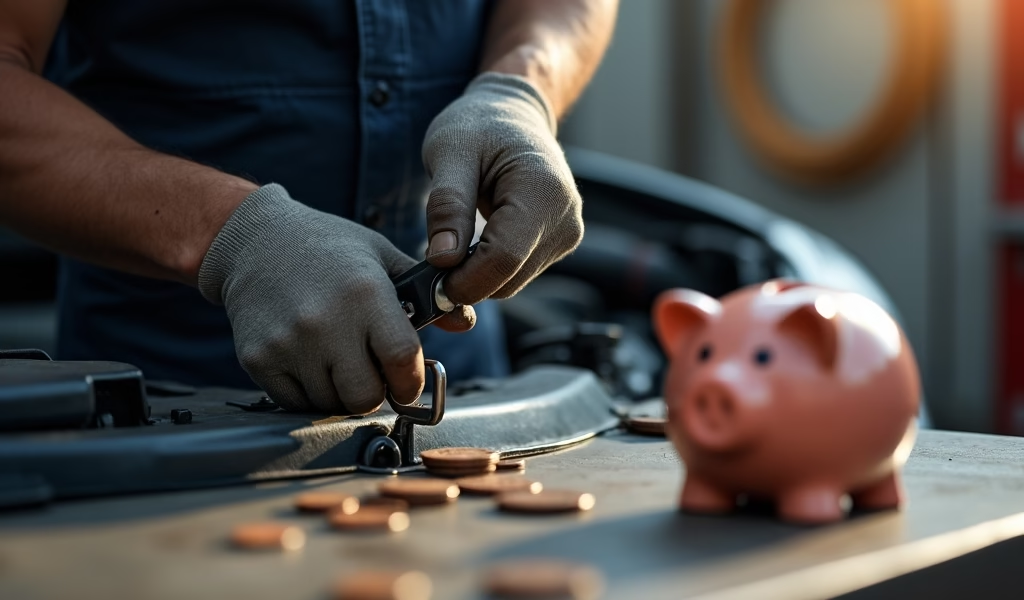
When your hood lock needs attention, you have several repair options depending on your comfort level, tools, and the specific issue at hand:
DIY Cleaning and Lubrication
For minor issues like stiffness or light corrosion, a thorough cleaning and proper lubrication often restore proper function. This is well within most car owners’ capabilities:
- Use a wire brush to gently remove surface rust and debris
- Clean the mechanism thoroughly with brake cleaner or a similar solvent
- Allow everything to dry completely
- Apply silicone spray or lithium grease to all moving parts
- Operate the latch several times to distribute the lubricant
This simple maintenance can add years to your latch’s lifespan and often resolves minor operation issues.
DIY Component Replacement
If cleaning doesn’t solve the problem, you might need to replace components. Replacing a release cable or the entire latch assembly requires moderate mechanical skills:
- Basic hand tools: socket set, screwdrivers, pliers
- Ability to follow vehicle-specific instructions
- Patience for working in tight spaces
- 1-2 hours of time depending on your vehicle
Most hood latch assemblies cost between $30-$150 depending on your vehicle make and whether you choose OEM or aftermarket parts. For many vehicles, the replacement process involves removing a few bolts and transferring the release cable to the new assembly—straightforward for those comfortable with basic car maintenance tasks.
Professional Repair
Some situations call for professional help:
- Complex vehicles with integrated alarm systems connected to the hood latch
- Situations requiring special tools or difficult access
- When multiple related components need replacement
- If you’re uncomfortable handling safety-critical repairs
A professional repair typically costs $150-$300 including parts and labor at an independent shop, potentially more at dealerships. The advantage is peace of mind knowing a safety-critical system has been properly repaired and tested.
Remember: This isn’t the place to cut corners on quality. Whether DIY or professional, use quality parts and thorough testing—your safety depends on it.
Cost-Saving Tips Without Compromising Safety
Fixing hood latch issues doesn’t have to break the bank. Here are my professional recommendations for saving money while maintaining safety:
Compare Part Options Carefully
OEM (Original Equipment Manufacturer) parts typically cost 30-50% more than quality aftermarket alternatives. For hood latches, trusted aftermarket brands like Dorman, Replacement, or ACDelco often provide comparable quality at lower prices.
Skip the bargain-basement options, though. I’ve seen $15 hood latches fail within months, while a $40-50 quality alternative might last the life of your vehicle. This isn’t the component to pinch pennies on.
Get Multiple Quotes
Labor rates vary significantly between repair facilities. Dealerships typically charge 30-50% more than independent shops for the same repair. Call around and specifically ask for quotes on hood latch replacement for your make and model.
Many shops offer free estimates. If time allows, having the vehicle physically inspected can prevent surprises, as sometimes related components need attention simultaneously.
Consider Partial DIY
If you’re comfortable with basic tools but not confident tackling the entire job, consider this hybrid approach: purchase the parts yourself (saving the markup shops typically add) and have a professional handle the installation.
Some independent mechanics are willing to install customer-supplied parts, though many dealerships won’t offer this option. Always ask about warranty coverage on installation when using this approach.
Preventative Maintenance Saves Big
The most cost-effective strategy is preventing failure in the first place. Regular cleaning and lubrication (twice yearly in harsh environments) can extend your latch’s lifespan significantly, potentially saving hundreds in premature replacement costs.
A $5 can of silicone lubricant applied regularly might postpone a $200+ repair for years. That’s a return on investment worth considering!
Preventative Maintenance to Extend Hood Lock Life
An ounce of prevention truly is worth a pound of cure when it comes to hood latches. Here’s my recommended maintenance schedule based on years in the shop:
Regular Schedule (Normal Conditions)
- Inspect visually every 3-4 months
- Clean and lubricate every 6 months
- Test secondary safety catch function quarterly
- Check alignment annually
Enhanced Schedule (Harsh Conditions)
If you live in a coastal area, region with severe winters, or dusty environment:
- Inspect visually monthly
- Clean and lubricate every 3 months
- Apply corrosion inhibitor twice yearly
- Test all functions monthly
When lubricating, use the right product. Silicone spray or white lithium grease work best as they repel moisture and don’t attract dirt. Avoid using WD-40 as your primary lubricant—it’s great for displacing moisture but evaporates relatively quickly, leaving components unprotected.
Don’t overlook your hood bumpers—those small rubber stops that the hood rests against when closed. When these wear out, your hood can sit improperly, creating misalignment that stresses the latch system. These inexpensive parts (usually $5-10 for a set) are often overlooked but play an important role in proper hood alignment.
Emergency Tips: What to Do If Your Hood Opens While Driving
Despite our best efforts, emergencies happen. If your hood suddenly opens while driving, staying calm and taking the right actions can prevent accidents. Here’s what to do:
- Don’t panic or slam on the brakes—sudden stops could cause rear-end collisions
- Immediately reduce your speed and turn on your hazard lights
- Try to look through the gap at the bottom of the hood or through your side windows to maintain some visibility
- Signal and carefully pull over to the nearest safe location
- Once stopped, secure the hood temporarily if possible using rope, bungee cords, or even a belt
I’ve had customers attempt dangerous maneuvers like reaching out the window to try grabbing the hood while still moving. Don’t do this! No repair is worth risking your safety.
After securing the vehicle, assess whether it’s safe to drive slowly to a repair facility or if you need a tow. When in doubt, choose the tow—the cost is minimal compared to potential accident damage.
Keep basic emergency supplies in your vehicle that could help secure a hood in an emergency: bungee cords, zip ties, and a basic tool kit can get you out of many roadside situations. A small investment in preparedness pays big dividends when problems arise.
Conclusion
Your vehicle’s hood lock mechanism may seem insignificant compared to engines and transmissions, but this humble component plays a crucial role in your safety on the road. Taking proactive steps to maintain and address hood latch issues isn’t just about saving money—it’s about preventing dangerous failures that could lead to accidents.
With regular inspection and maintenance, most hood latch problems can be identified early when they’re simpler and less expensive to fix. Whether you choose the DIY route or professional assistance, addressing these issues promptly protects both your wallet and your wellbeing.
Remember that while cost savings are important, safety should always be your priority when dealing with hood latch repairs. Quality parts and proper installation ensure your hood stays securely closed where it belongs—not blocking your view during critical driving moments.
By following the guidance in this article, you’re now equipped to identify problems early, make informed decisions about repairs, and properly maintain this essential safety system. Your hood latch may never be the most exciting car component, but with proper care, it will quietly do its job for the life of your vehicle.
Frequently Asked Questions
How much does it cost to replace a hood latch mechanism?
Typical costs range from $150-$300 at independent shops and $200-$400 at dealerships, including parts and labor. DIY replacement with quality aftermarket parts usually costs $40-$150 depending on your vehicle model.
Can I drive with a failing hood latch?
It’s not safe to drive with a compromised hood latch as it could open unexpectedly and block your vision. If the secondary safety catch is still functional, you might drive cautiously to a nearby repair shop, but never on highways or at high speeds.
How long does hood latch replacement take?
Professional mechanics typically complete the job in 45-90 minutes. DIY replacement might take 1-2 hours for someone with basic mechanical skills.
How often should I lubricate my hood latch?
In normal conditions, lubricate every 6 months; in harsh environments (coastal, extreme temperatures, road salt), increase to every 3 months. Always clean the mechanism thoroughly before applying fresh lubricant.
Are aftermarket hood latches as reliable as OEM parts?
Quality varies significantly among aftermarket brands. Premium aftermarket manufacturers like Dorman or ACDelco often provide comparable reliability to OEM at lower prices, while budget options may not last as long. For safety components like hood latches, choose at least mid-grade quality.