

Overview
Just like that frustrating moment when you’re clicking your remote in a parking lot with no response, most remote start systems deliver significantly less range than advertised due to physical obstructions, electronic interference, battery condition, and weather factors. Understanding these limitations—and solutions ranging from simple maintenance to smartphone-based alternatives—can prevent disappointment while maximizing your system’s performance through proper antenna positioning, battery replacement, and potentially upgrading to cellular-connected options that eliminate traditional range constraints entirely.
Table of Contents
- Understanding Remote Start Range: What to Expect
- Factors Affecting Your Remote Start Range
- Common Remote Start Range Issues and Fixes
- Extending Your Remote Start Range: Practical Solutions
- Aftermarket vs. Factory Remote Starters: Range Comparison
- Remote Start Technology: Today and Tomorrow
- Maintenance Tips for Optimal Remote Start Performance
- Conclusion
- Frequently Asked Questions
Understanding Remote Start Range: What to Expect
When it comes to remote start range, expectations and reality don’t always align. As someone who’s spent 20 years working with automotive electronics, I’ve seen countless frustrated drivers standing in parking lots repeatedly clicking their remote start fobs with no response from their vehicles. The advertised remote start range often becomes a point of contention – that “up to 1,500 feet” on the box rarely translates to real-world performance.
Remote start range refers to the maximum distance between you and your vehicle where the starter can still receive and respond to your command. Most standard factory-installed remote starters provide about 100-200 feet of range in optimal conditions, while premium aftermarket systems might reach 1,500-3,000 feet. However, these figures represent ideal scenarios – open areas with no obstructions and minimal interference.
In the real world, your remote start range is influenced by numerous factors that can drastically reduce these distances. Understanding these limitations isn’t just about convenience; it can prevent you from being stranded in cold weather or dangerous situations when your car won’t start from a distance.
Think of remote start range as similar to cell phone reception – it varies based on your environment, physical obstructions, and even weather conditions. The remote start fob transmits a radio frequency signal that must reach your vehicle’s receiver clearly enough to be interpreted correctly. Any interference along this path diminishes your effective range.
Most people discover their remote start’s true range limitations during winter when they most need the feature to warm up vehicles in freezing temperatures. This timing creates a perfect storm of frustration – cold weather already reduces battery performance in both your remote and your vehicle, while you’re simultaneously expecting maximum functionality from your system.
Factors Affecting Your Remote Start Range
Several key factors determine how far your remote start signal can effectively travel. Understanding these can help you maximize your system’s performance without unrealistic expectations.
Physical obstructions play perhaps the largest role in limiting range. Walls, buildings, large vehicles, and even crowds of people can block or weaken your remote’s signal. The radio frequency signals used by remote starters don’t easily penetrate solid objects, especially those containing metal. This explains why your remote might work perfectly in an open parking lot but fail completely inside a shopping mall.
Electronic interference is another major culprit. Our world is saturated with radio frequencies from cell phones, Wi-Fi networks, power lines, and countless other electronic devices. All these competing signals can create “noise” that drowns out your remote’s transmission. High-density urban areas typically experience more interference than rural locations, which explains why your range might seem inconsistent in different locations.
Weather conditions significantly impact performance as well. Cold temperatures reduce battery efficiency in both your remote and your vehicle’s receiving unit. Humidity and precipitation can also interfere with signal transmission. Even atmospheric conditions like heavy cloud cover can marginally affect range in some systems.
The battery status in your remote fob is a commonly overlooked factor. As batteries weaken, the transmission power gradually decreases before failing entirely. Many users experience gradually diminishing range without realizing it’s simply a battery issue. Quality matters too – premium batteries can improve performance compared to generic alternatives.
Finally, your remote start system’s quality and design make an enormous difference. Factory-installed systems prioritize security and integration over maximum range, while specialized aftermarket systems might offer significantly better range using more powerful transmitters and sensitive receivers. Antenna design, transmission power, and receiver sensitivity all factor into the equation.
Common Remote Start Range Issues and Fixes
Let’s address the most common problems that limit remote start range and the practical solutions to fix them. After diagnosing hundreds of remote start issues, I’ve found that most range problems fall into a few predictable categories.
Battery depletion in the remote fob is the most frequent and easiest issue to fix. If you notice gradually decreasing range, replace the batteries first before assuming there’s a system malfunction. Use high-quality batteries specifically recommended for your remote model. Some premium remotes use CR2032 lithium batteries rather than standard alkalines because they perform better in cold conditions and last longer.
Antenna positioning problems are another common culprit. Many systems include a small antenna wire that needs proper placement for optimal reception. If your installer tucked this wire behind metal components or bundled it with other wiring, your range could be severely compromised. The antenna should ideally be positioned high in the vehicle, away from metal objects and other electronic components. Sometimes, simply repositioning this wire can double your effective range.
Frequency interference can sometimes be addressed by changing usage habits. If you consistently have trouble at specific locations (like your workplace parking lot), try changing your position slightly or moving to a window if you’re indoors. Even a few feet of difference can sometimes improve reception dramatically if it helps avoid a particular interference source.
System component damage isn’t uncommon, especially in older installations. Water damage to receivers, broken antenna wires, or damaged connections can all reduce range. If your system previously had excellent range that suddenly diminished, professional diagnosis might be necessary. A qualified technician can test each component to identify failing parts.
For vehicles with factory-installed remote start, software updates might be available that improve performance. Check with your dealer to ensure your system is running the latest firmware, as manufacturers occasionally release updates that address range issues or improve signal processing.
Sometimes the issue relates to how you’re using the remote. Try these technique adjustments:
- Hold the remote up higher – lifting it just above head height can improve line-of-sight transmission
- Press the button for the full recommended duration (usually 2-3 seconds)
- Point the remote directly at your vehicle rather than pressing it at odd angles
- Hold the remote against your chin or head (this sounds strange but actually works as your body can act as a signal amplifier)
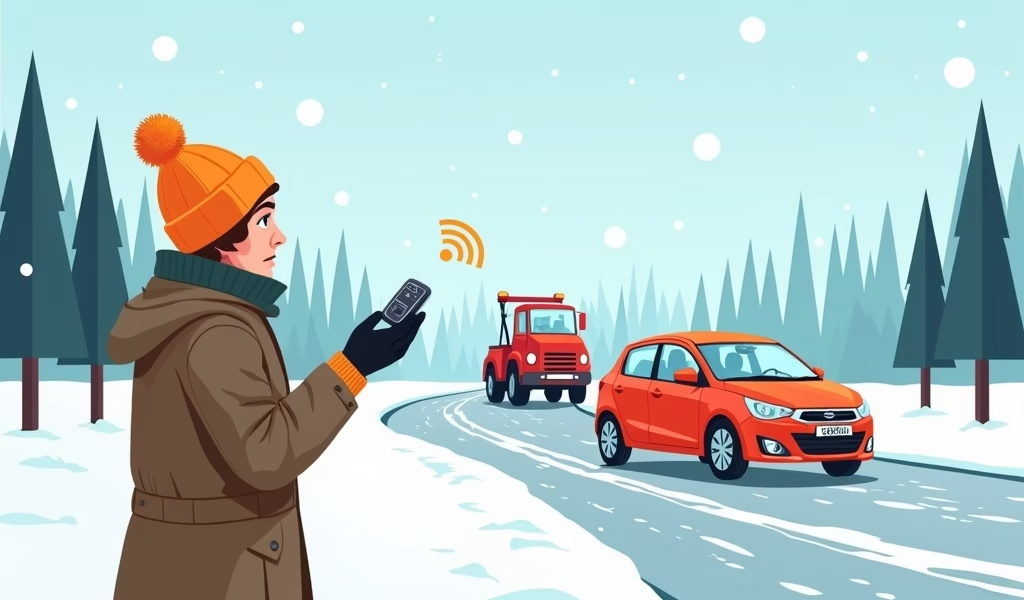
If range problems persist after trying these fixes, remote car monitoring systems with cellular connectivity might be a better solution than traditional RF remote starters. These systems use cell networks rather than direct radio transmission, effectively giving you unlimited range as long as both your phone and vehicle have cellular reception.
Extending Your Remote Start Range: Practical Solutions
If you’ve determined that your remote start range genuinely falls short of your needs, several solutions can extend it without requiring a complete system replacement.
Range extenders are dedicated devices designed to amplify your remote’s signal. These typically mount inside your vehicle and boost the original signal from your factory remote. Quality varies significantly between products, but the best models can double or triple your effective range. Installation usually requires professional help to ensure proper integration with your existing system.
Antenna upgrades represent another effective approach. Aftermarket high-gain antennas can replace stock antennas to increase reception sensitivity. This modification works particularly well for factory-installed systems where the original antenna might be designed for security rather than maximum range.
If you’re technically inclined, some DIY approaches can moderately improve range. Repositioning the existing antenna higher in the vehicle and away from metal components or other electronics can make a noticeable difference. Some users report success with simple modifications like extending the antenna wire or relocating it to the upper windshield area.
For truly significant range improvements, smartphone-based remote start systems offer the most dramatic solution. These systems connect your vehicle to cellular networks and cloud services, allowing you to start your car from virtually anywhere using a smartphone app. The range becomes limited only by cellular coverage rather than direct radio transmission distance. Popular systems like Viper SmartStart, Compustar DroneMobile, or manufacturer-specific apps like FordPass or myChevrolet effectively provide unlimited range.
When considering range extension options, always weigh the cost against the benefit. A basic range extender might cost $50-100, while a complete cellular-based system typically runs $300-600 plus installation and possible subscription fees. Consider how often you actually need extended range functionality before investing in expensive solutions.
Remember that range extension modifications may impact your vehicle warranty or remote start system warranty. Always check with both your vehicle manufacturer and remote start system provider before making modifications. Some manufacturers explicitly prohibit certain types of alterations to their systems.
Aftermarket vs. Factory Remote Starters: Range Comparison
The difference between factory-installed and aftermarket remote starters often comes down to priorities in their design philosophy. Understanding these differences helps set realistic expectations about range performance.
Factory-installed remote start systems prioritize integration and reliability over maximum range. Automobile manufacturers design these systems to work seamlessly with vehicle security, engine management, and climate control systems. They typically offer modest range (100-300 feet) but excellent reliability and zero risk of installation problems that might damage vehicle electronics.
Aftermarket systems, conversely, often emphasize maximum range and additional features. Premium aftermarket brands like Viper, Compustar, or Python frequently advertise ranges from 1,500 feet to over a mile in optimal conditions. These systems achieve greater range through more powerful transmitters, better antennas, and more sensitive receivers than factory systems typically include.
The installation quality dramatically impacts performance for both types of systems but becomes especially crucial with aftermarket options. A professionally installed aftermarket system will almost always outperform a factory system in terms of range. However, poor installation can severely limit range regardless of the system’s theoretical capabilities.
Cost considerations also differ significantly. Factory remote start typically adds $300-700 to a new vehicle’s price but integrates perfectly with all vehicle systems. Aftermarket systems range from $200 for basic models to over $1,000 for premium long-range systems with advanced features, plus installation costs of $200-500 depending on vehicle complexity. Some vehicle warranty implications may also arise with aftermarket installations.
For most users, I recommend factory remote start if you’re buying a new vehicle and the range meets your typical needs. If you require significantly better range or are adding remote start to an existing vehicle, quality aftermarket systems installed by certified professionals typically provide better performance.
Remote Start Technology: Today and Tomorrow
Remote start technology has evolved dramatically over recent years, with range limitations becoming less relevant as connectivity options expand. Understanding current technologies helps you make informed decisions about which approach best suits your needs.
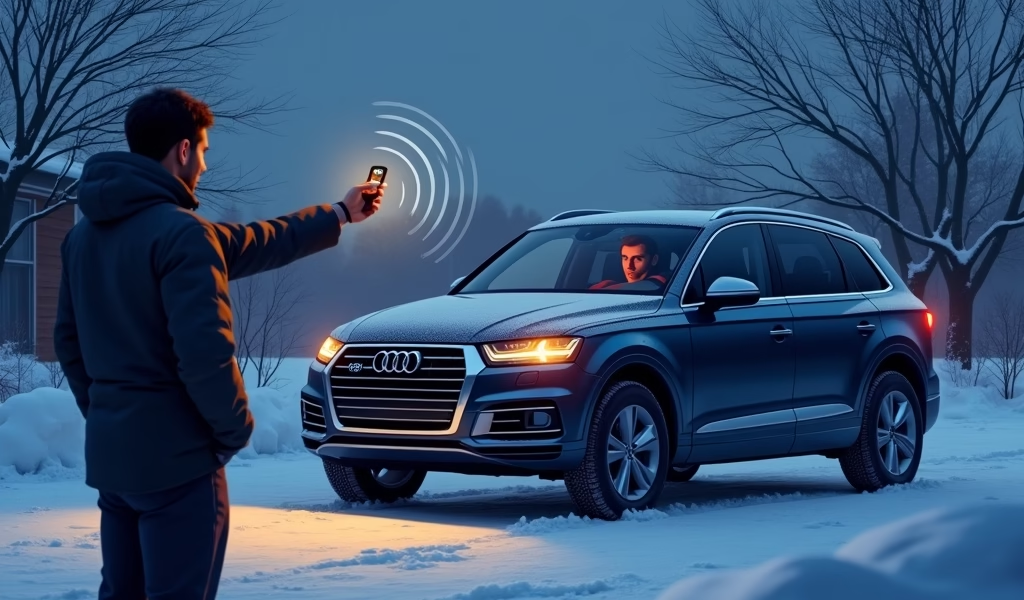
Traditional RF (Radio Frequency) systems remain the most common type, using simple radio transmission between a key fob and your vehicle. These systems offer ranges from 100 feet to 3,000+ feet depending on quality and conditions. They work without any subscription fees but remain limited by line-of-sight obstructions and maximum transmission distance.
Smartphone-based systems represent the fastest-growing segment, using cellular networks to connect your phone to your vehicle. These eliminate traditional range limitations entirely – you can start your car from across town or even across the country as long as both your phone and vehicle have cellular reception. Most require monthly subscription fees ($5-15 typically) but offer additional features like location tracking, vehicle diagnostics, and status alerts.
Emerging technologies are making remote start even more convenient. Voice-activated systems that work through Amazon Alexa, Google Assistant, or Apple’s Siri are becoming increasingly common. Imagine saying “Alexa, start my car” from the comfort of your home, regardless of where your vehicle is parked. Smart home integration is extending this functionality further, allowing automated routines that can prepare your vehicle based on your schedule or other triggers.
The future points toward even greater integration and connectivity. Many manufacturers are developing systems that predict when you’ll need your vehicle started based on your calendar, location, and habits. Some experimental systems are already using biometric triggers – starting your climate control automatically when your smartwatch detects you’re walking toward your vehicle.
Security remains a crucial consideration as these technologies advance. More connected systems potentially create more vulnerability points for hackers. The automotive industry is increasingly focused on car telemetry security safeguards to protect against unauthorized access. When selecting any remote start system, particularly connected ones, security features should be a primary consideration alongside range and convenience.
Maintenance Tips for Optimal Remote Start Performance
Maintaining your remote start system properly ensures you’ll get maximum range and reliability throughout its lifespan. These simple maintenance practices can prevent many common issues before they develop.
Regular battery replacement in your remote fob prevents gradual range deterioration. Don’t wait until the remote stops working completely – most systems experience reduced range long before total failure. Replace batteries preemptively every 6-12 months depending on usage, and always before winter when you’ll rely on the system most heavily.
Keep your remote protected from extreme conditions. Excessive heat, cold, or moisture can damage internal components and reduce transmission power. Avoid leaving your remote in a hot car during summer or exposing it to rain and snow. Some users report success using small silicone covers that provide environmental protection without interfering with signal transmission.
Vehicle battery maintenance becomes especially important with remote start systems. These systems place additional demand on your vehicle’s electrical system, particularly during cold starts. Have your vehicle battery tested annually and replace it preemptively if it’s showing signs of weakness. A marginal battery might start your car normally but fail under the additional strain of remote starting, especially in cold weather.
System inspections by qualified technicians can catch problems early. If you notice any reduction in range or reliability, have the system checked rather than simply accepting diminished performance. Technicians can verify antenna placement, check for corrosion on connections, and ensure all components are functioning optimally.
Software updates matter for modern systems. If your remote starter offers firmware updates (particularly smartphone-connected models), install these promptly. Manufacturers frequently improve signal processing algorithms and fix bugs that might affect range or reliability.
For vehicles with factory remote start, engine maintenance becomes particularly important. These systems often have safeguards that prevent remote starting if engine parameters fall outside normal ranges. Regular oil changes, proper fluid levels, and addressing check engine lights promptly all help ensure your remote start system remains operational.
Conclusion
Remote start range limitations don’t have to leave you out in the cold – literally or figuratively. With proper understanding of what affects range, realistic expectations, and appropriate maintenance, you can maximize your system’s performance and avoid those frustrating moments when your car won’t respond.
Remember that the “theoretical maximum” range advertised for any system rarely reflects real-world performance. Physical obstacles, electronic interference, battery condition, and weather all play significant roles in determining your actual usable range. By addressing these factors proactively, you can optimize what you already have without necessarily investing in expensive upgrades.
For those who truly need extended range, options exist from simple antenna repositioning to complete smartphone-based systems. The right solution depends on your specific needs, budget constraints, and technical comfort level. Don’t overlook the importance of professional installation when upgrading – the best equipment poorly installed will never perform to its potential.
As remote start technology continues evolving toward increasingly connected solutions, traditional range limitations are becoming less relevant. The future points toward systems that anticipate your needs rather than simply responding to button presses, with security and convenience advancing together.
Ultimately, a well-maintained remote start system – whether factory or aftermarket – should provide reliable service within its design parameters. By understanding those parameters and working within them, you’ll get the most value and avoid the frustration of unrealistic expectations.
Frequently Asked Questions
Why is my remote start range suddenly shorter?
The most common cause is a weakening battery in your remote fob. Other possibilities include new sources of interference in your environment or damage to your vehicle’s antenna system.
Can weather affect my remote start range?
Yes, cold temperatures reduce battery efficiency in both your remote and vehicle, while humidity and precipitation can interfere with signal transmission. Extreme weather conditions typically reduce range by 25-50%.
Do premium batteries really make a difference in remote range?
Yes, high-quality lithium batteries often provide better performance and longer life than standard alkalines, especially in cold weather. The small price premium typically yields noticeable improvement in transmission power.
Will my phone-based remote start work everywhere?
Phone-based systems work anywhere both your phone and vehicle have cellular reception. They won’t function in underground garages, remote areas without cell service, or during widespread network outages.
Can I install a range extender myself?
Basic antenna repositioning might be DIY-friendly, but most range extenders require integration with your vehicle’s electrical system. Professional installation is recommended to avoid damage to your vehicle’s electronics.