

Overview
That clicking sound you hear in your car might just be saving you hundreds in repair bills, as relays—the unsung heroes of your vehicle’s electrical system—control everything from headlights to fuel pumps with their simple switching mechanism. Through basic testing methods like visual inspection, multimeter diagnostics, and strategic relay swapping, car owners can identify failing relays before they lead to expensive component replacements, potentially turning a $1,000 repair into a $12 fix that takes just minutes to complete.
Table of Contents
- Understanding Relays: The Unsung Heroes of Your Car’s Electrical System
- Why Test Relays? Preventing Costly Repairs Before They Happen
- Signs of Relay Failure: Recognizing the Warning Signals
- Tools Needed for Relay Testing: Getting Equipped
- Visual Inspection: First Line of Defense
- Multimeter Testing: The Definitive Method for Relay Diagnosis
- Relay Swapping: A Quick Diagnostic Shortcut
- Common Relay Types and Their Testing Procedures
- Preventative Maintenance: Keeping Relays in Top Shape
- Conclusion: Master Relay Testing and Save Money
- Frequently Asked Questions
Understanding Relays: The Unsung Heroes of Your Car’s Electrical System
Relays are the silent workhorses of your vehicle’s electrical system, but understanding the relay testing procedure can save you hundreds in unnecessary repair bills. Think of relays as electrical switches that allow a low-current circuit to control a high-current circuit – similar to how a light switch lets you control a ceiling lamp without handling the full electrical load yourself.
In your car, these small but mighty components control everything from your headlights and fuel pump to your starter motor and air conditioning. When working properly, you never notice them. But when they fail? That’s when the headaches begin.
As a mechanic with 15 years in the field, I’ve seen countless customers pay for expensive component replacements when the humble relay was the culprit all along. The good news? Testing relays is relatively simple once you understand car electrical system basics, and it can be done with tools most DIYers already have at home.
Before we dive into the testing procedures, let’s get comfortable with what we’re dealing with. A typical automotive relay has four or five pins (terminals), a coil that creates a magnetic field when energized, and contacts that either connect or disconnect depending on whether the relay is activated. It’s this simple mechanism that allows your car to safely manage high-current components without overloading the switches and buttons you interact with.
Why Test Relays? Preventing Costly Repairs Before They Happen
Let’s talk money for a moment. The average cost to replace a major component like a fuel pump can run upwards of $800. A starter motor? That’ll set you back $500-1,000 including labor. Now consider this: relays typically cost between $5-20, and testing them takes just minutes.
I remember helping a customer who had already spent $1,200 replacing his fuel pump, only to have the same problem persist. After a quick relay test, we discovered the fuel pump relay was faulty. A $12 part and 10 minutes of labor fixed what had been a costly ordeal.
This cost-saving potential is why relay testing procedure should be one of the first diagnostic steps when you encounter electrical issues. It’s the automotive equivalent of checking if a device is plugged in before assuming it’s broken – simple but often overlooked.
Beyond the immediate financial benefits, regular relay testing can also help you catch potential problems before they strand you somewhere inconvenient. A failing headlight relay might just be annoying in your driveway but could create a dangerous situation on a dark country road. Similarly, a problematic starter relay might work intermittently until one morning, it doesn’t work at all.
Learning this skill puts you in control of your vehicle’s maintenance and helps you communicate more effectively with mechanics if professional service becomes necessary. When you can say, “I’ve tested the relay and it’s functioning correctly,” you’re helping focus the diagnostic process and potentially saving yourself money on unnecessary tests.
Signs of Relay Failure: Recognizing the Warning Signals
Before we get our hands dirty with testing, let’s talk about how to recognize when a relay might be causing problems. The symptoms of relay failure can mimic other electrical issues, but there are some telltale signs that should put relays high on your suspect list.
Intermittent operation is perhaps the most common symptom. If your headlights occasionally flicker, your power windows work sometimes but not always, or your fuel pump seems to cut out momentarily, a failing relay could be the culprit. Unlike complete failures, these intermittent issues happen because the relay’s internal contacts are worn or dirty, making connection inconsistent.
Complete component failure is another obvious sign. When your AC suddenly stops working, your fuel pump doesn’t prime when you turn the key, or your horn goes silent, the controlling relay might have given up the ghost. What makes relay failures distinctive is that they typically cause complete non-operation of a component rather than partial or degraded performance.
Clicking sounds from your dashboard or under the hood can also indicate relay issues. That distinctive click you hear when turning on your headlights or activating your air conditioning is actually the relay engaging. If you hear rapid clicking or no click at all when trying to activate a component, it’s time to learn car diagnostics focused on relay testing.
Unusual battery drain might also point to a relay problem. If a relay sticks in the “on” position, it can keep electrical components running even when they should be off, gradually draining your battery overnight. If you’ve ever come out to find your car battery unexpectedly dead, a stuck relay could be the hidden vampire drawing power.
Heat is another warning sign worth mentioning. During normal operation, relays shouldn’t get hot to the touch. If you find a relay that’s noticeably warm or hot during operation, it’s likely that internal resistance issues are causing it to work harder than it should, which will eventually lead to failure.
Tools Needed for Relay Testing: Getting Equipped
The beauty of relay testing is that it doesn’t require expensive specialized equipment. With just a few basic tools, you can perform comprehensive tests that will tell you definitively whether your relay is functioning properly. Here’s what you’ll need:
- Digital multimeter (DMM) – The most essential tool for relay testing. A basic model that measures voltage, resistance, and continuity is sufficient.
- Relay puller or small flathead screwdriver – To safely remove relays from their sockets without damaging the pins.
- Jumper wires with alligator clips – These will help when testing relays outside their sockets.
- 9V or 12V battery (for bench testing) – A power source for activating the relay when testing outside the vehicle.
- Circuit diagram for your specific vehicle – This helps identify relay locations and pin functions.
- Safety glasses – Electrical testing always carries a small risk of sparks or short circuits.
- Work gloves – For protection when working in tight engine compartments.
If you’re planning to make relay testing a regular part of your maintenance routine, you might also consider a dedicated relay test kit. These kits typically include a base socket for various relay types and built-in LED indicators that show when connections are made, making the testing process even more straightforward.
For those who prefer a more comprehensive approach, specialized relay testers are available that can test multiple relay types with the push of a button. While these are convenient, they’re not necessary for most DIY mechanics—our focus is on effective testing using basic tools most people already have.
Remember that some modern vehicles use solid-state relays (which have no moving parts) or integrated relay modules that combine multiple relays in one unit. These might require more specialized testing methods, but the basic principles we’ll cover still apply to most vehicles on the road today.
Visual Inspection: First Line of Defense
Before reaching for your multimeter, start with a thorough visual inspection. This simple step can often reveal problems and save you time in the diagnostic process. First, locate the relay you want to test using your vehicle’s owner manual or a repair guide. Common locations include the main fuse/relay box under the hood, a secondary fuse box inside the vehicle (often under the dashboard), or occasionally in specialized locations near the components they control.
Once you’ve located the relay, look for obvious signs of damage. A melted case, discoloration, or burn marks are clear indicators of overheating—a common relay failure mode. This typically happens when the relay has been working too hard due to a high-resistance connection or when it’s been controlling a component drawing more current than it was designed for.
Remove the relay carefully by pulling straight up, using a relay puller if available. Examine the pins on the bottom of the relay. They should be clean, straight, and free of corrosion. Green or white crusty buildup on the pins indicates corrosion, which can prevent proper electrical contact. Bent pins can also cause intermittent connections.
Hold the relay up to your ear and gently shake it. You should not hear anything rattling inside. If you do, it likely means the internal components have broken loose, and the relay needs replacement. This simple “shake test” has helped me identify many failed relays before even using electronic test equipment.
Finally, inspect the relay socket in the vehicle. The metal contacts inside should be clean and properly tensioned to grip the relay pins firmly. Look for signs of overheating here too—melted plastic or discoloration around specific pins often points to a high-resistance connection that needs attention before a new relay is installed.
Multimeter Testing: The Definitive Method for Relay Diagnosis
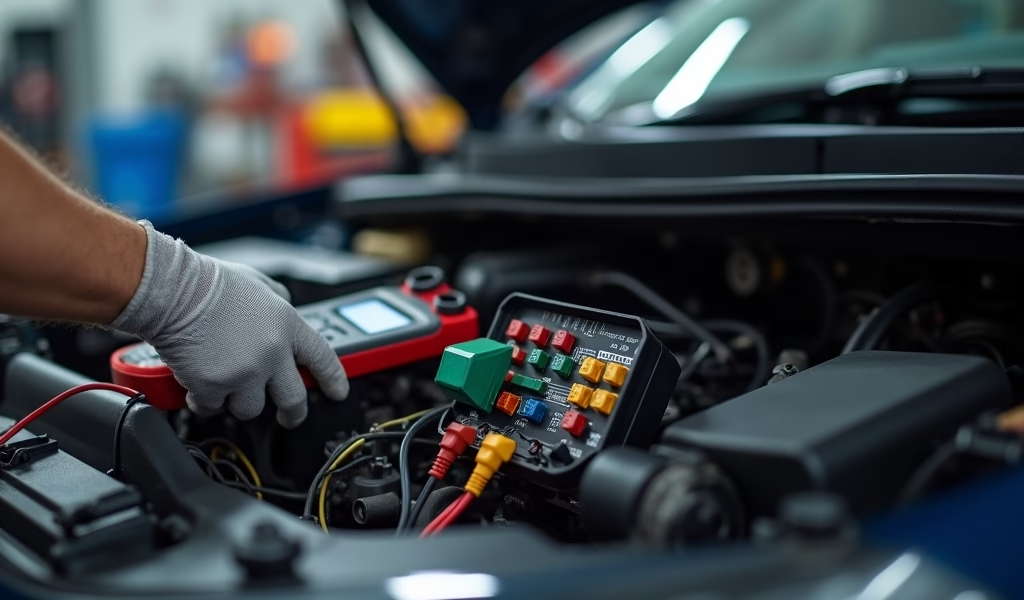
When it comes to definitive relay testing, your digital multimeter becomes your best friend. This simple yet powerful tool lets us check both the relay’s coil and contacts with precision. Let’s break down the relay testing procedure into manageable steps anyone can follow.
First, you’ll need to identify the relay’s pin configuration. Most automotive relays follow standard patterns, but it’s best to check your vehicle’s service manual or look for a diagram on the relay itself. Typically, pins 85 and 86 connect to the control coil, while pins 30, 87, and sometimes 87a are part of the switched circuit.
To test the relay coil, set your multimeter to the ohms (Ω) setting. Place your probes on pins 85 and 86. For most 12V automotive relays, you should read between 40-120 ohms. If you get an “OL” reading (overload) or infinity, the coil is open and the relay needs replacement. If the resistance is significantly lower than specifications, the coil may be shorted internally.
Next, let’s test the relay contacts using the continuity setting on your multimeter (usually indicated by a sound wave or speaker symbol). With the relay de-energized (not powered), check between pins 30 and 87a. You should have continuity (your meter will beep or show near-zero resistance). Between pins 30 and 87, you should have no continuity (high resistance or “OL” reading).
Now comes the dynamic test. We’ll need to energize the relay to check if the contacts properly switch positions. Connect a 12V power source (vehicle battery or bench power supply) to pins 85 and 86. You should hear an audible click as the relay activates. While powered, check continuity between pins 30 and 87—you should now have continuity. Between 30 and 87a, you should now have no continuity, indicating the contacts have switched as expected.
For a more thorough test, you can also measure the voltage drop across the closed contacts. Set your multimeter to DC volts, connect your power source to create a circuit through the relay’s closed contacts, and measure across the appropriate pins. A good relay will show less than 0.2V drop across closed contacts. Higher voltage drops indicate worn or dirty contacts that are creating resistance.
Remember to perform these tests several times, as some relay failures are intermittent and might not appear on the first check. If the relay passes consistently, it’s likely functioning correctly. If it fails even once, replacement is recommended, as intermittent operation will only worsen over time.
Relay Swapping: A Quick Diagnostic Shortcut
Sometimes the fastest way to test a relay is simply to swap it with another identical relay from your vehicle—preferably one controlling a system that’s currently working properly. This technique is especially useful when you’re in a pinch or don’t have testing equipment available.
Before attempting this method, verify that the relays are indeed identical. Check the part numbers and ensure they have the same pin configuration and current rating. Mixing incompatible relays can cause electrical damage to your vehicle’s systems.
The swap method works best with non-critical systems. For example, if you suspect your horn relay is failing, you might temporarily swap it with your rear defogger relay (assuming they’re the same type). If the horn starts working but now your defogger doesn’t, you’ve confirmed the original relay was faulty.
In my years as a mechanic, I’ve found this technique particularly valuable for roadside diagnostics. I once helped a stranded motorist whose car wouldn’t start due to a suspected fuel pump issue. By swapping the fuel pump relay with the identical headlight relay, the car started right up—confirming our diagnosis and letting them drive to the parts store for a proper replacement.
Be cautious when using this method with critical systems like your engine control module or airbag systems. Improper relay function in these areas could cause serious problems or safety issues. Also, always remember where each relay originally came from so you can return them to their proper locations afterward.
For modern vehicles with highly integrated electrical systems, relay swapping should be considered a temporary diagnostic step rather than a permanent solution. Even if a swapped relay seems to fix the problem, purchase and install the correct replacement as soon as possible. The electrical demands on specific circuits can vary, and using the wrong relay long-term might lead to premature failure or other electrical issues.
Common Relay Types and Their Testing Procedures
Not all relays are created equal, and knowing the specific type you’re dealing with is crucial for proper testing. Let’s explore the most common relay types found in modern vehicles and their specific testing considerations.
Standard (ISO) relays are the most common type and follow the 5-pin configuration we’ve discussed earlier. These are typically cube-shaped with standardized pin layouts that make them relatively easy to test and replace. The testing procedure outlined in the multimeter section applies directly to these relays.
Micro relays are smaller versions of standard relays, often used in tight spaces or for controlling lower-current devices. Though physically smaller, their testing procedure remains largely the same as standard relays. Pay extra attention when handling these as their pins are more delicate and easily bent.
Normally open (NO) relays have contacts that remain open (disconnected) until the relay is energized. Most automotive relays are of this type. When testing these relays, you should find no continuity between pins 30 and 87 when de-energized, and continuity when energized.
Normally closed (NC) relays have contacts that stay closed (connected) until the relay is energized, at which point they open. When testing these less common relays, you should find continuity between pins 30 and 87a when de-energized, and no continuity when energized.
Solid-state relays use semiconductors instead of physical contacts and coils. These have no moving parts and typically last longer than mechanical relays. Testing these requires a slightly different approach—you’ll need to check for proper voltage triggering thresholds rather than mechanical continuity. A logic probe can be helpful for these tests.
Time delay relays incorporate a timing circuit that delays the switching action. These specialized relays require testing both the relay function and the timing circuit. Use your multimeter in conjunction with a stopwatch to verify the delay matches specifications.
For modern vehicles with multiplex wiring systems, you might encounter integrated relay modules that combine multiple relays and control circuits in one unit. Testing these often requires scan tools or manufacturer-specific diagnostic equipment, as the traditional relay testing procedures may not apply. In these cases, consulting a professional or the vehicle’s service manual is recommended.
Remember that while relay testing procedures share common principles, always refer to your specific vehicle’s service information for relay specifications and testing parameters. This ensures you’re making accurate assessments based on the manufacturer’s intended functionality for each relay in your vehicle’s electrical system.
Preventative Maintenance: Keeping Relays in Top Shape
While relays are designed to be maintenance-free components, there are several preventative measures you can take to extend their life and catch potential issues before they leave you stranded. Implementing these simple practices can save you both money and headaches down the road.
Regular inspection should be part of your routine maintenance. Every 6-12 months, visually inspect accessible relays for signs of overheating, corrosion, or physical damage. This quick check can identify potential problems before they cause component failures.
Keep relay boxes clean and dry. Moisture is the enemy of electrical components. If you notice water intrusion in relay boxes, address the source immediately and dry the area thoroughly. Consider applying dielectric grease to relay pins when reinstalling them—this helps prevent corrosion and ensures good electrical contact.
Pay attention to any unusual noises. As mentioned earlier, relays make a characteristic click when activating. If you notice this sound becoming erratic, unusually loud, or absent altogether, it might indicate a relay beginning to fail. Similarly, if you hear rapid clicking (relay chatter), it often indicates voltage issues that are stressing the relay.
Consider carrying spare relays for critical systems in your vehicle emergency kit. Having replacements for your starter, fuel pump, and main power relays can be a lifesaver if you experience a failure away from home. They’re small, inexpensive, and could save you a tow bill.
When troubleshooting car engine issues, don’t overlook the electrical system. Many drivability problems that seem mechanical in nature are actually caused by relay issues affecting fuel delivery, ignition, or computer systems. Including relay testing in your diagnostic process can save considerable time and money.
If your vehicle regularly operates in extreme environments—whether extremely hot, cold, or dusty conditions—consider more frequent relay inspections. Environmental stressors accelerate relay wear, particularly the physical expansion and contraction that occurs with temperature changes.
Finally, maintain a healthy charging system. Relays are designed to operate at specific voltage ranges. Overcharging or undercharging conditions stress relays and can lead to premature failure. Regular alternator and battery testing helps ensure your vehicle’s electrical system provides the steady voltage relays need for reliable operation.
Conclusion: Master Relay Testing and Save Money
Mastering the relay testing procedure is one of the most cost-effective skills any vehicle owner can develop. Throughout this guide, we’ve explored how these small but critical components control many of your vehicle’s essential functions—and how their failure can mimic more expensive problems.
Remember that relay testing doesn’t require expensive equipment or years of training. With basic tools like a multimeter and some patience, you can accurately diagnose relay issues and often save hundreds of dollars in unnecessary repairs. The key is making relay testing one of your first diagnostic steps when electrical components act up, not a last resort.
The next time your car exhibits electrical gremlins—whether it’s headlights that occasionally flicker, a fuel pump that seems temperamental, or a starter that works only sometimes—reach for your multimeter and test those relays first. You might be surprised how often the solution is a simple, inexpensive relay replacement rather than a major component overhaul.
By incorporating the visual inspection techniques, multimeter testing procedures, and preventative maintenance tips we’ve discussed, you’ll develop a systematic approach to electrical troubleshooting that serves you well throughout your vehicle’s life. And perhaps most importantly, you’ll gain the confidence to tackle problems that might otherwise seem intimidating.
So take that first step, grab your multimeter, and start getting familiar with your vehicle’s relays. Your wallet—and your future self, standing confidently beside a running vehicle instead of waiting for a tow truck—will thank you.
Frequently Asked Questions
How can I tell if a relay is bad without a multimeter?
Listen for the characteristic “click” sound when the relay should activate. You can also try the swap method—replace the suspected relay with an identical working one from another system to see if the problem resolves.
Can a bad relay drain my car battery?
Yes, a relay stuck in the “on” position can keep electrical components running even when the vehicle is off. This continuous power draw will gradually drain your battery overnight.
How long do car relays typically last?
Under normal conditions, automotive relays can last the lifetime of the vehicle (10+ years). However, environmental factors like heat, moisture, and excessive electrical loads can significantly reduce their lifespan.
Can I drive with a faulty relay?
It depends on which system the relay controls. Driving with a failed headlight or horn relay might be possible but unsafe, while a failed fuel pump or ignition relay will likely prevent the vehicle from running altogether.
Are all automotive relays interchangeable?
No, relays have different current ratings, pin configurations, and functions. Always replace a relay with one that has the same part number or manufacturer-approved equivalent to ensure proper operation.