
Overview
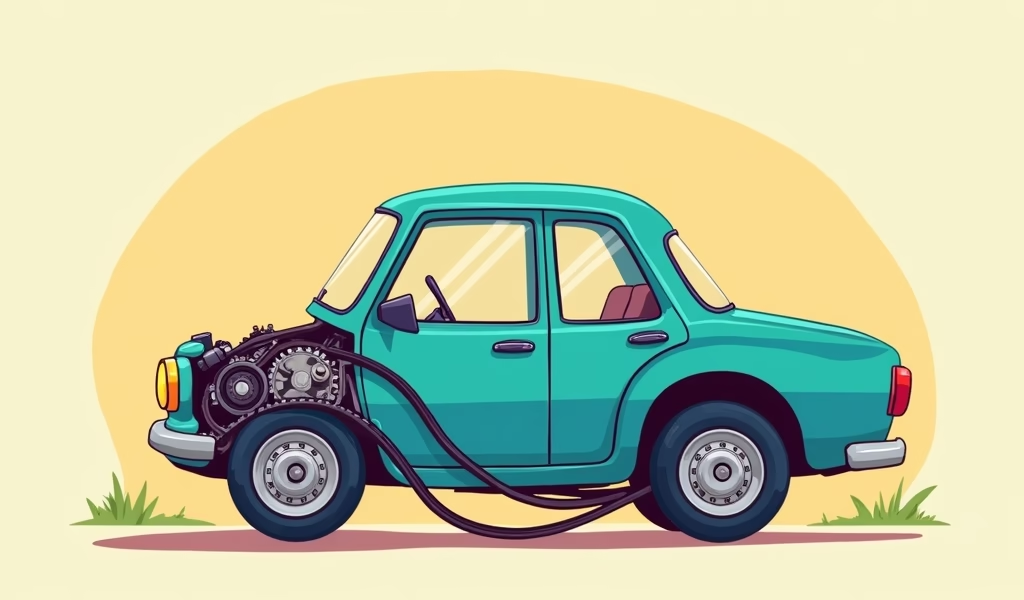
Ignoring your timing belt replacement interval is like playing Russian roulette with your engine, as what should be a $700 maintenance service can quickly escalate to a $3,000+ engine rebuild when the belt fails. Understanding your vehicle’s specific replacement schedule (typically every 60,000-100,000 miles) and proactively replacing the timing belt along with related components like water pumps and tensioners is the smartest way to protect your engine and avoid being stranded with catastrophic damage.
Table of Contents
- The $3,000 Mistake: Why Timing Belt Replacement Matters
- What Is a Timing Belt and Why It Controls Your Engine’s Heartbeat
- Warning Signs: How to Tell When Your Timing Belt Is Failing
- Recommended Replacement Intervals: When Should You Replace Your Timing Belt?
- Factors Affecting Timing Belt Lifespan
- Replacement Costs: What to Expect When You Visit the Shop
- Preventative Maintenance: The Smart Way to Protect Your Engine
- Frequently Asked Questions
The $3,000 Mistake: Why Timing Belt Replacement Matters
Let me tell you about Jim. He was driving his Honda Accord on a family vacation when he heard a loud snap followed by his engine immediately shutting down. Jim’s timing belt had broken at 105,000 miles – just 15,000 miles past the recommended replacement interval.
What should have been a $700 maintenance service turned into a $3,200 engine rebuild because the failed timing belt allowed the pistons to collide with valves. His vacation was ruined, and his wallet took a serious hit.
This scenario plays out thousands of times each year across the country. Drivers pushing their luck with aging timing belts end up stranded on roadsides facing repair bills that could have been avoided with proper maintenance.
Timing belt replacement might seem like just another expense on a long list of car maintenance items, but it’s one of the most critical services for preventing catastrophic engine damage. Understanding when to replace your timing belt could save you thousands in repair costs and prevent the massive inconvenience of unexpected breakdowns.
What Is a Timing Belt and Why It Controls Your Engine’s Heartbeat
Your timing belt is essentially the conductor of your engine’s orchestra. It synchronizes the rotation of the crankshaft and camshaft, ensuring valves open and close at precisely the right moment relative to piston movement. This precise timing is critical for your engine to run smoothly, efficiently, and safely.
Made from high-strength rubber reinforced with fiber cords, the timing belt has teeth that engage with gears on the camshaft and crankshaft. Unlike serpentine belts that are visible when you pop the hood, timing belts are hidden behind covers, making them easy to forget about.
The most important thing to understand is the difference between interference and non-interference engines:
- Interference engines: The paths of the pistons and valves overlap. If the timing belt breaks, pistons will collide with valves, causing severe internal engine damage.
- Non-interference engines: Designed with clearance between valves and pistons. If the belt breaks, your engine simply stops running without internal damage.
According to AAA, approximately 70% of vehicles on the road today have interference engines, making timing belt maintenance not just important but essential to avoid expensive engine repairs.

Warning Signs: How to Tell When Your Timing Belt Is Failing
Timing belts rarely fail without warning, though these signs aren’t always obvious to the untrained eye. Here are symptoms that might indicate your timing belt is reaching the end of its life:
- Engine misfiring or rough idling: A worn timing belt can slip, causing valves to open at the wrong time and creating misfires.
- Ticking noise from the engine: As the belt wears, it may create a distinctive ticking sound, especially during startup or acceleration.
- Difficulty starting the engine: A worn timing belt can slip enough to affect valve timing, making your engine harder to start.
- Oil leakage near the timing cover: Oil can contaminate and deteriorate your timing belt. If you notice oil leaking from the front of your engine, have it checked immediately.
- Decreased engine performance: As the belt stretches and wears, you might notice reduced power, especially during acceleration.
I’ve seen many timing belts that appeared fine visually but were severely compromised internally. The fiber reinforcement inside the belt can weaken long before visible cracks appear on the surface.
Don’t wait for warning signs to appear—by then, it might be too late. Preventative replacement based on your manufacturer’s mileage recommendation is always the safest approach to avoid costly engine damage.
Recommended Replacement Intervals: When Should You Replace Your Timing Belt?
Timing belt replacement intervals vary by manufacturer and model, but generally fall between 60,000 and 100,000 miles. Here’s a breakdown of typical recommendations:
- Honda/Acura: 60,000-90,000 miles
- Toyota/Lexus: 60,000-100,000 miles
- Ford/Lincoln: 60,000-120,000 miles
- Volkswagen/Audi: 75,000-105,000 miles
- Subaru: 105,000 miles
- Nissan: 105,000 miles
Time is just as important as mileage. Even if you haven’t reached the mileage threshold, most mechanics recommend replacing timing belts every 7-10 years, as rubber compounds deteriorate with age even when not in use.
The safest approach is to check your owner’s manual for the specific interval recommended for your vehicle. Some newer vehicles use timing chains instead of belts, which typically last much longer (often the lifetime of the engine), though they’re not completely maintenance-free.
When in doubt, err on the side of caution. I’ve never had a customer complain about replacing a timing belt “too early,” but I’ve consoled many who waited “just a little longer” and ended up with major engine damage.
Factors Affecting Timing Belt Lifespan
Not all timing belts age at the same rate. Several factors can significantly shorten or extend your timing belt’s useful life:
- Driving conditions: Stop-and-go traffic creates more heat cycles, accelerating belt wear.
- Climate: Extreme temperatures (both hot and cold) can cause timing belts to deteriorate faster. Desert heat is particularly hard on rubber components.
- Oil contamination: Oil leaks from failing seals can break down the rubber compound in timing belts, leading to premature failure.
- Driving style: Aggressive driving with frequent high RPMs puts additional stress on all engine components, including the timing belt.
- Belt quality: OEM (Original Equipment Manufacturer) belts typically last longer than some aftermarket alternatives. When replacing your timing belt, quality matters.
I’ve seen vehicles in extreme climates need timing belt replacement as early as 45,000 miles, while the same model in moderate conditions might easily reach the full recommended interval. Understanding these factors can help you determine if you should consider early replacement based on your specific circumstances.
If you’ve purchased a used car with unknown maintenance history, it’s often wise to replace the timing belt as a precautionary measure rather than gambling on its condition. The peace of mind for new car owners is well worth the investment.
Replacement Costs: What to Expect When You Visit the Shop
Timing belt replacement isn’t inexpensive, but it’s far cheaper than engine repairs caused by a failed belt. Here’s what you can typically expect to pay:
- Economy cars (Honda Civic, Toyota Corolla): $550-$750
- Mid-size sedans (Accord, Camry): $650-$950
- Luxury vehicles (Audi, BMW): $900-$1,500+
- SUVs and trucks: $700-$1,200
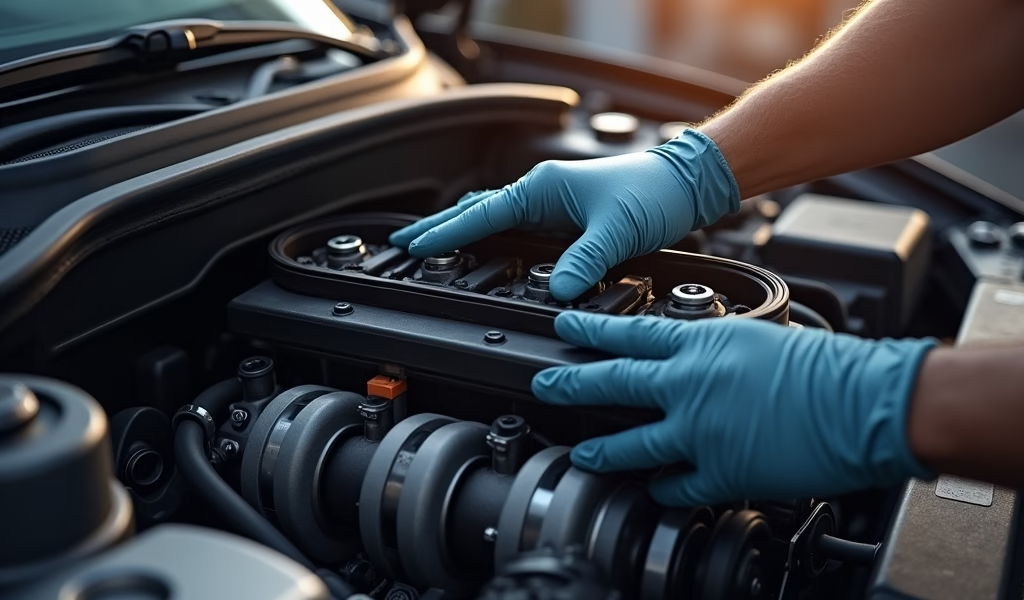
These estimates typically include not just the timing belt, but also related components like tensioners, idler pulleys, and often the water pump. Since these components are accessed during the same labor-intensive process, it makes financial sense to replace them simultaneously.
The water pump, in particular, often has a similar lifespan to the timing belt and is typically driven by it. Replacing both at once is smart preventative maintenance that can save you from paying for the same labor twice if the water pump fails shortly after the timing belt service.
Labor makes up the bulk of the cost—typically 60-70% of the total bill. This is because timing belt replacement requires significant disassembly of the engine area, precise alignment of timing marks, and careful reassembly. It’s not a job for novice mechanics or DIY enthusiasts without significant experience.
Many shops offer financing options for larger repairs, and some credit cards specifically designed for automotive expenses provide interest-free periods. According to Consumer Reports, planning ahead for these maintenance expenses by setting aside small amounts monthly can make the eventual bill much more manageable.
Preventative Maintenance: The Smart Way to Protect Your Engine
The best approach to timing belt maintenance is proactive rather than reactive. Here’s my recommended strategy:
- Document the last timing belt replacement in your vehicle records.
- Set calendar and mileage reminders for the next replacement (I recommend 10,000 miles before the maximum interval).
- Have your engine inspected for oil leaks during regular oil changes, as these can damage your timing belt.
- Listen for unusual noises from the timing belt area, especially during cold starts.
- Consider having the timing belt visually inspected at the 75% mark of its recommended lifespan.
When you do replace your timing belt, ask your mechanic for these related services that make financial sense during the same repair:
- Water pump replacement
- Camshaft and crankshaft seal inspection and replacement if necessary
- Inspection of motor mounts (which are often accessible during timing belt service)
- Coolant flush and refill
Keeping detailed maintenance records not only helps you track service intervals but can significantly increase your vehicle’s resale value. Documented timing belt replacement gives potential buyers confidence in your vehicle’s condition and can often command a premium of several hundred dollars compared to similar vehicles with unknown maintenance history.
Remember that preventative maintenance is always less expensive than emergency repairs. The average timing belt replacement costs $700-900, while engine repairs resulting from timing belt failure typically start at $2,500 and can exceed $4,000—not counting lost time, towing expenses, and rental car costs.
Conclusion: Peace of Mind Is Worth Every Penny
Timing belt replacement might seem like an expensive maintenance item you’d prefer to postpone, but it’s truly one of the most important services for preventing catastrophic engine damage. By understanding your vehicle’s specific replacement interval and planning accordingly, you’ll avoid the frustration, expense, and inconvenience of unexpected breakdowns.
Think of timing belt replacement as an investment in your vehicle’s longevity rather than an expense. For $600-$1,000 every 60,000-100,000 miles, you’re protecting an engine worth several thousand dollars and ensuring your vehicle remains reliable for years to come.
Don’t wait until you’re stranded on the side of the road with an engine that sounds like a box of rocks. Check your owner’s manual today, find out when your timing belt is due for replacement, and make a plan to have this critical service performed on schedule. Your future self (and your wallet) will thank you.
Frequently Asked Questions
How can I tell if my car has a timing belt or a timing chain?
Check your owner’s manual or call your dealer with your VIN number. Timing chains are generally more common in newer vehicles and typically last the lifetime of the engine.
Can I drive with a worn timing belt?
It’s extremely risky to drive with a worn timing belt, as failure can cause catastrophic engine damage without warning. Have it replaced as soon as you suspect wear or reach the recommended interval.
What happens if my timing belt breaks while driving?
In interference engines (most modern cars), pistons will hit valves, causing major internal engine damage requiring expensive repairs. Your engine will immediately stop running, leaving you stranded.
Is timing belt replacement covered under warranty?
Most manufacturers consider timing belt replacement normal maintenance, not covered under standard warranties. Some extended warranties or prepaid maintenance plans may include this service.
Should I replace my water pump when replacing the timing belt?
Yes, replacing the water pump during timing belt service is highly recommended. Since much of the labor overlaps, doing both at once saves money compared to separate services.