
Overview
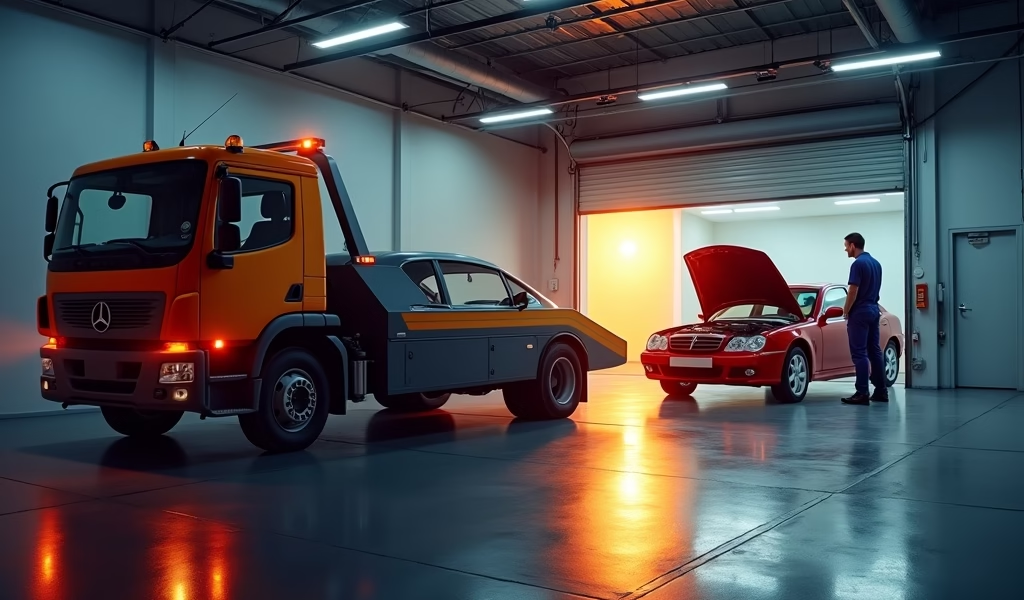
Ironically, the best towing service is the one you’ll never need to call, which is why this article outlines five essential maintenance strategies to keep your vehicle running smoothly: regular maintenance checks, proper fluid management, diligent tire care, battery maintenance, and preparing an emergency kit. By implementing these straightforward preventive measures, drivers can significantly reduce breakdown risks, avoid costly towing situations, and drive with confidence knowing they’ve taken practical steps to maintain their vehicle’s reliability.
Table of Contents
- Understanding Towing Service Preference: An Introduction
- Regular Maintenance Checks: Your First Line of Defense
- Fluid Management: The Lifeblood of Your Vehicle
- Tire Care: Rolling Into Prevention
- Battery Maintenance: Avoiding Dead-End Situations
- Emergency Kit Essentials: Be Prepared, Not Scared
- Conclusion: Driving Forward with Confidence
- Frequently Asked Questions
Understanding Towing Service Preference: An Introduction
When it comes to towing service preference, knowledge truly is power. As a mechanic with over 15 years in the field, I’ve seen countless roadside disasters that could have been prevented with some basic maintenance know-how. Choosing the right towing service is important, but wouldn’t you rather avoid needing one in the first place?
Vehicle breakdowns don’t just happen out of the blue – they often give warning signs that many drivers unfortunately miss. By implementing a few proven maintenance strategies, you can significantly reduce your chances of being stranded on the roadside, waiting for a tow truck in the pouring rain or blistering heat.
The relationship between regular maintenance and reduced towing needs isn’t just mechanic folklore – it’s backed by data. According to a study by AAA, nearly 40% of roadside assistance calls could have been prevented through routine maintenance procedures. That’s a staggering figure that highlights just how important these preventive measures can be.
Let’s dive into five proven car maintenance tips that will help keep your vehicle running smoothly and minimize your need for towing services. These straightforward strategies don’t require advanced mechanical skills – just a bit of attention and care for your four-wheeled companion.
Regular Maintenance Checks: Your First Line of Defense
The cornerstone of avoiding unexpected breakdowns lies in consistent maintenance checks. Your vehicle’s maintenance schedule isn’t just a suggestion – it’s a roadmap to reliability that directly impacts your towing service preference by hopefully eliminating the need altogether.
Start with your owner’s manual – that often-neglected booklet contains goldmine information specific to your vehicle. Manufacturers have carefully calibrated maintenance schedules based on extensive testing and real-world performance data. Following these guidelines isn’t just good practice; it’s essential preventive medicine for your car.
Here’s what a basic maintenance schedule might include:
- Oil changes: Typically every 3,000-7,500 miles depending on your vehicle and oil type
- Tire rotations: Usually every 5,000-8,000 miles
- Air filter replacements: Generally every 15,000-30,000 miles
- Brake inspections: At least once annually or every 12,000 miles
- Belt and hose inspections: Every 3,000-6,000 miles
Remember that these are general guidelines – your specific vehicle might require different intervals. What matters most is consistency. I’ve seen too many good cars abandoned on highway shoulders because their owners skipped “just one” oil change that cascaded into catastrophic engine failure.
Finding a trustworthy mechanic is equally crucial. A good mechanic doesn’t just fix problems; they anticipate them. They’ll notice the slightly worn belt before it snaps or the corroding battery terminal before it fails. Moreover, they’ll keep detailed records of your vehicle’s maintenance history, which proves invaluable for tracking patterns and predicting potential issues.
Consider scheduling seasonal inspections, especially before extreme weather conditions hit. These comprehensive check-ups can identify vulnerabilities before they become stranding events. Many shops offer reasonably priced inspection packages that can save you thousands in repair costs – not to mention the inconvenience of unexpected breakdowns.
Fluid Management: The Lifeblood of Your Vehicle
When discussing towing service preference, I often remind my customers that fluid management is perhaps the most underrated aspect of vehicle maintenance. Your car relies on various fluids to function properly, each serving a critical purpose in keeping you moving forward instead of calling for a tow.
Engine oil tops this list for good reason. It lubricates moving parts, prevents overheating, and keeps engine components clean. Dark, sludgy oil is your engine’s cry for help. Check your oil level monthly using the dipstick – it should be amber-colored and between the minimum and maximum marks. This simple five-minute check can prevent catastrophic engine failure.
Beyond oil, your vehicle depends on several other vital fluids:
- Transmission fluid: Ensures smooth gear transitions and prevents transmission overheating
- Brake fluid: Transfers the force from your brake pedal to the actual brakes
- Coolant/antifreeze: Regulates engine temperature in both hot and cold weather
- Power steering fluid: Assists in smooth steering operation
- Windshield washer fluid: Maintains visibility in adverse conditions
Each fluid has visual indicators of trouble. Transmission fluid should be pinkish and sweet-smelling; darkened, burnt-smelling fluid signals trouble. Brake fluid should be clear to amber – cloudiness or a low level requires immediate attention. Coolant should be bright (often green, orange, or pink depending on type) without particles or oil slicks.
According to Consumer Reports, improper fluid maintenance is linked to approximately 25% of vehicle breakdowns. What’s particularly frustrating as a mechanic is seeing customers who could have avoided expensive tows with just a bit more attention to these liquid lifelines.
Create a simple monthly fluid check routine. Pop the hood, check levels, look for leaks on your driveway or garage floor, and note any unusual colors or smells. This 15-minute investment can dramatically reduce your chances of needing emergency towing services.
Tire Care: Rolling Into Prevention
Your vehicle’s tires represent the only points of contact between your car and the road – four palm-sized patches of rubber carrying your entire vehicle’s weight. Proper tire maintenance significantly impacts your towing service preference by preventing one of the most common reasons for roadside assistance: flat tires and blowouts.
Let’s start with pressure. Underinflated tires flex excessively, generating heat that can lead to sudden blowouts. Overinflated tires have reduced road contact, compromising traction and handling. Check your tire pressure monthly (including the spare) using a quality gauge when tires are cold – meaning the car hasn’t been driven for at least three hours.
The correct pressure isn’t found on the tire itself but rather on a sticker inside your driver’s door jamb or in your owner’s manual. This simple check takes less than five minutes and can extend tire life by up to 20% while improving fuel efficiency and safety.
Tread depth is equally important. The legal minimum in most states is 2/32″, but I recommend replacing tires when they reach 4/32″ for better wet-weather performance. The classic penny test works well: insert a penny with Lincoln’s head upside down into your tire tread – if you can see the top of his head, it’s time for new tires.
Regular rotation ensures even wear across all four tires. Most vehicles benefit from rotation every 5,000-8,000 miles. This service typically costs $20-40 at most shops – a small price compared to premature tire replacement or roadside assistance.
Alignment issues cause uneven tire wear and can lead to handling problems. If you notice your vehicle pulling to one side or your steering wheel isn’t centered when driving straight, have your alignment checked promptly. What might seem like a minor inconvenience can rapidly accelerate tire wear, potentially leading to failure when you least expect it.
Seasonal tire considerations also matter. If you live in an area with severe winters, dedicated winter tires provide dramatically improved traction and safety. All-season tires are a compromise that works well in moderate climates but offer reduced performance in extreme conditions.
Battery Maintenance: Avoiding Dead-End Situations
In my years as a mechanic, I’ve seen countless towing service preference discussions center around one frustrating scenario: the dreaded dead battery. It’s particularly disheartening because battery-related tows are among the most preventable vehicle emergencies.
Your vehicle’s battery typically gives warning signs before complete failure. Slow engine cranking, dimming headlights, electrical issues, or the illuminated battery warning light shouldn’t be ignored. These symptoms suggest your battery is struggling and needs attention before you find yourself stranded.
Most automotive batteries last 3-5 years, though this varies based on climate and driving habits. Extreme temperatures – both hot and cold – are particularly taxing on batteries. If yours is approaching the four-year mark, consider proactive replacement rather than waiting for failure.
Visual inspection can reveal valuable clues about battery health:
- Check for corrosion around terminals (white, powdery substance)
- Ensure connections are tight and free from buildup
- Look for battery case swelling or cracking
- Note any rotten egg smell (indicating battery damage)
- Check electrolyte levels in non-maintenance-free batteries
Terminal corrosion is particularly common and easily addressed. Disconnect the battery (always negative terminal first), and clean the terminals with a wire brush and a solution of baking soda and water. Rinse with clean water, dry thoroughly, and reconnect (positive terminal first). Apply a small amount of petroleum jelly or commercial battery terminal protectant to prevent future corrosion.
For those with multimeters, a voltage test can provide objective battery health data. A fully charged battery should read approximately 12.6 volts when the engine is off. Readings below 12.4 volts indicate a partially discharged condition requiring attention.
Remember that your vehicle’s charging system works in tandem with the battery. A failing alternator can drain even a healthy battery. If your battery repeatedly dies despite being relatively new, have your alternator and charging system tested. Many auto parts stores offer this service for free.
Long periods of vehicle inactivity can also drain batteries. If you won’t be driving for several weeks, consider using a battery maintainer (trickle charger) to keep your battery at optimal charge. These inexpensive devices can extend battery life significantly and prevent the inconvenience and expense of emergency towing services.
Emergency Kit Essentials: Be Prepared, Not Scared
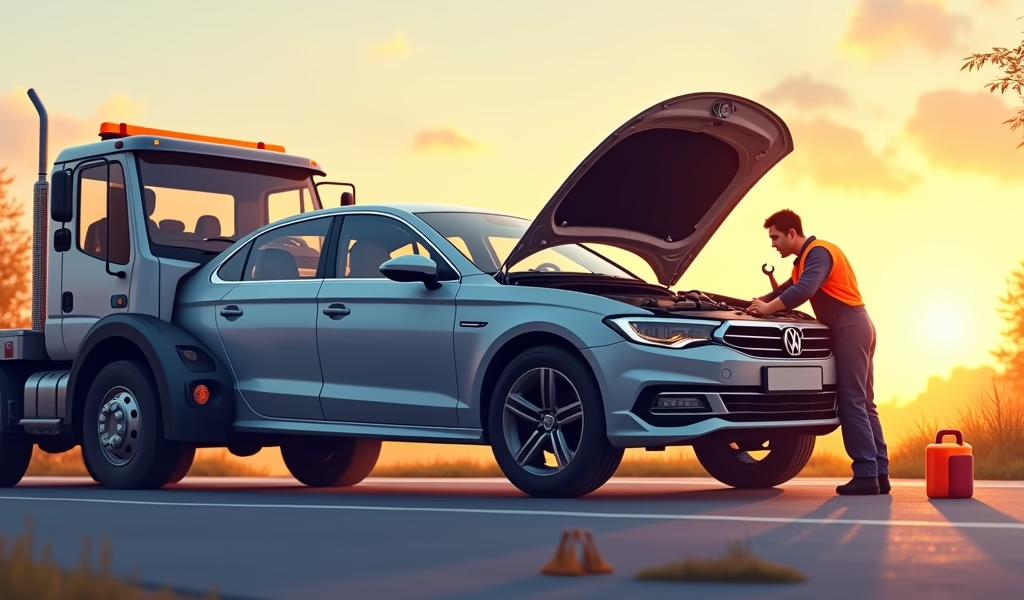
Even with meticulous maintenance, unforeseen situations can arise. Your towing service preference might be “none at all,” but wisdom dictates preparation for all scenarios. A well-stocked emergency kit can transform a potential towing situation into a minor inconvenience.
Let’s build a comprehensive emergency kit together, focused on preventing or minimizing the need for towing services:
- Jumper cables or portable jump starter: Modern lithium jump starters are compact powerhouses that can start most vehicles multiple times on a single charge
- Basic tool set: Include screwdrivers, adjustable wrench, pliers, and a tire pressure gauge
- Tire inflator: Portable compressors that plug into your 12V outlet can reinflate a tire enough to reach a service station
- Tire repair kit: Temporary plug kits can seal punctures, potentially avoiding a tow for a simple flat
- Flashlight with extra batteries: Vehicle troubles don’t respect daylight hours
- Reflective triangles or road flares: Essential for safety in breakdown situations
- Duct tape and zip ties: Temporary fixes for loose parts can get you to a repair shop
- Extra fluids: Small bottles of oil, coolant, and brake fluid for emergency top-ups
- Weather protection: Poncho, blanket, gloves for comfort during repairs in adverse conditions
- First aid kit: For minor injuries that might occur during roadside repairs
Beyond physical tools, digital preparation matters too. Store your preferred towing service contact information in your phone, along with your insurance roadside assistance details. Many insurers and automakers now offer apps with one-touch roadside assistance that transmits your exact location to service providers.
Consider joining a roadside assistance program if your insurance doesn’t include this benefit. Organizations like AAA provide peace of mind for relatively modest annual fees, often paying for themselves with a single service call.
Knowledge remains your most valuable emergency tool. Familiarize yourself with basic procedures like jumping a battery, changing a tire, or identifying common warning lights. Numerous online resources and video tutorials can guide you through these processes. The National Highway Traffic Safety Administration (NHTSA) offers excellent resources for vehicle safety and emergency preparedness.
Review and refresh your emergency kit seasonally. Replace expired items, check battery-powered devices, and adjust contents based on anticipated weather conditions. What works in summer might be insufficient for winter emergencies, particularly in regions with extreme temperature variations.
Conclusion: Driving Forward with Confidence
Throughout this guide, we’ve explored five proven maintenance strategies that directly influence your towing service preference by helping you avoid breakdowns altogether. From diligent maintenance schedules to fluid management, tire care, battery maintenance, and emergency preparedness, each element builds upon the others to create a comprehensive approach to vehicle reliability.
The beauty of these strategies lies in their simplicity and accessibility. You don’t need advanced mechanical knowledge or expensive equipment to implement most of these recommendations. What you do need is consistency and attention to detail – qualities that pay enormous dividends in vehicle longevity and reliability.
Remember that your relationship with your vehicle is precisely that – a relationship. Like any good relationship, it thrives on regular attention, care, and occasional professional intervention. The small investments of time and resources in preventive maintenance consistently yield returns far exceeding their costs.
If there’s one message to take away from this discussion about towing service preference, it’s this: the best towing service is the one you never have to call. By embracing these maintenance practices, you’re not just preparing for emergencies – you’re actively preventing them.
Drive safely, maintain diligently, and enjoy the confidence that comes from knowing you’ve done everything reasonable to keep your vehicle running smoothly for miles to come. Your wallet, schedule, and peace of mind will thank you for it.
Frequently Asked Questions
How often should I perform basic car maintenance to avoid needing towing services?
Follow your vehicle’s maintenance schedule in the owner’s manual for specific intervals. At minimum, check fluids monthly and have professional inspections seasonally or every 5,000-7,500 miles.
What are the warning signs that my battery might fail soon?
Look for slow engine cranking, dimming headlights, electrical issues, or the illuminated battery warning light. Most batteries last 3-5 years, so consider proactive replacement as they approach the four-year mark.
Can regular tire maintenance really prevent the need for towing?
Absolutely! Proper tire inflation, regular rotation, and attention to tread depth can prevent blowouts and flats that account for approximately 23% of roadside assistance calls. Check tire pressure monthly for optimal performance.
What should I do if my car overheats to avoid needing a tow?
Pull over immediately, turn off the engine, and wait at least 30 minutes for cooling. Check coolant levels only after the engine has cooled, and if possible, proceed to the nearest service station at a reduced speed with heater on full blast.
How do I choose the right towing service if prevention fails?
Look for services with 24/7 availability, reasonable response times, transparent pricing, and proper insurance coverage. Consider roadside assistance through your insurance or organizations like AAA for cost-effective, reliable service.