

Overview
When your car throws a tantrum on the highway, having the right roadside assistance number can save your day and your sanity. This article reviews five major roadside assistance services (AAA, Geico, Progressive, State Farm, and OnStar), comparing their contact methods, response times, coverage options, and pricing while emphasizing the importance of preparing for emergencies before they happen.
Table of Contents
- Roadside Assistance Essentials: What You Need to Know
- The Importance of Quick Contact in Roadside Emergencies
- Service Review #1: AAA Roadside Assistance
- Service Review #2: Geico Emergency Road Service
- Service Review #3: Progressive Roadside Assistance
- Service Review #4: State Farm Emergency Road Service
- Service Review #5: OnStar Roadside Assistance
- Preparing for Roadside Emergencies Before They Happen
- Conclusion
- Frequently Asked Questions
Roadside Assistance Essentials: What You Need to Know
When your car decides to call it quits on a deserted highway or in the middle of rush hour traffic, having reliable roadside assistance contact information can be the difference between a minor inconvenience and a major ordeal. As a mechanic with over 15 years of experience, I’ve seen firsthand how prompt roadside assistance can save drivers from expensive tows, dangerous situations, and hours of stress.
Roadside assistance services have evolved significantly over the past decade. Gone are the days of hoping a kind stranger stops to help or walking miles to find a payphone. Today’s roadside assistance programs offer comprehensive solutions for everything from flat tires to empty gas tanks, and most are just a phone call or app tap away.
What many drivers don’t realize is that the quality of roadside assistance can vary dramatically between providers. Response times, service coverage, and customer support differ widely – and in an emergency situation, these differences matter. That’s why I’ve compiled this guide to the top five roadside assistance services, along with everything you need to know about making contact when you’re in a pinch.
The Importance of Quick Contact in Roadside Emergencies
When your vehicle breaks down, the clock starts ticking. Every minute spent waiting on the side of the road increases your risk exposure – especially on busy highways or in unfavorable weather conditions. Having immediate access to roadside assistance contact information isn’t just about convenience; it’s about safety.
Modern roadside assistance services have recognized this urgency and have invested in multiple contact channels. Most now offer phone hotlines, mobile apps, and even integration with vehicle systems for one-touch assistance. The best services combine quick response with accurate location tracking to minimize wait times.
But here’s what separates good roadside assistance from great: the initial contact experience. The best providers train their operators to calm distressed callers while collecting essential information efficiently. They understand that when you’re stranded with a dead car battery in unfamiliar territory, the last thing you need is a confusing automated menu or an indifferent operator.
Before we dive into the reviews, let me share a quick tip from years of roadside assistance calls: always know your location as precisely as possible. Modern smartphones make this easier, but familiar landmarks, mile markers, or nearby businesses can help dispatchers send help exactly where you need it.
Service Review #1: AAA Roadside Assistance
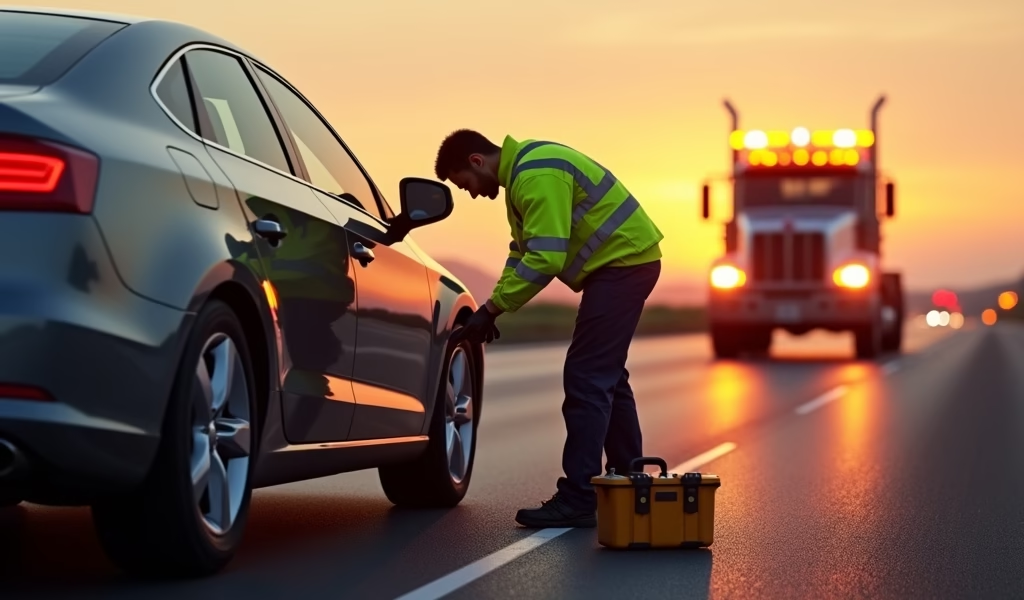
AAA remains the gold standard in roadside assistance for good reason. Their nationwide network of service providers means help is rarely far away, regardless of where your car decides to give up. What truly sets AAA apart is their multi-tiered membership structure that allows members to choose coverage based on their driving habits and needs.
When it comes to roadside assistance contact options, AAA excels with their 24/7 phone service, user-friendly mobile app, and online portal. Their app deserves special mention for its intuitive interface that allows you to request specific services and track your technician’s arrival in real-time – a genuine stress-reliever when you’re stranded.
Response times for AAA average between 30-45 minutes in urban areas, though rural calls can take longer. In my experience both as a mechanic and a member, their technicians arrive well-equipped to handle common roadside issues like flat tire changes, jump starts, and fuel delivery.
The membership cost ranges from $60-$130 annually depending on your tier, which might seem steep compared to some alternatives. However, the service quality, additional benefits (like travel discounts and free maps), and peace of mind tend to justify the price for frequent drivers. According to J.D. Power’s customer satisfaction studies, AAA consistently ranks among the top providers for customer service quality.
Service Review #2: Geico Emergency Road Service
Geico’s Emergency Road Service stands out primarily for its affordability and integration with their insurance offerings. For as little as $14 annually per vehicle (when added to an existing Geico policy), drivers gain access to a solid roadside assistance program covering the essentials: towing, battery jump-starts, flat tire changes, lockout services, and fuel delivery.
The roadside assistance contact process through Geico is streamlined and modern. Their mobile app allows for quick service requests with GPS location sharing, eliminating the confusion of explaining where you’re stranded. Alternatively, their 24/7 hotline is staffed by knowledgeable representatives who typically dispatch help within minutes of your call.
Where Geico sometimes falls short is in rural coverage areas. Their network, while extensive, doesn’t match AAA’s reach in remote locations. Urban and suburban drivers will rarely notice this limitation, but those who frequently travel through rural America might want to consider this factor.
One aspect I particularly appreciate about Geico’s service is their transparent communication. They provide realistic ETAs and send text updates if there are delays. For drivers who value clear communication during stressful situations, this feature alone might make Geico the preferred choice, especially when you’re trying to troubleshoot engine problems on your own while waiting for assistance.
Service Review #3: Progressive Roadside Assistance
Progressive’s approach to roadside assistance focuses on simplicity and integration with their insurance policies. At approximately $16 per six-month policy period, it represents one of the more affordable options on our list, especially for those already insured through Progressive.
The roadside assistance contact process with Progressive is straightforward, offering both a dedicated phone line and mobile app support. Their app deserves praise for its clean interface and simple service selection process. However, it lacks some of the advanced tracking features found in competitors’ apps.
Progressive’s service covers the standard roadside emergencies: towing (up to 15 miles), battery jump-starts, flat tire changes, fuel delivery, lockout assistance, and winching services if your vehicle is stuck. The coverage limits are reasonable for most situations, though the 15-mile towing limit may be insufficient if you break down in a remote area.
What makes Progressive stand out is their “sign and drive” approach – there’s no payment needed at the time of service, and no paperwork to file for reimbursement later. Everything is handled directly through Progressive, which removes a potential layer of stress during an already stressful situation. According to Consumer Reports’ roadside assistance comparisons, Progressive scores well on simplicity and ease of use.
While Progressive may not offer the premium service level of AAA, it provides excellent value for drivers who want basic coverage without a separate membership program. Their average response time of 35-50 minutes is comparable to other major providers in most areas.
Service Review #4: State Farm Emergency Road Service
State Farm’s Emergency Road Service takes a slightly different approach to roadside assistance. Rather than charging an annual fee, they operate on a per-use basis for most services if you’re a State Farm auto insurance customer. This can be cost-effective for drivers who rarely need assistance but want coverage for those rare emergencies.
For roadside assistance contact, State Farm offers a 24/7 hotline and a functional, if somewhat basic, mobile app. The app allows for service requests but lacks the sophisticated tracking and communication features found in more premium offerings. In my experience, their phone representatives are well-trained and efficient at gathering necessary information.
State Farm’s coverage includes standard services: towing to the nearest repair facility, jump-starts, tire changes, fuel delivery, lockout assistance, and even on-site mechanical labor in some cases. What sets them apart is their mechanical labor coverage, which can include up to one hour of on-site work – potentially saving you from a tow altogether for minor issues.
Response times with State Farm average between 35-55 minutes depending on location and conditions. While not the fastest in the industry, their service providers generally receive positive reviews for professionalism and knowledge. Their network coverage is quite good in suburban and urban areas but, like many providers, thins out in very rural locations.
Service Review #5: OnStar Roadside Assistance
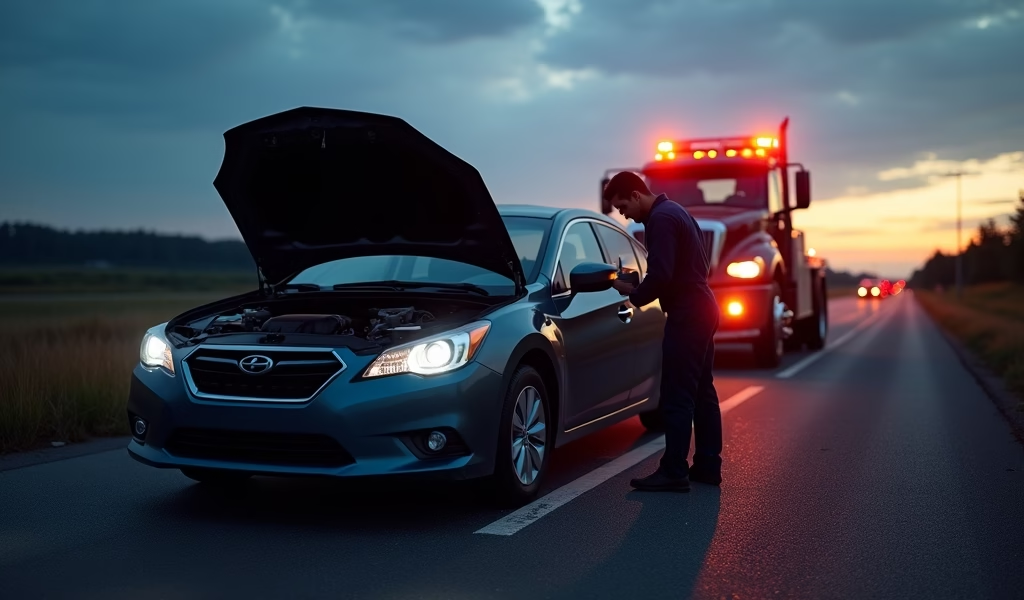
OnStar represents the technological evolution of roadside assistance, offering an integrated experience for vehicles equipped with their system. While primarily associated with General Motors vehicles, their roadside assistance service sets a high bar for convenience and automated support.
The roadside assistance contact process with OnStar is possibly the simplest on our list – push the blue OnStar button in your vehicle, and you’re immediately connected to an advisor who can see your exact location. For drivers without in-vehicle buttons, their mobile app and phone service provide alternative access points.
OnStar’s standout feature is their automatic crash response, which can detect a collision and contact emergency services automatically – even if you’re unable to make the call yourself. While this goes beyond traditional roadside assistance, it represents the integrated approach OnStar takes to driver support.
Standard roadside services include towing, jump-starts, flat tire assistance, fuel delivery, and lockout services. Response times average 30-40 minutes in most areas, with excellent coverage in urban and suburban regions. Rural coverage can be spotty but is generally better than many competitors thanks to OnStar’s partnership with major service networks.
The primary drawback of OnStar is cost and vehicle compatibility. Plans range from $24.99 to $49.99 monthly, significantly higher than other options on our list. However, for drivers who value the additional safety features and integrated experience, the premium may be worthwhile.
Preparing for Roadside Emergencies Before They Happen
Having reviewed the top roadside assistance services, let’s talk about preparation. The best roadside assistance contact information is useless if you can’t access it when needed. Here are essential steps every driver should take before an emergency occurs:
- Store multiple roadside assistance contact methods: Save your provider’s number in your phone, download their app, and keep a physical card in your glove compartment.
- Familiarize yourself with your coverage details: Know what services are included, distance limitations for towing, and any out-of-pocket costs.
- Keep a basic emergency kit: Include reflective triangles, a flashlight, basic tools, and weather-appropriate supplies.
- Maintain your vehicle properly: Many roadside emergencies can be avoided with regular maintenance and prompt attention to warning signs.
- Practice using your provider’s app or service before an emergency: Being familiar with the process will reduce stress when you actually need help.
Remember that even the best roadside assistance service can be delayed by extreme weather, remote locations, or high-volume periods. Your personal preparation can make these situations more manageable and safer.
For maximum peace of mind, consider keeping a portable jump starter in your vehicle – these compact devices have saved countless drivers from waiting for a jump-start service. Similarly, knowing how to change a flat tire can sometimes get you back on the road faster than waiting for assistance.
Conclusion
Finding the right roadside assistance contact solution is about matching your driving habits, budget, and peace-of-mind requirements. AAA offers premium service with extensive coverage but at a higher price point. Insurance-based options like Geico, Progressive, and State Farm provide cost-effective basic coverage that’s sufficient for most drivers. OnStar delivers a high-tech integrated experience for those willing to pay for convenience and additional safety features.
Regardless of which service you choose, the most important factor is having your roadside assistance contact information readily available and understanding how to use it effectively. In those stressful moments when your vehicle leaves you stranded, the ability to quickly and confidently request the right kind of help can transform a potential crisis into a minor delay.
As a mechanic who’s witnessed countless roadside emergencies, I can’t stress enough the importance of being prepared before trouble strikes. Take a few minutes today to verify your roadside assistance coverage, save contact information in multiple places, and familiarize yourself with the process. Your future self, stranded on the side of the road, will thank you for your foresight.
Frequently Asked Questions
How quickly can I expect roadside assistance to arrive after I contact them?
Average response times range from 30-60 minutes depending on your location, traffic conditions, and weather. Urban areas typically see faster response times than rural locations.
What information should I have ready when contacting roadside assistance?
Prepare your membership or policy number, exact location (including landmarks or mile markers), vehicle description, nature of the problem, and a callback number. Having this information ready speeds up the dispatch process.
Is roadside assistance the same as car insurance?
No, roadside assistance is a specific service that helps with vehicle breakdowns and emergencies. Many insurance companies offer it as an add-on to auto policies, but it’s a separate service from insurance coverage.
Can I use roadside assistance if I’m not the one driving my car?
Most roadside assistance plans cover the vehicle regardless of who is driving, but policies vary. Check your specific plan details, as some services like AAA cover the member rather than the vehicle.
What’s the difference between roadside assistance and towing services?
Towing is just one service offered under the broader umbrella of roadside assistance. Roadside assistance typically includes towing, jump-starts, fuel delivery, lockout services, and flat tire changes.