
Overview
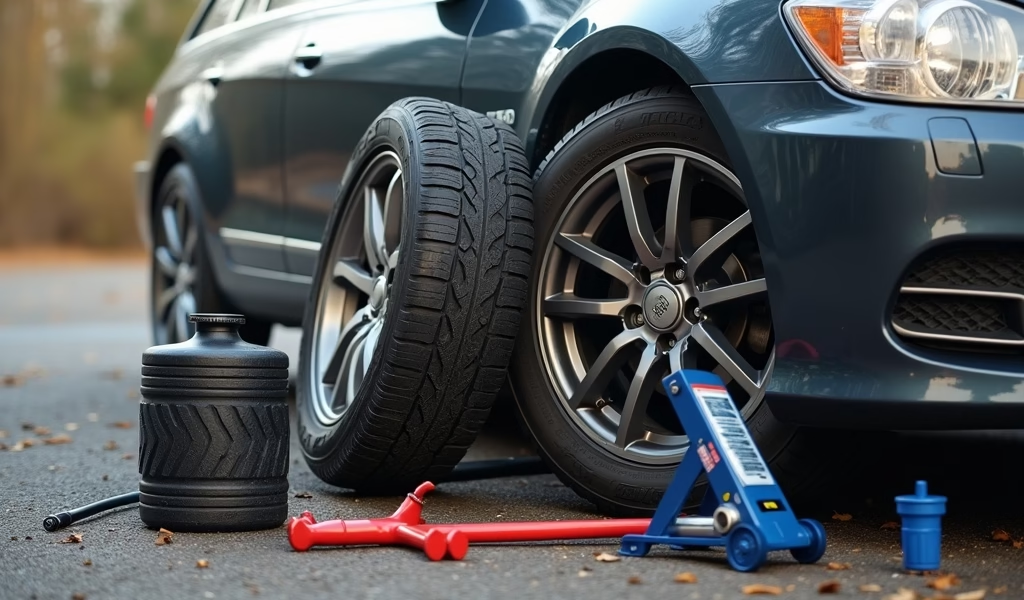
Who knew that tiny punctures could deflate not just your tires but your whole day faster than a dad joke at a family dinner? This article thoroughly explains five essential tire repair options—from quick-fix sealants to comprehensive plug-patch combinations—providing practical guidance on selecting, using, and maintaining the right kit based on your driving habits and mechanical skills.
Table of Contents
- Understanding Tire Repair Kits: Your Roadside Companion
- Why Every Driver Needs a Tire Repair Kit
- Tire Sealant Solutions: Quick Fixes for Punctures
- Plug Kits: Making Permanent Repairs on the Go
- Patch Kits: Traditional Reliability for Serious DIYers
- Combination Kits: The Comprehensive Solution
- CO2 Inflators: Completing Your Tire Repair Arsenal
- How to Choose the Right Tire Repair Kit for Your Needs
- Maintaining Your Tire Repair Kit
- Conclusion: Be Prepared, Stay Mobile
- Frequently Asked Questions
Understanding Tire Repair Kits: Your Roadside Companion
A reliable tire repair kit is something every driver hopes they’ll never need but will be eternally grateful to have when trouble strikes. As a mechanic with 15 years of experience handling everything from simple punctures to complete blowouts, I’ve seen firsthand how a quality tire repair kit can transform a potential roadside nightmare into a minor inconvenience.
The humble tire repair kit has evolved considerably over the years. Today’s options range from simple sealant solutions to comprehensive kits that can handle various types of tire damage. Having the right tools at your disposal means you won’t be stranded waiting for roadside assistance when you could be fixing the problem yourself.
In this guide, we’ll explore five proven flat tire solutions that have saved countless drivers from the headache of unexpected tire problems. Whether you’re a seasoned DIY enthusiast or someone who wants to be prepared for emergencies, understanding your options for tire repair is an essential part of responsible vehicle ownership.
Why Every Driver Needs a Tire Repair Kit
Let’s face it—flat tires don’t schedule appointments. They happen at the most inconvenient times: during rainstorms, on dark country roads, or when you’re already running late for an important meeting. Having a tire repair kit readily available in your vehicle isn’t just convenient; it’s a crucial safety measure.
The statistics are eye-opening. According to AAA, they respond to more than 4 million calls for flat tire assistance annually. That’s roughly one flat tire every 7 seconds in America alone. Many of these situations could be resolved quickly with a proper tire repair kit.
Beyond the immediate convenience, carrying a tire repair kit offers several advantages:
- Cost savings on towing and emergency roadside service
- Reduced downtime during travel
- Independence from service availability in remote areas
- The ability to safely reach a professional repair shop for permanent solutions
Even if you’re comfortable with changing to a spare tire, modern vehicles increasingly come without full-sized spares. Many now include only compact temporary spares or, in some cases, no spare at all—just a tire repair kit. Understanding how to use these kits effectively has become an essential part of basic car maintenance.
Tire Sealant Solutions: Quick Fixes for Punctures
Tire sealant solutions represent the fastest and simplest approach to emergency tire repair. These products work by injecting a liquid sealant into the tire through the valve stem, which then spreads inside the tire as you drive. When the sealant encounters a puncture, it forms a flexible plug that stops air from escaping.
The beauty of sealant solutions lies in their simplicity. Most require no tire removal or special mechanical skills. You simply connect the bottle to your tire valve, squeeze or press a button, and the sealant is injected. After adding the recommended amount, you’ll typically need to drive a short distance to distribute the sealant evenly.
Here’s what makes tire sealants particularly valuable:
- Extremely quick application (usually 5-10 minutes)
- No tools or tire removal required
- Most include a built-in compressor to reinflate the tire
- Effective for punctures up to approximately 1/4 inch in diameter
However, it’s important to understand the limitations. Sealants are temporary solutions designed to get you to a repair shop. Most manufacturers recommend having the tire professionally inspected within 100-200 miles after using a sealant. Additionally, they’re not effective for large punctures, sidewall damage, or complete blowouts.
Popular brands like Fix-A-Flat, Slime, and those included with many new vehicles offer reliable performance for common puncture scenarios. These products typically cost between $10-$50, making them an affordable insurance policy against being stranded.
One important consideration: most tire sealants contain chemicals that can potentially damage tire pressure monitoring system (TPMS) sensors. If your vehicle has TPMS, look specifically for “TPMS-safe” formulations to avoid costly sensor replacements.
Plug Kits: Making Permanent Repairs on the Go
For those willing to get their hands a little dirty, tire plug kits offer a more permanent solution than sealants. These kits contain tools to insert rubber or fibrous plugs directly into puncture holes, physically sealing the leak without relying on chemical compounds.
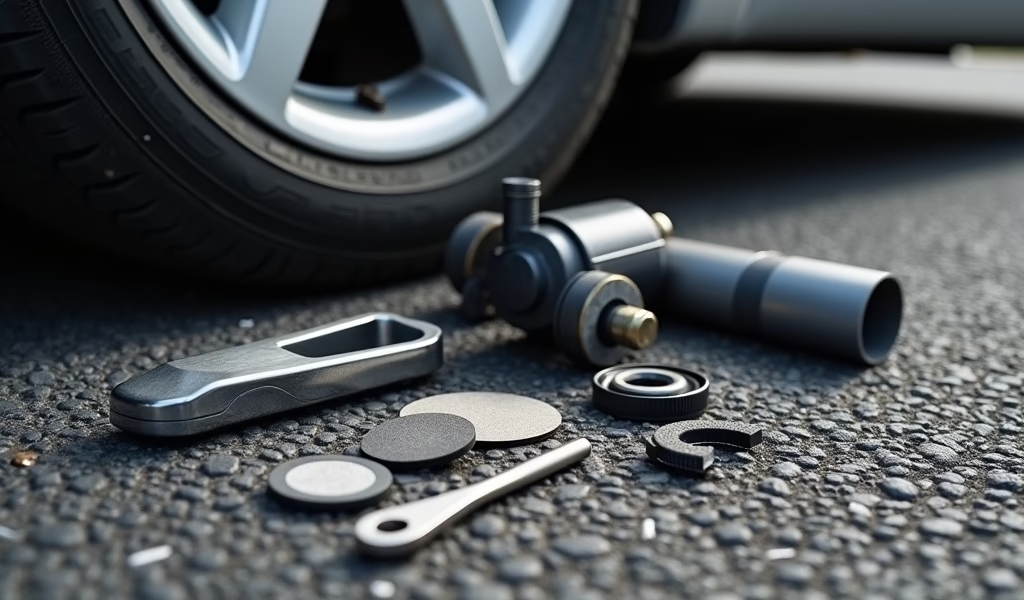
A basic tire plug kit typically includes several rubber plug strips, an insertion tool (often T-shaped), a reaming tool to clean and prepare the hole, and some form of lubricant. The process involves locating the puncture, removing the object causing it, reaming the hole to clean its edges, coating a plug with rubber cement, and forcefully inserting it into the puncture.
The advantages of plug kits are substantial:
- They provide a more permanent repair than sealants
- No chemicals that might damage TPMS sensors
- Can be applied multiple times for different punctures
- Much more economical over time (a $15-30 kit can fix numerous flats)
The downside is that plug repairs require more technical skill and physical effort than using sealants. You’ll need to remove the wheel, locate the puncture (sometimes requiring a spray bottle with soapy water to spot bubbles), and apply significant force to insert the plug.
It’s worth noting that while plug repairs are more durable than sealants, professional tire organizations like the U.S. Tire Manufacturers Association consider proper tire repair to involve both a plug and a patch applied from inside the tire. However, roadside plug repairs have been used reliably by drivers for decades when professional service isn’t immediately available.
For safety reasons, plug repairs should only be attempted on punctures in the main tread area—never on or near sidewalls. Additionally, multiple plugs close together may compromise tire integrity. In such cases, professional assessment is strongly recommended.
Patch Kits: Traditional Reliability for Serious DIYers
Patch kits represent the most thorough DIY repair option, closely mimicking professional repair standards. Unlike plug kits that address punctures from the outside, patch kits require removing the tire from the rim to apply an adhesive patch to the inner liner of the tire.
These kits typically include rubber patches in various sizes, a buffer tool for roughening the inner surface (improving adhesion), rubber cement, and application tools. The process involves locating the puncture, removing the tire from the rim, buffing the inner surface, applying cement, placing the patch, and then reinstalling and reinflating the tire.
The primary advantages of patch repairs include:
- Superior durability and reliability compared to plugs or sealants
- Properly applied patches can last the remaining lifetime of the tire
- No chemicals that might affect tire balance or TPMS sensors
- The ability to repair slightly larger punctures than plug-only methods
The considerable drawback is complexity. Patch repairs require substantially more time, tools, and expertise than other methods. You’ll need tire irons or a bead breaker to remove the tire from the rim, physical strength to manipulate the tire, and patience to ensure proper patch placement and adhesion.
Due to these requirements, patch kits are rarely practical for true roadside emergencies. They’re better suited for garage repairs when time isn’t critical. That said, for the serious DIY mechanic who wants the most professional-grade repair possible without visiting a shop, patches offer unmatched performance.
Many professional tire repair standards, including those from the Rubber Manufacturers Association, actually specify a combined plug-patch repair as the gold standard for puncture repair. This approach seals both the inner liner (with the patch) and fills the puncture channel (with the plug material).
Combination Kits: The Comprehensive Solution
For drivers who want maximum preparedness, combination tire repair kits offer the best of all worlds. These kits include components for multiple repair approaches, allowing you to choose the most appropriate method based on the specific situation and damage type.
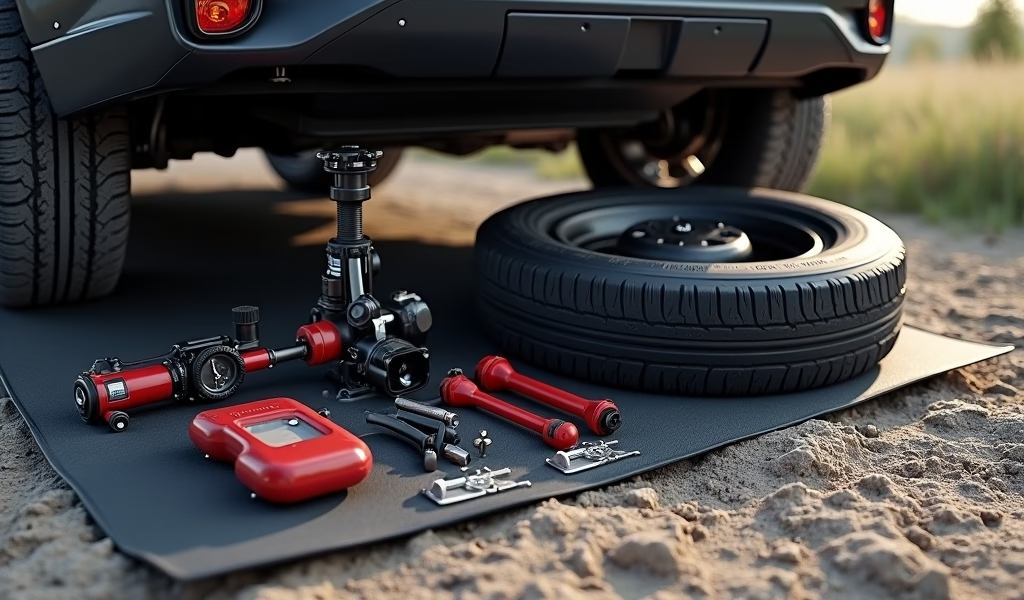
A well-equipped combination kit typically contains:
- Tire sealant for emergency, no-tool repairs
- Plug tools and materials for more durable tread puncture repairs
- Patches and application materials for workshop-level repairs
- Tire pressure gauge and sometimes a compact compressor
- Various accessories like valve cores, valve stem tools, and gloves
The versatility of combination kits makes them particularly valuable for road trips, especially to remote areas where professional help might be hours away. They allow you to apply a quick sealant repair to reach civilization, then follow up with a more durable plug or patch repair when circumstances allow.
Quality combination kits typically range from $40-100, representing a substantial value compared to purchasing individual specialized kits. The primary drawbacks are size and weight—these kits take up more space in your vehicle—and the higher initial investment.
When shopping for a combination kit, prioritize options with high-quality tools rather than those that simply offer more pieces. A sturdy steel insertion tool for plugs, for example, will perform better and last longer than a flimsy plastic alternative. Similarly, look for kits with name-brand sealants rather than generic formulations that might be less effective.
If you’re considering affordable options for car maintenance, a good combination kit represents excellent value. It’s an investment that can potentially save you hundreds in roadside assistance calls and towing fees over its lifetime.
CO2 Inflators: Completing Your Tire Repair Arsenal
Even the best repair is useless if you can’t reinflate your tire. That’s where CO2 inflators come in—these compact devices provide a powerful way to reinflate tires without electricity or manual pumping. They use compressed carbon dioxide cartridges that deliver high-pressure air quickly.
CO2 inflators are particularly valuable because:
- They’re extremely compact compared to traditional compressors
- No electricity required—perfect for remote locations
- They inflate tires much faster than manual pumps
- Cartridges maintain pressure for years until used
A typical CO2 system includes an inflator head that attaches to your valve stem and accepts CO2 cartridges. Each cartridge contains enough pressure to inflate a standard passenger tire to approximately 30-35 PSI, though this varies by tire size. For larger tires, you might need multiple cartridges.
When purchasing a CO2 system, consider the cartridge size and availability. The most common sizes are 16g, 20g, and 25g cartridges. Larger cartridges provide more inflation capacity but are slightly bulkier to carry. It’s wise to keep several spare cartridges with your kit.
One important limitation: unlike electric compressors that can run continuously, CO2 cartridges provide a finite amount of air. Once depleted, you’ll need a replacement cartridge. For this reason, many drivers pair their CO2 system with a compact digital tire pressure gauge to avoid wasting CO2 when checking pressure.
Research from Consumer Reports shows that proper tire inflation is crucial not just for emergency situations but for everyday driving efficiency and safety. Adding an inflation solution to your tire repair kit ensures you’re fully prepared for any situation.
How to Choose the Right Tire Repair Kit for Your Needs
Selecting the ideal tire repair kit depends on several factors including your mechanical comfort level, typical driving environments, and vehicle type. Here’s a straightforward approach to finding your perfect match:
- For occasional city drivers with limited mechanical experience: A quality sealant kit with built-in compressor provides the simplest solution. Look for TPMS-safe formulations if your vehicle has tire pressure monitoring.
- For regular highway commuters: Consider a plug kit plus portable compressor. This combination handles the most common punctures effectively without chemical concerns.
- For road-trippers and adventure travelers: A comprehensive combination kit offers maximum versatility for varying conditions and repair needs.
- For professional-minded DIYers: Include a patch kit alongside plug tools and inflation options for the most complete repair capabilities.
Vehicle-specific considerations matter too. Drivers of trucks or SUVs with larger tires should ensure their kits include adequately sized plugs and sufficient sealant volume. Similarly, performance vehicle owners should verify that any sealants are compatible with high-speed rated tires.
Budget naturally influences choices, but tire repair kits offer exceptional value when viewed as insurance against towing costs and travel disruptions. A mid-range combination kit around $50-70 provides excellent coverage for most drivers’ needs.
Whichever kit type you choose, familiarity is crucial. Take time to review the components and instructions before an emergency occurs. A trial run of the repair process (minus actually puncturing your tire!) can build confidence and ensure you’re prepared when it really matters.
Maintaining Your Tire Repair Kit
Even the best tire repair kit requires occasional maintenance to remain reliable when you need it most. Unlike tools that show obvious wear, tire repair components can deteriorate silently until they fail during an emergency.
Establish a simple maintenance routine:
- Check sealant expiration dates annually (most have 2-5 year shelf lives)
- Inspect rubber cement tubes for hardening or leakage
- Test battery-powered compressors periodically and replace batteries
- Verify that CO2 cartridges remain sealed and undamaged
- Replace any rusted or damaged tools
Environmental factors significantly impact kit longevity. Extreme heat can degrade sealants and adhesives, while moisture can rust metal components. Store your kit in a moderate temperature location in your vehicle, ideally in its original case or a waterproof container.
After using any portion of your kit, promptly replace those components. This ensures you’re never caught with a partially depleted kit during your next emergency. Many drivers keep a “kit restocking” note in their maintenance schedule alongside regular items like oil changes.
For families with multiple vehicles, consider a shared comprehensive kit that travels with different drivers as needed, supplemented by basic sealant options in each vehicle. This approach balances cost with preparedness.
Conclusion: Be Prepared, Stay Mobile
A quality tire repair kit represents one of the smartest investments any driver can make. From the simplicity of sealant solutions to the durability of plug and patch repairs, these kits transform potential roadside disasters into manageable inconveniences.
The peace of mind that comes with proper preparation is invaluable. Knowing you have the tools to address a flat tire—whether you’re commuting to work or exploring remote backroads—allows you to travel with greater confidence and security.
Remember that tire repair kits complement rather than replace regular tire maintenance. Continue monitoring tire pressure, inspecting tread depth, and addressing alignment issues promptly. The best flat tire is the one you prevent through proper care.
For those new to tire repair, don’t hesitate to practice basic procedures before an emergency occurs. Familiarity builds confidence, and confidence leads to competence when facing roadside challenges.
Ultimately, your tire repair kit is more than just tools and materials—it’s a commitment to self-reliance and preparedness. With the right kit and knowledge, you transform from a stranded motorist to a capable problem-solver, ready to handle whatever the road presents.
Frequently Asked Questions
How long do tire sealants last once applied?
Most tire sealants provide a temporary fix lasting approximately 50-100 miles or 3 days, whichever comes first. Always follow up with professional inspection for a permanent repair.
Can I repair a tire with sidewall damage?
No, sidewall punctures or damage should never be repaired with DIY methods. These areas flex significantly during driving and repairs are unlikely to hold safely.
Are tire plug repairs considered permanent?
While many plugs last for years, professional organizations recommend them as temporary repairs. The industry standard for permanent repair is a combined plug-patch applied from inside the tire.
Will using a tire repair kit void my tire warranty?
Some manufacturers may void warranty coverage if improper repairs are made. Check your warranty terms or consult with your tire dealer before making DIY repairs.
How do I know if my puncture is repairable?
Generally, punctures smaller than 1/4 inch in the main tread area (not sidewall) are repairable. Multiple punctures close together or damage near the shoulder of the tire typically require professional assessment.