

Overview
Like a reliable wingman on a road trip gone wrong, a well-stocked car first aid kit provides seven essential treatments: antiseptic solution, bandages, pain relievers, emergency blankets, cold packs, medical tape/scissors, and protective gloves/masks. These supplies should be stored in the passenger compartment (not the trunk), checked twice yearly for expiration, and organized in a hard case for quick access during emergencies—potentially making the difference between a minor inconvenience and a life-threatening situation.
Table of Contents
- Why Every Driver Needs First Aid Supplies
- 7 Essential Car Care First Aid Treatments
- How to Organize Your Car First Aid Kit
- Maintaining Your First Aid Kit
- Conclusion
- Frequently Asked Questions
Why Every Driver Needs First Aid Supplies
As someone who’s spent 20 years under the hood and seen my fair share of roadside emergencies, I can tell you that a well-stocked first aid kit isn’t optional equipment—it’s as essential as your spare tire. The National Highway Traffic Safety Administration reports over 5.5 million car accidents annually in the United States, with many victims needing immediate medical care before professionals arrive.
Having proper first aid supplies in your vehicle creates a crucial safety buffer during those critical first minutes after an accident or injury. A minor cut treated promptly won’t develop into an infected wound requiring antibiotics and extended care. That peace of mind alone is worth the modest investment.
While not universally mandated in the U.S., many European countries, Russia, and parts of South America legally require drivers to carry basic medical supplies. Being prepared isn’t just good practice—it could be the difference between a minor inconvenience and a serious emergency.
7 Essential Car Care First Aid Treatments
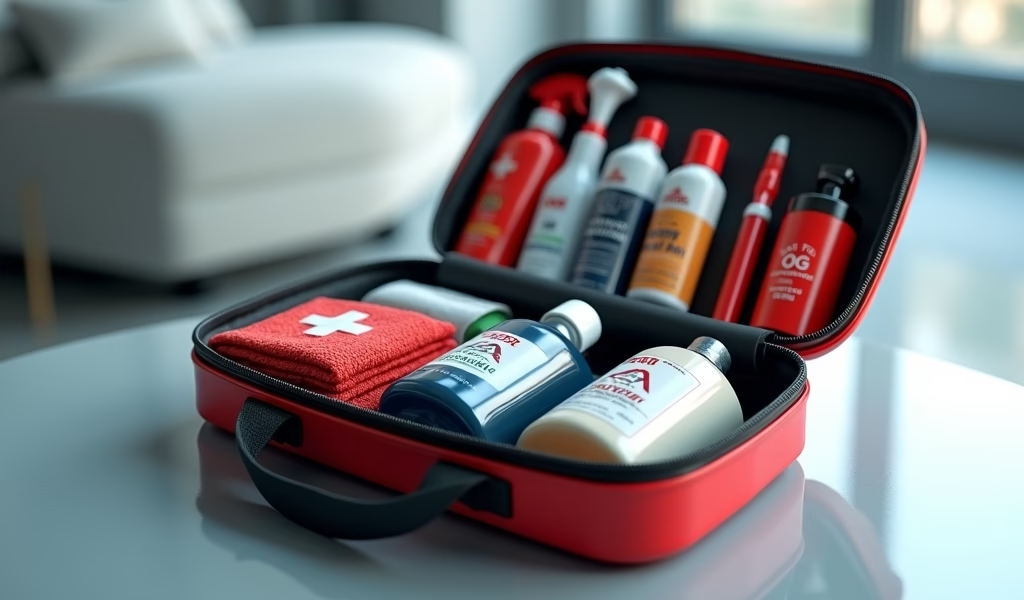
1. Multi-Purpose Antiseptic Solution
A good antiseptic solution is like having a tiny mechanic that cleans wounds while preventing infection. It’s your first defense against harmful bacteria when you’re miles from proper medical care.
Look for travel-sized bottles of Betadine, hydrogen peroxide, or Bactine with secure, leak-proof lids. The last thing you need is antiseptic solution performing an impromptu swimming routine in your glove compartment. Apply directly to wounds or use with clean gauze, allowing about 30 seconds of contact before patting dry and bandaging.
These products typically cost between $3-$10—an excellent value considering they prevent microscopic troublemakers from turning minor cuts into major problems. For maximum effectiveness, check expiration dates every six months.
2. Bandages and Wound Dressings
Just like vehicle repairs require different tools, wound care demands various bandages. Stock your kit with adhesive bandages in assorted sizes, gauze pads (both 2×2 and 4×4 inches), and at least one roll of gauze for larger injuries.
Waterproof options like Band-Aid’s Advanced Healing and Nexcare Waterproof keep performing even in wet conditions—think of them as all-weather tires for wound care. Store all bandages in their original packaging or sealed plastic bags to prevent contamination.
For reliability and comfort, mechanics and first responders alike recommend Band-Aid Flexible Fabric bandages, Curad Performance Series, and 3M Tegaderm transparent dressings. These products strike the perfect balance between staying power and comfort.
3. Pain Relief Medications
Every roadside kit needs basic pain relief medications. Include both acetaminophen (Tylenol) and a non-steroidal anti-inflammatory drug like ibuprofen (Advil) or naproxen (Aleve). One masks pain while the other addresses underlying inflammation—a powerful combination for roadside relief.
Remember that vehicles experience extreme temperature fluctuations that can degrade medications. Store them in a small insulated pouch in the main cabin rather than the trunk. Check expiration dates twice yearly, as expired pain relievers lose effectiveness.
Store brands from major pharmacy chains offer identical active ingredients to name brands at significantly lower prices. They’re the generic replacement parts of the medication world—same quality, lower cost.
4. Emergency Mylar Blankets
These lightweight silver sheets might look simple, but they’re engineering marvels in emergency situations. Beyond preventing hypothermia, they serve as ground covers, makeshift shelters, signal devices, and even impromptu rain protection.
Each blanket folds to about the size of a deck of cards, making them incredibly space-efficient. Quality mylar blankets retain up to 90% of body heat and withstand moderate weather conditions. Keep in mind they’re generally single-use items—once unfolded, they rarely pack back to their original compact form.
At $1-$3 each (or multipacks of 4-10 for $5-$15), these life-saving sheets deliver extraordinary value. They weigh almost nothing but could make all the difference if you’re stranded in cold conditions.
5. Instant Cold Packs
When sprains, strains, or bruises occur on the road, instant cold packs provide immediate relief by reducing swelling and numbing pain. They’re particularly effective when applied within the first 48 hours after injury.
Most single-use cold packs activate by squeezing or bending, which breaks an inner pouch and mixes chemicals to create a cooling reaction. It’s like having portable ice that doesn’t need refrigeration. These packs typically remain effective for 2-3 years when stored in your vehicle.
In my testing and field experience, Dynarex Instant Cold Pack, Medique Medi-First Cold Packs, and IceWraps 5″ Instant Cold Packs consistently provide rapid cooling and maintain their temperature for the advertised duration.
6. Medical Tape and Scissors
These humble tools are the unsung heroes of any first aid kit. Medical tape secures bandages, stabilizes sprains, and even serves as an emergency butterfly closure for small cuts. Trauma shears can safely cut through clothing, seatbelts, or bandaging materials when seconds count.
For automotive kits that endure temperature extremes, choose waterproof zinc oxide tape or silicone-based medical tape that maintains adhesion even in sweaty or wet conditions. Look for scissors with blunt tips and curved blades designed to slide under material without risking additional injury.
3M Micropore, Johnson & Johnson Waterproof Tape, and EMT Shears by Prestige Medical consistently earn top marks for reliability and performance. Keep these items in sealed plastic bags to prevent contamination.
7. Disposable Gloves and Face Masks
In our post-pandemic world, protective gear has become essential in every comprehensive first aid kit. Nitrile gloves resist punctures better than latex and don’t trigger latex allergies, making them ideal for emergency situations involving blood or other bodily fluids.
Store gloves and masks in sealed plastic bags to prevent contamination. Check them periodically for degradation from temperature extremes, which can affect elastic components over time. Beyond medical emergencies, gloves protect hands during tire changes or when handling potentially hazardous materials after a collision.
Kimberly-Clark Purple Nitrile Gloves and 3M Aura Particulate Respirator masks offer excellent protection without breaking the bank. This is one area where cutting corners isn’t worth the risk—quality matters.
How to Organize Your Car First Aid Kit
The best first aid supplies are worthless if you can’t find them quickly in an emergency. Hard cases protect contents from crushing and moisture better than soft cases, making them ideal for harsh conditions or trunk storage. Soft cases offer flexibility for tight spaces and often include helpful compartments.
Size matters—compact kits about the size of a hardcover book work well for small vehicles, while SUVs and family cars might benefit from more comprehensive kits. Whatever you choose, make sure it’s accessible to the driver or front passenger, not buried under cargo.
Place your kit in the glove compartment, center console, or a dedicated spot under the front seat. Avoid the trunk unless absolutely necessary—in a serious accident, trunk access might be compromised when you need supplies most.
Adjust your kit’s contents seasonally. Add sunscreen and insect repellent in summer, hand warmers in winter. This simple customization ensures your kit addresses the most likely needs year-round.
Maintaining Your First Aid Kit
Create a bi-annual schedule to check your first aid supplies—perhaps when you change your clocks for daylight saving time. This regular maintenance prevents the unpleasant surprise of reaching for antiseptic wipes during an emergency only to find they’ve dried out.
Different items have different lifespans in the harsh car environment:
- Medications: Replace yearly or per expiration date
- Bandages: Replace every 3-5 years
- Gloves and masks: Check elastic components yearly
- Antiseptic solutions: Replace every 1-2 years
For organized maintenance, keep a small inventory list with expiration dates in your kit. Alternatively, set a recurring calendar reminder on your phone. This simple step ensures your supplies will work when you need them most.
Conclusion
Your car’s first aid kit is like a good insurance policy—you hope to never need it, but you’ll be grateful for its existence when emergencies arise. The seven essential treatments we’ve covered form the core of your vehicular safety system.
Beyond these essentials, consider adding supporting items like tweezers for splinters, emergency contact information, a basic first aid manual, and any personal medications regularly needed by you or your passengers.
As someone who’s witnessed countless roadside emergencies, I can assure you that preparation isn’t paranoia—it’s protection. A properly stocked and maintained first aid kit could mean the difference between a minor inconvenience and a life-threatening situation.
Take a few minutes this week to assemble or update your car’s first aid supplies. This small investment of time and money provides immeasurable peace of mind on every journey, whether it’s a daily commute or a cross-country adventure.
Frequently Asked Questions
How often should I replace items in my car’s first aid kit?
Check your kit twice yearly and replace medications according to expiration dates. Bandages typically last 3-5 years, while antiseptic solutions should be replaced every 1-2 years.
What’s the best container for a car first aid kit?
Hard plastic containers offer better protection against moisture and crushing in vehicles. Look for waterproof options with secure latches that won’t open accidentally.
Should I keep my first aid kit in the trunk or passenger compartment?
Store your kit in the passenger compartment where it’s easily accessible in emergencies. The trunk may become inaccessible after an accident when supplies are most needed.
Are there specific first aid supplies needed for children in the car?
Include child-sized bandages, children’s pain relievers with appropriate dosing instructions, and any medications specific to your child’s needs. Consider adding a comfort item like a small stuffed animal to help distract and calm injured children.
Do first aid supplies expire if unused?
Yes, most first aid supplies have expiration dates, including medications, antiseptics, and even bandages. Extreme car temperatures accelerate deterioration, making regular replacement essential.