

Overview
Ever wondered why changing a tire feels like wrestling an octopus covered in butter? This guide explains the fundamentals of tire iron leverage for effective lug nut removal, covering proper techniques, tool selection, common mistakes to avoid, and safety considerations to transform what could be a roadside nightmare into a manageable 15-minute task.
Table of Contents
- Understanding Tire Iron Leverage: The Basics
- Why Proper Leverage Matters for Lug Nut Removal
- Choosing the Right Tire Iron for Maximum Leverage
- Proper Techniques for Using Tire Iron Leverage
- Common Mistakes to Avoid When Using a Tire Iron
- Advanced Tips for Stubborn Lug Nuts
- Safety Considerations When Using Tire Iron Leverage
- Maintenance Tips for Your Tire Iron
- Conclusion
- Frequently Asked Questions
Understanding Tire Iron Leverage: The Basics
Tire iron leverage is the fundamental principle that makes changing a tire possible for the average person. Without proper leverage, those stubborn lug nuts would remain firmly in place, leaving you stranded with a flat. As a mechanic with over 15 years of experience, I’ve seen countless people struggle with lug nuts simply because they don’t understand the physics at work.
At its core, leverage is about using a tool (your tire iron) to multiply the force you apply. The longer the handle of your tire iron, the more leverage you have. This is why those compact tire irons that come with many vehicles are often frustrating to use – they simply don’t provide enough leverage for the average person to loosen properly torqued lug nuts.
Think of it this way: when you’re trying to remove a lug nut, you’re fighting against the torque that was applied when the nut was tightened. Most passenger vehicle lug nuts are tightened to between 80-100 foot-pounds of torque. Without adequate leverage, generating that much force to break them loose can be nearly impossible, especially if they’ve been overtightened or have corrosion.
The beauty of tire iron leverage is that it transforms what would be an impossible task into something manageable. A properly designed tire iron with sufficient length can reduce the required effort by 5-10 times, making it possible for almost anyone to change a tire when needed.
Why Proper Leverage Matters for Lug Nut Removal
Proper tire iron leverage isn’t just about convenience – it’s about safety, efficiency, and preventing damage to your vehicle. When you apply the right amount of leverage in the correct way, you protect both yourself and your vehicle’s components.
First and foremost, adequate leverage prevents injury. I’ve treated too many scraped knuckles and strained muscles from folks who tried to compensate for poor leverage by applying brute force. When you suddenly slip while pushing with all your might, the results can be painful or even dangerous if you’re working on the roadside.
Beyond safety, proper leverage protects your lug nuts and wheel studs. Without sufficient mechanical advantage, people often resort to stomping on tire irons or using “cheater bars” (pipe extensions) improperly. These approaches can damage the lug nuts, strip threads, or even snap wheel studs – turning a simple tire change into a costly repair.
There’s also the matter of time and frustration. Nothing is more disheartening than being unable to loosen a single lug nut after several minutes of trying. With proper leverage, what might have been a 45-minute ordeal becomes a 15-minute routine maintenance task that you can handle confidently.
Interestingly, studies have shown that the average adult can comfortably generate about 50 pounds of force with their arms. With a 15-inch tire iron, that translates to only about 60-70 foot-pounds of torque – often insufficient for properly tightened lug nuts. This explains why so many people struggle with the factory-provided tools.
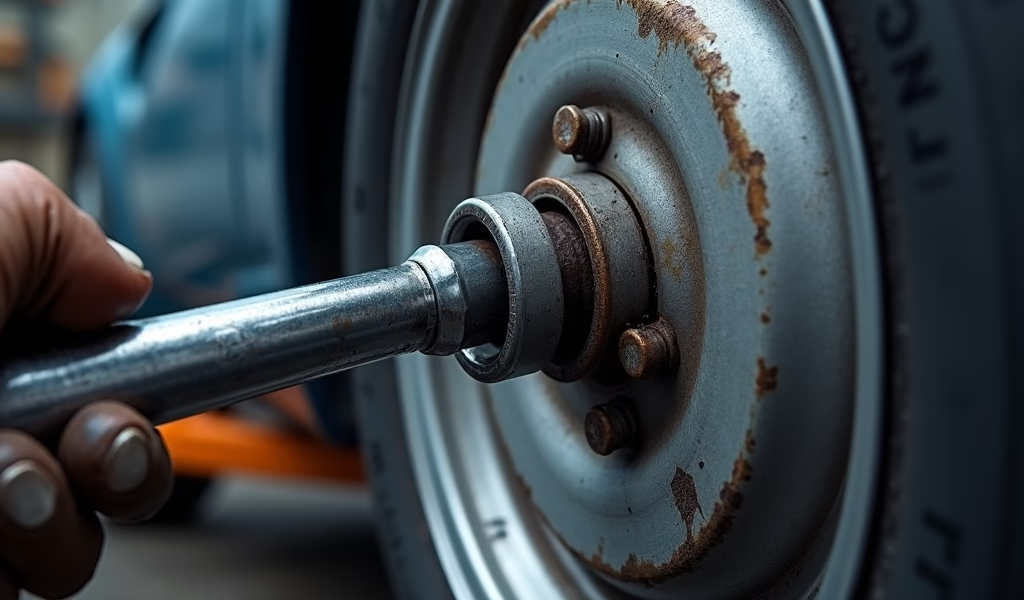
Choosing the Right Tire Iron for Maximum Leverage
Selecting the right tire iron can make all the difference in your ability to remove lug nuts efficiently. Not all tire irons are created equal, and the differences go beyond mere brand names or price points.
Length is the most critical factor in tire iron selection. A longer handle provides more leverage, making it easier to break loose stubborn lug nuts. While the compact tire irons included with many vehicles are typically 12-15 inches long, professional mechanics often prefer 18-24 inch models. Each additional inch dramatically increases your mechanical advantage.
The shape of your tire iron also matters significantly. The traditional cross-shaped (X-shaped) tire irons offer four different socket sizes and good leverage in most situations. Telescoping tire irons provide adjustable length for different scenarios, while L-shaped tire irons with extended handles offer maximum leverage for particularly stubborn nuts.
Material quality shouldn’t be overlooked. A tire iron made from hardened steel will resist bending and breaking even when significant force is applied. Chrome-vanadium steel is particularly valued for its strength and durability under high-torque situations, according to Popular Mechanics’ tool experts.
Consider socket design as well. Deep sockets that fully encase the lug nut provide better grip and reduce the risk of slipping or stripping the nut. Some premium tire irons feature thin-wall sockets that allow access to lug nuts in tight spaces without sacrificing strength.
For those who change tires frequently, a torque-limiting tire iron may be worth the investment. These specialized tools prevent over-tightening by “breaking” at a predetermined torque level, protecting your wheel studs from damage while ensuring proper lug nut tightening.
Proper Techniques for Using Tire Iron Leverage
Mastering the proper technique for tire iron leverage will save you time, energy, and potentially prevent injury. Let’s break down the correct approach to removing lug nuts efficiently.
Position is paramount. Before applying force to your tire iron, ensure your vehicle is on a flat, stable surface with the parking brake engaged. For maximum stability, place wheel chocks on the opposite side of the car from where you’re working. This basic maintenance practice prevents the vehicle from rolling while you’re applying force.
When it comes to actual lug nut removal, always position the tire iron at either 3 o’clock or 9 o’clock on the wheel. This allows you to push down (never pull up) on the iron, using your body weight rather than just arm strength. Stand to the side of the tire iron rather than directly behind it to prevent injury if it suddenly slips.
The application of force should be steady and controlled. Avoid jerking or using sudden movements, which can cause the iron to slip off the lug nut. Instead, gradually increase pressure while maintaining a firm grip on the iron. Some mechanics recommend using both hands on the tire iron for better control and force distribution.
For particularly stubborn lug nuts, try these proven techniques:
- The “stepping method”: Position the tire iron horizontally and carefully step on it with your foot (while holding onto the vehicle for balance)
- The “bounce technique”: Apply steady pressure and add small “bouncing” movements to help break the initial resistance
- The “two-handed method”: Position one hand at the end of the tire iron and the other near the socket for maximum control
Remember to break the initial resistance of each lug nut while the wheel is still on the ground. This uses the weight of the vehicle to your advantage, preventing the wheel from spinning. Once all nuts are loosened (but not removed), then proceed with jacking up the vehicle.
When reinstalling lug nuts, use the tire iron to tighten them in a star pattern (skipping directly adjacent nuts) to ensure even pressure across the wheel. However, final tightening should ideally be done with a torque wrench to manufacturer specifications.
Common Mistakes to Avoid When Using a Tire Iron
Even with the right tools, there are several common mistakes that can make lug nut removal unnecessarily difficult or even damaging. I’ve seen these errors countless times during my years in the shop, and they’re easy to avoid once you know what to look for.
One of the most frequent mistakes is attempting to remove lug nuts after jacking up the car. This causes the wheel to spin freely, making it nearly impossible to generate enough force to break the nuts loose. Always loosen lug nuts while the vehicle is still firmly on the ground, then raise the vehicle to complete the removal.
Improper tire iron placement can lead to frustration and damaged lug nuts. Ensure the socket is fully and squarely engaged on the lug nut before applying force. A partially engaged socket will slip and round off the corners of the nut, making it even harder to remove later.
Many people instinctively pull up on the tire iron rather than pushing down. This is both less effective (you can’t use your body weight) and more dangerous (if the iron slips, your face is in the path). Always position yourself to push downward on the tire iron when breaking lug nuts loose.
Using the wrong size socket is another common error. Modern vehicles have specific lug nut sizes, and using an ill-fitting socket can damage both the nut and your tire iron. Take the time to select the correct socket size before applying force. This simple step can save you from costly repair expenses down the road.
Perhaps the most damaging mistake is using makeshift extensions or “cheater bars” improperly. While additional leverage is sometimes necessary, improper extension methods can break wheel studs or damage your tire iron. If you need extra leverage, use proper extension tools designed for the purpose, or consider investing in a longer tire iron.
Finally, many people forget to clean and lubricate difficult lug nuts. If you encounter extreme resistance, a penetrating oil applied to the threads can make removal significantly easier after allowing it to work for a few minutes. This simple step has saved countless hours of struggle in professional garages.
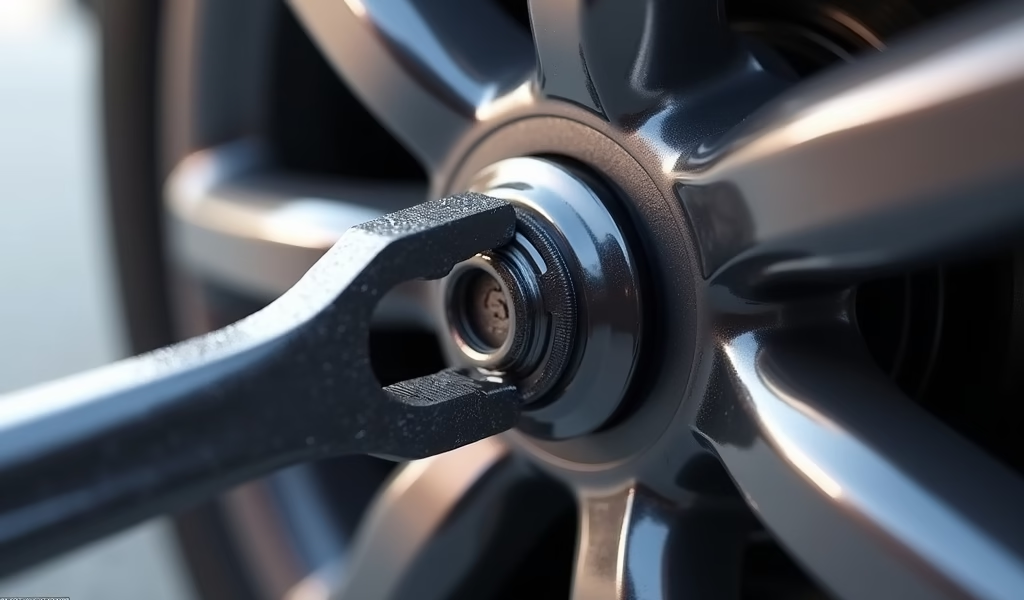
Advanced Tips for Stubborn Lug Nuts
When standard approaches fail, it’s time to employ some advanced techniques for those particularly stubborn lug nuts. These methods come from years of experience dealing with the most challenging wheel removal situations.
Impact techniques can be remarkably effective. Try positioning your tire iron at 3 o’clock, then strike the end of the handle with the heel of your hand or a rubber mallet. This sudden impact can break the corrosion seal that’s often binding lug nuts in place. The vibration travels through the metal and disrupts the bond between the threads.
Temperature differential can be your ally. Heating the lug nut (carefully, with a heat gun – not an open flame) causes metal expansion that can break corrosion bonds. Alternatively, applying a freeze spray to the center stud while heating the nut creates differential expansion that can free even the most stubborn connections.
For extreme cases, consider a dedicated lug nut removal tool. These specialized devices use principles of shock, vibration, and enhanced grip to remove damaged or severely stuck lug nuts. Professional mechanics often keep these tools on hand for the most challenging cases, as noted by Motor Trend’s technical experts.
The “breaker bar method” provides exceptional leverage for stubborn nuts. A breaker bar is essentially a long-handled socket wrench without the ratcheting mechanism, designed specifically for breaking loose stubborn fasteners. Its extra length (typically 18-30 inches) provides substantially more leverage than standard tire irons.
If corrosion is the culprit, specialized penetrating oils designed for automotive use can work wonders. Apply the penetrant generously, then tap the lug nut with a hammer to help the liquid work into the threads. Let it sit for 15-30 minutes before attempting removal again.
When all else fails, the “two-person method” can provide the solution. Have one person apply steady downward pressure on the tire iron while another delivers controlled impacts to the handle. This combination of steady force and shock often succeeds where either approach alone would fail.
Safety Considerations When Using Tire Iron Leverage
Safety must always be your priority when working with tire iron leverage. The forces involved in lug nut removal are substantial, and without proper precautions, injuries can occur.
Always ensure your vehicle is on flat, stable ground before attempting to change a tire. Working on an incline or uneven surface dramatically increases the risk of the vehicle shifting during the process. Set the parking brake firmly and use wheel chocks on the wheels opposite to where you’re working.
Proper hand positioning is crucial for preventing injuries. Maintain a firm grip on the tire iron, but position your hands so they won’t smash into the ground or wheel well if the iron suddenly slips. Never wrap your fingers around parts of the iron that could pinch if the tool shifts unexpectedly.
Be mindful of your body positioning as well. Stand to the side of the tire iron rather than directly behind it, and keep your face away from the path the iron would travel if it slips. Use controlled, steady pressure rather than sudden jerking movements that can cause loss of control.
Protective gear is often overlooked but extremely important. A quality pair of mechanic’s gloves not only improves your grip on the tire iron but also protects your hands from impacts, pinches, and abrasions. Safety glasses protect your eyes from rust flakes or debris that might dislodge during the process.
Weather conditions affect safety significantly. Working on hot lug nuts in summer can cause burns, while cold metal in winter can stick to bare skin. Wet or icy conditions make control of the tire iron more difficult and increase slip hazards.
If you’re changing a tire roadside, visibility to other drivers is a critical safety factor. Position warning triangles or flares, and try to work as far from moving traffic as possible. A reflective vest makes you more visible to passing vehicles, especially in low-light conditions.
Maintenance Tips for Your Tire Iron
A well-maintained tire iron will serve you faithfully for decades, while a neglected one might fail you when you need it most. Simple maintenance ensures your tool is ready when you need it.
Regular inspection is your first line of defense. Examine your tire iron for signs of bending, cracking, or socket damage. Pay special attention to welded joints on cross-type tire irons, as these can be failure points if weakened. If you notice any structural issues, replace the tool rather than risking failure under load.
Corrosion is the enemy of all metal tools. After use, especially in wet or salty conditions, thoroughly dry your tire iron and apply a light coating of protective oil to prevent rust. WD-40 or similar products work well for this purpose. Pay special attention to the sockets, where salt and moisture can become trapped.
The sockets of your tire iron need particular attention. Keep them clean and free of dirt, old grease, or road grime that could prevent proper engagement with lug nuts. A small wire brush is perfect for cleaning socket interiors, followed by a light application of penetrating oil to prevent corrosion.
Proper storage plays a key role in tire iron longevity. Store your tire iron in your vehicle’s designated tool compartment, secured against movement. Loose tools bouncing around in your trunk can become damaged or damage other items. Consider wrapping the tire iron in a cloth or using a tool roll to prevent scratching and rattling.
If your tire iron has moving parts, such as telescoping sections or folding components, periodically lubricate these mechanisms with a small amount of silicone spray or light machine oil. This ensures smooth operation when you need to use the tool in an emergency.
Finally, consider periodic “exercise” of your tire iron. If a tool sits unused for years, moving parts can seize and even solid components can develop hidden corrosion. Every few months, take out your tire iron, check its condition, and work any moving parts to ensure everything functions properly.
Conclusion
Mastering tire iron leverage is one of those essential skills that transforms a potentially stressful roadside emergency into a manageable task. Throughout this guide, we’ve covered everything from the basic physics of leverage to advanced techniques for stubborn lug nuts, all designed to empower you with the knowledge to handle tire changes confidently and safely.
Remember that tire iron leverage isn’t about brute strength – it’s about working smarter, not harder. The right tool, proper technique, and an understanding of the principles at work make all the difference. Whether you’re using the factory-provided tire iron or have invested in a professional-grade tool, applying what you’ve learned here will make lug nut removal easier and safer.
Take the time to practice these techniques before you actually need them. A controlled practice session in your driveway is far better than learning under pressure on a dark, rainy roadside. Check your tire iron now, make sure it’s in good condition, and consider upgrading if it doesn’t provide adequate leverage for your needs.
With the knowledge you’ve gained from this guide, you’re now equipped to handle one of the most common roadside challenges with confidence. Proper tire iron leverage is truly the key to easy lug nut removal – a skill that might just save your day someday.
Frequently Asked Questions
How long should a tire iron be for optimal leverage?
For optimal leverage, choose a tire iron between 18-24 inches in length. This length provides sufficient mechanical advantage for most drivers to break loose properly torqued lug nuts.
Can I use a pipe to extend my tire iron for more leverage?
While it’s possible to use a pipe as a “cheater bar,” this should be done carefully to avoid damaging the tire iron or wheel studs. A better solution is purchasing a proper breaker bar designed for high-torque applications.
Why are my lug nuts so difficult to remove even with a tire iron?
Difficult removal usually results from overtightening, corrosion between the threads, or using an impact wrench for installation without proper torque settings. Applying penetrating oil and using a longer tire iron often resolves these issues.
Should I remove lug nuts before or after jacking up the car?
Always break the initial resistance of lug nuts while the car is still on the ground. This prevents the wheel from spinning freely and uses the vehicle’s weight to your advantage.
How much force should I apply to my tire iron?
Apply steady, increasing pressure rather than sudden jerking motions. If you’re struggling even with proper technique, try using penetrating oil on the threads or a longer tire iron rather than excessive force.