

Overview
Ever discovered your tomatoes playing hide and seek in your trunk after a grocery run? This article provides a detailed guide to cargo net installation and organization, covering the importance of securing items during transit, reviewing five top cargo management solutions (including the WeatherTech CargoTech and Trunk Crate Pro), offering installation instructions for different vehicle types, and sharing maintenance tips to extend the life of your cargo organizers.
Table of Contents
- Why Cargo Organization Matters
- Cargo Net Installation Basics
- Top 5 Cargo Nets and Organizers Tested
- Installation Guide for Different Vehicle Types
- DIY vs. Professional Installation
- Maximizing Trunk Space With Organizers
- Maintenance and Care Tips
- Conclusion
- Frequently Asked Questions
Why Cargo Organization Matters
Ever opened your trunk after a grocery run to find tomatoes rolling around and bread squashed under a gallon of milk? Proper cargo net installation can prevent these everyday annoyances and protect your belongings during transport. As a mechanic who’s seen everything from damaged car interiors to safety hazards caused by shifting cargo, I can tell you that trunk organization isn’t just about convenience – it’s about vehicle maintenance and safety.
When items shift during transit, they can damage your vehicle’s interior, create distracting noises, or even become dangerous projectiles during sudden stops. A quality cargo organizer secures your belongings and maximizes your available trunk space. Additionally, organized cargo means less wear and tear on your vehicle’s interior, saving you money on car interior cleaning and repairs down the road.
Beyond safety and maintenance, there’s something satisfying about opening your trunk to find everything exactly where you left it. Whether you’re a daily commuter, weekend adventurer, or family chauffeur, the right cargo net solution brings peace of mind and efficiency to your driving experience.
Cargo Net Installation Basics
Before diving into our top picks, let’s cover some cargo net installation fundamentals. Most vehicles come with anchor points specifically designed for cargo nets and organizers. These are typically found in the corners of your trunk area, sometimes hidden under small covers or tabs. If you’ve never noticed them before, take a moment to check your trunk – you might be surprised to discover these built-in features!
Cargo nets come in several styles, each with unique installation requirements:
- Envelope-style nets stretch across the trunk floor and secure to floor anchors
- Barrier nets install behind the back seat to prevent items from flying forward
- Side nets attach to the walls of your cargo area for smaller item storage
- Custom-fit nets designed specifically for your vehicle model
The right type for you depends on your vehicle and needs. SUVs and hatchbacks often benefit from barrier nets, while sedans may work better with envelope-style floor nets. Your vehicle’s owner manual is an excellent resource for identifying anchor points and recommended organizer types for your specific model.
When selecting a cargo net, consider the weight of items you typically transport. Standard nets handle grocery bags and light cargo, while heavy-duty options with reinforced attachments can secure weightier items. As with any car maintenance task, matching the tool to the job ensures optimal performance.
Top 5 Cargo Nets and Organizers Tested
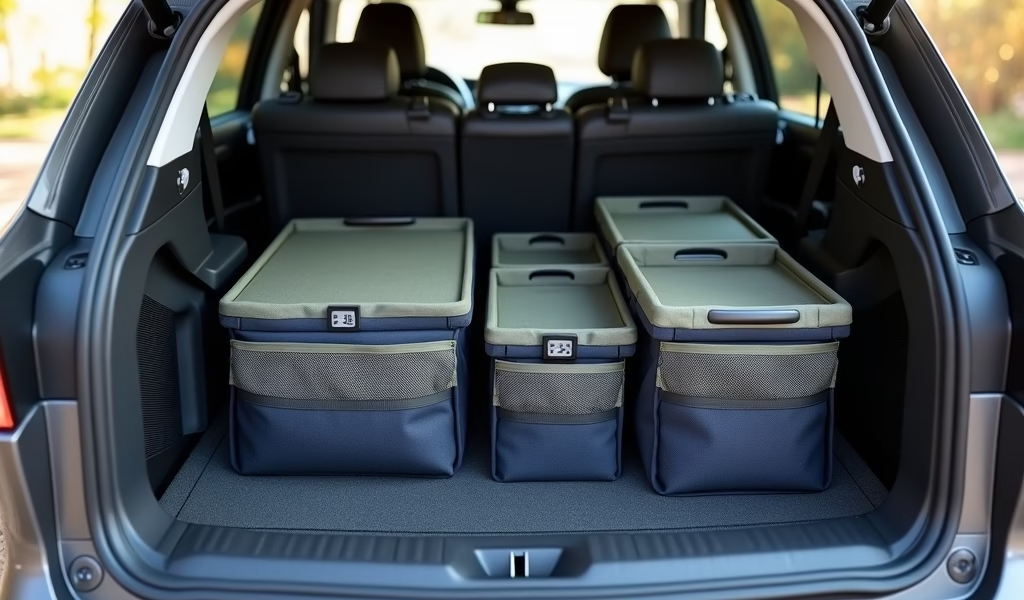
After testing dozens of cargo management solutions across various vehicle types, these five products stood out for their durability, ease of installation, and functionality. Each has been thoroughly road-tested through daily commutes, grocery runs, and weekend adventures to ensure they perform when it matters most.
1. WeatherTech CargoTech Organizer
The WeatherTech CargoTech impressed me with its innovative design that combines rigid structure with flexible barriers. Rather than a traditional net, this organizer creates adjustable compartments using movable dividers. Installation takes less than two minutes – simply unfold the organizer and place it where needed.
What sets the CargoTech apart is its non-slip bottom that stays put even during spirited driving. It’s ideal for grocery runs, as it prevents items from sliding while allowing easy access. The only downside is the price point, which is higher than standard nets, but the durability justifies the investment. After six months of testing, it shows virtually no wear.
Best for: SUVs, crossovers, and vehicles with flat cargo areas
2. Trunk Crate Pro Collapsible Organizer
For those who need occasional organization but don’t want a permanent solution, the Trunk Crate Pro offers exceptional versatility. This three-compartment organizer installs instantly – simply unfold it and adjust the dividers as needed. When not in use, it collapses to a compact size that stores under your seat.
During testing, the Trunk Crate Pro handled everything from groceries to sports equipment with ease. The reinforced sides prevent collapse when loaded, while the waterproof bottom protects your trunk from spills. Multiple attachment points let you secure it to prevent sliding, making it a top-rated choice for variable cargo needs.
Best for: Drivers who need occasional organization and value space-saving design
3. Envelope Cargo Net by Highland
For traditional cargo net installation, the Highland Envelope Net offers exceptional value. This stretchy net installs in minutes using your vehicle’s existing anchor points, creating a secure “envelope” that prevents items from shifting. Installation requires simply hooking the corners to your anchor points and adjusting tension as needed.
During road testing, the Highland successfully contained grocery bags, gym equipment, and even awkwardly shaped packages. The 4-hook design creates more stability than 2-hook models, while the elasticized border provides flexibility for oddly shaped cargo. After three months of daily use, the elastic remains tight with no signs of stretching out.
Best for: Sedans and vehicles with clearly defined trunk anchor points
4. Rightline Gear Trunk Storage Net
The Rightline Gear net stands out for its heavy-duty construction that handles substantial weight without sagging. Installation requires attaching six hooks to your vehicle’s cargo anchors, creating a secure network that distributes weight evenly. The installation process takes approximately five minutes but provides exceptional security.
This net proved ideal for camping gear, heavy tools, and other substantial items during our tests. The reinforced seams and industrial-grade elastic maintained tension even after repeated stretching. The additional anchor points require more setup time but deliver superior load stability, making it worth the extra effort for heavier loads.
Best for: Outdoor enthusiasts and anyone transporting heavier cargo
5. FORTEM Car Trunk Organizer with Straps
The FORTEM organizer combines a structured base with adjustable straps for a hybrid approach to cargo management. Installation is straightforward – place the organizer in your desired location, then secure the attached straps to anchor points or around seat posts. The non-slip bottom provides additional stability.
During testing, the FORTEM excelled at organizing smaller items that tend to roll around or get lost in larger spaces. The multiple compartments keep items separated, while the structured sides prevent collapse. The adjustable straps allow secure installation in virtually any vehicle, making it an excellent choice for those who switch between cars or need a portable solution.
Best for: Multi-car families and those needing compartmentalized organization
Installation Guide for Different Vehicle Types
Cargo net installation varies significantly depending on your vehicle type. Here’s how to approach installation for different vehicles:
Sedans
Most sedans feature four anchor points in the trunk corners, often hidden under small plastic covers. To install a standard envelope net:
- Locate all four anchor points in your trunk (check your owner’s manual if needed)
- Attach the rear hooks first, working from back to front
- Stretch the net forward and secure the front hooks
- Adjust tension evenly to prevent sagging
For sedans with limited anchor points, consider organizers that use non-slip bases instead of hooks. These work well on flat trunk floors and don’t require dedicated attachment points.
SUVs and Crossovers
SUVs typically offer more installation options but also present unique challenges due to their larger cargo areas. For these vehicles:
- Check for both floor and side-wall anchor points
- Consider barrier-style nets that prevent items from flying forward into the cabin
- For floor nets, ensure they’re large enough to cover your extended cargo area
- Use adjustable nets that can accommodate varying cargo configurations
Many SUVs also feature tracks or adjustable tie-down systems that provide flexible attachment options. These systems allow custom positioning of your cargo net to accommodate different loading scenarios.
Hatchbacks and Wagons
These vehicles often benefit from vertical cargo nets that install behind the rear seats. Installation typically involves:
- Locating upper anchor points near the ceiling
- Finding corresponding lower anchor points on the floor
- Installing the net in a vertical orientation
- Adjusting tension to create a secure barrier
Hatchbacks particularly benefit from envelope-style floor nets combined with vertical barriers, creating a comprehensive cargo management system that works with the vehicle’s open design while maintaining safety during quick stops.
DIY vs. Professional Installation
When it comes to cargo net installation, the DIY approach is typically straightforward enough for most vehicle owners. The majority of cargo nets and organizers are designed for simple installation without special tools or expertise. Standard envelope nets attach to existing anchor points in minutes, while drop-in organizers require no installation at all.
However, there are situations where professional assistance might be worthwhile:
- Custom nets requiring new anchor point installation
- Permanent cargo management systems integrated with your vehicle
- Heavy-duty applications for commercial use
- Vehicles with complex interior configurations
If you’re considering a more permanent or complex cargo management solution, consulting with a professional installer or your dealership service department can ensure proper fitment and prevent potential damage to your vehicle’s interior components.
For most drivers, though, the DIY route offers significant cost savings with minimal risk. Just be sure to follow manufacturer instructions and avoid overtightening attachments, which can damage both the net and your vehicle’s anchor points. When in doubt, consult your vehicle’s owner manual for guidance on maximum load ratings for factory anchor points.
Maximizing Trunk Space With Organizers
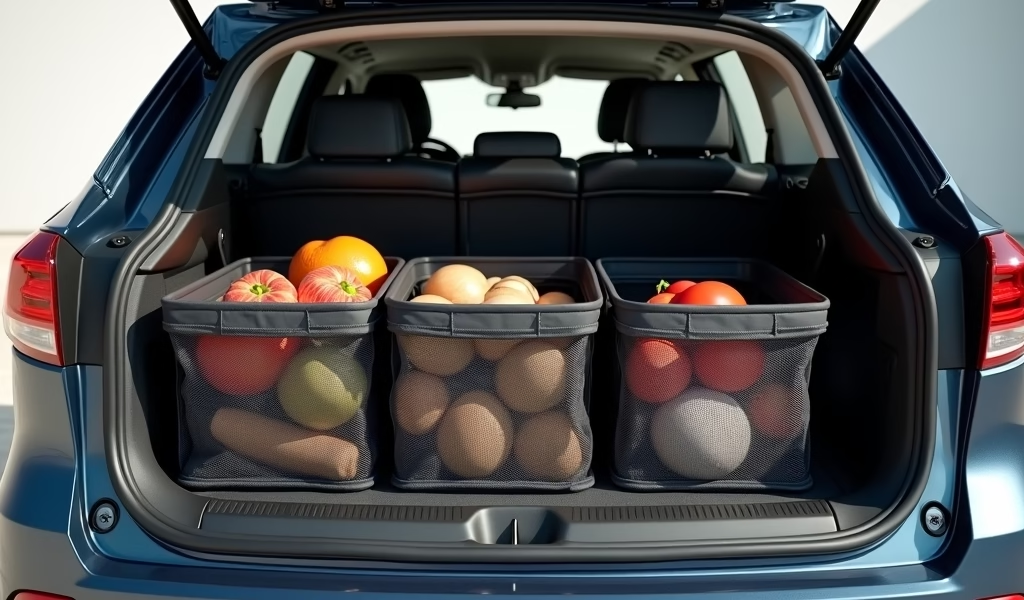
Strategic cargo net installation can actually increase your usable trunk space by making vertical storage more practical. Rather than viewing your trunk as a flat surface, think of it as a three-dimensional space with untapped potential. Proper organization turns awkward empty spaces into functional storage areas.
Try these space-maximizing strategies:
- Install side nets to utilize trunk wall space for smaller items
- Use stackable organizers with vertical dividers
- Consider ceiling-mounted nets for rarely used emergency items
- Combine different organizer types for specialized storage zones
One of my favorite approaches combines a rigid base organizer with an overhead net. This creates two distinct storage zones – one for heavier items that need structure and another for lighter items that benefit from flexible containment. This layered approach can effectively double your usable space while keeping everything accessible.
For vehicles with irregular trunk shapes, look for adjustable organizers specifically designed to utilize corner spaces and work around wheel wells. These specialty products transform previously unusable nooks into practical storage areas. Combined with regular car detailing, your organized trunk will look and function like it belongs in a luxury vehicle.
Maintenance and Care Tips
Even the best cargo nets and organizers require occasional maintenance to deliver long-lasting performance. With proper care, a quality cargo management system can last for years. Here are some professional tips to extend the life of your trunk organizers:
- Periodically check all attachment points for wear or loosening
- Clean fabric organizers according to manufacturer instructions
- Avoid storing wet items in enclosed organizers for extended periods
- Reduce tension on elastic nets when not in use
- Inspect for UV damage if your cargo area is frequently exposed to sunlight
For elasticized cargo nets, maintaining proper tension is crucial. Over-stretching can permanently deform the elastic, while under-tensioning reduces effectiveness. Aim for snug but not strained tension, and consider releasing hooks when storing particularly heavy items for extended periods.
Most fabric organizers can be spot-cleaned with mild soap and water, while plastic components benefit from occasional treatment with UV protectant to prevent brittleness. For leather or premium organizers, use appropriate conditioners to prevent cracking.
Finally, remember that cargo management systems are designed with specific weight limits. Exceeding these limits can damage both the organizer and your vehicle. When in doubt, distribute weight across multiple attachment points or consider a heavier-duty solution for substantial loads.
Conclusion
Proper cargo net installation transforms your vehicle’s trunk from a chaotic catch-all into an organized, functional space. Through our testing of these five top cargo management solutions, it’s clear that the right organizer can significantly improve your driving experience by preventing shifting cargo, protecting your belongings, and maximizing available space.
Whether you opt for the premium structure of the WeatherTech CargoTech, the versatility of the Trunk Crate Pro, or the simple effectiveness of a traditional envelope net, the key is matching the solution to your specific needs and vehicle type. Consider what you typically transport, how frequently you need organization, and your vehicle’s existing anchor points when making your selection.
Remember that proper installation is as important as choosing the right product. Take time to locate your vehicle’s anchor points, understand weight limitations, and follow manufacturer guidelines. With minimal investment of time and money, cargo organization delivers daily benefits that enhance both the functionality and longevity of your vehicle.
Your car’s trunk deserves the same attention as its engine and interior. A well-organized cargo area doesn’t just make driving more convenient – it makes it safer and more enjoyable for everyone along for the ride.
Frequently Asked Questions
How long does cargo net installation typically take?
Most basic cargo nets can be installed in 5-10 minutes without any special tools. Pre-assembled organizers like collapsible crates require no installation at all.
Can I install a cargo net if my vehicle doesn’t have anchor points?
Yes, you can use organizers with non-slip bases or those that secure with adjustable straps around seat posts. Alternatively, adhesive-backed hooks can be installed for lighter nets.
What’s the weight limit for typical cargo nets?
Standard envelope-style cargo nets typically handle 10-20 pounds distributed evenly. Heavy-duty nets with reinforced attachments can manage 40-50 pounds, but always check manufacturer specifications.
Will installing a cargo net damage my vehicle’s interior?
When properly installed using existing anchor points, cargo nets cause no damage. Avoid overtightening attachments or exceeding weight limits to prevent potential issues.
Can I use the same cargo net in different vehicles?
Adjustable nets with universal hooks work in most vehicles, while vehicle-specific nets may not transfer well. Organizers with strap attachments offer the most flexibility between different cars.