
Overview
Those tiny license plate lights aren’t just glowing for fun—they’re keeping you legal on the road and preventing unwanted traffic stops! This article provides practical guidance on diagnosing and fixing common license plate light issues, selecting the right replacement bulbs (with LED recommendations), maintaining these often-neglected components, and understanding the legal requirements that apply to license plate illumination.
Table of Contents
- Why License Plate Lights Matter
- Common License Plate Light Problems
- Diagnosing Your License Plate Light Issues
- 5 Tips for License Plate Light Fixes
- Choosing the Right Bulbs
- Maintaining Your License Plate Lights
- Legal Considerations
- Conclusion
- Frequently Asked Questions
Why License Plate Lights Matter
License plate lights might seem like a small, insignificant part of your vehicle, but they serve a crucial purpose. These humble illuminators ensure your license plate remains visible during nighttime driving, making them an essential safety and legal feature. As a mechanic with 15 years of experience, I’ve seen countless drivers get pulled over for this seemingly minor issue.
The primary function of license plate lights is straightforward—they keep your vehicle’s identification visible to law enforcement and other drivers after dark. But beyond avoiding tickets, proper license plate illumination is part of responsible vehicle maintenance that contributes to overall road safety.
Many drivers only notice their license plate light when it’s already failing. By then, you might be driving illegally without even realizing it. Let’s shed some light (pun intended!) on why these small bulbs deserve your attention and how to keep them functioning properly.
Common License Plate Light Problems
Before diving into fixes, it helps to understand what typically goes wrong with license plate lights. In my garage, I see the same issues repeating themselves regardless of vehicle make or model.
The most common problems include:
- Burned-out bulbs – Like any light, these eventually fail with age and use
- Corroded sockets – Exposure to the elements leads to corrosion that prevents proper electrical contact
- Damaged wiring – Often caused by road debris or improper previous repairs
- Cracked lenses – Physical damage allows moisture intrusion, accelerating corrosion
- Faulty switches – Sometimes the issue isn’t the light itself but the circuit that controls it
Interestingly, according to data from the National Highway Traffic Safety Administration, approximately 3-5% of nighttime traffic stops involve non-functioning license plate lights. That’s a surprisingly high number for such a small component.
Many of these issues are exacerbated by environmental factors. Vehicles in coastal areas face accelerated corrosion from salt air, while those in regions with harsh winters battle road salt damage. Even in mild climates, regular exposure to rain and temperature fluctuations takes a toll on these exposed electrical components.
Diagnosing Your License Plate Light Issues
Before you can fix your license plate light, you need to identify exactly what’s wrong. Diagnosis isn’t complicated, but it does require some methodical checking.
Start with the simplest explanation: is the bulb burned out? This accounts for roughly 70% of all license plate light failures I see in my shop. Have someone stand behind your vehicle while you turn on your lights. If one or both license plate lights aren’t illuminating, you’ll need to investigate further.
Next, check if the problem is isolated to the license plate lights or part of a broader electrical issue. Are your taillights and brake lights working properly? If multiple lights are out, you might have a fuse problem or more significant electrical concerns.
To properly diagnose the specific issue:
- Locate your license plate light assembly (usually above or to the sides of the plate)
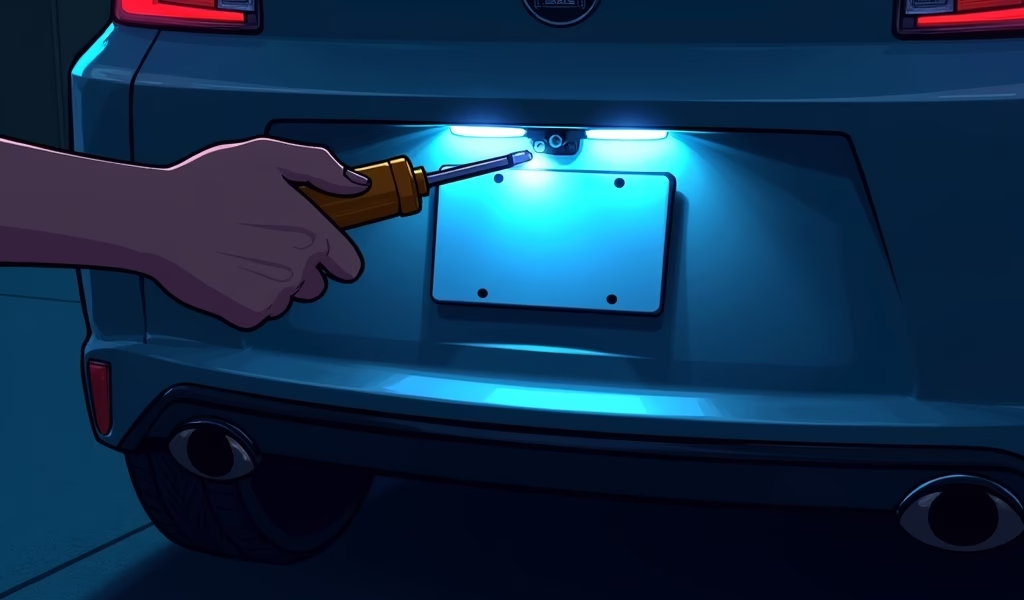
- Remove the cover (typically requires a screwdriver) to access the bulb
- Inspect the bulb for darkening or a broken filament
- Check the socket for corrosion, rust, or water intrusion
- Look for damaged wires leading to the socket
If the bulb looks intact, the issue might be with the electrical connection. A multimeter can be incredibly helpful here. With the lights turned on, check for voltage at the socket. No voltage indicates a wiring problem or blown fuse, while voltage with no light means a bad bulb or poor socket connection.
Taking the time for proper diagnosis saves both time and money in the long run. I’ve seen customers replace bulbs repeatedly without addressing the underlying socket corrosion that was the real culprit. A thorough approach to car maintenance always begins with accurate diagnosis.
5 Tips for License Plate Light Fixes
Now that you’ve diagnosed the problem, let’s get to the solutions. These five proven tips will help you restore your license plate lights to full brightness while preventing future issues.
1. Replacing Burned-Out Bulbs
This is the most straightforward fix and often all that’s needed. To replace your license plate light bulbs:
- Ensure your vehicle is off and cool
- Remove the license plate light cover (usually requires a Phillips screwdriver)
- Gently remove the old bulb – most twist out counter-clockwise or pull straight out
- Check your vehicle manual for the correct replacement bulb type
- Insert the new bulb without touching the glass with bare fingers (oils can cause premature failure)
- Reassemble the housing and test
Pro tip: While standard incandescent bulbs work fine, consider upgrading to LED bulbs. They last significantly longer (up to 30,000 hours compared to about 1,000 for incandescent) and provide brighter, more consistent illumination.
2. Cleaning Corroded Connections
If you noticed corrosion in the socket, cleaning it is essential for reliable operation:
- Disconnect your vehicle’s battery before working on electrical components
- Remove the bulb from the socket
- Use a small wire brush or old toothbrush with baking soda and water paste to gently scrub away corrosion
- For stubborn corrosion, use electronic contact cleaner spray
- Thoroughly dry the socket with compressed air or allow it to air dry completely
- Apply a thin layer of dielectric grease to prevent future corrosion
The dielectric grease is crucial – it repels moisture while maintaining electrical conductivity. This $5 investment can prevent repeated repairs.
3. Repairing Damaged Wiring
Damaged wires require more attention but are still manageable for a DIY repair:
- Trace the wiring from the light socket until you find the damage
- Cut out the damaged section
- Strip about ½ inch of insulation from each wire end
- Join the wires using appropriate-sized butt connectors
- Crimp securely using proper crimping tools
- Seal the connection with heat-shrink tubing or quality electrical tape
Always use automotive-grade wire and weatherproof connections for exterior repairs. The Vehicle Maintenance and Repairs Association recommends marine-grade connections for maximum durability in these exposed locations.
4. Fixing Cracked Light Covers
Damaged light covers allow moisture into the fixture, accelerating corrosion and causing electrical shorts:
- Remove the entire light assembly
- Clean thoroughly with isopropyl alcohol
- For minor cracks, use clear epoxy designed for plastic repair
- For severe damage, replace the entire assembly (usually inexpensive)
- Apply a thin bead of silicone sealant around the edges when reinstalling
While repairs can work temporarily, replacement is often the better long-term solution for cracked covers. Most assemblies cost between $15-40 depending on your vehicle.
5. Addressing Switch or Fuse Issues
Sometimes the problem isn’t with the light itself but with what controls it:
- Check your vehicle’s fuse box diagram to locate the fuse for license plate lights
- Remove and inspect the fuse – replace if blown
- If the light switch is faulty, check for power at the switch input and output
- Replace faulty switches according to your vehicle’s service manual
Modern vehicles often integrate license plate lights into the body control module system. If you’ve checked everything else, a scan tool might be necessary to identify computer-controlled lighting issues. This might be where professional help becomes valuable if you’re not experienced with automotive electronics.
Choosing the Right Bulbs
Selecting the proper replacement bulbs makes a significant difference in both appearance and reliability. Let’s break down your options to help you make an informed choice.
License plate lights typically use one of several common bulb types:
- 194/T10 wedge-base bulbs (most common)
- 168 wedge bulbs (slightly lower wattage)
- DE3175 festoon bulbs (used in some European vehicles)
- LED replacement versions of all the above
Your vehicle’s owner’s manual will specify the correct type, or you can simply match the original bulb. However, this is an excellent opportunity to upgrade to modern LED technology.
The benefits of LED bulbs for license plate lights include:
- Longer lifespan (20,000+ hours vs. 1,000 for incandescent)
- Lower power consumption
- Brighter, whiter light for better visibility
- Instant-on with no warm-up period
- Greater resistance to vibration
When choosing LED replacements, look for “CanBUS-compatible” versions if you drive a newer vehicle. These have built-in resistors that prevent error messages on your dashboard that can occur with standard LEDs. The small additional cost is worth avoiding the headache of dashboard warning lights.
Color temperature is another consideration. Standard bulbs emit a yellowish light (around 3000K), while LEDs can range from 6000K (pure white) to 8000K (slight blue tint). For license plates, I recommend staying in the 6000-6500K range for maximum visibility without excessive blue tint that might attract unwanted police attention.
Maintaining Your License Plate Lights
Prevention is always easier than repair. A few simple maintenance habits can dramatically extend the life of your license plate lights and help you avoid those unwanted traffic stops.
Include license plate lights in your regular car detailing routine. While washing your vehicle, pay special attention to the license plate area. Road grime, salt, and debris tend to accumulate around these fixtures, accelerating corrosion.
Every six months, take these proactive steps:
- Remove the light covers and check for moisture intrusion
- Clean the lens covers with plastic-safe cleaner
- Check that all mounting screws are tight
- Apply a small amount of dielectric grease to the bulb contacts
- Inspect the wiring for signs of wear or damage
For vehicles in harsh environments (coastal areas, regions with heavy road salt use, or extremely dusty conditions), consider applying a thin coat of clear silicone sealant around the edges of the light assembly. This creates an additional moisture barrier that can significantly extend the lifespan of your lighting components.
If your vehicle sits unused for extended periods, electrical connections can develop corrosion more quickly. For seasonal vehicles or those in storage, removing the bulbs during storage periods can prevent stuck bulbs and socket damage.
Finally, develop the habit of regularly checking all your vehicle’s lights. A quick walk-around while your lights are on takes just 30 seconds and can catch problems before they result in a traffic stop. I recommend doing this check at least monthly and always before long trips.
Legal Considerations
Let’s talk about the legal aspects of license plate lighting – an area where many drivers unwittingly find themselves on the wrong side of the law.
All 50 states require functioning license plate lights that make your plate clearly visible from a distance of at least 50 feet. This isn’t just about the presence of light but also about its quality and positioning.
Common legal issues include:
- Non-functioning lights (the most obvious violation)
- Lights that are too dim to properly illuminate the plate
- Colored lights (white is the only legally permitted color in most states)
- Lights positioned to deliberately obscure certain characters
- Aftermarket frames that block portions of the plate
The consequences vary by jurisdiction but typically start with a fix-it ticket or equipment violation. These may seem minor, but they can escalate if ignored. In some areas, equipment violations also serve as a legal pretext for traffic stops that might lead to more serious discoveries.
Another consideration is modifying license plate lights. While upgrading to brighter LEDs is generally acceptable, dramatic modifications can attract unwanted attention. According to research from the Insurance Institute for Highway Safety, modifications that make license plates difficult to read by automated cameras are increasingly being targeted for enforcement.
The safest approach is to ensure your license plate is clearly visible without being excessively bright or modified in ways that could be construed as attempting to evade identification. When in doubt, refer to your state’s vehicle code for specific requirements.
Conclusion
License plate lights may be small, but their importance to your vehicle’s legal operation and safety cannot be overstated. From avoiding unnecessary traffic stops to ensuring your vehicle meets basic road safety standards, maintaining bright, clear license plate illumination is worth the minimal effort required.
The five tips we’ve covered—replacing bulbs, cleaning connections, repairing wiring, fixing covers, and addressing electrical issues—provide a comprehensive approach to resolving almost any license plate light problem. Remember that upgrading to LED technology offers significant benefits in longevity and visibility, making it a worthwhile consideration for your next bulb replacement.
Regular maintenance of these often-overlooked lights should become part of your vehicle care routine. A quick check during car washes or fuel stops takes seconds but can save you from the inconvenience and potential expense of traffic citations.
Whether you’re a DIY enthusiast or someone who prefers professional service, understanding the basics of license plate lighting empowers you to make informed decisions about your vehicle’s maintenance needs. After all, the best automotive problems are the ones you prevent rather than repair.
So the next time you walk away from your parked car at night, take a moment to glance back and ensure those license plate lights are shining bright and clear. Your future self will thank you for the attention to detail.
Frequently Asked Questions
How often should I check my license plate lights?
Check your license plate lights at least once a month during a regular walk-around inspection of all vehicle lights. Seasonal changes in temperature and moisture can affect bulb life, so additional checks before winter and summer are recommended.
Can I use any white bulb to replace my license plate light?
You should use the specific bulb type recommended in your vehicle’s owner manual or match the existing bulb exactly. Using bulbs with incorrect bases or power ratings can cause socket damage or electrical issues.
Are LED license plate lights legal in all states?
LED replacements are legal in all states provided they emit white light and don’t exceed reasonable brightness levels. Some jurisdictions have specific regulations about maximum brightness, so avoid extremely high-output LED bulbs.
Why do my license plate light bulbs keep burning out?
Frequent burnouts usually indicate electrical system issues like voltage spikes or corrosion in the socket. Clean the socket connections and check for proper voltage (12-14.5V) at the fixture when the engine is running.
Can a faulty license plate light cause other electrical problems?
While a single faulty light is unlikely to affect other systems, underlying issues like corrosion or damaged wiring that caused the light failure can spread to other circuits. Address these root causes promptly to prevent more extensive electrical problems.