
Overview
Kick panel rust isn’t just an unsightly nuisance—it’s a structural time bomb that can compromise your vehicle’s safety and tank its resale value faster than you can say “orange plague.” This guide explores five effective treatments including rust converters, protective coatings, undercoating, galvanic protection, and preventive maintenance, emphasizing that investing $20-$150 in prevention now can save you $300-$1,000+ in future repairs.
Table of Contents
- Why Kick Panel Rust Matters
- Understanding the Enemy: What Causes Kick Panel Rust
- Treatment #1: Rust Converters
- Treatment #2: Protective Coatings
- Treatment #3: Undercoating
- Treatment #4: Galvanic Protection
- Treatment #5: Preventive Maintenance
- Comparison: Which Treatment Is Best?
- Conclusion
- Frequently Asked Questions
Let me tell you something about those innocent-looking kick panels in your car—they’re rust magnets waiting to happen. After 25 years turning wrenches, I’ve seen far too many vehicles where these panels have surrendered to the orange plague, leaving owners with hefty repair bills and that “how did I miss this?” expression.
Kick panels—those metal sections at the bottom of your vehicle’s interior where your feet rest when entering—take a daily beating from boots, road salt, and whatever else you drag in. Without proper protection, they’ll eventually wave the white flag to rust, compromising both your car’s appearance and structure.
But here’s the good news: with the right approach to kick panel protection, you can stop rust before it starts. Let’s dive into why this matters and the five proven treatments that actually work.
Why Kick Panel Rust Matters
Ever noticed how rust always seems to start in the least convenient places? Your kick panels might seem insignificant, but they’re actually crucial structural components. When rust takes hold here, it’s not just an eyesore—it’s the beginning of a cascade of problems.
First, there’s the structural integrity issue. Kick panels form part of your vehicle’s safety cage. Once rust eats through, your car’s ability to protect you in a collision becomes compromised. Not exactly what you want to discover during an accident.
Then there’s the financial hit. A complete kick panel replacement runs $300-$1,000 for parts alone, with labor potentially doubling that figure. Compare that to prevention methods costing $20-$150, and suddenly being proactive looks like financial genius. As my grandfather used to say, “An ounce of prevention saves a pound of your retirement fund.” Well, he didn’t say exactly that, but you get the idea.
And let’s talk resale value. Nothing tanks a car’s worth faster than visible rust. Even minor spots can knock hundreds or thousands off your vehicle’s value—money literally dissolving before your eyes like an antacid in water, except much less satisfying.
Understanding the Enemy: What Causes Kick Panel Rust
Before we arm ourselves against rust, let’s understand what we’re fighting. Rust isn’t just dirt or discoloration—it’s an actual chemical reaction where iron combines with oxygen to form iron oxide. It’s basically your car slowly returning to nature, which would be poetic if it weren’t so expensive.
Kick panels are particularly vulnerable because they’re constantly exposed to moisture. Every time it rains and you hop in your car, water drips from your shoes directly onto these panels. In winter regions, this water comes with a bonus—road salt, which accelerates corrosion faster than a teenager accelerates when the light turns green.
The design of kick panels makes matters worse. They often have seams, crevices, and drainage channels where water can hide and do its dirty work. Think of these areas as rust’s secret hideouts, where it plans its attacks on your vehicle’s integrity.
Environmental factors play a huge role too. Living near the ocean? That salt air is seasoning your car for rust. Winter driving in regions where roads are treated? You might as well be marinating your kick panels in corrosion starter.
Treatment #1: Rust Converters
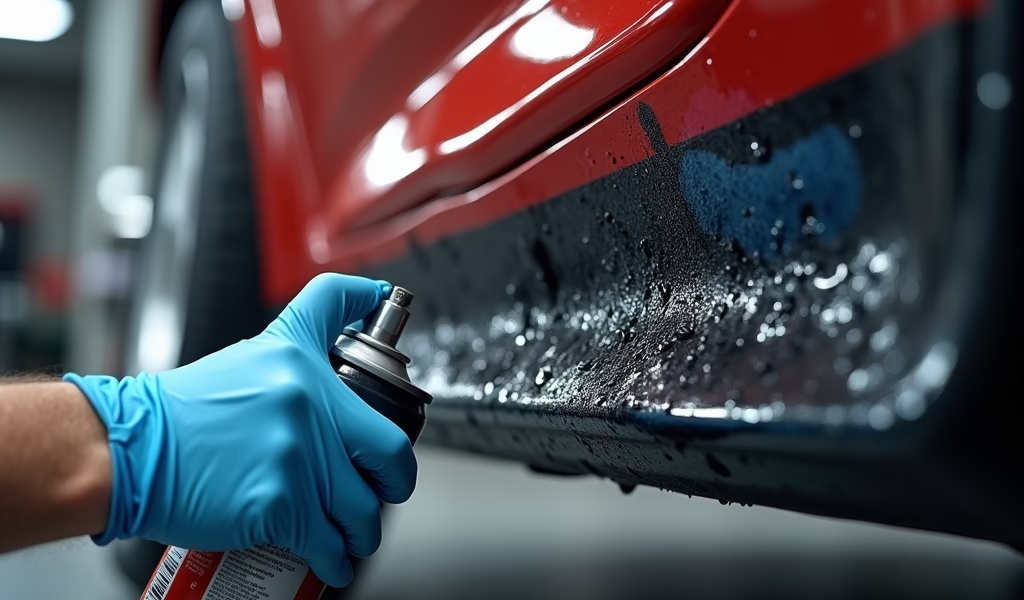
If you’re already spotting the telltale orange freckles on your kick panels, rust converters are your first line of defense. These products are like chemical magicians—they actually transform iron oxide (rust) into a stable compound that blocks further oxidation. It’s basically science coming to the rescue of your automotive investment.
The application process is straightforward but requires attention to detail:
- Start by cleaning the area thoroughly with soap and water
- Once dry, use medium-grit sandpaper to remove loose rust and paint
- Apply the converter with a brush (most products need 2-3 coats)
- Allow proper curing between coats (typically 20-30 minutes)
- Finish with appropriate primer and paint for complete protection
In my shop, we’ve had consistent results with products like Permatex Rust Treatment, POR-15, and Corroseal. They typically cost between $15-$30 per bottle and can treat multiple areas. A solid application can last 2-5 years, giving you plenty of time to feel smug about your proactive vehicle care.
Word to the wise: wear gloves and eye protection when applying these products. They’re effective because they’re chemically active, which means they don’t discriminate between rusting metal and your skin. Trust me, explaining chemical burns from rust converter isn’t the conversation starter you want at dinner parties.
Treatment #2: Protective Coatings
If rust converters are the chemists of the rust prevention world, protective coatings are the bouncers—they create a physical barrier that tells moisture and corrosive elements, “Not today, pal!” These coatings work beautifully on kick panels, especially after treating any existing rust.
The coating market offers several worthy contenders:
- Rubberized coatings: Flexible and impact-resistant, perfect for areas taking physical abuse
- Polymer-based sealants: Provide a clear, hard finish that maintains original appearance
- Ceramic coatings: High-end protection that bonds at the molecular level (yes, really)
Application is key to success here. Your surfaces need to be completely clean, rust-free, and bone dry. Apply in thin, even coats using a quality brush or spray. Patience pays off—most coatings need 2-3 layers with 24-hour curing time between applications. Rush this process and you’ll be back where you started, but with less money in your pocket and more colorful language in your vocabulary.
Cost-wise, you’re looking at $30-$60 for DIY options and $100-$300 for professional-grade products. With durability ranging from 2-7 years depending on quality and application, it’s a small price to pay for keeping your car’s interior protected from the inside out.
My personal favorite trick? Apply a thin layer of clear protective film over coated kick panels for the ultimate belt-and-suspenders approach. It’s like giving your rust prevention strategy a backup generator.
Treatment #3: Undercoating
If protective coatings are bouncers, undercoating is the full security detail. It provides comprehensive protection against moisture, salt, and road debris—essentially giving your kick panels a weatherproof jacket.
Professional undercoating typically uses specialized equipment to apply petroleum-based or water-based compounds that adhere to metal surfaces. While DIY kits exist ($50-$100), professional application ($150-$400) offers more consistent coverage, especially in those hard-to-reach areas where rust loves to party.
Common undercoating materials include:
- Rubberized undercoating: Flexible, sound-dampening, and highly protective
- Wax-based products: Excellent for penetrating seams and crevices
- Oil-based sprays: Great for annual application and reaching hidden areas
Quality undercoating should last 2-5 years, though annual inspection is recommended. This is doubly true if you live in the “Salt Belt” states, where winter roads are treated more heavily than a celebrity at a luxury spa.
One note of caution from personal experience: avoid getting undercoating on brake components, exhaust systems, or driveline parts. Unless you enjoy the smell of burning undercoating (spoiler alert: you don’t) and the expensive repairs that follow, mask these areas carefully before application.
Treatment #4: Galvanic Protection
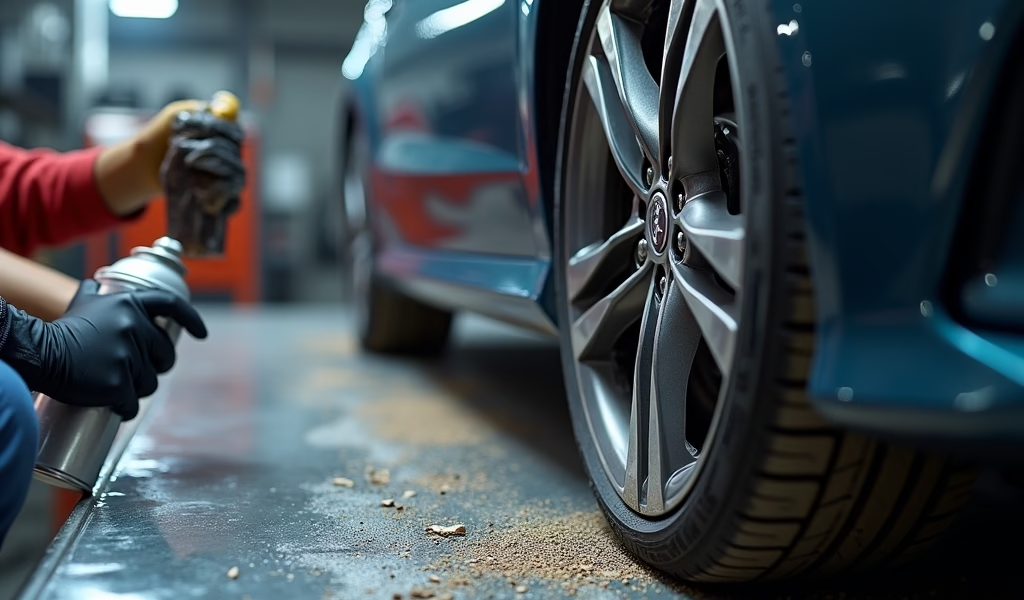
Now we’re getting into the realm where science meets practicality. Galvanic protection leverages basic chemistry principles that would make your high school science teacher proud. The concept is brilliant in its simplicity: sacrificial anodes (usually zinc or magnesium) corrode first, essentially taking the bullet for your vehicle’s more valuable metal components.
In automotive applications, zinc-rich primers and galvanic protectant sprays create a sacrificial layer that corrodes before your kick panels do. It’s like having a bodyguard who jumps in front of every rust bullet—noble, effective, and surprisingly affordable.
Application involves:
- Thoroughly cleaning the metal surface
- Applying zinc-rich primer as a base coat
- Following with regular paint and clear coat systems
- Reapplication every 3-5 years for optimal protection
Products like ZRC Cold Galvanizing Compound ($25-$40 per can) work particularly well in coastal areas where salt air turns cars into rust farms faster than you can say “ocean view property.” The science of galvanic protection has been proven effective for decades in marine applications, and it translates perfectly to automotive use.
Fair warning—zinc-rich primers often have a dull gray appearance, so they’re not ideal for visible areas unless you’re planning to topcoat them. Think of them as the utilitarian underwear of automotive protection: not pretty, but they get the job done when it matters most.
Treatment #5: Preventive Maintenance
Sometimes the best solution isn’t the most exotic. Regular maintenance might not sound as exciting as galvanic wizardry, but it’s the automotive equivalent of flossing—unsexy but absolutely essential for long-term health.
Establish a monthly kick panel inspection ritual that includes:
- Washing the lower portions of your doors thoroughly, including door jambs
- Drying completely with microfiber towels (moisture is the enemy)
- Checking for early signs of rust (bubbling paint, orange discoloration)
- Applying a silicone-based protectant to clean, dry surfaces
Seasonal considerations matter too. In winter, increase cleaning frequency to remove road salt weekly. In summer, watch for mud and debris accumulation that can trap moisture against metal surfaces. This part of your car detailing routine pays dividends far beyond the aesthetic benefits.
Early warning signs include paint discoloration, bubbling, or rough spots on previously smooth surfaces. Catching these early can save hundreds in repair costs—think of it as the automotive equivalent of finding a suspicious mole before it becomes a bigger problem.
One of my favorite customer stories involves a gentleman who religiously cleaned his kick panels every Sunday. His 15-year-old truck had immaculate panels while trucks half its age were showing significant rust. When asked about his secret, he simply said, “I’m too cheap to buy a new truck, so I take care of this one.” Words to live by.
Comparison: Which Treatment Is Best?
So which rust-fighting champion deserves your attention and hard-earned cash? Let’s break it down by what matters most:
For effectiveness against existing rust:
- Rust converters (9/10): Direct chemical intervention
- Undercoating (7/10): Good coverage but less effective on existing rust
- Galvanic methods (7/10): Excellent prevention but limited remediation
For preventive protection:
- Undercoating (9/10): Comprehensive barrier protection
- Galvanic methods (9/10): Scientifically sound protection
- Protective coatings (8/10): Excellent barrier with proper application
For cost efficiency:
- Regular maintenance ($10-$20/month): Cheapest but requires discipline
- Rust converters ($15-$30): Affordable spot treatment
- Protective coatings ($30-$60): Good value for DIY application
For DIY-friendliness, maintenance routines and rust converters top the list, while professional undercoating sits at the “leave it to the pros” end of the spectrum.
My professional recommendation? A combined approach yields the best results. Treat any existing rust with converters, apply protective coatings or undercoating for prevention, and maintain a regular cleaning schedule. It’s like a financial advisor telling you to diversify your portfolio, except this advice actually works every time.
Conclusion
Rust on kick panels isn’t just an aesthetic issue—it’s the beginning of a potentially expensive and dangerous degradation process. The silent destroyer works methodically, compromising your vehicle’s structure, safety, and value while you’re busy living your life.
The good news? With these five proven treatments, you now have the knowledge to fight back against rust before it takes hold. Your choice of treatment should reflect your specific situation and budget, but remember this: any protection is better than none.
Whether you choose the chemical intervention of rust converters, the barrier protection of coatings, the comprehensive coverage of undercoating, the scientific approach of galvanic protection, or the simple discipline of regular maintenance—your kick panels will thank you with years of rust-free service.
Prevention is infinitely cheaper and easier than cure. A small investment of time and money now can save you hundreds or even thousands in repairs later. Your vehicle is likely one of your most valuable assets—protecting it from rust is simply smart ownership.
Now get out there and show that rust who’s boss. Your future self (and wallet) will thank you.
Frequently Asked Questions
How can I tell if rust on my kick panels is superficial or structural?
Superficial rust appears as orange discoloration or light flaking, while structural rust causes bubbling paint, soft metal, or visible holes. Probe suspicious areas gently with a screwdriver—if it easily penetrates the metal, you’re dealing with structural rust.
Can I paint directly over rusted kick panels?
No, painting over rust is like putting a bandaid on a broken leg. The rust will continue spreading underneath, eventually pushing through the new paint.
How often should I reapply protective treatments to my kick panels?
Most protective treatments should be reapplied every 2-3 years, with more frequent application in harsh climates. Check manufacturer recommendations for your specific product.
Are factory undercoatings sufficient to prevent kick panel rust?
Factory undercoatings provide initial protection but typically degrade after 3-5 years. Supplemental protection is recommended, especially if you live in rust-prone regions.
Can kick panel rust spread to other parts of my vehicle?
Yes, rust can migrate along connected metal surfaces through a process called galvanic corrosion. Addressing kick panel rust early prevents it from becoming a vehicle-wide problem.