
Overview
Like a disco ball that nobody asked for, flickering trailer lights are not only annoying but dangerous, stemming from poor ground connections, corroded wires, inadequate gauge, or voltage issues. The article offers seven practical fixes ranging from checking ground connections and replacing corroded wires to installing dedicated power lines, voltage regulators, upgrading to LEDs, and adding isolation modules—all aimed at ensuring your trailer’s lighting system reliably communicates with other drivers.
Table of Contents
- Understanding Why Trailer Lights Flicker
- Fix #1: Check Ground Connections
- Fix #2: Inspect and Repair Corroded Connections
- Fix #3: Upgrade Your Wiring Gauge
- Fix #4: Install a Dedicated Power Line
- Fix #5: Add a Voltage Regulator
- Fix #6: Replace Bulbs with LEDs
- Fix #7: Install an Isolation Module
- Preventative Maintenance Tips
- Conclusion
- Frequently Asked Questions
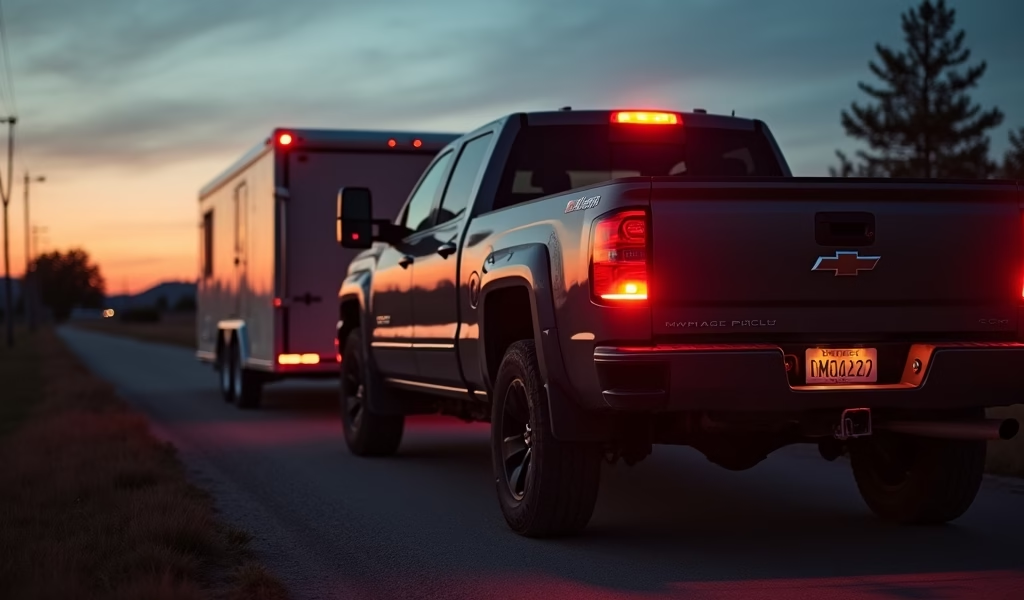
Have you ever been driving down the highway at dusk, glancing in your rearview mirror only to see your trailer lights flickering like a budget disco ball? Not only is this annoying, it’s downright dangerous. Those lights aren’t just decorative—they’re essential safety equipment that communicates your intentions to everyone sharing the road with you.
As a master technician with over 20 years of experience, I’ve seen just about every trailer wiring problem imaginable. The good news? Most flickering issues can be resolved with some basic troubleshooting and a few simple tools. Let’s roll up our sleeves and get those lights working properly again.
Understanding Why Trailer Lights Flicker
Before we dive into solutions, it helps to understand what’s happening when trailer lights flicker. Think of your vehicle and trailer as partners in an electrical relationship—and like any relationship, communication problems can cause frustration.
Most flickering stems from three main issues:
- Poor electrical connections
- Inadequate power supply
- Resistance in the circuit
Your vehicle’s alternator generates power that travels through various connections before reaching your trailer lights. Any weak link in this chain can cause flickering. Understanding the fundamentals of how your car’s electrical system works can help you diagnose these issues more effectively.
Voltage drops are particularly troublesome. When voltage falls below what your lights need to operate properly, they dim or flicker. This commonly happens when your vehicle’s electrical system is under load (like when braking activates both your vehicle and trailer brake lights simultaneously).
Fix #1: Check Ground Connections
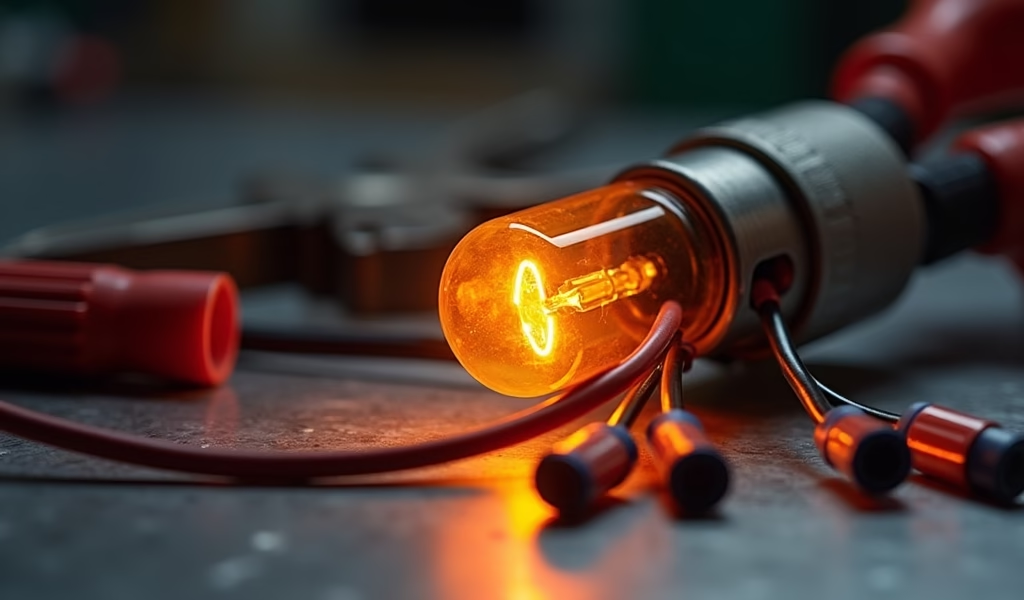
If trailer light wiring had a golden rule, it would be: “Respect the ground.” Poor grounding is the leading cause of flickering lights—it’s like trying to complete an electrical circuit through a marshmallow instead of a wire.
Your trailer’s lights need a proper path for electricity to return to its source. Without this, voltage fluctuates and lights flicker. Here’s how to fix it:
- Locate ground connections at both your vehicle and trailer
- Remove connections and inspect for corrosion or damage
- Clean connection points with a wire brush until they shine like new
- Ensure ground wires attach directly to bare metal (not painted or coated surfaces)
- Tighten all connections firmly—but don’t strip the threads!
For persistent grounding issues, consider adding a dedicated ground wire running directly from your vehicle’s frame to your trailer frame. This creates an electrical superhighway that bypasses potential problem areas.
According to research from the Trailer Safety Institute, over 60% of trailer light problems stem from poor ground connections. Taking the time to address this first can save hours of frustration later.
Fix #2: Inspect and Repair Corroded Connections
Corrosion is the silent killer of electrical connections. Those greenish-white crusty deposits you see on battery terminals? They create resistance that blocks electrical flow and causes flickering.
Common corrosion hotspots include:
- Connector pins and sockets
- Wire splices and junctions
- Light socket connections
- Any connection exposed to moisture
Here’s my tried-and-true cleaning method:
- Disconnect your battery for safety (better safe than sorry!)
- Disassemble connections carefully—take photos if needed for reassembly
- Clean with a wire brush and electrical contact cleaner
- Apply a thin coat of dielectric grease before reconnecting
- Consider upgrading to sealed waterproof connectors for problem areas
That dielectric grease isn’t just for show—it creates a moisture barrier that prevents future corrosion. It’s cheap insurance against roadside headaches.
For severely corroded connections, replacement is often better than repair. Modern sealed connectors cost a few dollars but can save hundreds in future repairs and headaches.
Fix #3: Upgrade Your Wiring Gauge
Sometimes your trailer’s wiring is simply too skinny for the job—like trying to water your garden with a coffee stirrer instead of a proper hose. Thin wires create resistance, and resistance causes voltage drops that make lights flicker.
Wire gauge measurements work backward from what you might expect: smaller numbers mean thicker wire. Here’s what I recommend:
- Small utility trailers: 16-14 gauge
- Medium trailers: 14-12 gauge
- Large trailers with multiple lights: 12-10 gauge
Upgrading your wiring isn’t just about stopping flickering—it’s a safety improvement that reduces heat buildup and prevents electrical fires. The modest cost of heavier gauge wire is cheap insurance against roadside emergencies.
When replacing wiring, take the opportunity to use automotive-grade wire with proper insulation. The stuff from the hardware store isn’t designed for the vibration, temperature swings, and environmental exposure your trailer faces. Spending a bit more on quality materials pays dividends in reliability.
Fix #4: Install a Dedicated Power Line
Your vehicle’s factory wiring wasn’t designed with your trailer in mind. It’s handling its own lighting needs just fine until you ask it to power additional lights. Installing a dedicated power line creates an express lane for electricity to flow directly to your trailer.
Here’s how to set it up:
- Run a heavy gauge wire (10-12 gauge) from your vehicle’s battery to your trailer connector
- Install an appropriate fuse near the battery (absolutely critical for safety!)
- Connect this power line to the appropriate circuits in your trailer connector
- Ensure proper grounding at both ends
This approach bypasses your vehicle’s lighting circuits entirely, providing direct, stable power to your trailer lights. The proper fuse installation is non-negotiable—it protects against potential short circuits that could damage your vehicle or even cause fires.
While this solution requires more work than some others, it provides the most reliable power source for trailers with extensive lighting. If you regularly tow at night or in poor visibility, this upgrade is worth considering.
Fix #5: Add a Voltage Regulator
Modern vehicles have sophisticated electrical systems with voltage fluctuations that can wreak havoc on trailer lights. Adding a voltage regulator is like hiring a bouncer to keep the electrical current in line—it maintains a steady output regardless of what your vehicle’s electrical system is doing.
This solution is particularly effective for:
- Vehicles with variable voltage charging systems
- Trailers with LED lights (which are sensitive to voltage changes)
- Systems where flickering persists despite addressing connections
Installation is typically straightforward—the regulator connects between your power source and your trailer’s lighting circuits. Most quality voltage regulators cost between $20-$50, making this a cost-effective solution for persistent flickering issues.
The technical principles behind voltage regulators involve complex electronics, but the result is simple: steady power equals steady lights. For the technically curious, these devices continuously sample the incoming voltage and adjust their output to maintain a constant level.
Fix #6: Replace Bulbs with LEDs
If your trailer is still sporting incandescent bulbs from the last century, upgrading to LEDs can resolve flickering issues while providing other benefits. LEDs draw significantly less power, which reduces the strain on your electrical system.
Advantages of LEDs include:
- Lower power consumption (often 80% less than incandescent)
- Greater tolerance for voltage fluctuations
- Brighter, more visible light output
- Nearly instantaneous on/off response (critical for brake lights)
- Vastly longer lifespan (often 50,000+ hours)
When converting to LEDs, ensure you’re purchasing trailer-specific lights designed to withstand vibration, moisture, and temperature extremes. Generic LED bulbs often lack the durability needed for trailer applications.
One important note: some vehicles may require load resistors when switching to LEDs. This prevents “hyper-flashing” or error codes caused by the vehicle’s lighting circuit expecting the higher current draw of incandescent bulbs. These resistors are simple to install in-line with your wiring.
Fix #7: Install an Isolation Module
An isolation module is the diplomatic negotiator between your vehicle and trailer electrical systems. It creates electrical independence while maintaining communication between the two systems.
These clever devices prevent your vehicle’s electrical system from affecting your trailer’s lights and vice versa. They’re particularly valuable for vehicles with multiplexed or computer-controlled lighting systems that don’t play well with traditional trailer wiring.
How isolation modules work:
- They detect signals from your vehicle’s lighting system
- These signals trigger internal relays
- The relays switch power from a separate source to your trailer lights
Installation typically involves connecting the module between your vehicle’s wiring and your trailer connector. While more expensive than other solutions (typically $50-$100), isolation modules offer the most comprehensive fix for persistent flickering issues, especially with newer vehicles.
Preventative Maintenance Tips
As with most vehicle systems, preventative maintenance prevents future headaches. Here’s my maintenance routine for keeping trailer lights working reliably:
- Perform seasonal inspections of all connections before heavy use periods
- Apply dielectric grease to all connections and consider protective covers for connectors
- Secure plugs fully and add additional fasteners to prevent vibration disconnects
- Regularly inspect for wire chafing, especially near moving parts and suspension components
- Keep connectors clean and free of road grime, salt, and debris
- Apply connector caps during storage to prevent corrosion and critter damage
I always recommend keeping a small trailer electrical repair kit in your vehicle containing electrical tape, dielectric grease, spare fuses, wire connectors, and basic tools. Being prepared turns a potential trip-ending problem into a quick roadside fix.
Conclusion
Flickering trailer lights aren’t just annoying—they’re unsafe and potentially illegal. By addressing the root causes through these seven proven fixes, you can ensure your trailer’s lighting system performs reliably mile after mile.
Start with the basics: check grounds, clean connections, and inspect wiring. If problems persist, consider more comprehensive solutions like dedicated power lines, voltage regulators, or isolation modules. Remember that proper trailer lighting isn’t just about avoiding tickets; it’s about communicating your intentions clearly to other drivers and preventing accidents.
At Knows Your Car, we believe that education empowers better vehicle ownership. Understanding how your trailer’s electrical system works helps you make informed decisions about maintenance and repairs. By applying these fixes and maintenance tips, you’ll ensure your trailer lights shine steadily for years to come—no Morse code necessary!
Frequently Asked Questions
How much does it typically cost to fix flickering trailer lights?
DIY repairs typically cost $20-$50 for materials like wire, connectors, and dielectric grease. Professional repairs at a shop usually range from $75-$200 depending on the complexity of the issue.
Can I drive with flickering trailer lights?
No, driving with flickering trailer lights is both dangerous and illegal in most jurisdictions. Proper functioning lights are required by law for safely communicating your intentions to other drivers.
Will a new trailer connector solve my flickering light issues?
A new connector will solve flickering caused by damaged or corroded connector pins. However, it won’t address underlying issues like poor grounding, inadequate wiring gauge, or vehicle electrical problems.
How often should I inspect my trailer wiring?
Inspect your trailer wiring before every major trip and at least seasonally. Quick visual checks before each use can catch developing problems before they leave you stranded.
Can I convert my trailer to run completely on LED lights?
Yes, most trailers can be fully converted to LED lighting. Just ensure you use trailer-rated LED fixtures and install load resistors if your tow vehicle requires them to prevent hyper-flashing or error codes.